
Ramen Tsurumusha belongs to Kyoto’s compact counter-ramen culture rather than its kaiseki-facing dining image. The Saiin shop is an 11-seat counter known for ramen and tsukemen, with repeat selection in Tabelog’s Ramen WEST 100 in 2023, 2024, and 2025, placing it in a serious regional conversation while keeping the meal in the low-cost, quick-turn rhythm of everyday Kyoto.
Pearl is the En Primeur Club membership app — saves, bookings, and concierge access live there. Same editors, same standards.
- Address
- 京都府京都市右京区西院矢掛町28-2
- Phone
- +81753227015
- Website
- ameblo.jp
 Saves & bookings on Pearl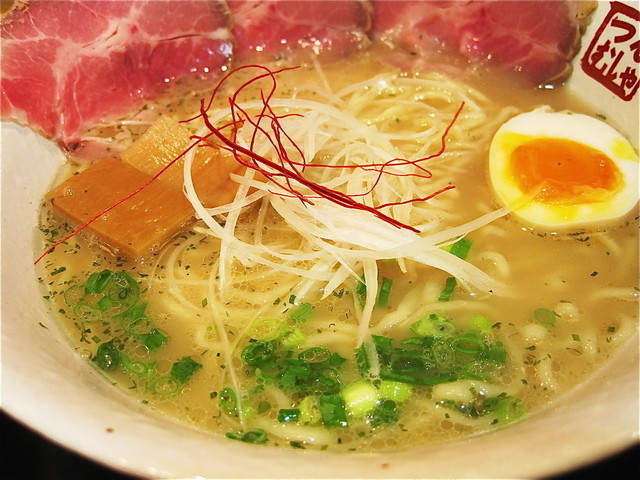
Approach Saiin at meal time and Kyoto feels less ceremonial than it does around Gion or the temple districts. The cues are practical: station traffic, small shopfronts, counter seats, and the short pause before a bowl lands. This is the Kyoto ramen register that matters here, a fast, concentrated dining ritual built around timing, silence, and heat rather than long-form hospitality.
Ramen Tsurumusha fits that register with unusual clarity. Its format is counter-led, its categories are ramen and tsukemen, and its scale is small enough that the meal is shaped by queue discipline and turnover. The point is not ceremony in the kaiseki sense. It is the opposite: a narrow room, a short decision, and a bowl that has to justify the wait before the noodles soften.
Kyoto ramen away from the postcard districts
Kyoto’s international dining reputation leans heavily on tea, sweets, temple-adjacent vegetarian cooking, and high-end seasonal cuisine. Ramen sits in a different civic layer. It is commuter food, student food, post-work food, and, at its better counters, a precise craft with less theatre than Tokyo’s tasting-menu ramen rooms. Saiin gives that culture a useful setting because it is west of the tourist core and connected by everyday transit patterns rather than sightseeing loops.
That context changes the reader’s expectations. A Kyoto ramen counter should not be judged by the same criteria as a private-room restaurant in Higashiyama or a polished French room near Karasuma. The sharper comparison is with low-to-mid priced neighbourhood specialists, including Menya Sanda and Taiyo Curry in Kyoto, where a narrow format and repeat local use matter more than breadth. Kashi Shokunin and caffellatte sit in a similar casual-price conversation, while Nishino occupies a different bracket entirely, with a high-price dining structure that changes the pace and purpose of the meal.
The award signal is meaningful because ramen is crowded, regional, and brutally comparative. Selection for Tabelog Ramen WEST 100 in 2025, after appearances in 2023 and 2024, places the shop inside western Japan’s competitive ramen field rather than merely Kyoto’s neighbourhood map. That does not turn a counter meal into luxury dining. It says the bowl has been measured against a specialist peer group, where repeat selection carries more weight than décor or service choreography.
The counter ritual: order, wait, eat before the bowl cools
Ramen’s etiquette is often misunderstood by travellers who approach it as a relaxed sit-down meal. At an 11-seat counter, the rhythm is tighter. Parties split if needed, coats and bags stay contained, and lingering after the final sip disrupts the room. The kitchen does not need a narrative to carry the experience; it needs the sequence to hold: ticket or order, bowl, noodles, broth, exit.
Tsukemen adds a second grammar to that ritual. Dipping noodles slow the meal slightly because broth and noodles are separated, but the discipline remains the same. The diner manages texture and temperature with each dip rather than waiting for courses. In Kyoto, where many visitors arrive primed for multi-course refinement, this kind of meal offers a useful correction. Precision can be brief, affordable, and stripped of explanation.
Ramen Tsurumusha’s appeal sits there: not in spectacle, not in a chef myth, and not in an inflated sense of rarity. The value is the combination of a compact counter, a narrow noodle brief, and credible regional recognition. For travellers building a Kyoto food itinerary, it works as a counterweight to reservation-led dining and sweets culture. Pairing it with places such as 3TOKU6MI Shijo karasuma ten, 551蓬莱, [ki:], Abbesses, or Aburi Mochi Honke Nemoto Kazariya gives a broader view of how Kyoto eats outside a single genre.
Where it fits in a Kyoto food itinerary
The strongest use case is a focused noodle stop rather than a long evening anchor. The price tier keeps it in everyday territory, while the recognition record gives it enough editorial weight to merit a detour within Kyoto’s western side. Solo diners are especially well served by this format; counter ramen is one of Japan’s cleanest answers to dining alone without compromise.
For planning across the city, use Our full Kyoto restaurants guide to balance noodle counters with formal dining, sweets, cafés, and casual regional cooking. If the trip extends beyond meals, Our full Kyoto hotels guide, Our full Kyoto bars guide, Our full Kyoto wineries guide, and Our full Kyoto experiences guide help separate the city’s food rituals from its lodging, drinking, and cultural pacing.
Readers comparing casual Japanese formats across cities can also benchmark the experience against -Grilled beef Sukiyaki- KAMAKURA TANUKIAN 鎌倉 たぬき庵 in Kamakura. 鮪と炭火焼き うお炭 秋葉原店 in Tokyo.cafe in Osaka.know in Kumamoto, (Shoku) Vietnam in Kawasaki, [Curry Senmon Ten] Maruyama Kyoju. in Sapporo, Jōdo Saké Bar in Los Angeles, and Onigiri Time in Pasadena. The lesson is comparative: Japan’s casual formats can be as disciplined as formal dining, but they ask for speed, attention, and respect for the room.
Where It Fits
Comparable venues to calibrate price, style, and recognition.
| Venue | Cuisine | Price | Notes |
|---|---|---|---|
| Ramen TsurumushaThis venue — the venue you are viewing | Kyoto-style Ramen Shop | $ | Not listed |
| Kaidashi Men Kitada | Shellfish Ramen | $ | Shimogyō |
| Kono Hana | Traditional Japanese sweets & cafe near Kitano Tenmangu | $ | Kamigyō |
| MASH Kyoto | Kyoto bakery & sweet breads | $ | Shimogyō |
| Fuka Nishiki ten | Traditional Kyoto nama-fu & Japanese sweets | $ | Nakagyō |
| Ichiwa Ichimonjiya Wasuke | Traditional Kyoto wagashi & aburi-mochi teahouse | $ | Kita |
Recognition history
Dated appearances from independent guides and award organizations, with the underlying list record or original source where available.
Tabelog 100 #91 · No. 91
Tabelog · Tabelog 100 - Ramen - WEST - 2025
Continue exploring
More in Kyoto
Restaurants in Kyoto
Browse all →

Bars in Kyoto
Browse all →
Hotels in Kyoto
Browse all →
Wineries in Kyoto
Browse all →
At a Glance
- Cozy
- Lively
- Solo
- Casual Hangout
- Late Night
- Family
- Chefs Counter
- Standalone
- Local Sourcing
Compact, counter-only space with an open kitchen; casual and bustling with a friendly, welcoming atmosphere that is comfortable even for families and solo diners.