
Marushin Hanten is a low-price Kyoto Chinese, cafeteria and ramen address in Higashiyama, selected for Tabelog Chinese WEST “Tabelog 100” in 2021, 2024 and 2026. Expect a compact, everyday room rather than ceremony: 29 seats, no reservations, children welcome, take-out available, and a cash-only payment setup.
Pearl is the En Primeur Club membership app — saves, bookings, and concierge access live there. Same editors, same standards.
- Address
- 431-3 Minamisaikaishicho, Higashiyama Ward, Kyoto, 605-0013, Japan
- Phone
- +81 75-561-4825
- Website
- marushinhanten.com
- Directions
- Get directions
 Saves & bookings on Pearl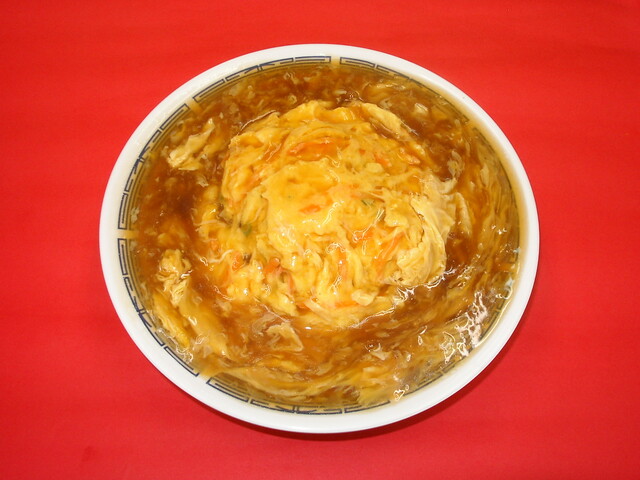
Higashiyama’s restaurant life is not all kaiseki formality and temple-side tea. Around Higashiyama-Sanjo, buses pull in, station exits feed local traffic, and small dining rooms serve repeat use rather than special-occasion choreography. Marushin Hanten belongs to that Kyoto, where Chinese cooking, cafeteria rhythm and ramen sit together without the staged minimalism that defines much of the city’s luxury dining conversation.
That context matters because Kyoto can distort expectations. Visitors looking for tatami, counter precision or a tasting-menu arc can miss the everyday food culture that keeps neighbourhoods moving. Casual Chinese restaurants in Japan occupy a clear lane: fast service, broad menus, family-friendly tables, late utility and prices suited to regular use. In a city where dinner can escalate quickly, recognition here signals consistency, local demand and category strength rather than expense.
Higashiyama's everyday Chinese table, judged by a public-ranking culture
The useful fact is not simply that Marushin Hanten appears on a list. It was selected for Tabelog Chinese WEST “Tabelog 100” in 2021, 2024 and 2026, a repeat pattern that places it inside a public Japanese evaluation culture where casual restaurants can gain reputational weight without becoming luxury rooms. Its Tabelog score is 3.67, and the listing categories are Chinese, cafeteria and ramen, which explains the appeal better than a polished cuisine label would.
Kyoto’s Chinese dining scene is often read through two frames: polished destination restaurants and reliable neighbourhood counters. The former competes on sourcing, wine, private-room comfort and high-spend hospitality; the latter on speed, volume, recognisable dishes and repeat affordability. Marushin Hanten sits firmly in the second group, yet the Tabelog 100 pattern gives it a wider audience than an anonymous local canteen. For travellers, it offers a Kyoto meal with critical recognition, without the etiquette and spend of formal dining.
Comparison sharpens the point. In Kyoto, Gion Morikou occupies a higher casual spend band at dinner, while Ito operates in a far more expensive special-occasion bracket. Kissho Karyo Gion honten stays close to café-dessert territory, and Hiiragitei signals a yakitori lane. The restaurant belongs instead to the Chinese comfort-food economy, where value and regularity matter as much as refinement. For a broader sweep across the city, Our full Kyoto restaurants guide maps those contrasts more clearly than a single award badge can.
Why this room makes sense in a city of formal dining
The room is small, with 29 table seats rather than counter theatre. This is not the place for a hushed tasting menu, chef-led progression or sommelier-paced evening. It is practical: children are welcome, take-out is listed, private rooms are unavailable, and the setting is described as a house restaurant. Read the atmosphere through those signals: a busy local dining room, not a sanctuary.
The award history also explains why it can matter to travellers with limited Kyoto meals. Tabelog’s Hyakumeiten selections tend to reward venues Japanese diners use heavily within a category, and Chinese WEST is a competitive regional field. Repeated selection in 2021, 2024 and 2026 suggests durable standing, not a single-year spike. That is especially relevant for casual Chinese food, where quality shows through operational discipline: keeping food moving, serving mixed groups and maintaining a price point regulars accept.
There is a useful corrective for visitors building an itinerary around only Kyoto’s formal face. A city’s dining intelligence is not measured solely by kaiseki, sushi or hotel bars. It is also visible in places that absorb families, friends and workers without turning dinner into an event. If a trip already includes refined Japanese cooking, a casual Chinese meal in Higashiyama adds another register of Kyoto literacy. The same logic applies across the city’s other categories: Our full Kyoto hotels guide, Our full Kyoto bars guide, Our full Kyoto wineries guide and Our full Kyoto experiences guide are better read as complementary layers rather than separate lists.
How to use it in a Kyoto eating plan
The restaurant works well as a counterweight to heavily scheduled dining. Reservations are unavailable, so treat it as a flexible meal around Higashiyama rather than the anchor of a high-stakes evening. Payment is cash-only, with no credit cards, electronic money or QR payments, still common enough in Japan to plan for but inconvenient if ignored. No service charge or appetizer fee is listed, useful for diners comparing casual Japanese restaurants with izakaya-style customs.
Location does real work. Higashiyama Station and the Higashiyama-Sanjo bus stop put the restaurant in an easy transit corridor, so it can sit before or after time on the city’s eastern side without a detour. The listed parking arrangement, a nearby 100 yen lot with one hour free, is more relevant to domestic visitors than most inbound travellers, but reinforces its neighbourhood utility. Tuesday closure is the key planning constraint.
For Kyoto visitors sorting casual meals across cuisines, it pairs well with other low-friction addresses rather than replacing formal restaurants. Nearby planning might include 551蓬莱 for another kind of Kansai comfort food, Aburi Mochi Honke Nemoto Kazariya for old Kyoto sweets, or [ki:], Abbesses and 3TOKU6MI Shijo karasuma ten when the itinerary shifts toward other contemporary formats. The point is contrast, not checklist collecting.
Outside Kyoto, the same casual-specialist logic appears in different forms: -Grilled beef Sukiyaki- KAMAKURA TANUKIAN 鎌倉 たぬき庵 in Kamakura. 鮪と炭火焼き うお炭 秋葉原店 in Tokyo.cafe in Osaka.know in Kumamoto, (Shoku) Vietnam in Kawasaki, [Curry Senmon Ten] Maruyama Kyoju. in Sapporo, Jōdo Saké Bar in Los Angeles and Onigiri Time in Pasadena all show how narrow formats can carry serious audience trust. The restaurant’s value is that Kyoto’s version comes with repeat Tabelog 100 recognition and the plain-spoken mechanics of an everyday dining room.
Cost and Credentials
Comparable venues to calibrate price, style, and recognition.
| Venue | Cuisine | Price | Notes |
|---|---|---|---|
| Marushin HantenThis venue — the venue you are viewing | Not listed | $ | Not listed |
| Meirin | Kamigyō, Kyoto Chinese | $$ | Not listed |
| Ajari Mochi Honpo Kyogashi Tsukasa Mangetsu Honten | Not listed | $ | Sakyō, Traditional Japanese Wagashi & Mochi Shop |
| Kamo Mitarashi Chaya | Not listed | $ | Sakyō, Traditional Japanese sweets café & mitarashi dango shop |
| Kaidashi Men Kitada | Shimogyō, Shellfish Ramen | $ | Not listed |
| Ramen Tsurumusha | Ukyō, Kyoto-style Ramen Shop | $ | Not listed |
Recognition history
Dated appearances from independent guides and award organizations, with the underlying list record or original source where available.
Tabelog 100 #36 · No. 36
Tabelog · Tabelog 100 - Chinese cuisine - WEST - 2026
Continue exploring
More in Kyoto
Restaurants in Kyoto
Browse all →

Bars in Kyoto
Browse all →


Hotels in Kyoto
Browse all →
Wineries in Kyoto
Browse all →
At a Glance
- Lively
- Classic
- Cozy
- Late Night
- Casual Hangout
- Solo
- Family
- Group Dining
- After Work
- Standalone
- Historic Building
- Beer Program
Current opening hours
- Monday
- 11 AM–5:45 AM
- Tuesday
- Closed
- Wednesday
- 11 AM–5:45 AM
- Thursday
- 11 AM–5:45 AM
- Friday
- 11 AM–5:45 AM
- Saturday
- 11 AM–5:45 AM
- Sunday
- 11 AM–5:45 AM
Hours can change for holidays and private events. Last verified .
Casual and nostalgic Chinese diner atmosphere with a small, tightly packed room that stays busy and energetic, giving a classic Kyoto neighborhood feel rather than a polished modern restaurant.