
Kyoto’s wagashi culture rewards narrow focus: a single sweet, a small counter, a purchase that fits between temple visits rather than taking over the day. Ajari Mochi Honpo Kyogashi Tsukasa Mangetsu Honten sits in that tradition, with Tabelog 100 recognition for Japanese traditional sweets in WEST 2023 and a take-out format built around Ajari mochi rather than a full café ritual.
Pearl is the En Primeur Club membership app — saves, bookings, and concierge access live there. Same editors, same standards.
- Address
- 京都府京都市左京区鞠小路通今出川上ル
- Phone
- +81757914121
- Website
- ajyarimochi.com
 Saves & bookings on Pearl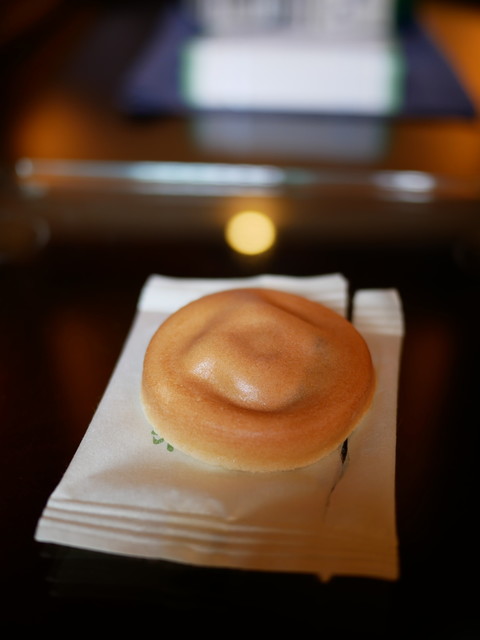
Approaching a Kyoto confectioner differs from approaching a restaurant. The cues are quieter: a noren, compact shopfront, a line moving by purchase rather than service, and the sense that the object has been refined for daily life rather than ceremony. In Sakyo-ku, near the Demachiyanagi side of the city’s university district, Ajari Mochi Honpo Kyogashi Tsukasa Mangetsu Honten fits that practical Kyoto sweet-shop grammar: small scale, specific purpose, and a purchase carried away rather than staged at a table.
Kyoto wagashi is often flattened into tea-ceremony imagery, but the city’s stronger lesson is range. Some sweets are formal, seasonal, or built for gifting; others are everyday enough to buy en route across town. This shop sits firmly in the last category. Its recognition on the Tabelog 100 list for Japanese traditional sweets and Japanese sweets cafés in WEST 2023 places it in a serious regional field, yet the format remains closer to a specialist counter than a destination dining room. That contrast is the appeal: high local credibility without the friction of a long meal.
A Kyoto sweet-shop format where value comes from focus
The value proposition is not abundance but concentration. Kyoto has no difficulty producing elaborate kaiseki rooms, French counters, and tasting-menu dining, but wagashi asks a different question: how much craft can be compressed into a small purchase? Ajari Mochi Honpo Kyogashi Tsukasa Mangetsu Honten answers through narrow specialization. The category is Japanese traditional sweets, the service is take-out, and the experience is closer to buying a calibrated edible souvenir than sitting down for dessert.
That matters because Kyoto itineraries often punish overplanning. A full restaurant meal can dictate half a day; a wagashi stop can fit between a shrine visit, river walk, or train connection. The shop’s position near Demachiyanagi gives it a different rhythm from the hotel-heavy central grid. This is northern Kyoto, where students, commuters, and visitors cross paths, and sweets serve as both local routine and travel punctuation.
Compared with Kyoto’s higher-spend dining categories, the appeal is direct. French dining at Bistro Cerisier or Droit follows a different tempo and budget logic; casual bakeries such as Bakery Ryugetsudo sit closer in price but not necessarily in cultural role. Wagashi carries gift value, seasonal association, and regional identity compactly. Ryokujuan Shimizu, another Kyoto sweet specialist in the comparison set, shows how seriously the city treats confectionery as craft rather than afterthought. In that context, Mangetsu Honten reads as a focused purchase for travellers who want Kyoto’s sweet tradition without turning dessert into an appointment.
Ajari mochi, shelf life, and the souvenir question
The item to understand is ajari mochi. The shop’s own note gives it a five-day shelf life and advises prompt consumption, useful for anyone treating Kyoto sweets as gifts rather than snacks. Many Japanese confectionery purchases are shaped by perishability: some are same-day, some travel well, and some sit between. A five-day window works for a short domestic leg or the first part of an international itinerary, but not a long suitcase tour across several cities.
This is where Kyoto’s sweet culture differs from luxury retail. The purchase is inexpensive in structure but not casual in meaning. A small box of local confectionery can function as omiyage, train food, or a quiet hotel-room dessert. The pleasure is not excess; it is the confidence that a single local specialty has earned repeat selection in a city crowded with alternatives. Tabelog’s 2023 WEST selection is a useful signal because wagashi is a category where outside visitors can struggle to distinguish heritage, popularity, and convenience.
There is also practical city-reading value. Kyoto rewards edible stops that avoid rigid reservation systems. For travellers already moving through Sakyo-ku or using Demachiyanagi as transit, this shop can be more useful than another seated meal. It gives the day a local anchor without requiring a change of clothes, a full menu decision, or a late-night return across town.
How to place it within a Kyoto food day
The strongest use for a wagashi specialist is as a counterweight. Pair it with a restrained lunch, tea stop, or walk through the northern city rather than stacking it after a heavy dinner. Kyoto dining can be formal, but its snack culture is agile: sweets, buns, grilled mochi, department-store counters, and station purchases all compete for small windows of attention.
For travellers building a broader Kyoto plan, the city works better when categories are separated rather than forced into one checklist. Wagashi belongs beside other specialist stops such as Aburi Mochi Honke Nemoto Kazariya, while restaurant planning can run through 3TOKU6MI Shijo karasuma ten, 551蓬莱, [ki:], and Abbesses depending on appetite and neighbourhood. Broader planning sits in Our full Kyoto restaurants guide, with separate city context in Our full Kyoto hotels guide, Our full Kyoto bars guide, Our full Kyoto wineries guide, and Our full Kyoto experiences guide.
Outside Kyoto, the same editorial question applies: is the stop adding local texture, or just filling time? A compact purchase can carry as much place-specific value as a formal meal when disciplined. That is why Japan’s casual and specialist addresses, from -Grilled beef Sukiyaki- KAMAKURA TANUKIAN 鎌倉 たぬき庵 in Kamakura to. 鮪と炭火焼き うお炭 秋葉原店 in Tokyo,.cafe in Osaka,.know in Kumamoto, (Shoku) Vietnam in Kawasaki, and [Curry Senmon Ten] Maruyama Kyoju. in Sapporo, often matter less for scale than clarity. The same logic extends abroad in Japanese-focused formats such as Jōdo Saké Bar in Los Angeles and Onigiri Time in Pasadena.
The verdict is simple: treat Mangetsu Honten as a precision stop, not a meal replacement. Its strength lies in the Kyoto habit of making a small purchase carry cultural weight. For travellers who measure value by specificity rather than length of service, that is exactly the point.
Accolades, Compared
Comparable options at the same price tier.
| Venue | Cuisine | Price | Awards | Notes |
|---|---|---|---|---|
| Ajari Mochi Honpo Kyogashi Tsukasa Mangetsu HontenThis venue — the venue you are viewing | Traditional Japanese Wagashi & Mochi Shop | $ | , | |
| Kansen Do | Traditional Japanese Wagashi & Sweets | $ | , | Higashiyama |
| Shinrin Shokudo | Japanese curry house | $ | , | Nakagyō |
| Awamochidokoro Sawaya | Traditional Japanese sweets (wagashi) cafe | $ | , | Kamigyō |
| Honke Daiichi Asahi Honten | Classic Kyoto ramen shop | $ | , | Shimogyō |
| Mangetsu JR kyoto isetan ten | Traditional Japanese sweets (wagashi) take-out | $ | , | Shimogyō |
Continue exploring
More in Kyoto
Restaurants in Kyoto
Browse all →
Bars in Kyoto
Browse all →


Hotels in Kyoto
Browse all →

Wineries in Kyoto
Browse all →
At a Glance
- Classic
- Quiet
- Hidden Gem
- Solo
- Casual Hangout
- After Work
- Standalone
- Historic Building
Traditional, low-key Japanese wagashi shop with a modest storefront and a few bench seats, focused on takeaway sweets rather than extended dine-in, giving a calm, classic neighborhood feel.