
Tabelog Bronze #255
Our verdict
A Tabelog Bronze Award winner for 2022, 2024, 2025, and 2026, Marushin in Koriyama sits inside Japan's Tabelog 100 for Japanese cuisine EAST and holds a score of 3.98 on over 400 reviews. Dinner runs JPY 10,000–14,999; lunch is dramatically more accessible at JPY 1,000–1,999. The kitchen's stated commitment is ingredient provenance: 'The Star is the Producer.'

Pearl is the En Primeur Club membership app, where members save venues, book tables and use the concierge.
Koriyama's Ingredient-Led Counter
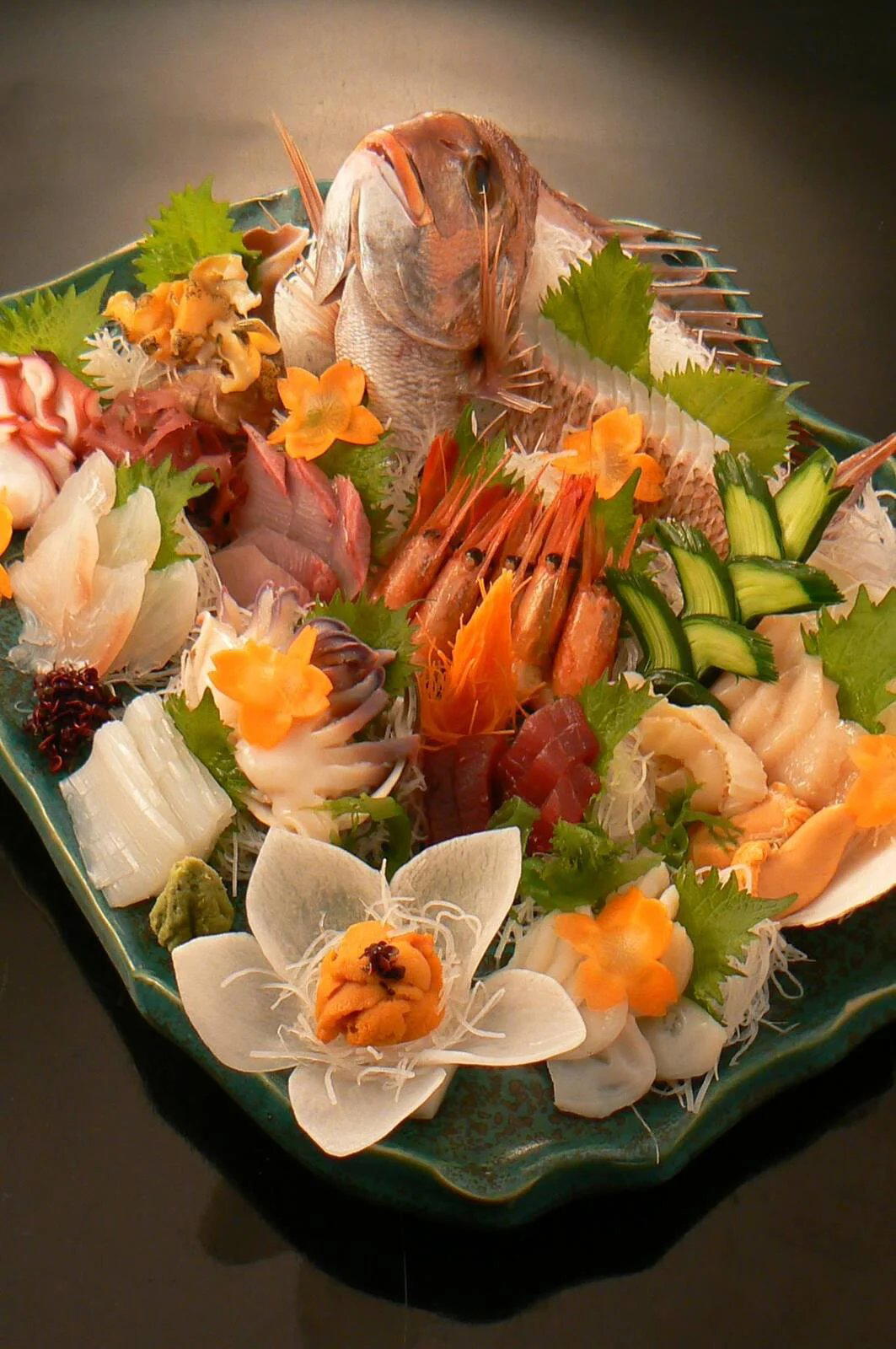
Japan's most decorated restaurant cities, Tokyo, Kyoto, Osaka, pull most of the international attention, but the provincial Japanese dining scene operates on its own logic, one that often rewards ingredient access over spectacle. Koriyama, the largest city in Fukushima Prefecture, sits in a region with direct supply lines to Tohoku seafood, mountain vegetables, and local rice culture. In that context, Marushin's positioning makes immediate sense: the restaurant's self-described philosophy, 'The Star is the Producer,' places it squarely in a tradition of shun-driven Japanese cooking, where the kitchen's primary task is not transformation but selection and timing.
The physical setting reinforces this priority. Marushin operates from a house-style space in Shinmeicho, a residential pocket of Koriyama roughly fifteen minutes on foot from Koriyama Station's west exit. Alternatively, the Sakura Loop bus (Toramaru route and several others) stops at the Toramaru bus stop, a two-minute walk from the entrance. Sixteen parking spaces sit on site, which matters in a city where many diners arrive by car rather than rail. Inside, the room divides into counter seating, standard tables with spacious seating, a tatami room, and a private room accommodating up to six, giving it a range that few specialist restaurants in prefectural cities offer within 42 total seats.
The Ingredient Tradition Behind the Menu
Japanese cuisine has long framed sourcing as the primary creative act. The kaiseki tradition, codified in Kyoto over centuries, built its seasonal calendar around shun: ingredients at their peak, prepared with just enough intervention to honor rather than mask them. Outside Kyoto, that tradition disperses into regional variants. Seafood-focused restaurants in Tohoku inherit a version of this ethic shaped by proximity to the Pacific coast, the Sanriku fishing grounds, and mountain watersheds that feed rivers with specific wild produce.
Marushin's categorisation as Japanese cuisine, seafood, and kaisen-don (seafood rice bowl) points to a place operating in this tradition without the formal multi-course kaiseki structure. The seafood bowl format is among Japan's most democratic expressions of ingredient-forward cooking: a short list of decisions, almost no concealment, and an immediate read on material quality. At the same time, the dinner price band of JPY 10,000–14,999 positions Marushin well above casual kaisen-don counters and into the tier where selection, provenance, and preparation precision justify the premium. This is the same pricing logic you find at ingredient-focused restaurants further up the award hierarchy. Harutaka in Tokyo and Gion Sasaki in Kyoto operate on the same principle at considerably higher price points; Marushin sits in the mid-premium tier where the value-to-provenance ratio tends to be strongest.
The drink program is equally deliberate. The listing flags a specific focus on nihonshu (sake) and wine, a pairing that has become increasingly common in serious Japanese restaurants as the country's wine culture matures. A sake-forward list in Tohoku carries regional logic: Fukushima Prefecture is one of Japan's most decorated sake-producing regions, with multiple breweries holding national competition titles. A kitchen that sources ingredients from across the country and pairs them with a sake selection is expressing a coherent point of view, not assembling a generic offer.
Award Consistency as a Reliability Signal
Tabelog's award architecture is worth understanding before reading Marushin's record. The Bronze tier sits below Silver and Gold but above the platform's general score rankings; inclusion requires sustained performance across a statistically significant review base.
The additional recognition matters equally. Marushin has been selected for the Tabelog Japanese Cuisine EAST 'Tabelog 100' list in 2021, 2023, and 2025, three separate editorial cycles covering eastern Japan. That list specifically focuses on Japanese cuisine category, placing Marushin in a peer group that extends from Tokyo's highest-regarded nihon-ryori counters outward. To appear consistently on that list from a Koriyama address is a signal about how the regional restaurant scene evaluates itself, independent of international guide attention. For context on how other Tohoku-adjacent and regional Japanese restaurants sit in the award ecosystem, affetto akita in Akita and 1000 in Yokohama represent different expressions of serious regional dining recognised through similar peer review systems.
Marushin does not hold Michelin recognition, which reflects the geographic scope of the Michelin Japan guides rather than a qualitative gap. The Michelin Japan selection historically concentrates on Tokyo, Kyoto, Osaka, Hokkaido, and a small number of other regions. Provincial cities in Tohoku fall largely outside that coverage, making Tabelog the operative reference system for local and visiting diners. In that context, Marushin's Tabelog record functions as the primary credentialling signal. Restaurants at a similar award tier in cities with Michelin coverage include Goh in Fukuoka and akordu in Nara, both of which operate in cities where guide attention is more concentrated.
Koriyama's Dining Position in Fukushima
Fukushima Prefecture's dining identity was complicated significantly by the 2011 earthquake and subsequent nuclear incident, which attached stigma to regional produce that Fukushima producers have spent the intervening years actively addressing. Testing regimes for Fukushima agricultural and seafood products are among the most rigorous in Japan, and the region's produce has returned to national markets with a recovery narrative that serious restaurants have engaged rather than avoided. A kitchen that declares its producers as the stars is, in the current Fukushima context, making a statement with specific regional weight.
Koriyama itself functions as a commercial hub for Fukushima Prefecture, with transport links that make it accessible from Sendai to the north and Tokyo to the south via the Tohoku Shinkansen. The city's restaurant scene is largely oriented toward local professionals and families rather than tourists, which shapes the format range: practical lunch services, private rooms for business use, and dinner formats that work for both celebrations and regular visits. Marushin's listing as suitable for family, business, and friends, alongside its note that it accommodates celebrations and memorial services, reflects this local orientation.
Other well-regarded Koriyama and Fukushima options for comparison include HAGI and Rantei Vivian, both of which serve the regional dining market from different format positions. Our full Fukushima restaurants guide covers the wider picture across cuisine types and price tiers.
Planning a Visit
Marushin runs a split service across all seven days, with lunch from 11:30 (last order 13:00) and dinner from 17:00 (food last order 20:00, drinks 21:30). Lunch runs JPY 1,000–1,999 per person based on listed averages, making the midday service a genuinely accessible entry point for a kitchen operating at a different scale in the evening. Saturday lunch shifts to reservation-only course meals, a structural change that effectively converts the weekend midday service into a more formal format. Dinner reservations are accepted; lunch reservations are not available except for Saturday course meals. The phone number on record is +81-24-922-1851. Major credit cards are accepted (VISA, Mastercard, JCB, AMEX, Diners); electronic money and QR payments are not. The restaurant relocated from its previous Ekimae address to the current Shinmeicho location; the current address is 15-4 Shinmeicho, Koriyama, Fukushima.
For broader trip planning in the region, our full Fukushima hotels guide covers accommodation options, while our full Fukushima bars guide, our full Fukushima wineries guide, and our full Fukushima experiences guide round out the prefectural picture.
Frequently asked questions
Is Marushin okay with children?
Yes. The listing explicitly marks children as welcome and flags family dining as a recommended occasion. The tatami room and 42-seat layout give families room to settle in without feeling cramped, and the restaurant notes it handles celebrations alongside regular service.
Is Marushin better for a quiet night or a lively one?
Quiet, without question. Marushin operates from a house-restaurant address in a residential part of Koriyama rather than the main dining strip near the station, and the space is described as relaxing rather than high-energy. Private rooms seating up to six are available, making it a practical choice for business dinners or subdued celebrations.
What's Marushin known for in terms of accolades?
Marushin has received recognition including:
What should I order at Marushin?
The kitchen's declared focus is fish sourced from across Japan, so the seafood-led courses and kaisen-don are where the kitchen's identity sits most clearly. Dinner runs JPY 10,000–14,999 per person on average, so a course meal is the format that earns the price; Saturday lunch course reservations are accepted by advance booking only.
When can I go to Marushin?
Hours at Marushin: Mon, Tue, Wed, Thu, Fri, Sat, Sun, Public Holiday, Day before public holiday, Day after public holiday 11:30 - 14:00 L.O. 13:00 17:00 - 22:00 L.O. Food 20:00 Drinks 21:30.
Price Lens
Comparable venues nearby, for context on price, style, and recognition.
| Venue | Cuisine | Price | Awards | Notes |
|---|---|---|---|---|
| MarushinThis venue (the venue you are viewing) | Fukushima-Style Soy Sauce Ramen | $1–10 | Tabelog Bronze #255 | Not listed |
| Rantei Vivian | Seasonal Kaiseki Omakase | $100–150 | Tabelog Bronze #354 | Koriyama, Seasonal Kaiseki Omakase |
| Dateya | Traditional Fukushima ramen shop | $10–20 | Tabelog 100 #65 | Fukushima, Traditional Fukushima ramen shop |
| Bistro Mikasa | Yoshoku (Japanese-style Western) Bistro | $10–20 | Tabelog 100 #2 | Fukushima, Yoshoku (Japanese-style Western) Bistro |
| Hisuinosato | Seasonal Japanese Kaiseki | $300–500 | Not listed | Fukushima, Kawasemi-style Japanese Kaiseki |
| Hachi no Ki | Japanese ginger pork set-meal diner | $10–20 | Tabelog 100 #8 | Fukushima, Japanese ginger pork set-meal diner |
Recognition history
Dated appearances from independent guides and award organizations, with the underlying list record or original source where available.
Tabelog Bronze #255
Tabelog
Full recognition history (3 entries)
Tabelog 100 #39 · No. 39
Tabelog · Tabelog 100 - Japanese cuisine - EAST - 2025
Tabelog Bronze
Tabelog
Continue exploring
More in Koriyama
Restaurants in Koriyama
All restaurants in Koriyama →
Hotels in Koriyama
Browse all →
Details
- Lively
- Casual
- Casual Hangout
- After Work
- Open Kitchen
- A La Carte
Current opening hours
- Monday
- 11:30 AM–1 PM, 5–9 PM
- Tuesday
- 11:30 AM–1 PM, 5–9 PM
- Wednesday
- 11:30 AM–1 PM, 5–9 PM
- Thursday
- 11:30 AM–1 PM, 5–9 PM
- Friday
- 11:30 AM–1 PM, 5–9 PM
- Saturday
- 11:30 AM–1 PM, 5–9 PM
- Sunday
- Closed
Hours can change for holidays and private events. Last verified .
Compact counter seating around an open kitchen with functional lighting focused on the steaming bowls and efficient service flow.