
Harukiya Kooriyama bunten belongs to Koriyama’s serious everyday ramen tier: affordable, family-ready, and recognized in Tabelog’s Ramen EAST 100 selection for 2025, with prior selections in 2024 and 2019. The appeal is less about spectacle than regional ramen discipline, with tsukemen and dumplings broadening the meal beyond a single bowl.
Pearl is the En Primeur Club membership app — saves, bookings, and concierge access live there. Same editors, same standards.
- Address
- 2 Chome-16-13 Kuwano, Koriyama, Fukushima 963-8025, Japan
- Phone
- +81 24-922-0141
- Website
- harukiya-bunten.com
- Directions
- Get directions
 Saves & bookings on Pearl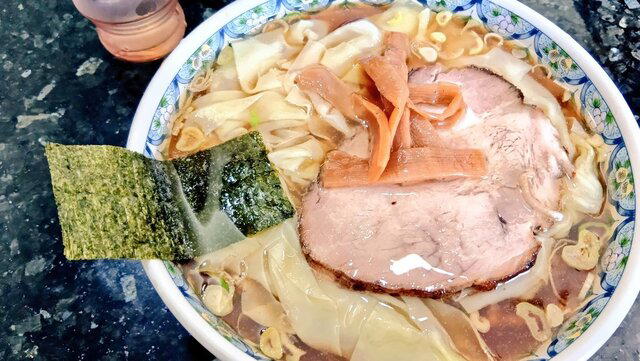
Koriyama’s ramen rooms tend to announce themselves through function before theatre: counter seats, family tables, quick turnover, and the quiet concentration of lunch service. Harukiya Kooriyama bunten fits that grammar. It is not built around tasting-menu ceremony or chef-as-celebrity performance; it belongs to the Japanese ramen tradition in which broth, noodles, tare, and side dishes carry the argument. In Fukushima, where inland climate and regional pantry habits shape a more grounded style of eating than the seafood-first cities on the coast, that matters.
The useful way to read the room is as a local ramen shop that has crossed into national attention without leaving its everyday category. Selection for Tabelog’s Ramen EAST 100 in 2025, with previous selections in 2024 and 2019, places it among the eastern Japan ramen addresses that have earned sustained diner attention rather than one-season noise. The score attached to its listing, 3.71, reinforces the same point: this is a serious bowl shop operating inside a casual price band, not a luxury restaurant borrowing ramen language for effect.
Fukushima ramen through an everyday ingredient lens
Ramen in regional Japan is often discussed through style labels, but the better question is simpler: what does the kitchen ask the broth and noodles to do? In a city such as Koriyama, the answer usually sits closer to repeatable comfort than novelty. The category mix here, ramen, tsukemen, and dumplings, gives the meal a practical structure. A diner can read the kitchen through soup noodles, dipping noodles, and a gyoza-side format rather than through a long menu engineered for tourists.
Ingredient sourcing is difficult to separate from ramen technique because the dish is an assembly of extracted flavor: bones or vegetables for stock, wheat for noodles, soy or salt seasoning, fats, aromatics, and toppings. Nothing in the public details names specific farms or producers, so the meaningful editorial signal is not a named supplier but the format itself. A ramen shop that holds attention across several Tabelog 100 cycles has to deliver consistency at volume, and consistency in this category depends on procurement discipline as much as kitchen timing. The bowl has little room to hide poor base ingredients.
That separates the address from broader Koriyama casual dining in useful ways. Jin Tei sits in a similar everyday spend bracket, while Ootomo Pan Ten points to the city’s lower-cost bakery culture. Soba Kiri Anazawa represents another noodle tradition, one where buckwheat, cutting, and dipping sauce shift the conversation away from ramen’s stock-and-tare architecture. Read together, these places show why Koriyama rewards category-specific eating: the pleasure is in knowing which format the city handles with confidence.
A casual room with national ramen recognition
Harukiya Kooriyama bunten is also notable because its recognition has not pulled it into a precious format. The room is listed with counter seating, tatami seating, and spacious seating, a combination that says more about local use than destination dining. Family friendliness is part of the operating culture, with children welcome, stroller access, baby-chair use, and a kids’ menu listed. That is a strong signal in Japan’s ramen world, where acclaimed counters can skew tight, fast, and adult-focused.
The reservation position is equally revealing. Reservations are unavailable, so the experience belongs to the democratic ramen queue rather than the managed reservation economy that defines high-end sushi, kaiseki, and some newer ramen counters. For travelers used to planning Japan meals through booking platforms, this changes the rhythm. The smarter move is to treat it as a lunch-led stop in Koriyama rather than the anchor of an evening itinerary. The absence of reservation theatre keeps the focus where it belongs: turnover, bowl quality, and whether the kitchen can repeat its core work service after service.
Compared with Genji or Munakata Ya, the attraction is not a broad hospitality proposition but a narrower ramen decision. That distinction matters for visitors building a day around Koriyama rather than treating it as a pass-through rail stop. A restaurant with this profile is useful because it gives the city a benchmark casual meal: accessible, recognized, and grounded in a format that locals can return to without turning lunch into an event.
How to fit it into a Koriyama food day
Koriyama’s dining map benefits from contrast. A ramen stop here pairs naturally with soba, bakery, or izakaya-style eating elsewhere, and the city’s appeal is stronger when meals are planned by category rather than by a single prestige list. For a broader read on the local scene, start with Our full Koriyama restaurants guide, then use the adjacent city guides for context: Our full Koriyama hotels guide, Our full Koriyama bars guide, Our full Koriyama wineries guide, and Our full Koriyama experiences guide.
The broader Japan comparison is useful only if it sharpens the decision. A sukiyaki meal such as -Grilled beef Sukiyaki- KAMAKURA TANUKIAN 鎌倉 たぬき庵 in Kamakura asks diners to think about beef, heat control, and set-piece dining.. 鮪と炭火焼き うお炭 秋葉原店 in Tokyo sits in a different seafood-and-charcoal lane, while.cafe in Osaka.know in Kumamoto, (Shoku) Vietnam in Kawasaki, and [Curry Senmon Ten] Maruyama Kyoju. in Sapporo show how Japanese cities absorb outside formats and specialist cuisines. Across the Pacific, Jōdo Saké Bar in Los Angeles and Onigiri Time in Pasadena make a different point: Japanese casual formats travel well, but regional ramen remains harder to detach from its local habits of service, sourcing, and repeat custom.
The editorial case is clear. Harukiya Kooriyama bunten is worth prioritizing for travelers who want Koriyama through a working local lens rather than a trophy meal. The award history supplies the trust signal; the casual format supplies the reason to go. In a city where the strongest meals often sit in modest categories, that combination carries more weight than spectacle.
- Wonton ramen
- Chuka soba
- Shio chuka soba
- New chuka soba (shio and shoyu)
- Shio tsukemen
- Gyoza
Comparable Spots, Quickly
Comparable venues by cuisine and price in the same metro.
| Venue | Cuisine | Price | Notes |
|---|---|---|---|
| Harukiya Kooriyama bunten | Classic Tokyo-style ramen (chuka soba) | $$ | Kuwano |
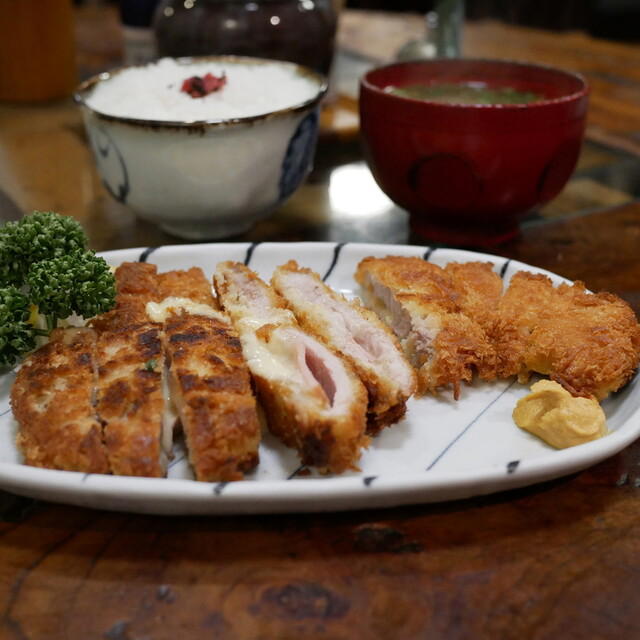
| Jin Tei | Tonkatsu and Japanese yoshoku cafeteria | $$ | Tsurumidan, Koriyama |
| Munakata Ya | Yakitori & Chicken Dishes | $$$ | Ekimae |
| Soba Kiri Anazawa | Traditional Japanese soba noodle shop | $$ | /郡山市 |
| Soba Saizen Ryusenbo | Traditional Japanese soba | $$ | .null |
| Sushi Kappou Gyomon | Traditional Sushi Kappou | $$$$ | Ekimae |
Recognition history
Dated appearances from independent guides and award organizations, with the underlying list record or original source where available.
Tabelog 100 #98 · No. 98
Tabelog · Tabelog 100 - Ramen - EAST - 2025

At a Glance
- Classic
- Lively
- Cozy
- Solo
- Casual Hangout
- Family
- After Work
- Group Dining
- Standalone
Current opening hours
- Monday
- Closed
- Tuesday
- 11 AM–2:30 PM
- Wednesday
- 10:50 AM–2:30 PM
- Thursday
- 10:50 AM–2:30 PM
- Friday
- 10:50 AM–2:30 PM
- Saturday
- 10:50 AM–2 PM
- Sunday
- 10:50 AM–2:30 PM
Hours can change for holidays and private events. Last verified .
Casual, non-smoking neighborhood ramen shop with a simple, classic feel, focused on efficient service and bowls of comforting chuka soba rather than design flourishes; busy and energetic at meal times but still comfortable for families and solo diners.