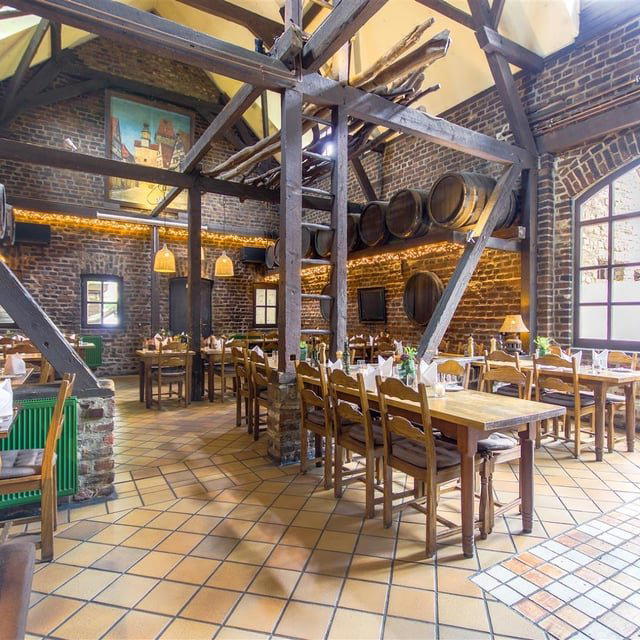
A covered market hall in Cologne's Ehrenfeld district, Markthalle Körnerstraße sits within a neighbourhood that has reshaped the city's casual food culture over the past decade. The hall format places multiple producers and food stalls under one roof, reflecting a broader European return to market-hall eating as a social ritual rather than a shopping errand. For visitors tracing Cologne's less formal food scene, it represents a different register from the city's fine-dining tier.
Pearl is the En Primeur Club membership app — saves, bookings, and concierge access live there. Same editors, same standards.
- Address
- Körnerstraße 21, 50823 Köln, Germany
- Phone
- +4949221121385
- Website
- markthalle-k21.de
- Directions
- Get directions
 Saves & bookings on Pearl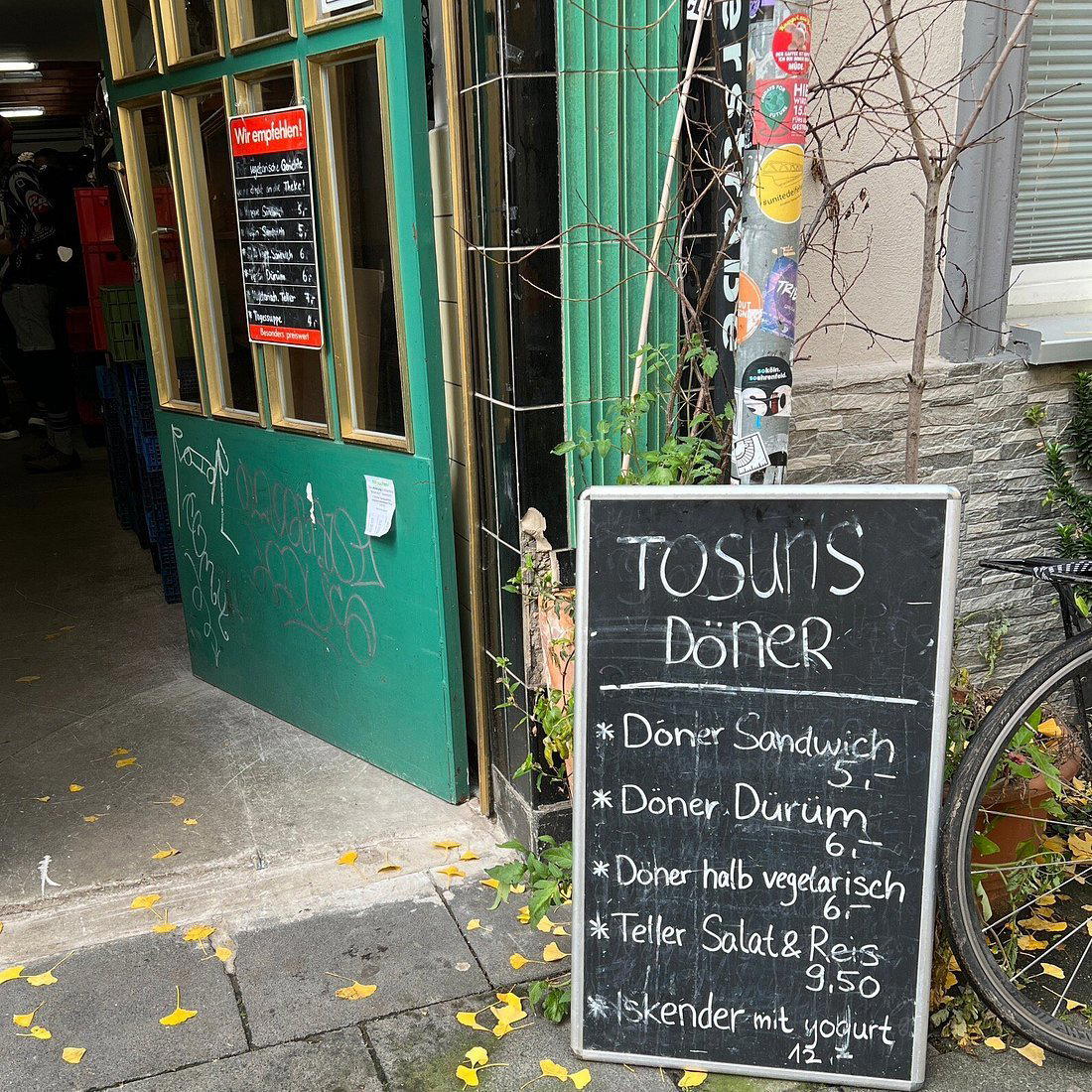
Ehrenfeld's Market Hall and What It Says About Cologne's Food Culture
Markthalle Körnerstraße is a German market hall bistro with Turkish döner in Cologne's Ehrenfeld district. From Barcelona's Mercat de Santa Caterina to Rotterdam's Markthal, the format has re-established itself not as a relic of pre-supermarket provisioning but as a deliberate social space where the act of choosing, buying, and eating converges. Cologne arrived at this conversation through Ehrenfeld, a district that spent decades as an industrial working neighbourhood before becoming the city's most densely creative quarter. Markthalle Körnerstraße, on Körnerstraße 21, sits inside that shift.
Ehrenfeld matters here because the neighbourhood's character sets the conditions for what a market hall can be. Unlike the more formal retail energy of Cologne's centre, Ehrenfeld draws a mix of long-term residents, artists, and the kind of food-curious visitor who regards a well-sourced charcuterie stand or a regional cheese counter as the point of the trip rather than a warm-up act. That audience sustains a different kind of vendor, one more likely to work with small regional producers than to optimise for throughput.
The Market Hall Format in Context
Germany has its own strong tradition of covered markets, from the Viktualienmarkt in Munich to the Kleinmarkthalle in Frankfurt, but the Cologne version of this format has historically been underrepresented relative to those cities. The Markthalle Körnerstraße addresses that gap at a neighbourhood level rather than a city-wide one, which shapes both its scale and its atmosphere. Where Frankfurt's Kleinmarkthalle draws tourists alongside locals, a district-anchored hall in Ehrenfeld primarily serves the community around it, with visitors arriving because the neighbourhood is worth the trip on its own terms.
This distinction matters for how you approach the space. A tourist-facing market hall often performs its regional identity; a community-facing one simply has it. The stalls, the rhythms of the week, the regulars who know which vendor gets the first delivery on which morning, these are not stage-managed for an outside audience. Germany's serious food cities, including those producing the country's highest-rated restaurant experiences, depend on exactly this kind of supply-chain infrastructure operating without fanfare below the fine-dining tier.
Cologne's restaurant scene at its upper end, represented by addresses like Ox & Klee, La Cuisine Rademacher, and La Société, depends on producers and supply relationships that market halls help sustain. The connection between street-level provisioning and high-end kitchens is rarely direct, but it is real: cities with functioning local food markets tend to maintain the producer relationships that give restaurant cooking its regional specificity. Nationally, that argument extends to places like Aqua in Wolfsburg, Schwarzwaldstube in Baiersbronn, and Vendôme in Bergisch Gladbach, all of which draw on regional sourcing as a structural commitment rather than a marketing line.
What Draws People to Körnerstraße
The address functions primarily as a place to eat and provision. That positions it differently from the tasting-menu format that dominates Cologne's critical conversation, venues like maiBeck or Le Moissonnier Bistro operate with a clear authorial point of view, a set sequence, and a booking process that begins weeks in advance. A market hall inverts all of those conditions: the format is open-ended, the choices are lateral rather than sequential, and arrival without a plan is not just permitted but expected.
For visitors who have spent time at Germany's more structured fine-dining operations, say, JAN in Munich or Restaurant Haerlin in Hamburg, a market hall like this provides a useful counterweight. The pleasure is different in kind, not degree. Regional breads, prepared foods, and produce consumed informally in a covered space carry their own authority, particularly when the neighbourhood around them has the density and character that Ehrenfeld does.
Ehrenfeld as a Food District
Understanding the restaurant requires understanding Ehrenfeld's trajectory. The district sits west of Cologne's centre and spent much of the twentieth century as a working-class industrial area. Over the past two decades it has accumulated a concentration of independent food businesses, small bars, and creative enterprises that now make it one of the more interesting parts of the city to spend an afternoon in. That density of independent operators creates the conditions for a market hall to function as a genuine local institution rather than a temporary pop-up or a retail experiment.
The broader pattern is visible in other German cities: Berlin's Neukölln, Frankfurt's Sachsenhausen, and Munich's Glockenbach have each followed a version of the same arc, with creative industries preceding food businesses, which then consolidate into permanent neighbourhood infrastructure. Cologne's version of this story runs through Ehrenfeld, and Körnerstraße sits near the centre of it.
Germany's food culture at this level often goes underreported in international coverage, which tends to focus on the country's Michelin-starred tier, addresses like Victor's Fine Dining by Christian Bau in Perl, Waldhotel Sonnora in Dreis, Schanz in Piesport, or ES:SENZ in Grassau, while the informal infrastructure that supports daily food life receives less attention. Internationally, comparable informal dining energy at the market-hall level has drawn serious critical interest in cities like New York, where venues such as Le Bernardin and Atomix anchor the formal tier while neighbourhood food markets operate in parallel. CODA Dessert Dining in Berlin represents a different kind of experimental format entirely, but the underlying point holds: Germany's food cities are more varied in register than their star counts suggest.
Know Before You Go
Address: Körnerstraße 21, 50823 Köln, Germany
District: Ehrenfeld, Cologne
Hours: Not confirmed, check locally before visiting
Booking: Market hall format; walk-in access expected
Getting there: Ehrenfeld is served by Cologne's S-Bahn and U-Bahn network; the district is accessible from Cologne Hauptbahnhof in under fifteen minutes by rail
Ideal time to visit: Morning visits typically offer the fullest selection at European market halls; midday on weekends tends to draw the heaviest foot traffic
More Cologne dining: Our full Cologne restaurants guide
Reputation First
Comparable venues nearby, for context on price, style, and recognition.
| Venue | Cuisine | Price | Notes |
|---|---|---|---|
| Markthalle KörnerstraßeThis venue — the venue you are viewing | German Market Hall Bistro with Turkish Döner | $$ | Not listed |
| Feinkost Seemann | Traditional Austrian Specialties | $$ | Bayenthal |
| Augustin | Modern German-French Brasserie | $$$ | Altstadt/Nord |
| Brauerei zur Malzmühle | Traditional Rhineland Brauhaus | $$ | Altstadt/Nord |
| Restaurant Zum Buchheimer Kreuz | Croatian Balkan Grill | $$ | Buchheim |
| Bad Ape | Premium Sandwiches & Salads | $$ | Neustadt/Nord |
Continue exploring
More in Cologne
Restaurants in Cologne
Browse all →
Bars in Cologne
Browse all →
Hotels in Cologne
Browse all →
At a Glance
- Lively
- Rustic
- Trendy
- Casual Hangout
- Standalone
- Beer Program
- Local Sourcing
Current opening hours
- Monday
- Closed
- Tuesday
- Closed
- Wednesday
- 11:30 AM–6 PM
- Thursday
- 10 AM–6 PM
- Friday
- 10 AM–6 PM
- Saturday
- 10 AM–4 PM
- Sunday
- Closed
Hours can change for holidays and private events. Last verified .
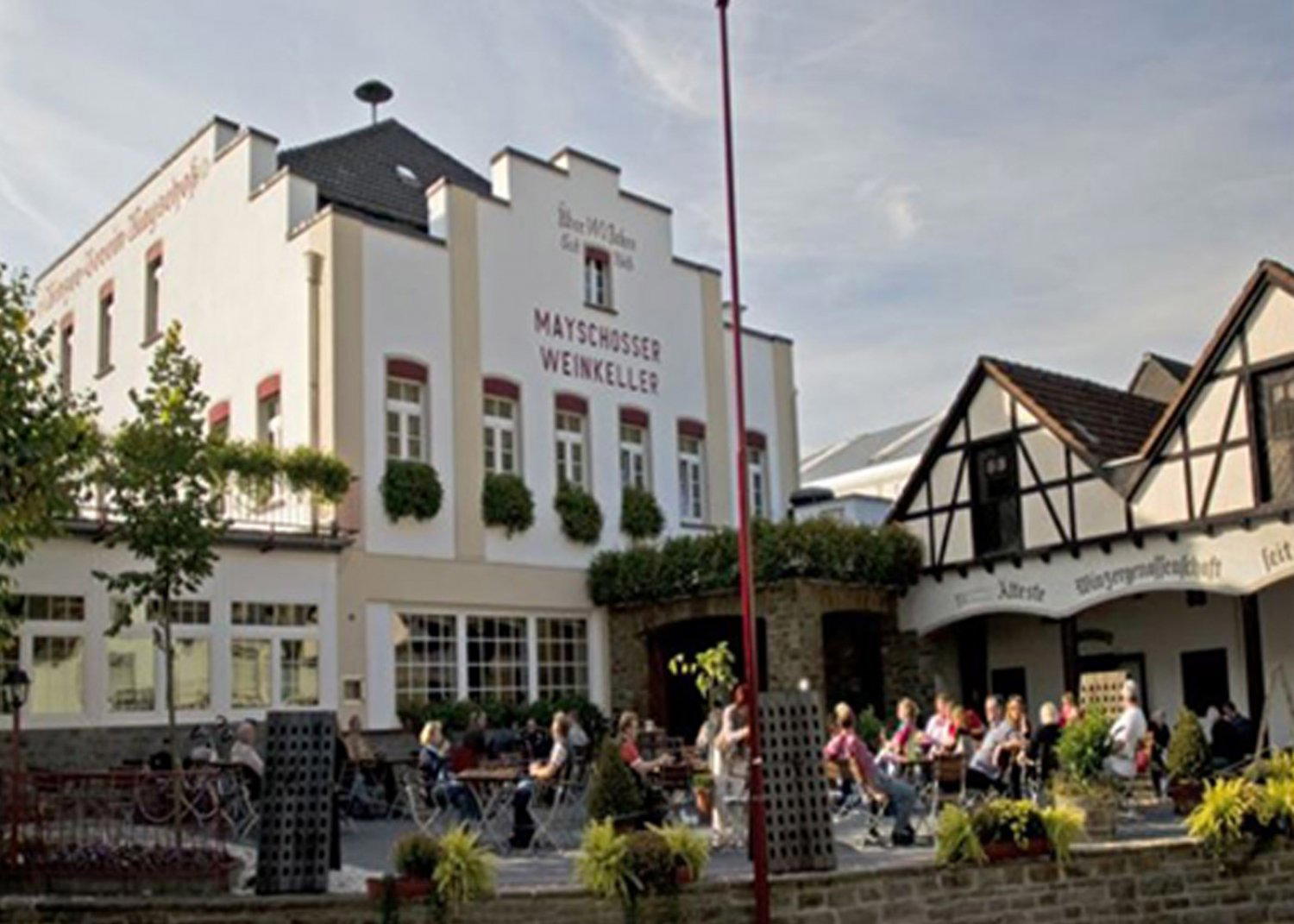
Casual market hall atmosphere with a lively buzz around the popular Döner counter and hearty bistro seating.