Brauerei zur Malzmühle is one of Cologne's oldest working breweries, anchored at Heumarkt 6 in the heart of the Altstadt. Where the city's fine-dining scene has moved steadily toward modern European formats, Malzmühle holds to the Kölsch hall tradition: long communal tables, ceramic Stangen, and a room that hasn't rearranged its priorities in decades.
Pearl is the En Primeur Club membership app — saves, bookings, and concierge access live there. Same editors, same standards.
- Address
- Heumarkt 6, 50667 Köln, Germany
- Phone
- +49 221 92160613
- Website
- brauereizurmalzmuehle.de
- Directions
- Get directions
 Saves & bookings on Pearl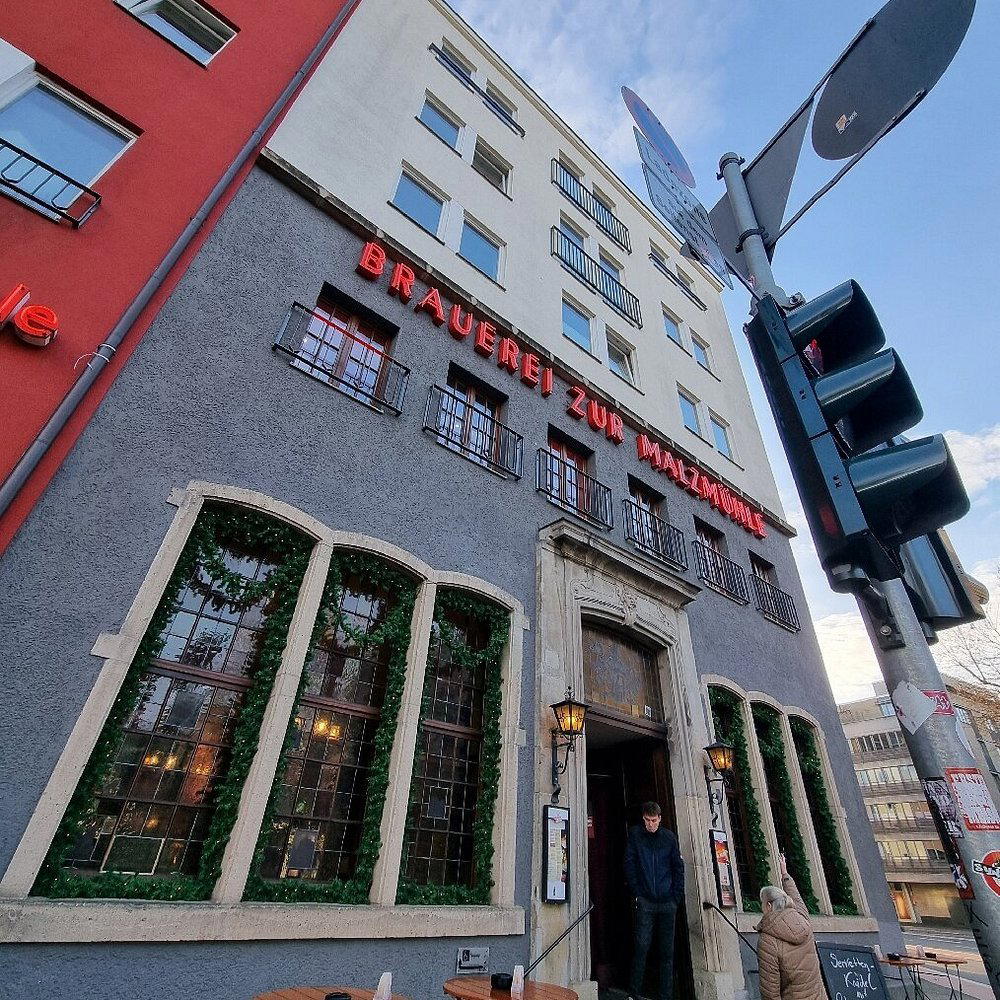
The Room Before the Beer
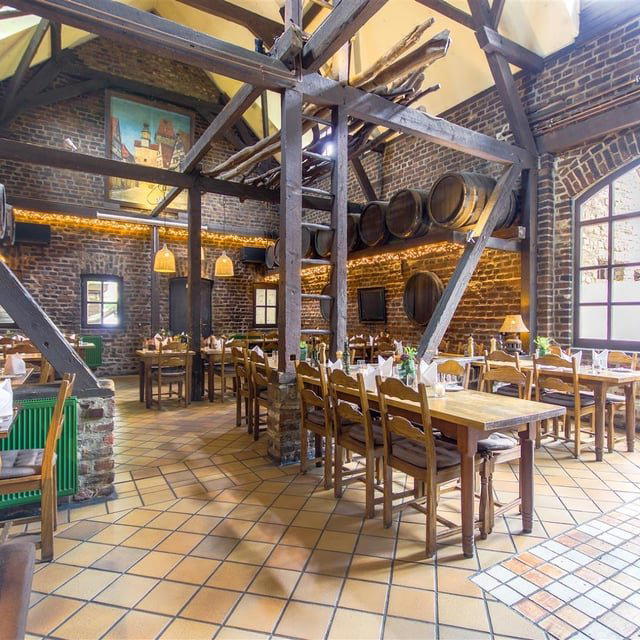
There is a particular architectural honesty to the great German brewery halls that no amount of reclaimed wood and Edison bulbs can manufacture. At Brauerei zur Malzmühle, occupying Heumarkt 6 on the square that anchors Cologne's Altstadt, the physical container does the talking before anyone has drawn a Kölsch. The ceiling sits low, the wood has absorbed decades of smoke and conversation, and the bench seating forces the kind of proximity that makes strangers argue about football by the second round. This is not a designed atmosphere. It is an accumulated one, and that distinction matters enormously in a city where hospitality has split sharply between the heritage hall format and the contemporary fine-dining tier represented by places like Ox & Klee and La Cuisine Rademacher.
The Heumarkt address is not incidental. The square sits at the edge of the Altstadt's densest tourist corridor, but Malzmühle has never oriented itself toward passing trade in the way that its immediate neighbours have. The building announces itself with quiet confidence. In the context of Cologne's brewery landscape, that positioning has proved durable.
What the Kölsch Hall Format Actually Demands
Germany's brewery hall formats are regionally specific to a degree that often surprises visitors expecting a generic beer-hall experience. The Kölsch hall is a distinctly Cologne institution, governed by its own informal codes: the beer arrives in 0.2-litre Stangen (straight cylindrical glasses) carried on circular trays called Kranz, the Köbes (waiter) keeps refilling until the guest covers the glass with a coaster, and the pace of service is calibrated to the beer's intended freshness window rather than the diner's hunger cycle. Malzmühle operates within this framework as a working brewery, meaning the Kölsch served here travels a shorter distance from fermentation tank to tap than at the dozens of Cologne bars and restaurants that stock regional brands without producing them on site.
This puts Malzmühle in a smaller subset of the city's drinking institutions. Cologne has a number of traditional Hausbrauereien with active brewing operations, and that group occupies a different position in the local hierarchy than the restaurant-bars and hotel venues that have adopted Kölsch as a menu item. For visitors comparing the hall tradition against the modern dining formats at La Société or the French-accented bistro cooking at Le Moissonnier Bistro, Malzmühle represents the opposite end of the culinary register, and deliberately so.
Interior Architecture as Argument
The editorial angle that matters here is not what the room contains but what it refuses to contain. There are no cocktail menus, no small-plates architecture, no lighting rigs adjusted for social media. The communal table format is load-bearing in a structural sense: it determines the social dynamics, the noise level, the dwell time, and the ordering rhythm. Bench seating along shared tables means that the room fills more completely than equivalent floor plans with individual tables, and the noise floor rises accordingly. By mid-evening, Malzmühle produces the particular acoustic density of a space where many conversations compete at equal volume, which is either the point or the problem depending on what you came for.
That interior logic separates it from Cologne's contemporary fine-dining venues, where spatial separation, acoustic control, and table service choreography are treated as part of the dining experience. At maiBeck, or further afield at destination restaurants like Vendôme in Bergisch Gladbach or Schwarzwaldstube in Baiersbronn, the room is engineered for a specific kind of attentive dining. Malzmühle engineers for a different kind of attention entirely: sociability, volume, and the efficient movement of cold beer.
Where Malzmühle Sits in Cologne's Eating and Drinking Map
Cologne's dining scene in 2024 has a pronounced upper tier of modern-European kitchens, several of which carry Michelin recognition, and a lower tier that runs from casual international to the tourist-facing Altstadt restaurants serving Himmel un Äd and Sauerbraten to every nationality simultaneously. The traditional Brauerei format sits outside both tiers in a category that is valued locally for authenticity and used by visitors as orientation into Cologne's specific food culture rather than as a dining destination in its own right.
The food served in brewery halls of this type is functional rather than ambitious. Rheinische Hausmannskost, the regional home-cooking tradition, anchors most menus: braised meats, fried potatoes, bread-based starters, and the mustard-heavy accompaniments that the local cuisine has always favoured. None of this competes with the technical ambition on display at Germany's leading kitchens, whether that's Aqua in Wolfsburg, JAN in Munich, or Victor's Fine Dining by Christian Bau in Perl. But that comparison misses the point. Malzmühle is not trying to occupy that tier, and its longevity suggests that clarity of purpose has served it better than ambition might have.
An evening at Malzmühle functions as a useful change of pace from serious tasting menus and a reminder that German hospitality spans more than Michelin-listed rooms. The same instinct applies globally: the communal format and craft-production ethos that defines places like Lazy Bear in San Francisco has its own vernacular in Cologne's brewery halls, even if the aesthetic is entirely different.
Planning a Visit
Brauerei zur Malzmühle sits on Heumarkt 6, walking distance from the Dom and the main Altstadt cluster of bars and restaurants, which puts it in the middle of Cologne's highest-footfall evening zone. The Heumarkt square itself connects easily to public transport, making arrival direct without a car. Because the hall format prioritises throughput over reservation control, walk-in access is generally possible, though weekend evenings during Cologne's major events, including Karneval in February and the Christmas market period from late November, compress available space significantly. International visitors who have experienced the formal end of the German dining spectrum will find Malzmühle a useful counterpoint. And for those arriving from further afield via the kind of high-wire technique found at Le Bernardin in New York City, the directness of a Cologne brewery hall will read less as a step down than as a shift in register entirely.
At a Glance
Comparable venues nearby, for context on price, style, and recognition.
| Venue | Price | Notes |
|---|---|---|
| Brauerei zur MalzmühleThis venue — the venue you are viewing | $$ | Not listed |
| Funkhaus | $$ | Altstadt/Nord, Modern German Bistro |
| der gockel | $$ | Altstadt/Süd, German Gastropub - Grilled Chicken & Kölsch |
| Markthalle Körnerstraße | $$ | Ehrenfeld, German Market Hall Bistro with Turkish Döner |
| Poké Makai | $$ | Altstadt/Nord, Hawaiian Poké Bowls |
| Artistanbul Meze | $$ | Altstadt/Nord, Authentic Turkish Meze |
Continue exploring
More in Cologne
Restaurants in Cologne
Browse all →
Bars in Cologne
Browse all →

Hotels in Cologne
Browse all →

At a Glance
- Rustic
- Lively
- Classic
- Well Known
- Group Dining
- Casual Hangout
- After Work
- Historic Building
- Beer Program
- Local Sourcing
Current opening hours
- Monday
- 12–11 PM
- Tuesday
- 12–11 PM
- Wednesday
- 12–11 PM
- Thursday
- 12–11 PM
- Friday
- 12 PM–12 AM
- Saturday
- 12 PM–12 AM
- Sunday
- 12–11 PM
Hours can change for holidays and private events. Last verified .
Traditional Brauhaus atmosphere with hearty communal dining and lively Kölsch service.