Our verdict
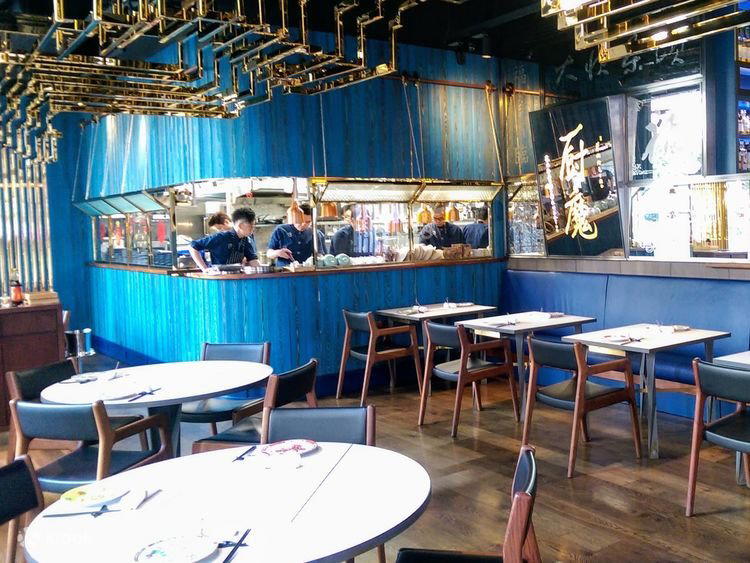
"While this noodle shop offers little in the way of atmosphere (expect glass-topped tables, flimsy paper napkins, and soda out of the can), the won ton noodles are served quick and delicious, making this the perfect pit-stop for a fast and cheap lunch."

Pearl is the En Primeur Club membership app, where members save venues, book tables and use the concierge.

The menu
What to order
- Shrimp Wonton Noodles
- Beef Brisket Noodles
- Beef Tendon Noodles
Wellington Street, Bowls First
Central Hong Kong compresses several food cities into one district. Within a few blocks of Wellington Street, you can move from hotel fine dining at Caprice to Japanese-French innovation at Ta Vie to Cantonese heritage cooking at Forum. Mak's Noodle, at number 77, occupies a different register entirely: a tightly run, counter-and-table shop where the transaction is fast, the bowls are small, and the wonton noodle soup has been refined over decades rather than seasons.
That compression matters. Central is not the neighbourhood you typically associate with affordable, high-craft noodle work. The rents are among the highest in the city, and the dining room footprint reflects that reality. Tables are close, turnover is quick, and the room operates on the logic of a professional kitchen rather than a leisurely lunch venue. For visitors arriving from the direction of the IFC, past Le Salon de Thé de Joël Robuchon Hong Kong, the shift in register is immediate and deliberate.
What Wonton Noodle Soup Actually Means in Hong Kong
Hong Kong's wonton noodle tradition is one of the most technically specific noodle forms in Cantonese cooking. The variables are narrow but unforgiving: the noodle gauge and alkalinity, the wonton filling ratio and wrap tightness, the clarity and depth of the broth, and the volume of the bowl itself. That last point is worth pausing on. Mak's serves its noodle soup in smaller portions than visitors often expect. This is not an oversight. The convention reflects a philosophy that the bowl should be finished while still hot and that quality, not quantity, is the argument being made.
Across the city, wonton noodle shops operate on a spectrum from mass-production canteens to heritage shops that have maintained consistent standards for generations. Mak's sits firmly in the latter category and has attracted sustained recognition as a reference point for the form. Comparisons with other noodle-focused venues across the city, including Block 18 Doggie's Noodle in Yau Tsim Mong, show how differently operators interpret the same tradition across neighbourhoods and price tiers.
The Central Address and What It Means for Timing
Wellington Street during weekday lunch hours is not a casual destination. Office workers from the surrounding financial district fill the area from roughly midday to half one, and Mak's draws a consistent crowd during that window. Visiting outside the peak lunch rush, either in the mid-morning or in the mid-afternoon gap before dinner service, is the practical choice for anyone who wants to settle in rather than queue. The shop does not operate on a reservation model, so timing is the primary planning variable.
For those building a broader Central itinerary, the neighbourhood is dense with contrasting options across the price range. At the higher end, Amber and 8½ Otto e Mezzo Bombana represent the kind of multi-course, formally structured dining that occupies the opposite end of the spectrum from Mak's. Further afield, the contrast extends to venues like the Former Jumbo Floating Restaurant in Aberdeen and the more casual AMMO in Central and Western. Mak's functions well as either a standalone stop or a quick, grounding meal before or after something more elaborate.
A Reference Point, Not a Novelty
The category of heritage noodle shops in Hong Kong carries genuine critical weight. These are not novelty destinations drawing attention because of scarcity or theatrics. The sustained interest in places like Mak's reflects a broader pattern in how serious food culture operates in the city: there is a high floor for technical execution, and shops that maintain standards across decades earn a durable reputation that newer openings have to work against. That reputation is built on consistency, not on changing menus or seasonal pivots.
This stands in direct contrast to the innovation-led model at venues like Ta Vie, where the menu is the argument, or at destination restaurants across other cities, such as Le Bernardin in New York City or Lazy Bear in San Francisco, where format and chef voice drive the experience. At Mak's, the argument is the bowl. The shop does not need to update its premise to remain relevant; the relevance is embedded in the precision of the product itself.
Across Hong Kong's broader noodle and regional Chinese spectrum, venues in different districts make similar cases for tradition over novelty. Chin Sik in Tsuen Wan, Lei Garden in Sha Tin, and Hoi Tin Garden in Tuen Mun each operate with their own neighbourhood logic. The discipline of Mak's, anchored in Central, is shaped by its address as much as its kitchen.
Planning Your Visit
Mak's Noodle is located at 77 Wellington Street in Central, accessible on foot from the Central MTR station in under ten minutes. No reservations are accepted, which means the queue during peak lunch hours is real and should factor into any planning. The format is walk-in, seat-when-available, and the pace of service reflects a kitchen built for throughput. Payment and ordering are handled at the table. For a fuller picture of where Mak's sits within the city's dining options across price points and neighbourhoods, our full Hong Kong restaurants guide maps the broader scene, including venues from Enchanted Garden Restaurant in the Islands to King Of Soybeans in Wong Tai Sin and Habib's Indian and Middle Eastern Food in Kwun Tong.
Frequently asked questions
Where exactly is Mak's Noodle?
Mak's Noodle is located at 77 Wellington St, Central, Hong Kong, Hong Kong.
How does Mak's Noodle fit into Hong Kong's wonton noodle tradition compared to other Central shops?
Hong Kong's wonton noodle tradition is one of the most codified noodle forms in Cantonese cooking, and Central's Wellington Street corridor puts Mak's within walking distance of the district's full dining spectrum. Among heritage noodle shops, Mak's holds a reference position, not as a novelty or a destination built on scarcity, but as a shop assessed on the same technical criteria that Hong Kong's food community applies to the category as a whole.
What do people recommend at Mak's Noodle?
Wonton noodle soup is the dish that draws most visitors to 77 Wellington Street. Within Hong Kong's wonton noodle tradition, the variables are narrow: the texture of the egg noodles, the quality of the shrimp-filled wontons, and the clarity of the broth. Those three elements are what regulars assess on every visit.
Is Mak's Noodle reservation-only?
No reservations are accepted at Mak's Noodle. During weekday lunch hours, the surrounding Central financial district generates significant foot traffic on Wellington Street, so arriving outside the midday rush, before noon or after 1:30pm, reduces wait time considerably.
What's the defining dish or idea at Mak's Noodle?
The defining idea is technical fidelity to Hong Kong's wonton noodle form. This is a style of Cantonese cooking with narrow specifications and little room for variation: noodle texture, wonton filling, and broth each carry equal weight. Mak's operates as a reference point for how that form is executed at a serious level.
Do they accommodate allergies at Mak's Noodle?
Given the focused, high-volume format at 77 Wellington Street, guests with shellfish allergies should note that shrimp wontons are central to the menu. Contacting the venue directly before visiting is advisable.
Should I splurge on Mak's Noodle?
Mak's Noodle sits in the heritage noodle shop category, not the fine dining tier, so the spend per head is modest by Central Hong Kong standards. The case for visiting is not about price point, it's about eating a technically specific Cantonese form at an address that carries genuine critical weight among Hong Kong's food community.
Style and Standing
A quick peer check to anchor this venue’s price and recognition.
| Venue | Cuisine | Price | Awards | Notes |
|---|---|---|---|---|
| Mak's NoodleThis venue (the venue you are viewing) | Traditional Cantonese Wonton Noodles | $10–20 | Not listed | Not listed |
| Ta Vie | Modern French-Japanese Fine Dining | $300–500 | 3 Michelin Stars · World's 50 Best #68 | Japanese - French, Innovative |
| 8 1/2 Otto e Mezzo Bombana (Hong Kong) | 3 Michelin-Star Italian Fine Dining | $200–300 | 3 Michelin Stars · World's 50 Best #94 | Italian |
| Estro | Modern Neapolitan Italian | $150–200 | 1 Michelin Star · World's 50 Best #32 | Wine Bar, Italian |
| Feuille | Modern Vegetable-Forward French | $200–300 | 1 Michelin Star · World's 50 Best #93 | French Contemporary |
| Mono | Modern Latin American Fine Dining | $150–200 | 1 Michelin Star · World's 50 Best #46 | Latin American |