Tabelog 100 #2
Our verdict
Maison de Yuron occupies a quiet address in Akasaka, Minato City, placing it inside one of Tokyo's most concentrated corridors for serious French-Japanese dining.

Pearl is the En Primeur Club membership app, where members save venues, book tables and use the concierge.
Akasaka After Dark, and Before It
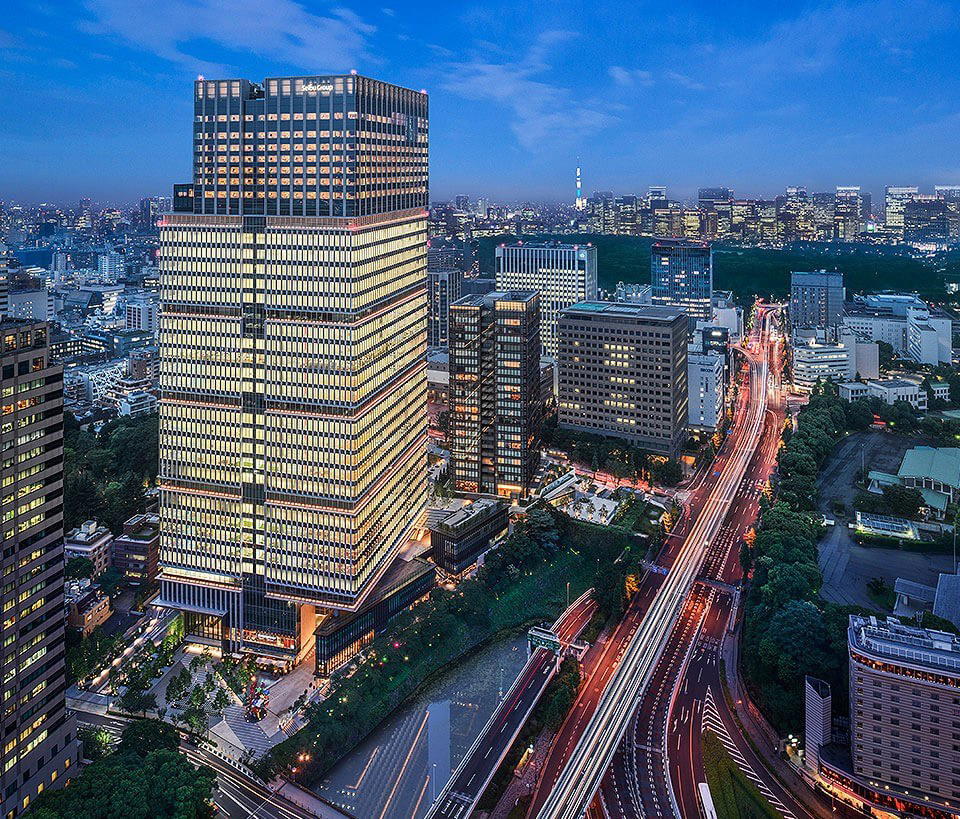
Akasaka has long operated as one of Tokyo's more divided dining districts. By day, the neighbourhood around 4-chome runs on business lunches and neighbourhood regulars who know which doors to try before the evening crowds arrive. By night, the same streets carry a different charge: expense accounts, longer menus, and rooms that feel arranged for occasion rather than convenience. Maison de Yuron sits within this rhythm at 4 Chome-13-18 Akasaka, Minato City, and the address alone places it inside a competitive set that includes some of the city's more demanding French-influenced kitchens.
That positioning matters because Akasaka's dining tier is not homogeneous. The district supports everything from quick yakitori to multi-course tasting formats that run past midnight. What separates the upper tier from the middle is not price alone but the degree to which a room shifts its register between service periods. The leading addresses in this bracket run genuinely different operations at lunch and dinner, not just a shorter version of the evening menu with the lights turned up.
The Lunch and Dinner Divide
In Tokyo's French-influenced dining tier, the lunch-versus-dinner distinction carries more structural weight than it does in most European cities. A kaiseki counter like RyuGin or a French house like L'Effervescence uses the lunch sitting as a controlled entry point: fewer courses, a narrower price band, and a room that tends to move faster. The evening sitting is where the kitchen extends its vocabulary, where the pacing slows, and where the full argument of the menu becomes legible.
This divide is partly economic and partly theatrical. Tokyo's leading French addresses have historically used lunch as an access mechanism, a way for the kitchen to run a full section without requiring the outlay that a three-hour evening demands of a guest. For the diner, it represents the most information-dense way to assess a room before committing to the longer format. Maison de Yuron's Akasaka address places it squarely in a neighbourhood where that calculus is well understood by the clientele.
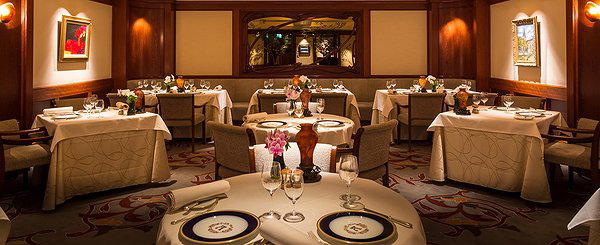
The contrast with venues like Sézanne, which operates at the very leading of Tokyo's French bracket and prices its dinner accordingly, is instructive. Where Sézanne pitches itself as a destination format from the first course, mid-tier Akasaka addresses often use the lunch service to carry a different identity: lighter, faster, and more forgiving of impromptu visits. Whether Maison de Yuron follows this model or runs a unified experience across both services is something the room itself communicates better than any description.
The Neighbourhood as Context
Minato City contains several of Tokyo's most recognisable dining corridors, and Akasaka is among the more layered. It is not Ginza, where the density of Michelin-rated counters creates a kind of formal pressure on every address. Nor is it Shibuya, where the demographic skews younger and the formats more casual. Akasaka occupies a middle register: professional, relatively quiet by Tokyo standards, and populated by a clientele that tends to know what it wants before it arrives.
That neighbourhood character shapes how a venue like Maison de Yuron is likely to read. Akasaka rewards precision over spectacle. A room that tries to compete on visual drama tends to look strained against the district's more composed addresses. The kitchens that have earned sustained attention in this part of the city, including Crony, which operates its innovative French format in the broader Minato orbit, do so through consistency and a clear sense of what they are trying to do, rather than through the kind of seasonal reinvention that animates Ginza's higher-stakes counters.
For comparison points further afield, the French-Japanese synthesis that defines much of Tokyo's upper dining tier has close analogues elsewhere in Japan. HAJIME in Osaka operates at the extreme end of that synthesis, with three Michelin stars and a format that reads as closer to French haute cuisine than to anything recognisably kaiseki. Gion Sasaki in Kyoto takes the opposite approach, anchoring firmly in Japanese technique while absorbing French influence at the edges. Akasaka venues tend to occupy the middle of that spectrum, which is precisely why the district attracts the clientele it does.
Placing Maison de Yuron in the Tokyo French Scene
Tokyo's French restaurant scene has fractured into at least three distinct tiers over the past decade. Below that sits a second tier of serious but less internationally profiled French kitchens, technically accomplished, neighbourhood-rooted, and often more interesting to visit precisely because the pressure of external expectation does not shape every decision the kitchen makes. A third tier runs through the brasserie and bistro format, where the French reference is more atmospheric than technical.
What the address communicates is intent: 4-chome Akasaka is not where a casual bistro opens. The rents and the clientele select for a certain seriousness of purpose. For points of reference across Japan's broader French-influenced scene, akordu in Nara and Bistro Ange in Toyohashi show how the French format adapts outside major urban centres, while Goh in Fukuoka demonstrates what a fully individual creative voice looks like within a broadly French-Japanese framework. In Tokyo itself, Harutaka represents the counter-format alternative for diners whose instinct runs toward Japanese precision over European structure.
For those calibrating against international reference points, the French fine dining conversation in Tokyo has more in common with New York's technically rigorous upper tier, Le Bernardin for classical discipline, Atomix for the kind of cross-cultural fluency that characterises the best of both cities, than it does with Paris, where the tradition carries different institutional weight.
For a fuller picture of where Maison de Yuron sits within Tokyo's current dining moment, the EP Club Tokyo restaurants guide maps the city's active tier across neighbourhoods and formats.
Know Before You Go
- Address: 4 Chome-13-18 Akasaka, Minato City, Tokyo 107-0052, Japan
- Neighbourhood: Akasaka, Minato City, professional district, quieter than Ginza, suited to focused dining
- Nearest Metro: Akasaka Station (Chiyoda Line) or Akasaka-mitsuke Station (Ginza/Marunouchi Lines) are the closest access points for the 4-chome address
- Booking: Booking details not publicly listed, direct contact recommended; walk-ins at this Akasaka tier carry risk, particularly for evening service
- Pricing: Price range; the address and neighbourhood position suggest mid-to-upper bracket for Tokyo French dining
- Ideal time to visit: If lunch service runs, it is the lower-commitment entry point; evening sittings in Akasaka typically require more lead time
- Related venues: See also Crony, L'Effervescence, and Sézanne for peer-set comparison within Tokyo's French tier
Frequently asked questions
Is Maison de Yuron good for families?
Maison de Yuron sits in Akasaka's 4-chome, a district that skews toward business dining and adult-oriented evening meals. The French-influenced format typical of this neighbourhood tier tends to suit couples, corporate tables, and serious diners rather than families with young children. That said, lunch service in Tokyo's French restaurants often carries a more relaxed tempo than dinner, which may suit older children better.
Is Maison de Yuron better for a quiet night or a lively one?
Akasaka's 4-chome corridor operates at a measured register, this is not the high-energy density of Shinjuku or the after-midnight pulse of Roppongi. Maison de Yuron, positioned within that neighbourhood, reads as the kind of address suited to conversation-first evenings: a business dinner, an anniversary, or a deliberate meal with a small group. Expect composure over cacophony.
How does Maison de Yuron compare to other French restaurants in Akasaka and Minato City?
Minato City contains some of Tokyo's most competitive French dining, from Michelin-recognised rooms in Azabu and Hiroo to the business-lunch circuit that defines Akasaka's 4-chome. Maison de Yuron occupies the Akasaka address at 4 Chome-13-18, placing it within walking distance of the district's corporate and embassy clientele. Without a documented award tier, it sits in a bracket where kitchen consistency and neighbourhood positioning carry more weight than star count alone.
What's the signature dish at Maison de Yuron?
In Tokyo's French dining tier, the bracket that includes Akasaka addresses alongside Ginza and Minami-Aoyama counterparts, kitchens typically rotate signatures seasonally, making a single fixed dish less common than a chef-driven tasting progression. Contacting the venue directly is the most reliable way to confirm current offerings.
What part of town is Maison de Yuron in?
Maison de Yuron is located at 4 Chome-13-18 Akasaka, Minato City, Tokyo 107-0052, Japan, Tokyo.
Can I walk in to Maison de Yuron?
Walk-in availability at French restaurants in Akasaka's dining tier is limited, particularly at dinner. Tokyo's mid-to-upper French segment operates almost entirely on reservations, and addresses in Minato City's 4-chome area rarely hold significant same-day capacity. Booking in advance is the standard approach; the venue's website or phone contact would confirm current policy.
Reputation First
Comparable venues nearby, for context on price, style, and recognition.
| Venue | Cuisine | Price | Awards | Notes |
|---|---|---|---|---|
| Maison de YuronThis venue (the venue you are viewing) | Nouvelle Chinoise | $100–150 | Tabelog 100 #2 | Not listed |
| Akasaka Rikyu Ginza ten | Traditional Cantonese fine dining in Ginza | $100–150 | Tabelog 100 #100 | Chūō |
| Kakyubou | Orthodox Chinese Fine Dining | $150–200 | Michelin Plate | Minato |
| 飘香 广尾店 | Traditional Sichuan Omakase | $200–300 | Tabelog 100 #74 · Black Pearl 1 Diamond | Hiroo |
| Tsugumi | Modern Chinese Tasting Menu | $150–200 | Tabelog 100 #3 | Minato |
| Xao Xiong Fan Dian | Refined Old Sichuan Cuisine | $200–300 | 1 Michelin Star | Minato |
Recognition history
Dated appearances from independent guides and award organizations, with the underlying list record or original source where available.
Tabelog 100 #2 · No. 2
Tabelog · Tabelog 100 - Chinese cuisine - TOKYO - 2026