Macon Bistro
A Chevy Chase neighborhood bistro on Connecticut Avenue NW, Macon Bistro occupies the quieter, residential end of Washington D.C.'s dining spectrum, where the emphasis falls on approachable cooking and a room that feels genuinely local rather than destination-driven. It sits in a part of the city where independent restaurants shape the character of blocks rather than compete for tasting-menu press coverage.
Pearl is the En Primeur Club membership app — saves, bookings, and concierge access live there. Same editors, same standards.
- Address
- 5520 Connecticut Ave NW, Washington, DC 20015
- Phone
- +12022487807
- Website
- macondc.com
- Directions
- Get directions
 Saves & bookings on Pearl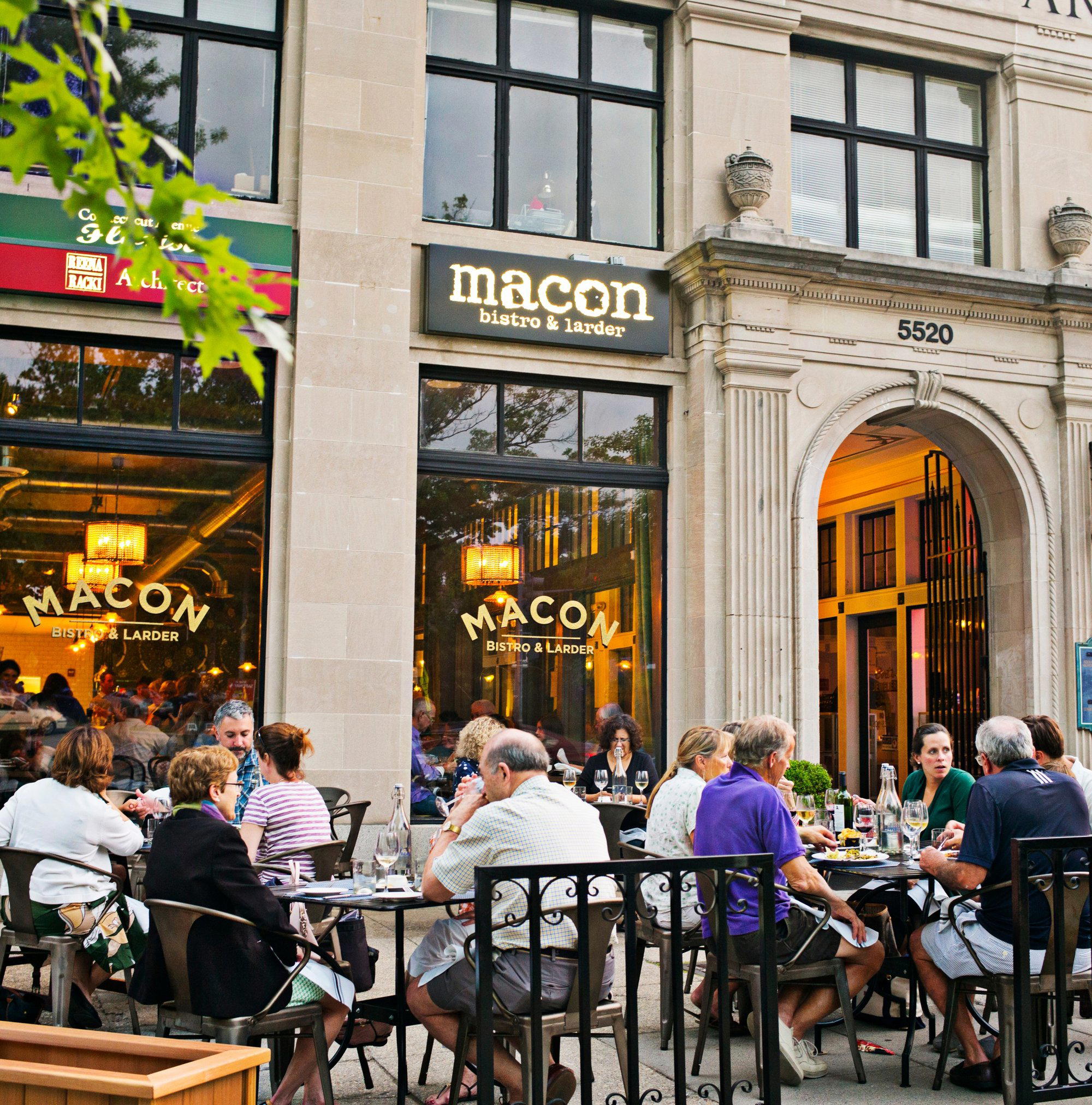
Connecticut Avenue at Its Most Residential
The stretch of Connecticut Avenue that runs through Chevy Chase tells a different story about Washington dining than the corridors that attract the city's headline tasting menus and embassy-circuit expense accounts. At this northern reach, the avenue narrows into a genuinely residential rhythm: dry cleaners, independent bookshops, and neighborhood restaurants that measure success by return visits rather than reservation queues. Macon Bistro, at 5520 Connecticut Ave NW, sits inside that rhythm. The room reads as a bistro in the functional, unpretentious sense of that word, a place built around the needs of the surrounding blocks rather than around a culinary thesis. That positioning matters in a city where the distance between neighborhood-anchored and destination-driven has widened considerably over the past decade.
The Context: D.C.'s Two-Speed Dining Scene
Washington's restaurant culture has split into increasingly legible tiers. At the upper end, the city now sustains a cluster of technically ambitious, nationally recognized programs. Jônt runs a multi-course contemporary French format that competes with the country's most demanding tasting-menu rooms. minibar has held Michelin recognition while operating in a molecular register that few D.C. kitchens attempt. Albi and Causa each brought focused regional identities, Middle Eastern and Peruvian respectively, to the $$$$ bracket. Oyster Oyster carved out a distinct lane with a sustainability-led vegetable program at the $$$ level. Against that backdrop, Chevy Chase neighborhood bistros occupy a different competitive set entirely, one defined less by culinary ambition and more by consistency, accessibility, and the capacity to serve as a genuine local.
What a Neighborhood Bistro Format Actually Means
The bistro category in American dining has drifted far from its French origins, the original model centered on affordable daily plates, a short wine list weighted toward approachability, and a room that functioned as a community anchor rather than a dining event. American bistros absorbed that template and adapted it: longer menus, more eclectic sourcing, and a broader price range that blurs the line between casual and considered. The format tends to succeed when it commits to the neighborhood-anchor function rather than hedging toward destination appeal. A bistro that tries to compete with the tasting-menu tier on ingredient prestige typically ends up between categories rather than owning one. The leading neighborhood bistros in American cities, and the format appears across the country, from comparable residential corridors in Chicago and San Francisco to the outer boroughs of New York, hold their ground by being precisely and only what the surrounding blocks need: reliable, characterful, and open on a Tuesday.
Reading the Meal: A Bistro's Natural Arc
The multi-course progression at a neighborhood bistro differs structurally from the sequenced tasting-menu format that defines restaurants like Lazy Bear in San Francisco, Alinea in Chicago, or The French Laundry in Napa. Where those rooms control pace, portion, and sequence with precision, a bistro hands that control to the diner. You compose your own arc: a shared starter, a main that anchors the meal, a dessert if the room's energy warrants it. That flexibility is the format's appeal and its challenge. It rewards diners who know what they want from a kitchen rather than those seeking curation. In a city with many curated experiences, from Single Thread Farm in Healdsburg to Blue Hill at Stone Barns in Tarrytown at the farm-to-table end, a bistro's a-la-carte freedom carries genuine value. The meal at a well-run bistro has a beginning you choose, a middle you negotiate, and an end you can reasonably predict. That predictability is not a weakness; it is the point.
Nationally, the bistro format has produced particularly enduring neighborhood institutions in American dining. Emeril's in New Orleans and Le Bernardin in New York City represent the upper end of what American restaurant ambition looks like when it matures into institution. At the neighborhood level, the calculus is different: durability is measured in local regulars rather than critic cycles. D.C.'s Chevy Chase corridor has several restaurants that have sustained that kind of tenure, and Macon Bistro belongs to that tradition of residential-block anchoring.
Placing Macon in D.C.'s Northwest Quadrant
The Northwest quadrant of Washington holds the city's densest concentration of residential dining, neighborhoods like Cleveland Park, Tenleytown, and Chevy Chase that generate consistent weeknight demand from a professional, locally-rooted population. That demographic context shapes what neighborhood restaurants here actually need to do. The competition for those diners runs laterally across the quadrant rather than vertically against downtown tasting menus. A successful Chevy Chase bistro competes with other accessible neighborhood formats in the immediate corridor, not with Providence in Los Angeles or Addison in San Diego. Understanding that competitive geometry matters when assessing what Macon Bistro is actually trying to do, and whether it succeeds on those terms. Comparable D.C. neighborhood formats, including the legacy of The Inn at Little Washington at the fine-dining end and newer entrants like Atomix in New York City setting the international benchmark for controlled multi-course progressions, bracket the wide range of what restaurant ambition looks like in and around the capital region. The restaurant operates nowhere near those extremes, and that is precisely its positioning. Internationally, restaurants like 8½ Otto e Mezzo Bombana in Hong Kong illustrate how far the Italian bistro template can travel when applied at a different price point and culinary register, a useful reference for understanding how elastic the format actually is across markets.
Planning a Visit
The restaurant's address at 5520 Connecticut Ave NW places it in upper Chevy Chase, accessible by the Red Line Metro (Friendship Heights station sits within walking distance) and straightforwardly reachable by car or rideshare from most D.C. neighborhoods. Chevy Chase has limited late-night dining options compared to downtown and Shaw, which makes the restaurant's position as a neighborhood anchor more pronounced during evening hours. Hours, pricing, and reservation policy are listed separately below.
Cuisine and Recognition
Comparable venues nearby, for context on price, style, and recognition.
| Venue | Cuisine | Price | Notes |
|---|---|---|---|
| Macon BistroThis venue — the venue you are viewing | Southern-French Bistro Fusion | $$ | Not listed |
| The Hamilton | Modern American Steakhouse with Sushi | $$ | East End |
| Bub and Pop's | Philly-Style Deli Sandwiches | $$ | Eckington |
| Makers Union | Modern American Gastropub | $$ | Southwest Waterfront |
| Old Ebbitt Grill | Classic American Steakhouse & Raw Bar | $$ | East End |
| Milk & Honey - The Wharf | Southern Inspired Kitchen | $$ | Southwest Waterfront |
Continue exploring
More in Washington DC
Restaurants in Washington DC
Browse all →
Bars in Washington DC
Browse all →
Hotels in Washington DC
Browse all →
At a Glance
- Cozy
- Classic
- Brunch
- Date Night
- Historic Building
- Craft Cocktails
- Beer Program
Current opening hours
- Monday
- 5–9 PM
- Tuesday
- 5–9 PM
- Wednesday
- 5–9 PM
- Thursday
- 5–9 PM
- Friday
- 11 AM–10 PM
- Saturday
- 11 AM–10 PM
- Sunday
- 10 AM–3 PM
Hours can change for holidays and private events. Last verified .
Warm, friendly neighborhood atmosphere in a historic building with quality cooking and service.