Lluerna




1 Michelin Star · Guía Repsol 2 Soles · Macarfi 8.5 Food Rating
Our verdict
A Michelin-starred family restaurant on Avinguda Pallaresa, Lluerna applies modern technique to Catalan tradition with a strict commitment to named local producers: Penedès chicken, Duroc pork, Xisqueta lamb. The kitchen operates on set menus only, ranked #538 in Opinionated About Dining's Europe list for 2024. A serious address that rewards those willing to cross the Besòs.

Pearl is the En Primeur Club membership app, where members save venues, book tables and use the concierge.
The menu
What to order
- Tempura Maitake and Mushroom Tea
- Fricandó Fritter
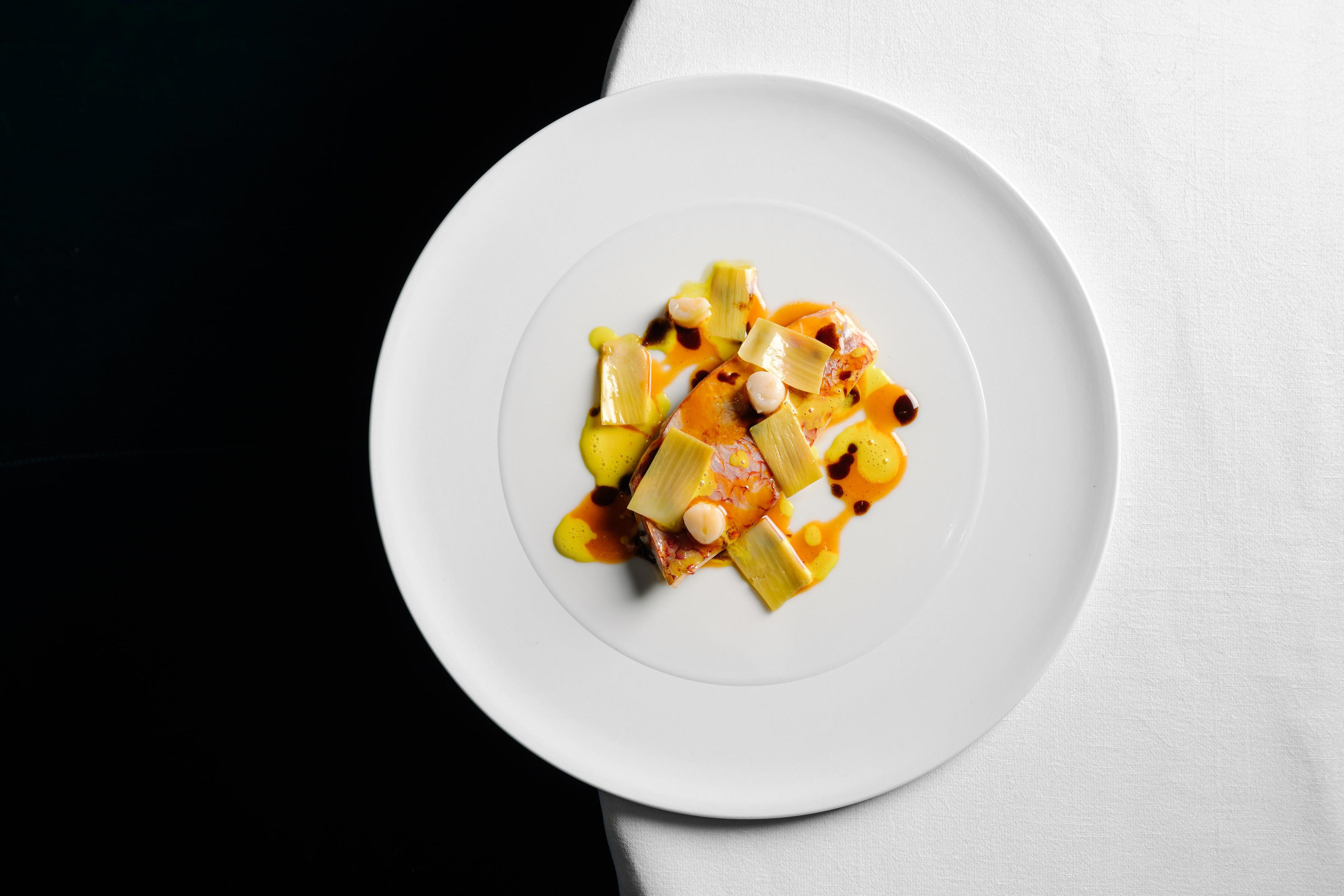
- Mediterranean Seafood Salad with Jerusalem Artichoke
Across the Besòs: Why Santa Coloma Has a Michelin Table Worth the Trip
The restaurants that earn sustained critical attention in greater Barcelona tend to cluster inside the city's tourist-facing districts, where visibility and footfall reinforce each other. Lluerna, on Avinguda Pallaresa in Santa Coloma de Gramenet, operates outside that logic. Santa Coloma sits on the northern bank of the Besòs river, a working-class municipality that shares a metropolitan area with Barcelona but not its dining reputation. The fact that a Michelin-starred kitchen has taken root here, and held its star through consecutive years, says something specific about how Catalan fine dining has evolved: the most committed producer-focused cooking does not always follow the money to the city centre. Sometimes it stays close to the farms.
Lluerna occupies a different coordinate: family-run, deliberately unhurried, and organised around the Slow Food principle that sourcing decisions are culinary decisions. That positioning is not a compromise; it is an argument about what a restaurant should be.
The Room and the Kitchen in View
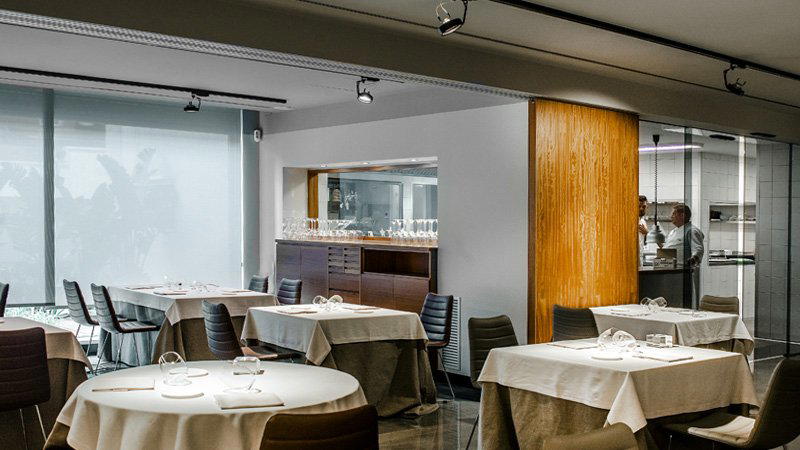
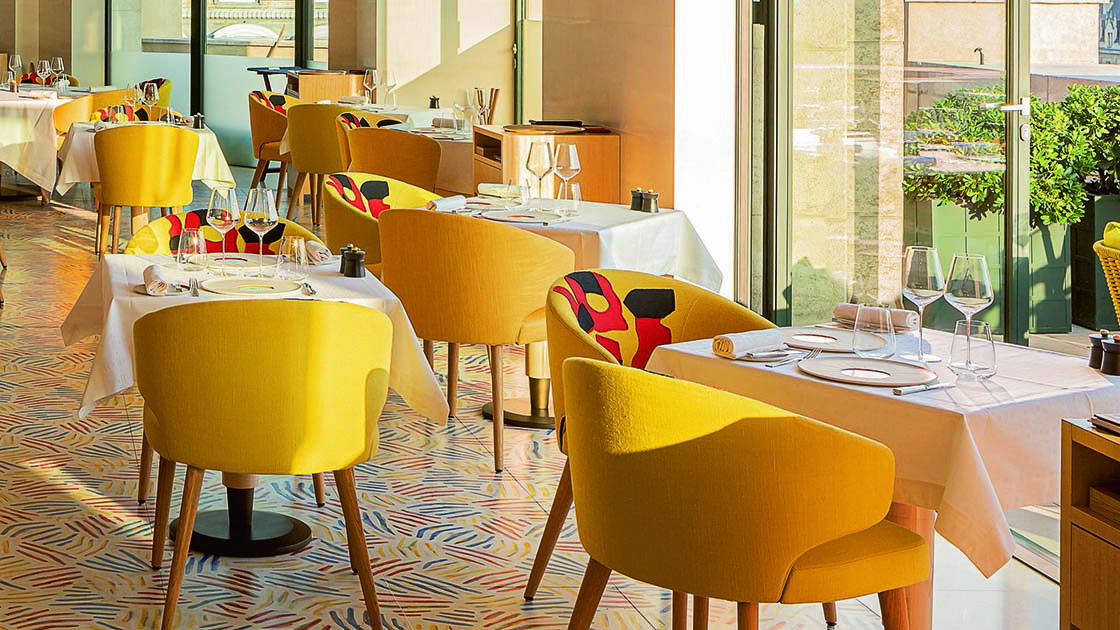
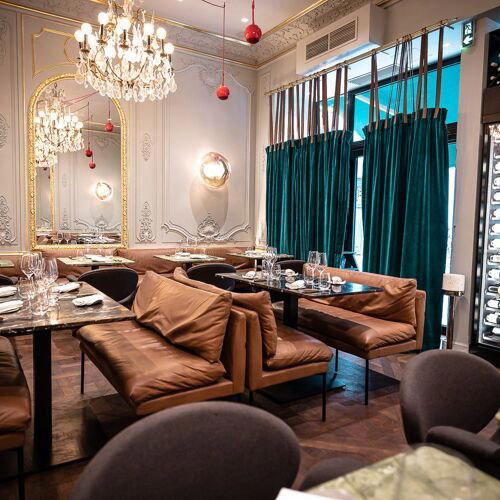
Walking into Lluerna, the first thing the room communicates is intentionality. The kitchen is visible from both the main dining room and a chef's table, a physical arrangement that is as much a statement as a convenience. In Spanish restaurant culture, where back-of-house opacity has historically been the default, an open kitchen at this level signals that the cooking process itself is part of what guests are paying to witness. The provenance of ingredients is explained to guests when each dish arrives, which means the meal functions partly as a live account of regional Catalan agriculture. This is not decorative storytelling. It is the operating principle made audible.
The atmosphere that results is deliberately decompressed. There is no performance anxiety in the pacing, no sense that covers are being turned or that the evening has been engineered to conclude by a certain hour. This is the characteristic of family-run Slow Food-aligned restaurants that distinguishes them from the more choreographed end of the tasting-menu market. The dining room reflects that ethos rather than contradicting it.
Catalan Produce and the Logic of Named Suppliers
Spain's relationship with named-source ingredients is long and specific. The most discussed expression of it is the Ibérico ham tradition: the Denominación de Origen system for jamón, the insistence on breed (pata negra), feed regime (bellota or cebo), and curing origin (Jabugo, Guijuelo, Extremadura) as determinants of value. That same logic, of treating provenance as a primary quality signal rather than a marketing addition, underpins what Lluerna does with its entire larder. Where the jamón world names the dehesa and the acorn season, Lluerna's menus name the farm, the breed, and the producer family: chicken from the Penedès area, Duroc pigs, Xisqueta lambs, pigeon from the Tatjé family.
Duroc is a breed associated with well-marbled, flavourful pork, the kind of fat-to-muscle ratio that makes slow cooking meaningful. Xisqueta is a Pyrenean sheep breed, leaner and more aromatic than commercial alternatives, raised at altitude in ways that influence the flavour of the meat directly. The Tatjé family name attached to the pigeon is the restaurant signalling a specific supply relationship, not a category. This is the same transparency that the leading jamón producers have long applied to their product, and it is relatively rare to see it extended across an entire menu at this level of culinary ambition.
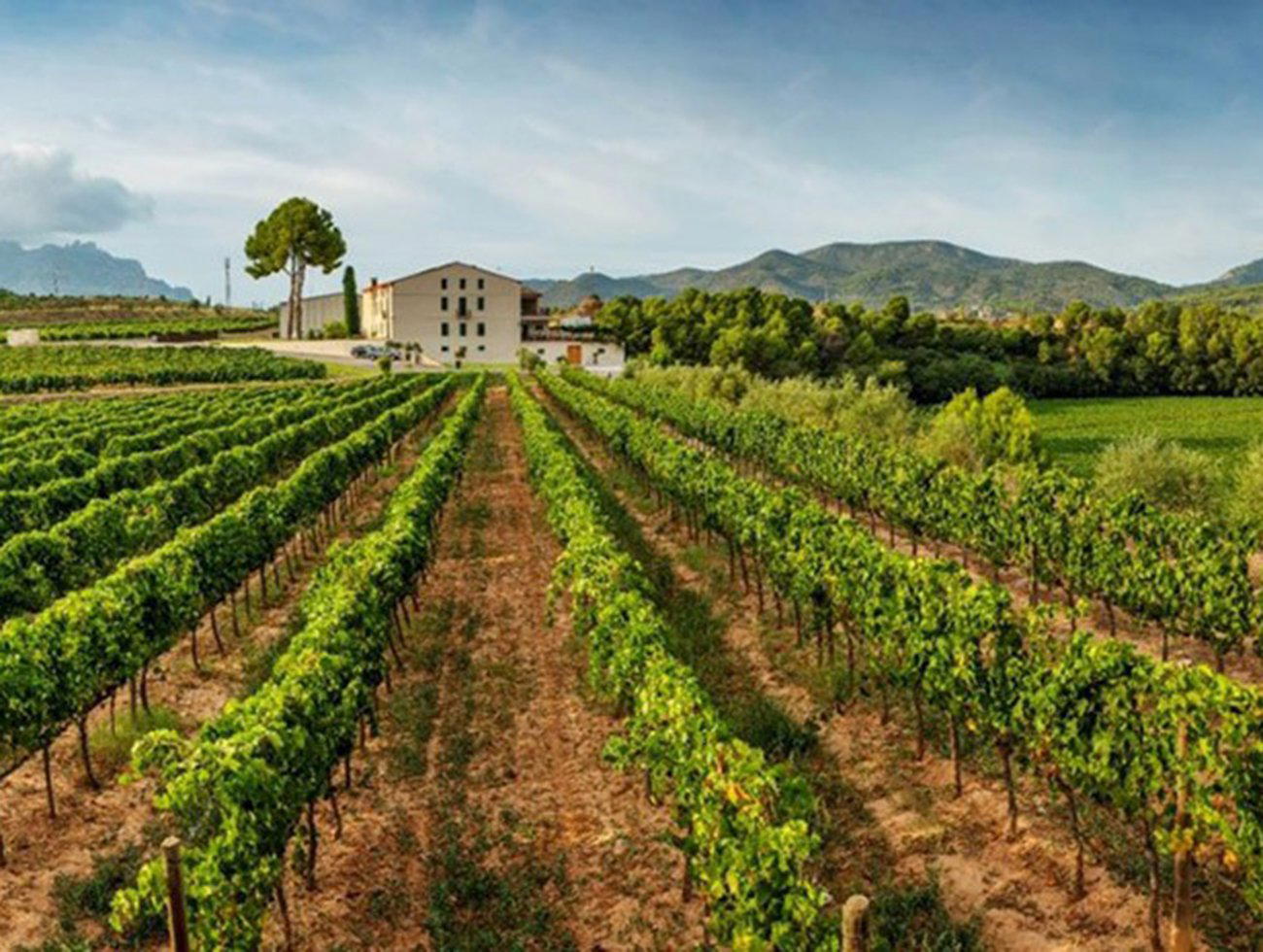
The Penedès, from which the chicken comes, is better known internationally as wine country, home to Cava production and increasingly to still wines from producers working with native varieties. That it also supplies free-range poultry to Michelin-starred kitchens is a detail that points to the density of agricultural activity in the region just south-west of Barcelona. Lluerna's sourcing is not assembled from across Spain; it is drawn from a coherent and relatively compact geography, which gives the menu a regional coherence that purely technique-led restaurants rarely achieve.
The Menu Structure: Set Only, Whole Table
Lluerna operates on a set-menu-only format, with all guests at a table eating the same menu. This is a structural choice with real implications for how the kitchen can cook and how the dining room can be managed. It eliminates the à la carte compromise, where some dishes are made to order under pressure and others sit waiting. It allows the kitchen to calibrate quantities, temperatures, and timing with precision that a mixed-format service cannot replicate.
Four menu formats are available. The Degustació menu runs at lunchtime on weekdays only, making it the most accessible price point and the one suited to visitors who want to plan a midweek afternoon around the meal. The Vegetal menu reflects the kitchen's capacity to make the producer-focused approach work without meat as the centrepiece, a harder discipline than it sounds when your supplier relationships are built largely around named livestock. The Presentació and Lluerna menus represent the fuller expressions of the tasting format. The kitchen's techniques are applied to enhance texture and concentrate flavour in the Catalan tradition rather than to introduce foreign idioms. This is modern cuisine in the sense that it uses contemporary methods, not in the sense that it is trying to escape its regional roots.
For comparison, the approach differs markedly from the high-spectacle format of DiverXO in Madrid or the maximalist creativity of Quique Dacosta in Dénia. Those kitchens are working at the outer limit of what Spanish cuisine can be conceptually. Lluerna is working at a different question: what does Catalan cuisine become when every ingredient is given the attention it was raised for? Both are serious answers to serious questions. They are not in competition.
Critical Recognition and Peer Context
Lluerna holds one Michelin star, awarded in the 2024 guide. In Opinionated About Dining's Europe ranking, it moved from a recommended listing in 2023 to #567 in 2025, having ranked #538 in 2024. The OAD ranking system is survey-based and tends to weight dining-frequency and critical engagement, so movement within that list reflects sustained professional attention rather than a single-year anomaly.
Within Spain's broader fine-dining tier, the relevant comparison set for Lluerna is not the three-star houses but the single-star family-run restaurants with strong regional identities. Tables like Venta Moncalvillo in Daroca de Rioja and Enoteca Paco Pérez in Barcelona operate in adjacent territory. Further afield, Ricard Camarena in València, Azurmendi in Larrabetzu, Mugaritz in Errenteria, and Martin Berasategui in Lasarte-Oria trace the outer edges of what serious Spanish regional cooking looks like across its various geographies. Lluerna is the Catalan entry in that conversation, and the one most explicitly committed to Slow Food principles as a structural rather than decorative feature.
Locally, Bar Verat represents the more casual dining option in Santa Coloma de Gramenet for those building a fuller picture of what the municipality offers beyond Lluerna's tasting format. Visitors wanting to build a full day around the area can also consult the guides for bars, wineries, and experiences in the municipality.
Planning a Visit
Lluerna is located at Av. Pallaresa, 104, Santa Coloma de Gramenet, accessible from central Barcelona by metro on Line 1 (Fondo station) in under thirty minutes. The price tier is €€€, placing it at the mid-to-upper end of Catalan tasting-menu restaurants without reaching the €€€€ bracket of the three-star houses. The Degustació menu, available at lunch from Tuesday to Friday only, is the natural entry point for first visits and for those planning a working-day trip from Barcelona. The full Lluerna tasting menu represents the kitchen's most complete statement. Reservations should be made well in advance given the small-format, whole-table menu structure, which limits the number of covers per service and makes last-minute availability unlikely.
at Lluerna?
Lluerna operates on set menus only, so individual dish ordering is not part of the format. The choice available to guests is which menu to book. For a first visit, the Degustació lunch offers the clearest introduction to the kitchen's approach to Catalan produce at a format and price point calibrated for the midweek lunch context. Guests with more time and appetite for the full range of named-supplier ingredients should book the Lluerna tasting menu, which represents the widest scope of the kitchen's sourcing relationships and technique. The Vegetal menu is the option for those who want to see how the producer-focused philosophy works when animal proteins are removed from the equation. Whatever the format, the provenance of each ingredient is explained as dishes arrive, making the menu itself a record of regional Catalan agriculture as much as a sequence of courses. The Aponiente comparison is instructive: both kitchens use the set-menu structure to make a coherent argument about a specific ingredient world. At Lluerna, that world is the farms and pastures of Catalonia and the Penedès.
Booking and Cost Snapshot
Comparable venues nearby, for context on price, style, and recognition.
| Venue | Cuisine | Price | Awards | Notes |
|---|---|---|---|---|
| LluernaThis venue (the venue you are viewing) | Modern Catalan Fine Dining | $150–200 | 1 Michelin Star · Guía Repsol 2 Soles | Not listed |
| Bar Verat | Modern Mediterranean Tapas | $20–30 | Michelin Bib Gourmand · Macarfi 7 Food Rating | Santa Coloma de Gramenet, Modern Mediterranean Tapas |
| Rincón de Diego | Modern Spanish Seafood | $50–100 | 1 Michelin Star · Guía Repsol 1 Sol | Cambrils Port, Modern Spanish Seafood |
| Tresmacarrons | Contemporary Catalan Fine Dining | $100–150 | 1 Michelin Star · Macarfi 7.6 Food Rating | El Masnou, Contemporary Catalan Fine Dining |
| Els Casals | Traditional Catalan Farm-to-Table | $100–150 | 1 Michelin Star · La Liste Top Restaurants | Sagàs, Berguedà, Traditional Catalan Farm-to-Table |
| Sala | Traditional Catalan | $50–100 | 1 Michelin Star | Olost, Traditional Catalan |
Recognition history
Dated appearances from independent guides and award organizations, with the underlying list record or original source where available.
Michelin 1 Star
Michelin
Guía Repsol 2 Soles
Guía Repsol
Macarfi 8.5 Food Rating
Macarfi
Opinionated About Dining Top Restaurants in Europe Ranked #567
Opinionated About Dining
Full recognition history (8 entries)
Michelin 1 Star
Michelin
Michelin 1 Star
Michelin
Opinionated About Dining Top Restaurants in Europe Ranked #538
Opinionated About Dining
Opinionated About Dining Top New Restaurants in Europe Recommended
Opinionated About Dining
Continue exploring
More in Santa Coloma de Gramenet
Restaurants in Santa Coloma de Gramenet
All restaurants in Santa Coloma de Gramenet →
Bars in Santa Coloma de Gramenet
Browse all →

Lluerna
The wine
- Wine program
- Deep wine list
- Extensive wine list
Details
- Elegant
- Modern
- Intimate
- Sophisticated
- Date Night
- Special Occasion
- Celebration
- Open Kitchen
- Extensive Wine List
- Local Sourcing
- Farm To Table
- Organic
- Tasting Menu
- Vegetarian Friendly
- Vegan Options
Current opening hours
- Monday
- Closed
- Tuesday
- 1:30–3:30 PM, 8:30–10:30 PM
- Wednesday
- 1:30–3:30 PM, 8:30–10:30 PM
- Thursday
- 8:30–10:30 PM
- Friday
- 1:30–3:30 PM, 8:30–10:30 PM
- Saturday
- 1:30–3:30 PM, 8:30–10:30 PM
- Sunday
- Closed
Hours can change for holidays and private events. Hours as of .
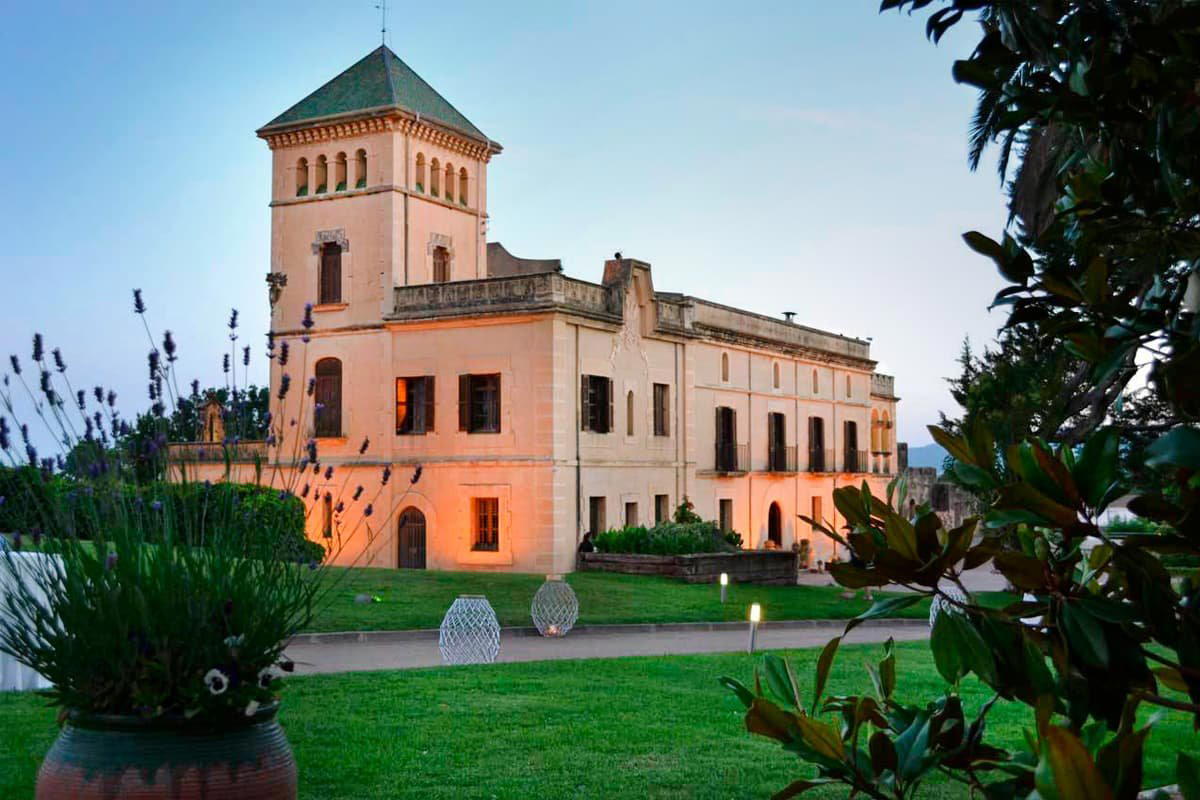
Bright, airy, contemporary space with elegant and approachable atmosphere, visible kitchen, well-suited for romantic dinners