


A 44-storey steel-and-glass tower designed by Bruce Graham for the 1992 Barcelona Olympics, Hotel Arts occupies a rare position on the city's beachfront, operating as a full resort within a metropolitan setting. With 483 rooms, a two-Michelin-star restaurant, a 43rd-floor spa, and a Michelin Key awarded in 2024, it draws travellers who want Mediterranean access without retreating from the city.
Pearl is the En Primeur Club membership app — saves, bookings, and concierge access live there. Same editors, same standards.
- Address
- Carrer de la Marina, 19-21, Ciutat Vella, 08005 Barcelona
- Phone
- +34 932 21 10 00
- Website
- ritzcarlton.com
- Directions
- Get directions
 Saves & bookings on Pearl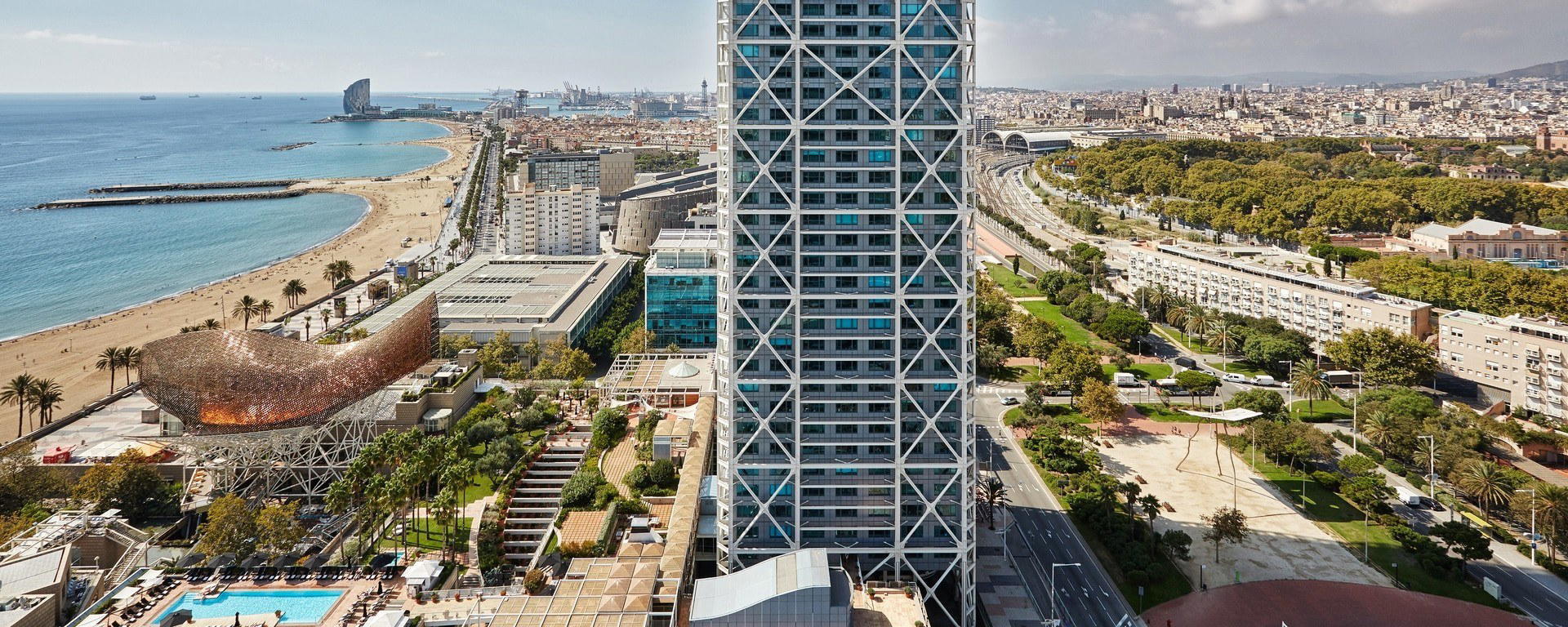
Where the City Grid Meets the Sea
Barcelona has always struggled to reconcile its two competing identities: the dense, ordered Eixample grid pushing inland, and the Mediterranean coast that the 1992 Olympics finally returned to the city. Hotel Arts Barcelona, designed by architect Bruce Graham and opened for those Games, occupies exactly that fault line. The 44-storey steel-frame tower rises from the Barceloneta beachfront at Carrer de la Marina, its exposed superstructure catching the light differently depending on whether you approach from the water or from the city. That context matters: this building is a product of civic ambition, not hotel development strategy, and it still reads that way from a distance.
Within Barcelona's luxury hotel sector, the property occupies a particular position. Where smaller design-led properties like Alma Barcelona or Hotel Boutique Mirlo compete on intimacy and neighbourhood character, and Eixample addresses like Mandarin Oriental Barcelona or Monument Hotel lean into the Passeig de Gràcia address, Hotel Arts operates as something structurally different: a resort-scale property with 483 rooms and a genuine beach adjacency, managed under Ritz-Carlton standards. Properties like Cap Rocat in Cala Blava or Mas de Torrent Hotel & Spa in Torrent offer coastal seclusion but require leaving the city entirely. Hotel Arts offers the Mediterranean a hundred yards from the lobby without surrendering urban access.
Daytime at Hotel Arts: Pool, Garden, and the Gehry Sculpture
The daytime experience at Hotel Arts is defined by its outdoor spaces in a way that few city hotels can match. Frank Gehry's El Peix, the 52-metre copper fish sculpture installed beside the pool, functions as the property's most legible landmark and the hinge between hotel and seafront. The sculpture is visible from the beach and serves as a waypoint for guests moving between the pool area and the sand, which lies only a short walk from the lobby. The garden extends to more than 10,700 square feet, providing an unusual amount of green space for a tower hotel in a dense urban district.
During daylight hours the property functions closest to its resort register. The pool area draws both hotel guests and, when conditions allow, a broader crowd aware of the address. This daytime informality, sun, terrace, salt air from the nearby beach, sits in contrast to the more structured evening service elsewhere in the building. For guests arriving in summer, this is also the period most affected by high demand; Barcelona's Barceloneta beach fills quickly when temperatures climb, and the hotel's direct access to the waterfront becomes its most practical differentiator. The beach is genuinely a few steps from the property rather than a cab ride, which changes how a stay is structured day to day.
Evening Service and the Enoteca Paco Pérez Question
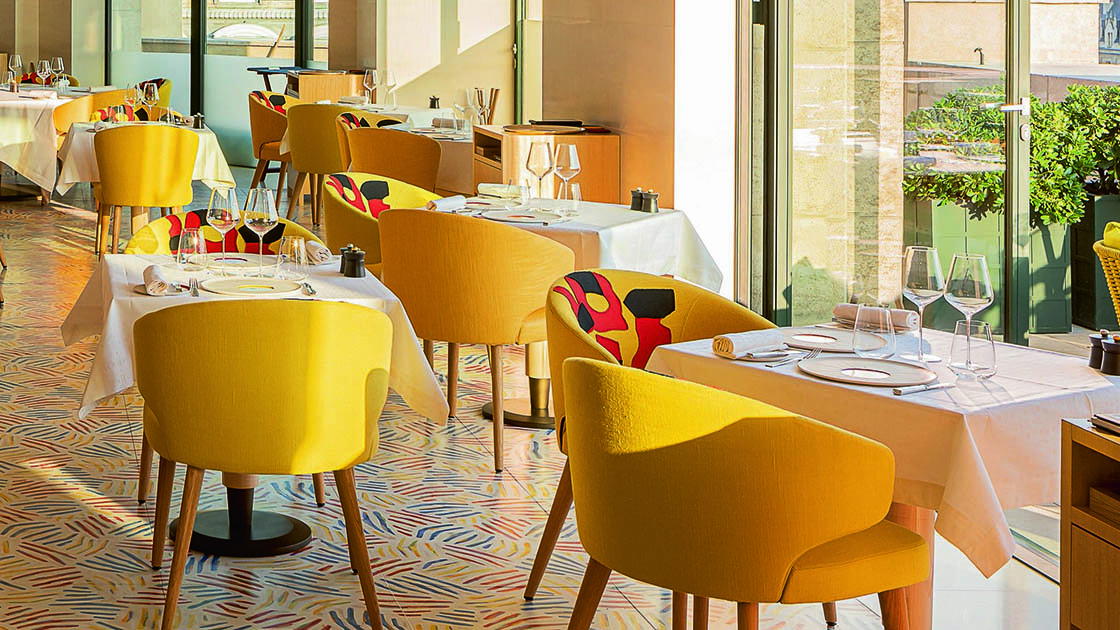
The evening shift at Hotel Arts is anchored by Enoteca Paco Pérez, the two-Michelin-star restaurant operating within the property. In a city where Michelin-recognised dining has expanded across multiple neighbourhoods, a two-star address inside a hotel lobby is a specific proposition, one that aligns Hotel Arts with a small number of Spanish properties where the restaurant credential is as significant as the room rate. For comparison, ABaC Restaurant & Hotel follows a similar hotel-anchored fine dining model in the upper city, and beyond Barcelona, properties like Akelarre in San Sebastián or Atrio Restaurante Hotel in Cáceres have built their identity around the same pairing of serious accommodation and destination-level cooking.
The Michelin One Key awarded to Hotel Arts in 2024 places it within a recognition framework that evaluates the full hospitality experience rather than the restaurant in isolation. This dual credential, two stars for the kitchen, one Key for the hotel, positions the property within a small tier of Spanish luxury addresses where the dining and sleeping experience are assessed together. Guests who treat the hotel primarily as a base for exploring the city's broader restaurant scene, and Barcelona's offer across Catalan, Basque-influenced, and contemporary Mediterranean cooking is substantial, are making a different calculation than those for whom Enoteca is the anchor of the stay. Both approaches are coherent; the hotel supports them differently.
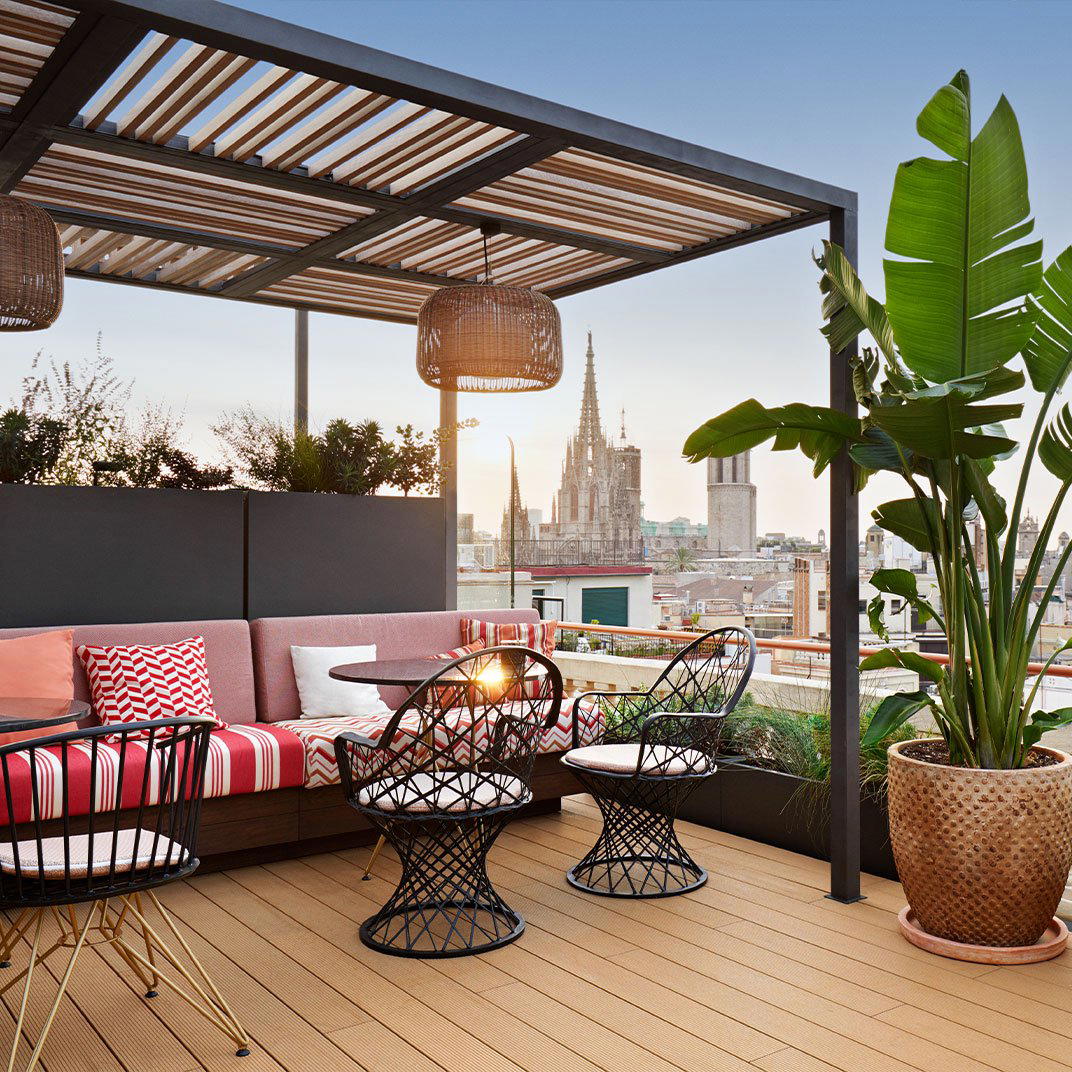
Evening mood across the property shifts from the open, salt-aired informality of the pool terraces to the more composed register of the upper floors. The 43rd-floor spa operates in a different key entirely from the beach-facing afternoon hours. The floor-by-floor transition up the building tracks a change in the type of experience on offer, from sunlight and movement at ground level to deliberate calm near the upper end.
The Room Structure and Which Level Fits the Stay
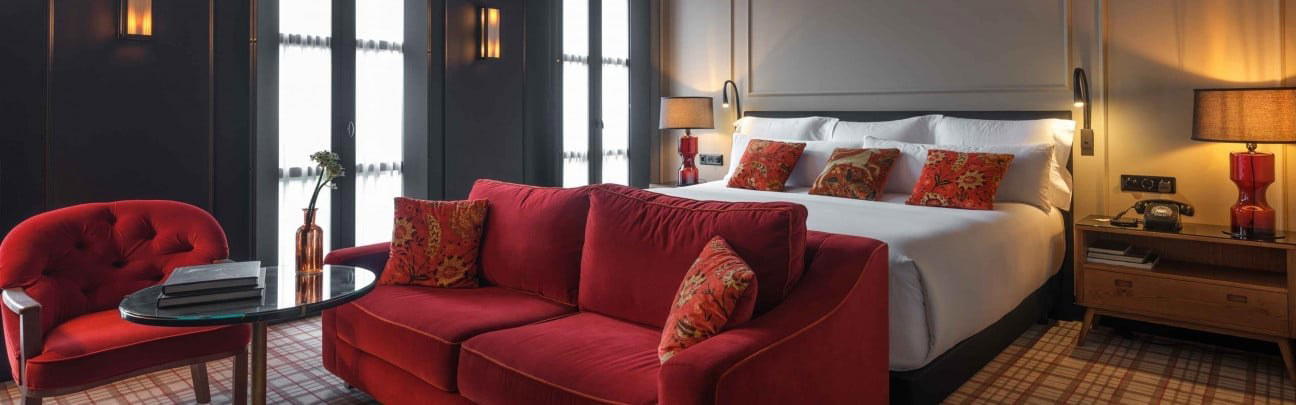
The 483 accommodations divide into three distinct tiers. Standard guest rooms and suites across the main floors are designed around the city-meets-sea duality: custom hand-woven headboards, generous window proportions, and a material palette drawn from Mediterranean references including deep blue, sandstone, and warm gold. Rooms face the sea, the city, or a combination, and the building's height means that even mid-floor city-facing rooms carry views that most Barcelona hotels cannot offer.
Club-level rooms and suites add a dedicated host team, private check-in, and access to a Club Lounge serving food and beverages throughout the day. In practical terms, Club access changes the rhythm of the stay: the lounge functions as a buffer between the public hotel and the private room, useful for business travellers or guests who prefer not to calibrate every meal around a restaurant booking. Some suites at this level include telescopes, a detail that reflects the building's unusual relationship with the skyline rather than being a styling flourish.
The 28 penthouses occupy floors 34 to 43 and are configured as one-to-three-bedroom apartments rather than oversized hotel rooms. The perks at this tier, airport transfers among them, are calibrated for guests treating the stay as a private residence rather than a hotel room. the accommodation logic is closer to a private villa rental than a hotel booking, which is how the comparison with properties like La Residencia in Mallorca or Aman Venice becomes relevant for guests making cross-destination decisions.
Getting There and How the Location Works in Practice
Hotel Arts sits in the Ciutat Vella district, at the eastern edge of Barceloneta, where the grid of the old town dissolves into the Olympic port development. The address is walkable to the beach in seconds and to the Gothic Quarter in around fifteen minutes on foot, but parts of the city, the Eixample, Gràcia, the upper reaches of Passeig de Gràcia - require a cab or the metro. Staff are reported to be efficient and English-speaking throughout the property, which matters when coordinating transport or dining reservations in a city where the leading restaurant seats book weeks ahead. The Sagrada Família is roughly ten minutes by car; Casa Batlló around twelve. MACBA sits fourteen minutes away. The Museu Picasso is eight minutes by car. These are not walking distances, which is worth factoring into a stay built around the city's architecture and museum circuit rather than the beach.
For guests whose itinerary extends beyond Barcelona into Spain's broader luxury hotel network, the property connects logically to addresses like Mandarin Oriental Ritz, Madrid, Abadía Retuerta LeDomaine, or wine-country properties like Terra Dominicata in Escaladei and Torre del Marqués Hotel Spa & Winery. Within Barcelona's own hotel set, guests comparing on design ambition and boutique scale might also consider Almanac Barcelona, Antiga Casa Buenavista, or Mercer Hotel Barcelona, each of which takes a different position relative to the city's history. For those extending across Spain's Atlantic coast or into Galicia, Pepe Vieira Restaurant & Hotel in Poio and Casa Beatnik Hotel in A Coruña represent the restaurant-anchored model at a smaller scale. Transatlantic comparisons for guests moving between Europe and North America might include The Fifth Avenue Hotel in New York City or Aman New York, both of which operate in the same high-credential urban luxury tier, and Marbella Club Hotel for those drawn to the resort-within-Spain axis more broadly.
Comparable Spots
Comparable venues nearby, for context on price, style, and recognition.
| Venue | Cuisine | Price | Notes |
|---|---|---|---|
| Hotel Arts BarcelonaThis venue — the venue you are viewing | Contemporary beachfront resort with artistic urban design | $$$$ | Not listed |
| The One Barcelona | Contemporary luxury design hotel with Mediterranean influences, executed by prestigious designer Jaime Beriestain, positioned as an urban sanctuary near architectural landmarks. | $$$$ | la Dreta de l'Eixample |
| ABaC Restaurant & Hotel | Contemporary boutique hotel in a former private estate | $$$$ | Sant Gervasi - la Bonanova |
| Hotel Boutique Mirlo | luxury boutique hotel with private spa rooms and lush gardens | $$$$ | Sant Gervasi - la Bonanova |
| Almanac Barcelona | Boutique luxury hotel in a stylish traditional building with modern residential refinement. | $$$$ | la Dreta de l'Eixample |
| Seventy Barcelona | Modern upscale boutique hotel blending luxury services with stylish design. | $$$$ | la Dreta de l'Eixample |
Recognition history
Dated appearances from independent guides and award organizations, with the underlying list record or original source where available.
Forbes 4-Star
Forbes
Virtuoso Luxury Hotel Partner
Virtuoso
Forbes 4-Star
Forbes
Michelin 1 Key
Michelin
Michelin 1 Key
Michelin
Continue exploring
More in Barcelona
Hotels in Barcelona
Browse all →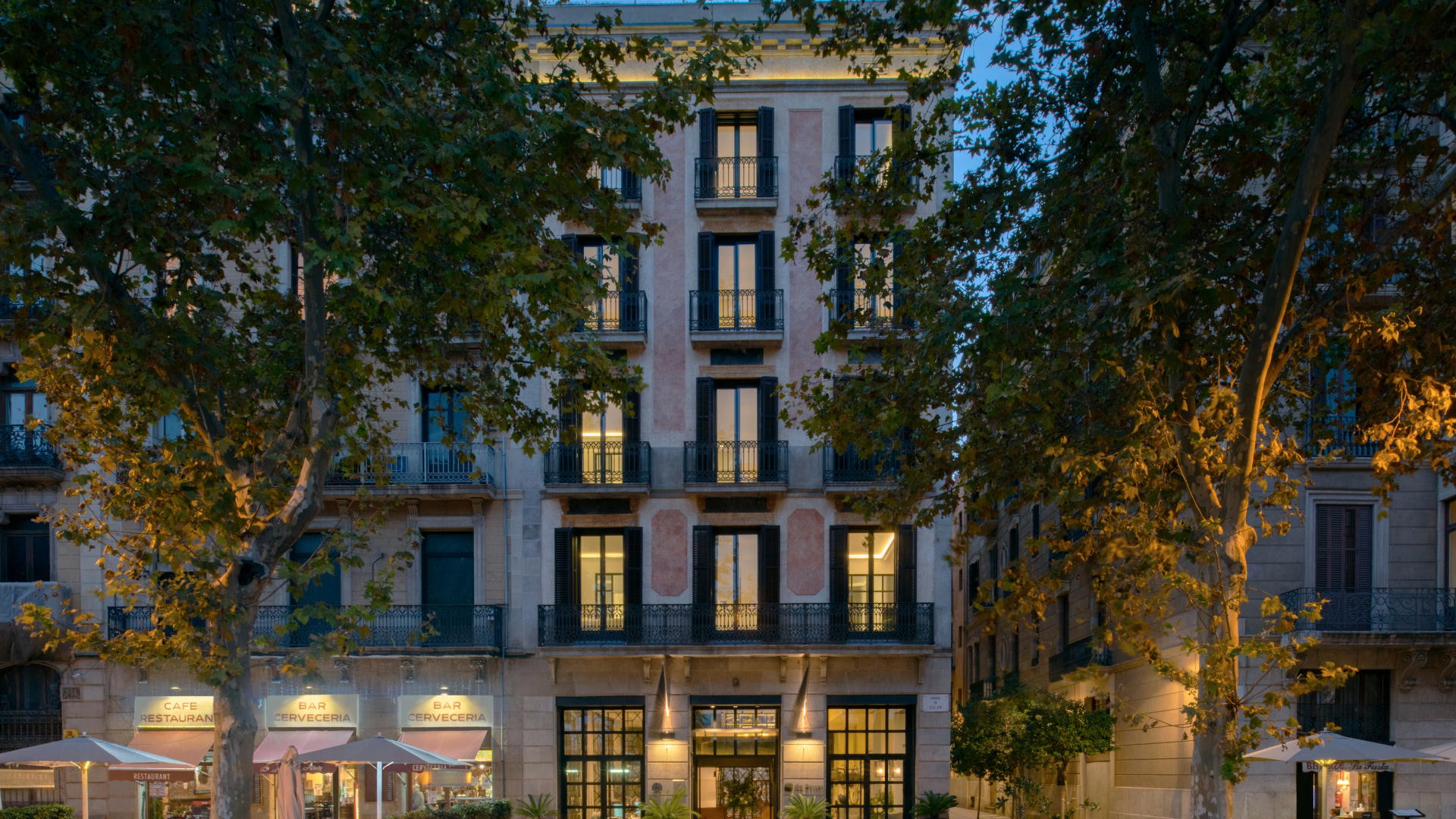
Bars in Barcelona
Browse all →
Restaurants in Barcelona
Browse all →
At a Glance
- Modern
- Elegant
- Sophisticated
- Well Known
- Romantic Getaway
- Business Trip
- Honeymoon
- Beachfront
- Rooftop Pool
- Infinity Pool
- Panoramic View
- Wi Fi
- Pool
- Spa
- Fitness Center
- Room Service
- Concierge
- Business Center
- Valet Parking
- Waterfront
- Skyline
- Wi Fi
- Pool
- Spa
- Fitness Center
- Room Service
- Concierge
- Business Center
- Valet Parking
Luxurious and chic with natural light, modern decor, and serene gardens offering a tranquil yet lively atmosphere.