Among Budapest's otherwise Central European-dominated dining scene, Leila's Authentic Lebanese Cuisine on Váci utca occupies a distinct position: a Middle Eastern address in a city where such kitchens are scarce. The menu structure follows the logic of Lebanese communal eating, built around mezze and shared plates rather than the individuated courses that define most of the city's fine-dining tier.
Pearl is the En Primeur Club membership app — saves, bookings, and concierge access live there. Same editors, same standards.
- Address
- Budapest, Váci u 42, 1056 Hungary
- Phone
- +36302453393
- Website
- leilascuisine.com
- Directions
- Get directions
 Saves & bookings on Pearl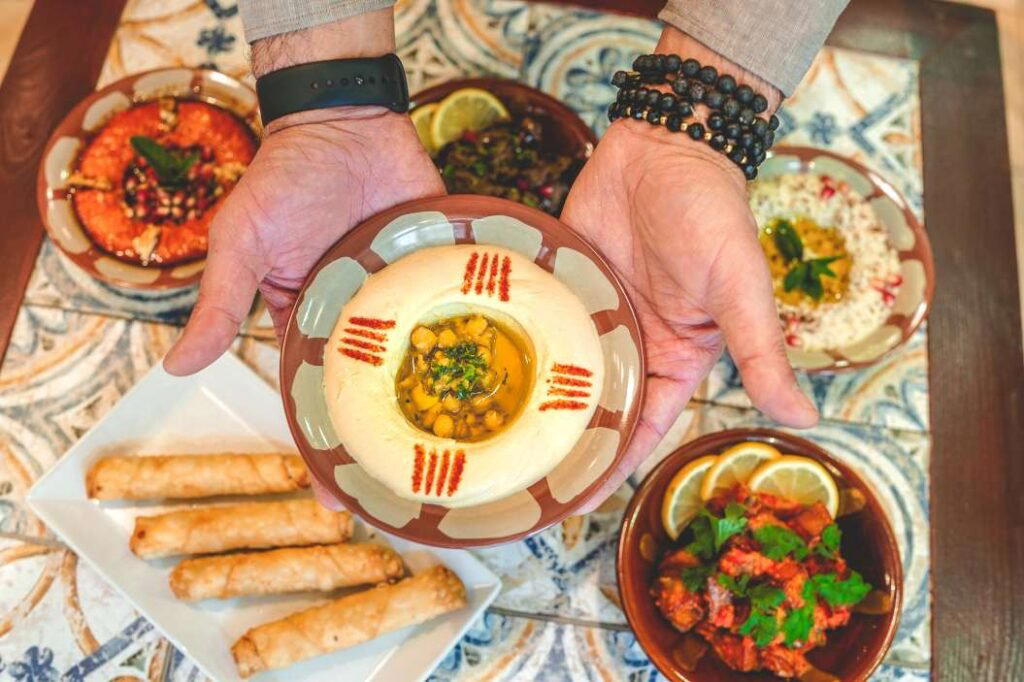
A Different Logic on Váci Utca
Budapest's inner-city dining corridor along Váci utca skews heavily toward Hungarian classics, tourist-facing Central European menus, and a handful of international addresses that default to Italian or Asian formats. Lebanese cuisine sits outside all of those defaults. Leila's Authentic Lebanese Cuisine, at number 42, is a Middle Eastern kitchen in a city where that culinary tradition remains underrepresented across all price tiers.
The broader context matters here. Hungary's restaurant scene has developed considerable depth at the modern Hungarian and contemporary European end, with addresses like Costes (€€€€ · Modern Cuisine), Babel (€€€€ · Modern Cuisine), and Stand (€€€€ · Modern Cuisine) anchoring its upper bracket. Borkonyha Winekitchen (€€€ · Modern Cuisine) and essência (€€€€ · Modern Cuisine) fill further positions in that spectrum. What that concentration of talent produces is a dining scene highly fluent in one tradition and considerably quieter in others. A restaurant serving Lebanese food in this context is not simply an ethnic-cuisine outlier, it is answering a question that most of Budapest's kitchen culture does not ask.
How the Menu Is Structured, and What That Tells You
Lebanese restaurant menus follow an architectural logic that differs fundamentally from the Western tasting-menu or à la carte sequence that dominates Budapest's more formal dining rooms. The meal is typically organised around mezze, cold preparations first, then hot, then grilled proteins, with the expectation that the table shares across all courses rather than eating sequentially as individuals. This communal format means the menu functions as a catalogue of components rather than a linear narrative, and the skill of the kitchen is read in the precision of individual preparations rather than in course-to-course progression.
At a well-executed Lebanese table, cold mezze carry the intellectual weight of the meal. Hummus consistency, the balance of tahini and lemon in baba ghanoush, the herb ratio in tabbouleh, the freshness of fattoush, these are the technical benchmarks. Hot mezze, including kibbeh and falafel, add textural contrast. Grilled meats and fish arrive later, typically as the centrepiece around which everything else has been arranged. The menu at an authentic Lebanese kitchen is not designed to be read left-to-right as a Western diner might approach it; it is designed to be composed by the table collectively, which changes the nature of the ordering experience entirely.
For a Budapest diner whose frame of reference is a tasting menu or a Hungarian set lunch, this requires a mental adjustment. The absence of a fixed sequence is not a lack of structure, it is a different structure, one rooted in Levantine hospitality traditions where generosity and abundance are expressed through variety rather than singularity.
The Address and What It Implies
Váci utca is one of Budapest's most trafficked pedestrian streets, running through the fifth district between the Danube embankment and the inner city. It draws significant tourist footfall, which means restaurants here operate in a mixed market, locals with specific intent alongside visitors making proximity-driven decisions. A Lebanese kitchen in this location suggests a dual purpose: serving a community with genuine appetite for Middle Eastern food while remaining accessible to visitors who may be encountering the cuisine more casually.
The fifth district more broadly sits within walking distance of the major cultural and civic landmarks of Pest, the Central Market Hall, the Chain Bridge, the Hungarian National Museum. For visitors building an itinerary around central Budapest, the location on Váci utca at number 42 is logistically convenient without requiring a cross-city commitment. Those planning longer stays in Hungary who want to extend their dining beyond the capital can look to venues like Platán Gourmet in Tata, Aranysárkány Vendéglő in Szentendre, or Pajta in Őriszentpéter, while regional specialists in wine country include Halasi Pince Panzió in Villány and Forst-Ház Étterem és Kávézó in Eger.
Where Leila's Sits in the Broader Picture
For diners calibrating expectations, it helps to note what Leila's is not competing against. The Michelin-tracked addresses in Budapest, Costes, Stand, Babel, Borkonyha, occupy a different tier and a different culinary tradition entirely. Leila's is not positioned against those rooms. Its comparable set is the small cluster of Middle Eastern and Mediterranean kitchens operating in Budapest's mid-market, where the proposition is authenticity of tradition rather than creative reinterpretation.
This is a meaningful distinction in a city where modern Hungarian cuisine has become the prestige format and everything else tends to be evaluated against that benchmark. Lebanese food does not need to be held against Hungarian fine dining to make sense, it operates on its own terms, with its own technical standards and its own hospitality logic. Visitors who have eaten well at Lebanese tables in Beirut, London, or Paris will find those reference points more useful than any Budapest-centric comparison.
For a fuller picture of what Budapest's dining scene offers across styles and price tiers, the EP Club Budapest restaurants guide maps the range in detail, from neighbourhood bistros to the city's most ambitious tasting menus. Those looking for other regional perspectives across Hungary can also find editorial coverage of BoriMami in Gyöngyös, Classic Grill Serbian Restaurant Underground in Szeged, Astro Tea & Kávéház in Gyor, La Pizza Del Lupo in Onga, and Almalomb in Hosszúhetény. For international reference points at the technical extreme of the spectrum, Le Bernardin in New York City and Atomix in New York City represent what menu architecture at the highest level of ambition looks like in practice.
Planning Your Visit
Leila's Authentic Lebanese Cuisine is located at Váci utca 42, in the fifth district of Budapest, easily reachable on foot from the Ferenciek tere metro station on line M3. As with most mid-market restaurants on a high-footfall pedestrian street, walk-in availability varies by time of day and day of week, evenings and weekends on Váci utca can move quickly, particularly in the summer tourist season. Current hours run Mon-Sun 12 to 11 PM.
Just the Basics
Comparable venues nearby, for context on price, style, and recognition.
| Venue | Cuisine | Price | Notes |
|---|---|---|---|
| Leila's Authentic Lebanese CuisineThis venue — the venue you are viewing | Belvaros, Authentic Lebanese Cuisine | $$ | Not listed |
| EscoBar & Cafe | Not listed | $$ | District IX (Ferencváros), Hungarian & Italian Fusion |
| Vadrózsa | Not listed | $$ | Pasaret, Traditional Hungarian & International |
| Jamie's Italian Budapest | Not listed | $$ | Varhegy, Italian Classics & Artisan Pizza |
| Spicy Fish Budapest | Ferencvaros, Authentic Sichuan Chinese | $$ | Not listed |
| Toscana | Belvaros, Authentic Tuscan Trattoria | $$ | Not listed |
Continue exploring
More in Budapest
Restaurants in Budapest
Browse all →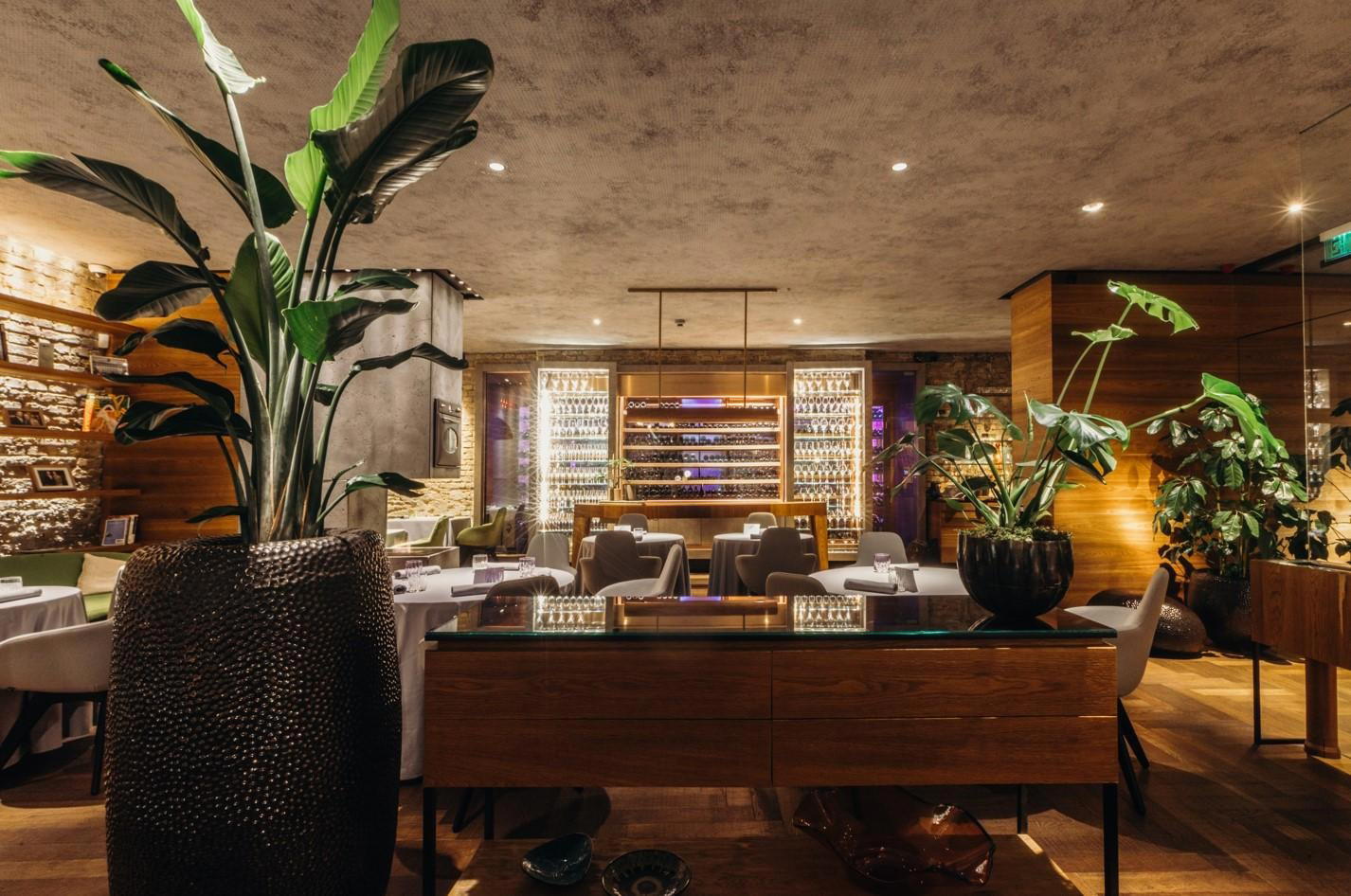
Bars in Budapest
Browse all →
Hotels in Budapest
Browse all →

At a Glance
- Cozy
- Date Night
- Group Dining
- Family
- Casual Hangout
- Terrace
Current opening hours
- Monday
- 12–11 PM
- Tuesday
- 12–11 PM
- Wednesday
- 12–11 PM
- Thursday
- 12–11 PM
- Friday
- 12–11 PM
- Saturday
- 12–11 PM
- Sunday
- 12–11 PM
Hours can change for holidays and private events. Last verified .
Cozy and welcoming interior with lovely decor, creating a homey atmosphere in the heart of the city.