Le Tunnel sits on Saillans' Grande Rue in the Drôme valley, a corner of rural France where market-town dining traditions run deep and the surrounding hills supply the table as much as the kitchen does. The restaurant occupies a specific tier of regional French dining: local in sourcing, unhurried in pace, and firmly rooted in the agricultural rhythms of the Drôme Provençale. For context on how it sits within the broader French fine-dining spectrum, see our full Saillans restaurants guide.
Pearl is the En Primeur Club membership app — saves, bookings, and concierge access live there. Same editors, same standards.
- Address
- 93 Gr Grande Rue, 26340 Saillans, France
- Phone
- +33475215387
- Directions
- Get directions
 Saves & bookings on Pearl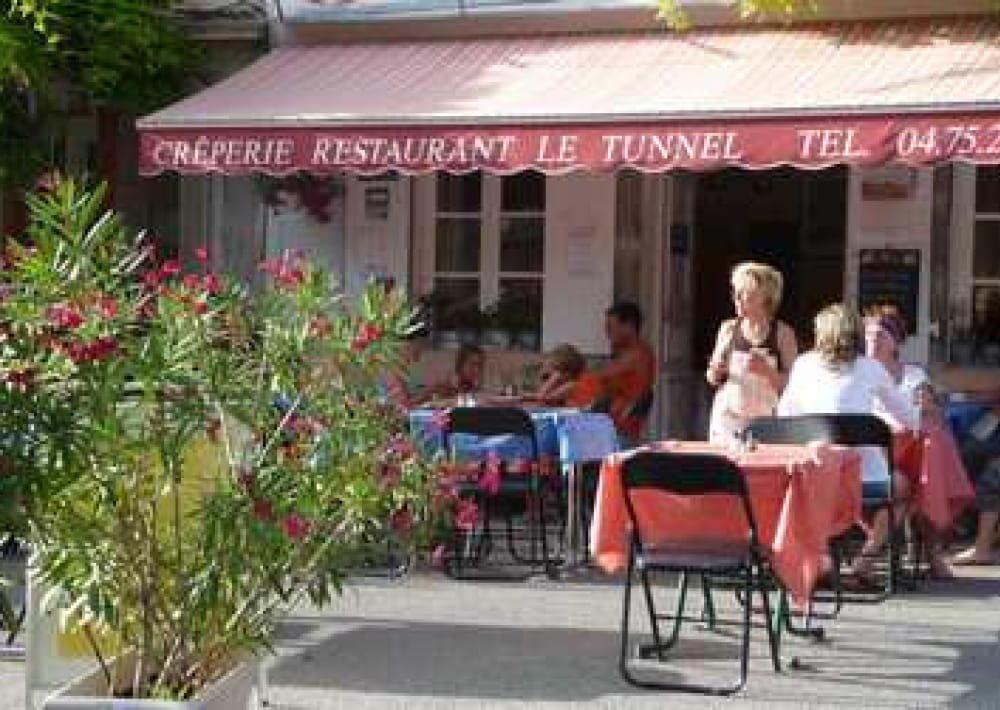
Saillans and the Drôme's Quiet Dining Identity
The Drôme valley has never competed for culinary headlines the way Provence or Lyon do, and that relative quietude is part of what defines eating here. Saillans sits along the Drôme river at the edge of the Drôme Provençale, a stretch of southern French countryside where lavender fields give way to walnut groves and apricot orchards, and where the supply chain between farm and table is often a matter of kilometres rather than supply contracts. Le Tunnel, at 93 Grande Rue, occupies a position in that local continuum: a restaurant whose address places it at the centre of a market town that has sustained agricultural commerce for centuries.
Understanding Le Tunnel means first understanding what the Drôme does well. This is not a region of elaborate technique or tasting-menu theatre. The cooking tradition here draws on Rhône valley produce, stone-fruit from the valley floor, lamb and cheese from the pre-Alpine plateaus, olives and herbs from the southern reaches, and on a direct relationship between season and plate. The leading rural restaurants in this part of France earn their standing by handling that produce honestly rather than reinterpreting it beyond recognition.
The Physical Setting: What You Encounter on Grande Rue
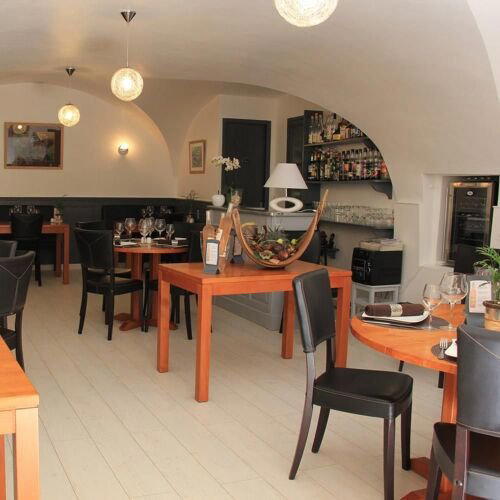
Arriving in Saillans, the scale shifts immediately. This is a village of a few thousand residents, and Grande Rue functions as its commercial spine: a single street of stone-fronted buildings, occasional plane trees, and the kind of unhurried foot traffic that marks a town still organised around local life rather than tourism. Le Tunnel's address at number 93 places it within that fabric, in a building whose stone construction is typical of Drôme market towns, thick walls that retain cool air in summer and hold warmth in the colder months. The name itself references the physical character of the space, the compressed, vaulted quality that characterises older ground-floor rooms in this part of southern France.
That physical environment sets the register before a plate arrives. In French regional dining, the room is rarely incidental: it signals whether a kitchen is working within a tradition or against it. A vaulted stone room on a village high street signals the former, a kitchen operating inside an established relationship between place, produce, and guest, rather than one seeking to distance itself from its context.
Ingredient Sourcing and the Drôme Provençale's Agricultural Context
The Drôme Provençale carries a protected designation of origin for several of its signature products, and the agricultural density of the valley means that any kitchen paying attention has access to a seasonal larder that shifts noticeably across the year. Spring brings asparagus and young chevre from nearby farms; summer moves into stone fruit, courgette, and wild herbs from the hillsides; autumn delivers walnuts, chestnuts, and the game that the surrounding garrigue supports. Winter tightens the palette toward root vegetables, dried legumes, and preserved fruit.
This rhythm is the backbone of serious regional cooking across rural France, and it separates kitchens that source locally from those that merely describe themselves that way. The Drôme's relative insularity, it draws fewer international tourists than the Luberon to its south or the Rhône corridor to its west, means its agricultural infrastructure remains oriented toward local consumption rather than export or prestige markets. That insularity is a practical advantage for a kitchen: provenance is traceable, relationships with producers are direct, and the produce arrives at a stage of ripeness that longer supply chains cannot replicate.
This is the sourcing context that defines the category Le Tunnel belongs to. Across rural France, the restaurants that hold local authority over time are those that stay close to their agricultural surroundings rather than reaching for ingredients or references from outside the region. The contrast with the grand houses of French haute cuisine, Alléno Paris au Pavillon Ledoyen operating at the apex of creative French cooking in Paris, or Mirazur in Menton drawing on the microclimate of the Côte d'Azur, is instructive. Those kitchens have the resources and profile to source globally and construct tasting menus around provenance as a concept. Rural Drôme restaurants operate on a different logic: the sourcing is local because the geography and the economy make it so, not because it has been positioned as a selling point.
Other French regional houses that have built sustained reputations on deep territorial sourcing include Bras in Laguiole, where the Aubrac plateau's herbs and grasses have defined the kitchen's output for decades, and Auberge du Vieux Puits in Fontjoncouse, another village restaurant that turned a remote Languedoc address into a point of distinction rather than a liability. The pattern is consistent: rural French kitchens that commit to their immediate geography tend to develop a coherence that urban restaurants with more varied supply options sometimes lack.
Placing Le Tunnel in the French Regional Dining Picture
France's regional dining tier is broad and internally varied. At one end sit multi-generational institutions like Auberge de l'Ill in Illhaeusern and Georges Blanc in Vonnas, which have held Michelin recognition for decades and operate at the intersection of tradition and destination dining. At the other end sit the village restaurants that serve their communities first and occasional visitors second, with no awards infrastructure and no expectation of it. The restaurant, based on its address and context, sits in the latter group: a local restaurant in a small Drôme town, operating at the scale and pace the town itself sets.
That positioning is not a limitation. Particularly instructive eating in France happens outside the awarded circuit, in places where the kitchen has no incentive to perform for a guide inspector and every incentive to cook for regulars who will return the following week. The coastal equivalent of this logic produces restaurants like La Marine in Noirmoutier-en-l'Île, where island geography dictates the menu as completely as any Michelin brief could. In the Drôme valley, the same principle applies through a different agricultural lens.
For reference, the awarded tier of French regional cooking includes destinations spread across the country: Flocons de Sel in Megève in the Alps, AM par Alexandre Mazzia in Marseille on the Mediterranean coast, Assiette Champenoise in Reims in Champagne country, and Christopher Coutanceau in La Rochelle on the Atlantic. Each of those operates at a different scale and with a different set of resources than a village restaurant in the Drôme. The comparison clarifies what the restaurant is: a place working in a different register, closer to Troisgros's original roots in regional French cooking than to its current incarnation, and more aligned with the tradition that produced Paul Bocuse's Auberge du Pont de Collonges as a document of a place and time.
Planning a Visit
Saillans is accessible by train on the Valence-Grenoble line, with the village station a short walk from Grande Rue. By car from Valence it is roughly 35 kilometres southeast via the D111. The restaurant is recommended for reservations, and its regular hours are Monday, Wednesday through Saturday from 12-2 PM and 7-9 PM, Tuesday closed, and Sunday from 10 AM-2 PM and 7-10 PM. Saillans itself has limited accommodation, so visitors often base themselves in Die, the larger town 15 kilometres to the east, or in the Drôme valley towns closer to Valence. The strongest months for the Drôme Provençale as a food destination are late spring through early autumn, when the valley's agricultural output is at its peak and the market towns run their weekly producers' markets in full form.
Quick Comparison
Comparable venues nearby, for context on price, style, and recognition.
| Venue | Cuisine | Price | Notes |
|---|---|---|---|
| Le TunnelThis venue — the venue you are viewing | Traditional French Bistro | $$ | Not listed |
| La Farigoule | Traditional Provençal French | $$ | center of town |
| Ferme Auberge de Jameysse | Traditional Ardèche Farm Cuisine | $$ | Désaignes |
| Le Terroir | Traditional French Bistro with Pizzas | $$ | Clérieux |
| Restaurant EAT | Modern French Bistro | $$ | Historic Center |
| Le Clos | Traditional French Bistro | $$ | La Garde-Adhemar |

At a Glance
- Cozy
- Rustic
- Family
- Casual Hangout
- Terrace
- Local Sourcing
- Mountain
Current opening hours
- Monday
- 12–2 PM, 7–9 PM
- Tuesday
- Closed
- Wednesday
- 12–2 PM, 7–9 PM
- Thursday
- 12–2 PM, 7–9 PM
- Friday
- 12–2 PM, 7–9 PM
- Saturday
- 12–2 PM, 7–9 PM
- Sunday
- 10 AM–2 PM, 7–10 PM
Hours can change for holidays and private events. Last verified .
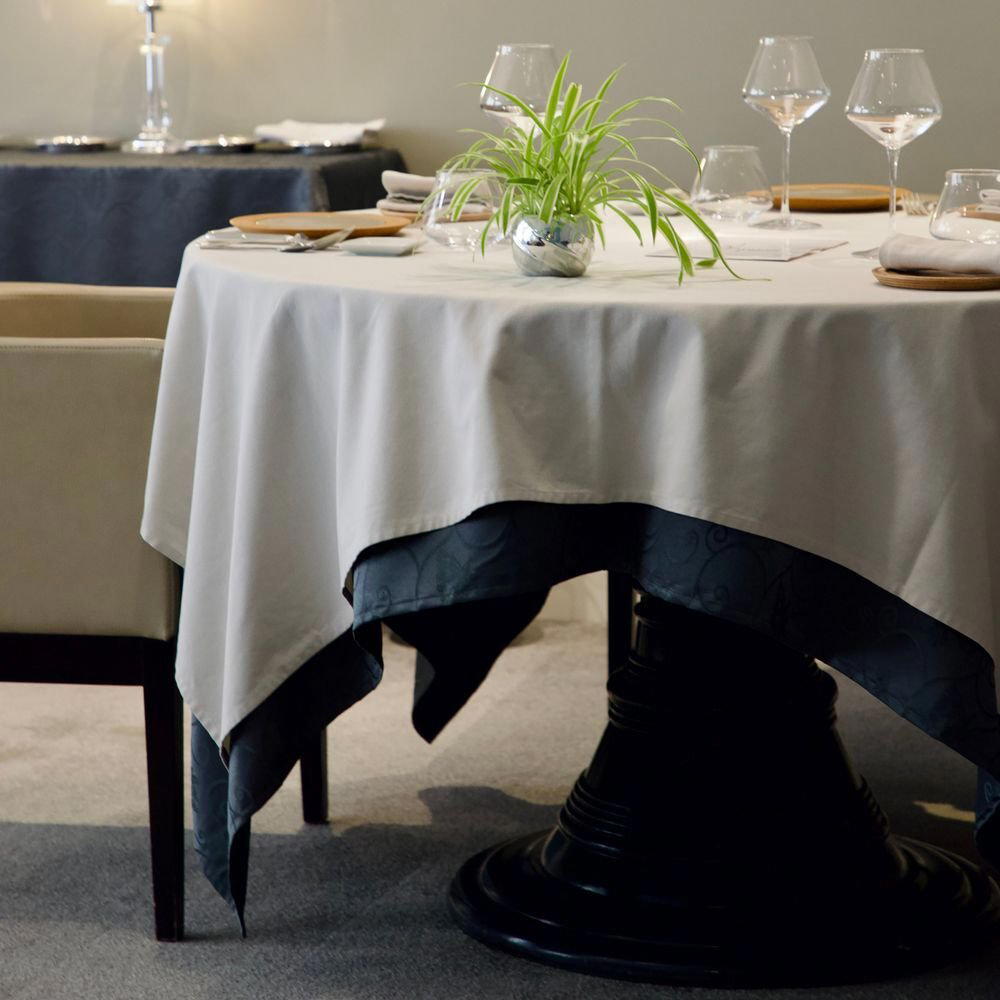
Convivial and warm interior with homely, kitsch and cozy decor, plus pleasant outdoor terrace seating with mountain views.