Le Clos
Le Clos occupies a stone-walled address in La Garde-Adhémar, one of the Drôme Provençale's most architecturally preserved hill villages. The restaurant draws on the agricultural depth of the surrounding Rhône corridor, where lavender fields, truffle oak groves, and market gardens define the sourcing territory. For travellers moving between Lyon and the Côte d'Azur, it represents a considered stop in a region that rarely makes headlines but consistently rewards attention.
Pearl is the En Primeur Club membership app — saves, bookings, and concierge access live there. Same editors, same standards.
- Address
- 50 Pl. Georges Perriod, 26700 La Garde-Adhémar, France
- Phone
- +33979493351
- Website
- restaurantleclos.fr
- Directions
- Get directions
 Saves & bookings on Pearl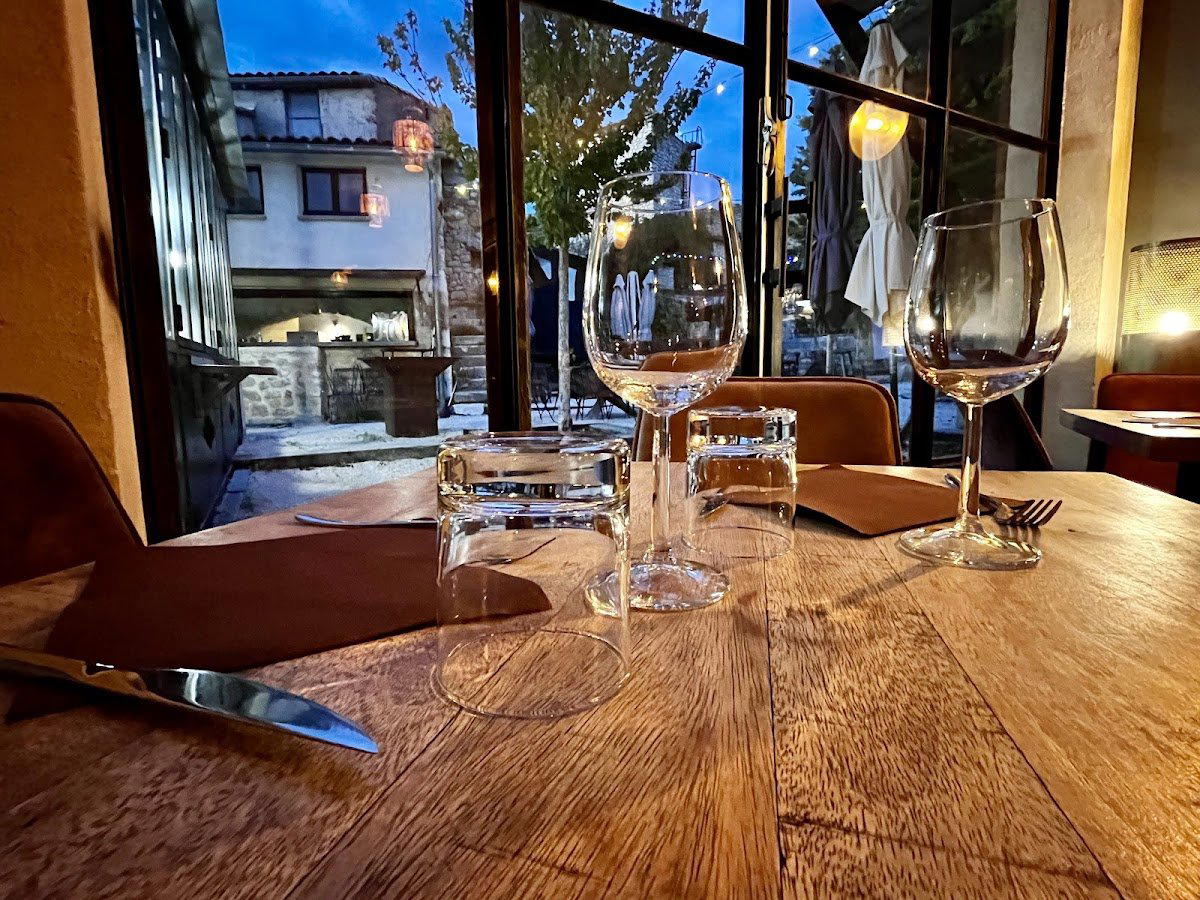
Stone, Lavender, and the Larder of the Drôme Provençale
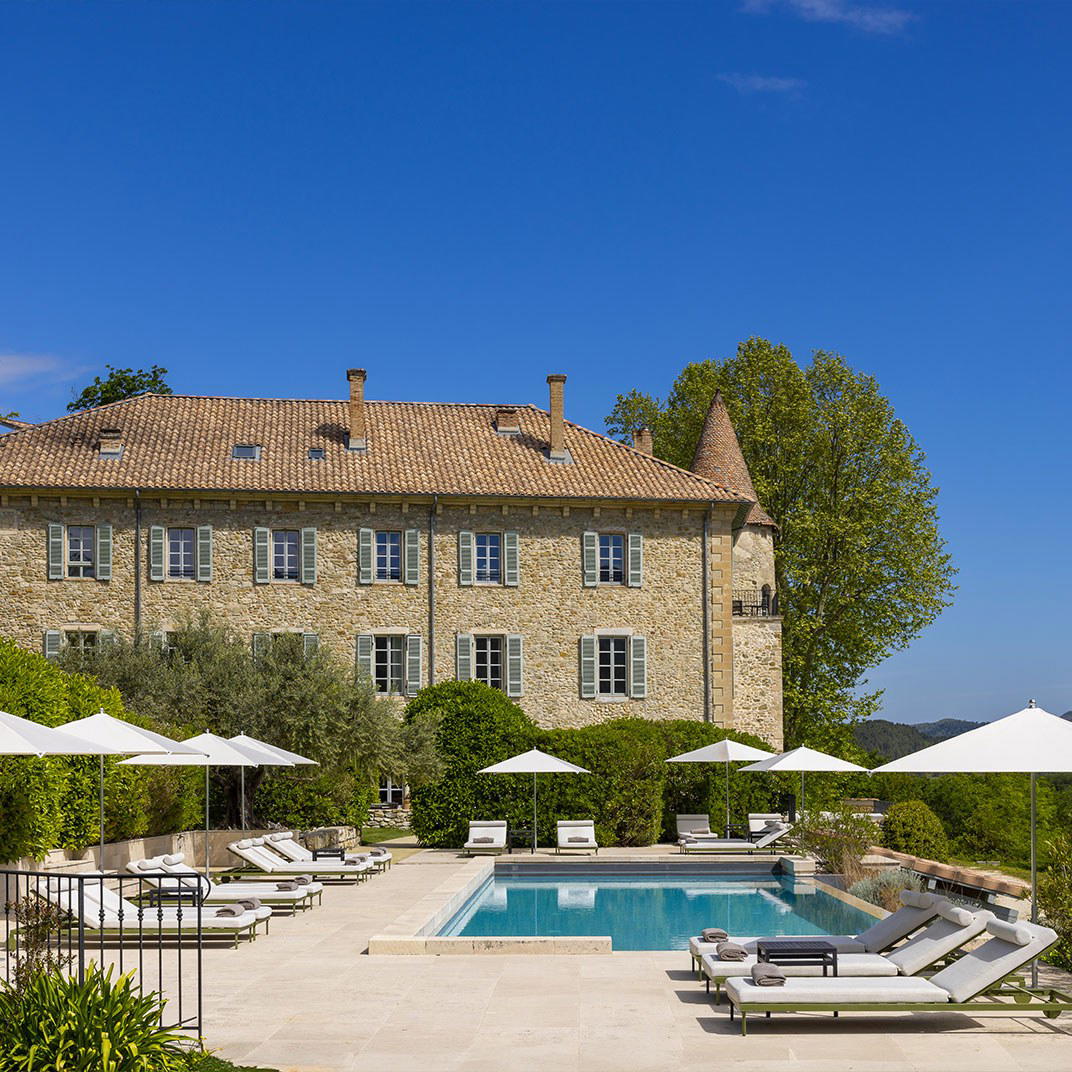
Approaching La Garde-Adhémar from the valley floor, the village presents itself as a study in medieval restraint: limestone walls bleached by the southern sun, a Romanesque church marking the ridge, and the kind of silence that only arrives where cars cannot easily follow. Le Clos sits within this geometry, housed in the stone fabric of a village that has changed shape slowly over centuries. The physical setting is not incidental to the dining experience here. In the Drôme Provençale, the relationship between architecture and agriculture is unusually direct, the same terroir that built the walls also stocks the kitchen.
This corner of the northern Provence corridor, running south from Montélimar toward the Vaucluse, produces ingredients that appear on tables from Lyon to Monaco. Black truffles from the Tricastin, lamb from the Baronnies, lavender honey, stone-fruit orchards along the Rhône's eastern bank, and goat's cheese operations that have been running in the same valley configurations for generations. In a region where ingredient sourcing is not a marketing claim but a geographic fact, a kitchen in La Garde-Adhémar can access that supply chain at close range. Alléno Paris au Pavillon Ledoyen operates within the logic of a grand Parisian institution, where sourcing relationships must be engineered across distance. Here, distance is not the constraint.
Where the Drôme Fits in the French Fine-Dining Map
France's most-discussed restaurant tables tend to cluster in Paris, along the Atlantic coast, and in a handful of provincial cities. The Drôme Provençale occupies a quieter position on that map, despite sitting within reasonable reach of several of the country's most celebrated kitchens. Mirazur in Menton operates on the Italian border with a garden-to-plate philosophy that has drawn global attention; Bras in Laguiole built its identity around the wild plants of the Aubrac plateau. Both represent a strand of French cooking that takes geographic specificity seriously, and the Drôme corridor shares that same agricultural logic without the same degree of international visibility.
Further afield, the benchmark addresses include Troisgros - Le Bois sans Feuilles in Ouches, Auberge de l'Ill in Illhaeusern, and Paul Bocuse - L'Auberge du Pont de Collonges, addresses whose reputations were built partly on the argument that France's leading cooking does not require a Paris postal code. The Drôme operates within this same argument, at a lower register of celebrity but with equivalent access to notable primary produce. For those tracking the south of France more broadly, AM par Alexandre Mazzia in Marseille and L'Oustau de Baumanière in Les Baux provide useful reference points for how southern French kitchens at the summit of their respective tiers handle the same Mediterranean larder.
The Sourcing Territory Around La Garde-Adhémar
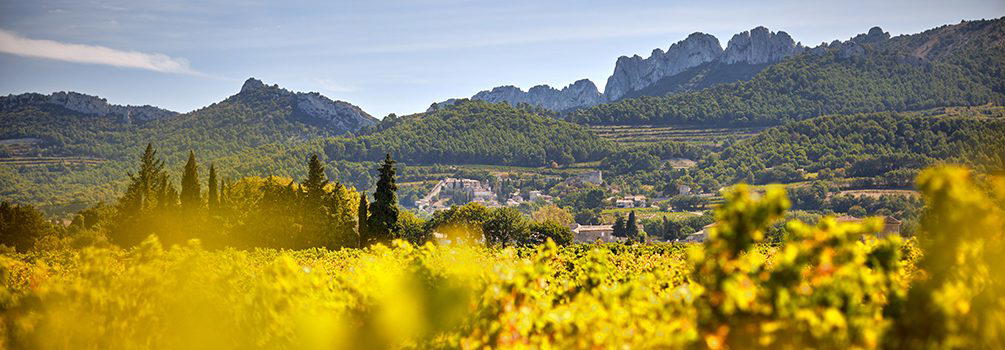
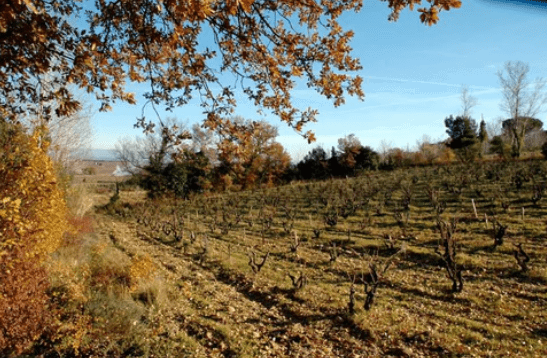
The Drôme department produces ingredients at a density that is easy to underestimate. The Tricastin plain, immediately below La Garde-Adhémar, is one of France's more productive truffle zones, with the black Périgord truffle harvested from November through March across oak groves that have been managed for this purpose for well over a century. To the east, the Baronnies pre-Alps provide grazing for sheep and goats whose milk and meat carry a flavour profile shaped by the wild herbs, thyme, savory, rosemary, that grow on the same slopes. Stone fruits from the Rhône valley, apricots in particular, have a protected origin designation in adjacent Ardèche, and the crossover into Drôme production follows the same alluvial soil logic.
This is sourcing territory in a literal sense: a kitchen within the village of La Garde-Adhémar can draw on suppliers whose operations are visible from the dining room window. That proximity has a practical consequence for what arrives on the plate, seasonality is not curated, it is imposed by geography and climate. The northern Provence growing calendar runs roughly from asparagus in April through to the last of the autumn truffle season, with a summer peak in tomatoes, courgettes, peppers, and the wild herbs that define Provençal cooking at its most direct. Restaurants in this corridor that pay attention to this calendar eat differently in August than in January, and that range is itself part of the proposition.
Christopher Coutanceau in La Rochelle and La Marine in Noirmoutier-en-l'île apply the same geographic specificity to Atlantic seafood. The pattern holds across French fine dining at its most grounded: the ingredient source defines the ambition.
Planning a Visit to La Garde-Adhémar
La Garde-Adhémar sits roughly 12 kilometres north of Pierrelatte and around 25 kilometres south of Montélimar, making it accessible from the A7 autoroute that connects Lyon to Marseille. Visitors travelling the classic north-south corridor between Lyon and the Côte d'Azur can include the village as a considered detour rather than a destination requiring significant route adjustment. Those arriving by rail would typically use Pierrelatte or Montélimar as the nearest TGV-connected stations, with local transport or a hire car needed to reach the village itself, as public connections to the hill towns in this area are limited.
At-a-Glance Comparison
Comparable venues nearby, for context on price, style, and recognition.
| Venue | Cuisine | Price | Notes |
|---|---|---|---|
| Le ClosThis venue — the venue you are viewing | Traditional French Bistro | $$ | Not listed |
| Le Four à Chaux | French Bistronomy with Local Mediterranean Influences | $$ | Caromb |
| L Autruche | Modern Southern French Market Bistro | $$ | Historic Center |
| Le Relais du Vivarais | Traditional French Bistro | $$ | Viviers |
| L'Alandier | French Bistro | $$ | Le Village |
| L’aventure | French Mountain Grill | $$ | Oz en Oisans |
Continue exploring
More in La Garde Adhemar
Restaurants in La Garde Adhemar
Browse all →
Hotels in La Garde Adhemar
Browse all →
At a Glance
- Cozy
- Elegant
- Romantic
- Rustic
- Date Night
- Family
- Special Occasion
- Terrace
- Courtyard
- Open Kitchen
- Historic Building
- Local Sourcing
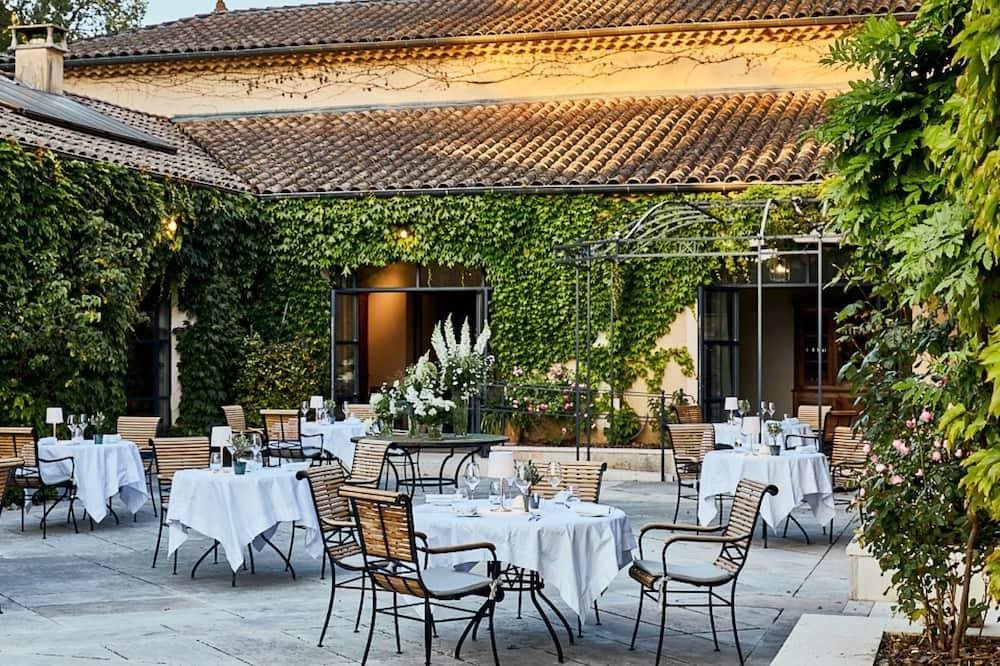
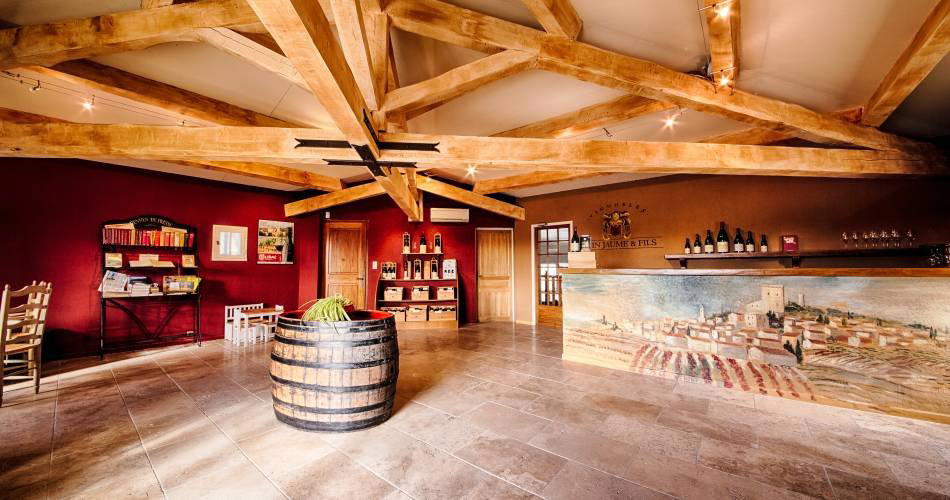
Cozy and elegant atmosphere in a renovated historic village space with warm lighting from a large fireplace, magical decor, and charming courtyard seating.