
Domaine Auguste Clape is among the more consequential addresses in Cornas, a small northern Rhône appellation built almost entirely on Syrah.
Pearl is the En Primeur Club membership app — saves, bookings, and concierge access live there. Same editors, same standards.
- Address
- 146 Av. du Colonel Rousset, 07130 Cornas
- Phone
- +33 4 75 40 33 64
- Website
- domaineclape.fr
- Directions
- Get directions
 Saves & bookings on Pearl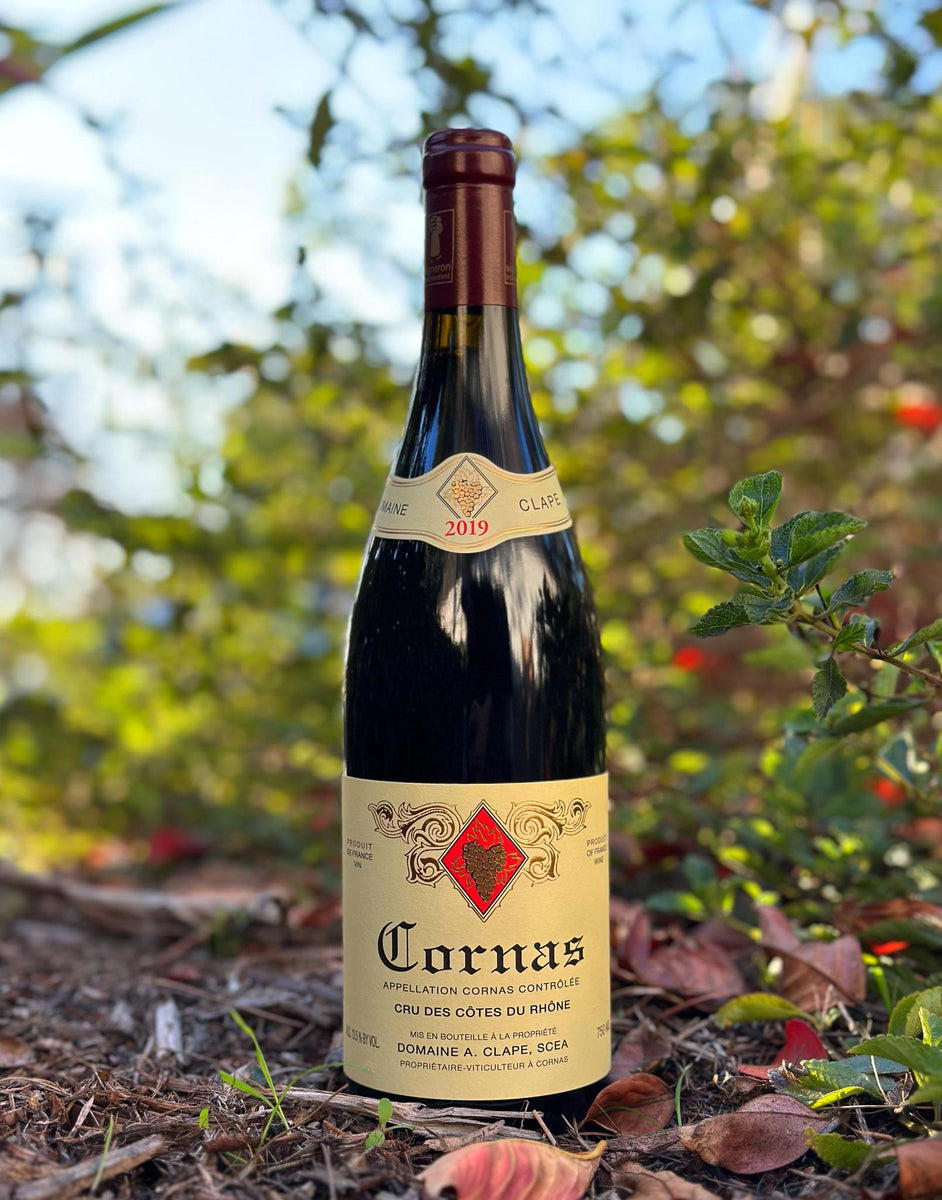
Granite, Syrah, and the Logic of Cornas
The northern Rhône has many famous appellations, but few are as stubbornly themselves as Cornas. Where Hermitage trades on centuries of documented prestige and Côte-Rôtie leans into the drama of its twin hillsides, Cornas has always operated on narrower terms: one grape, one colour, one geological argument. The granite and gneiss soils of the commune produce Syrah of a particular density and reticence, wines that need time to open and rarely apologise for it. Domaine Auguste Clape, located at 146 Avenue du Colonel Rousset in the village itself, sits at the centre of that argument with a track record stretching back to a first vintage in 1978.
Understanding what Clape represents requires understanding what makes Cornas different from its neighbours. The appellation sits at the southern end of the northern Rhône's main arc, which means warmer average temperatures than Crozes-Hermitage but the same granitic basement that characterises the leading northern Rhône terroirs. The amphitheatre of slopes behind the village traps heat and shields vines from the mistral, creating conditions that push ripeness without sacrificing the mineral structure the soils provide. Syrah here tends toward iron, black olive, and smoked meat rather than the more violet-and-pepper register you find further north. The wines age differently too, slowly, with tannins that only begin to resolve after a decade in bottle.
Four Decades of Continuity as a Critical Signal
In wine, continuity of ownership and winemaking philosophy is itself a form of terroir data. A domaine that has been making wine from the same sites across multiple decades accumulates something that cannot be replicated by a new entrant, however talented: a record of how those vineyards behave across vintages, across climate cycles, across the full arc of what the appellation can produce. Domaine Auguste Clape's first vintage of 1978 places it among the small group of Cornas producers who were making serious wine before the appellation's wider recognition in the 1990s and 2000s.
Winemaker Olivier Clape now carries that continuity forward. In appellations as small and personality-driven as Cornas, succession within a family represents something specific: the accumulated knowledge of the land transfers through practice rather than documentation, and the house style evolves incrementally rather than being reset by new ownership. Across the wider Rhône, this pattern repeats at particularly respected addresses, compare the multigenerational continuity at properties like Château Bélair-Monange in Saint-Emilion or the sustained family stewardship at Château Batailley in Pauillac. The thread across all of them is that the land's character gets more legible over time, not less.
What the Terroir Is Actually Doing
Cornas granite is not a uniform substrate. The village's slopes present a mix of decomposed granite, sandy granite soils, and areas where gneiss and mica-schist interleave with the main geological mass. Older vines, with root systems that have penetrated deep into fractured rock, access water reserves and mineral complexity that younger plantings cannot reach. This is one reason why vine age matters so acutely in Cornas: it is not sentimentality but geology. The older the vine, the more faithfully it reports on what lies beneath.
At the elevation and aspect of the leading Cornas slopes, daytime heat accumulation is significant, but diurnal temperature variation, the drop at night, preserves the acidity that keeps these wines alive over extended cellaring. Without that acid backbone, the density of Cornas Syrah would become oppressive. With it, wines made in warm vintages can still age for twenty years or more. This thermal logic is shared across other serious Rhône addresses and explains why the region's leading producers consistently talk about elevation and aspect before they talk about anything else. Producers across the broader arc of French fine wine, from Albert Boxler in Niedermorschwihr working Alsatian grand cru slopes to the Bordeaux estates of Château Branaire-Ducru and Château Cantemerle, are all, in different ways, making the same argument: that the land speaks if you give it the conditions to do so.
In Cornas terms, that is a meaningful designation. The appellation has fewer producers than Saint-Émilion or the Médoc, and the gap between those who manage the granite's demands well and those who produce merely competent wine is substantial. A 4 Star Prestige signal indicates a producer operating at the upper end of what the appellation delivers, which in Cornas means wines that will be of genuine collector and cellar interest.
The Prestige qualifier within the 4 Star band signals sustained performance rather than a single high-scoring vintage.
Cornas in the Northern Rhône Hierarchy
Cornas occupies an interesting position in the hierarchy of northern Rhône appellations. It has never had the name recognition of Hermitage, the fashionable allure of Côte-Rôtie, or the sheer scale of Crozes-Hermitage. What it has is a purity of focus that those larger appellations cannot match: pure Syrah, granite-dominated, with a style that tends toward structure over charm in youth. That profile has historically meant that Cornas was undervalued relative to its quality ceiling, and producers like Clape were making serious wine while the world's attention was directed elsewhere.
That period of relative obscurity has largely ended. Cornas now attracts serious collector attention, and the village's leading producers have pricing and allocation dynamics that reflect their recognition. This shift mirrors what happened in other once-overlooked French wine regions: Château Dauzac in Labarde and Château d'Arche in Sauternes both represent appellations where careful buyers identified quality before broader market consensus caught up. In Cornas, that window has narrowed, but the fundamental argument for the appellation's leading producers remains intact.
Planning a Visit to Cornas
Cornas sits in the Ardèche department of the Auvergne-Rhône-Alpes region, just south of Valence on the western bank of the Rhône. The village is small and the domaine infrastructure is characteristically modest for the northern Rhône. Visiting the domaine at 146 Avenue du Colonel Rousset requires advance contact; visits require advance appointment. Serious buyers and wine professionals tend to arrange visits through trade channels or direct correspondence. The nearest significant city is Lyon to the north, making Cornas accessible as a day visit from there or from Valence, which sits roughly 10 kilometres to the north on the A7 motorway corridor.
For a broader view of the appellation's dining and hospitality scene alongside the winery visits, Chartreuse in Voiron, a different expression of the region's artisanal production culture. Accendo Cellars in St. Helena or Scotch whisky producers like Aberlour makes for a useful study in how terroir-focused production varies across entirely different climatic and geological contexts. Château d'Esclans in Courthézon offers a counterpoint that underlines just how wide French wine's range actually runs.
Comparable Venues
Comparable venues nearby, for context on price, style, and recognition.
| Venue | Cuisine | Price | Notes |
|---|---|---|---|
| Domaine Auguste ClapeThis venue — the venue you are viewing | Syrah, Marsanne | $$$ | Not listed |
| Domaine Grand Veneur | Grenache, Syrah | $$$ | Orange |
| Domaine du Clos Saint Jean | Grenache, Syrah | $$$ | Châteauneuf-du-Pape |
| Domaine de la Janasse | Grenache, Syrah | $$$ | Courthézon |
| Domaine du Cayron | Grenache, Syrah | $$$ | Gigondas |
| Domaine de Marcoux | Grenache, Mourvèdre | $$$ | Châteauneuf-du-Pape |
Recognition history
Dated appearances from independent guides and award organizations, with the underlying list record or original source where available.
Falstaff Winery - Listed
Falstaff

At a Glance
- Classic
- Rustic
- Elegant
- Wine Education
- Special Occasion
- Vineyard Tour
- Estate Grounds
- Sustainable
- Vineyard
- Mountain
- Cornas AOC
- Syrah
- Marsanne
- Still Red
- Cave Tasting
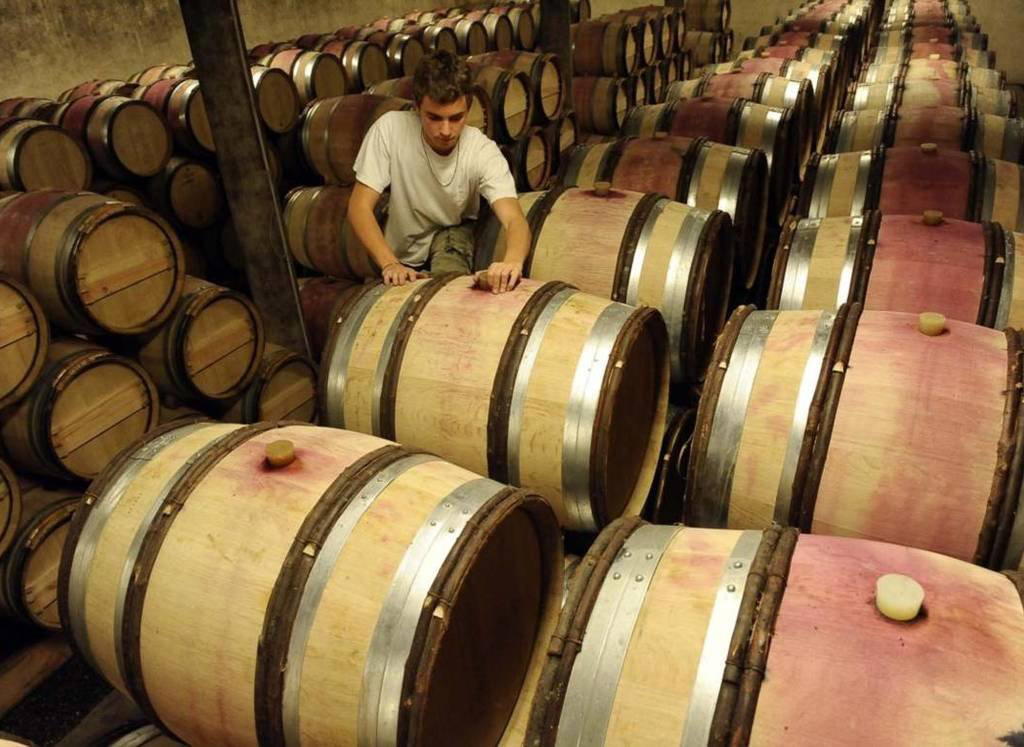
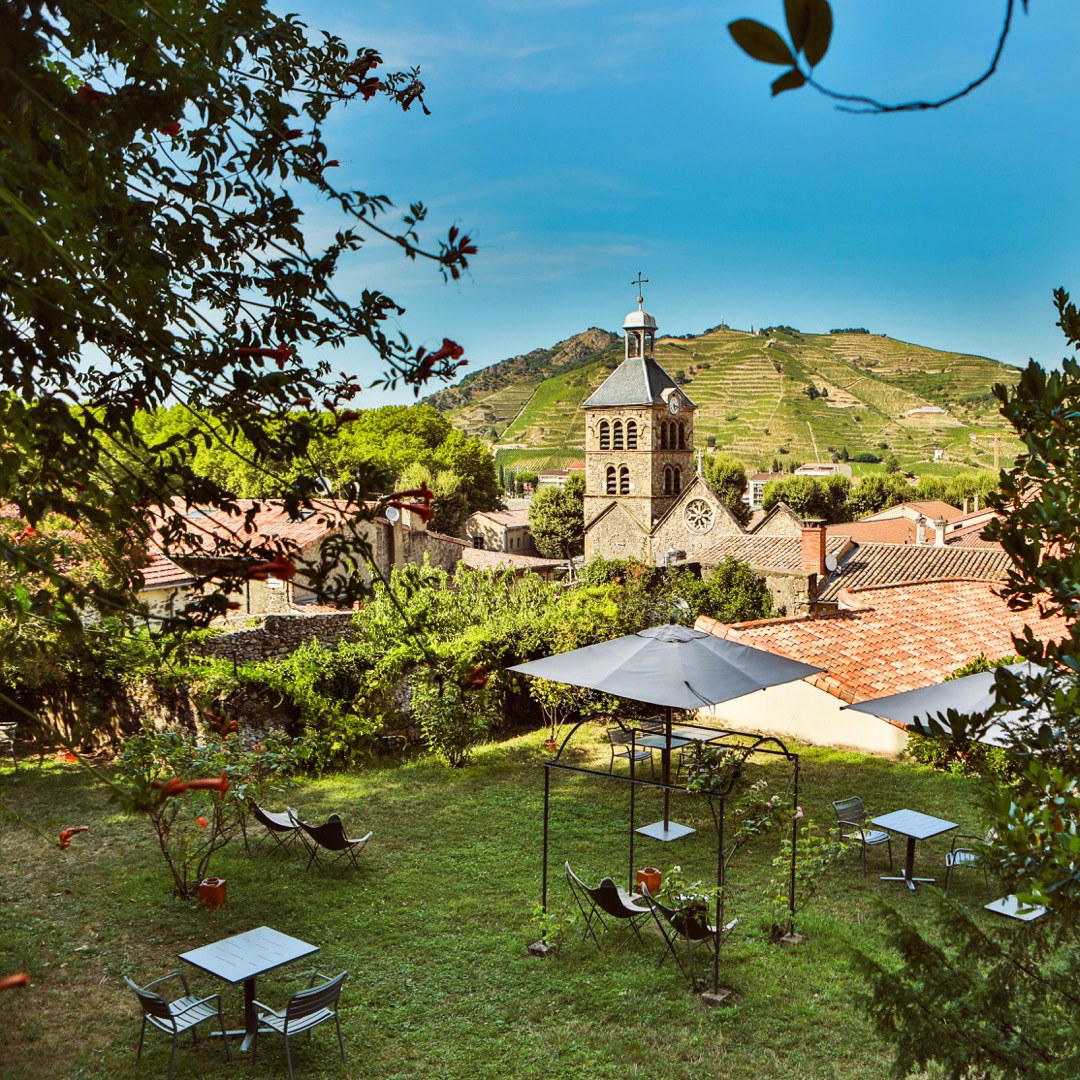
Traditional and rustic with powerful, structured wines evoking dark fruits, spice, and minerality in a historic family setting.