Larus sits in Budapest's 12th district, where the city's fine-dining ambitions meet the quieter, residential hillside above the Buda bank. The address on Csörsz utca places it away from the tourist circuit, drawing a local crowd that treats the room as a neighbourhood institution rather than a destination showcase. It occupies the tier of Budapest restaurants where kitchen discipline and local sourcing intersect with technique refined elsewhere.
Pearl is the En Primeur Club membership app — saves, bookings, and concierge access live there. Same editors, same standards.
- Address
- Budapest, Csörsz u. 18/b, 1124 Hungary
- Phone
- +3617992480
- Website
- larusetterem.hu
- Directions
- Get directions
 Saves & bookings on Pearl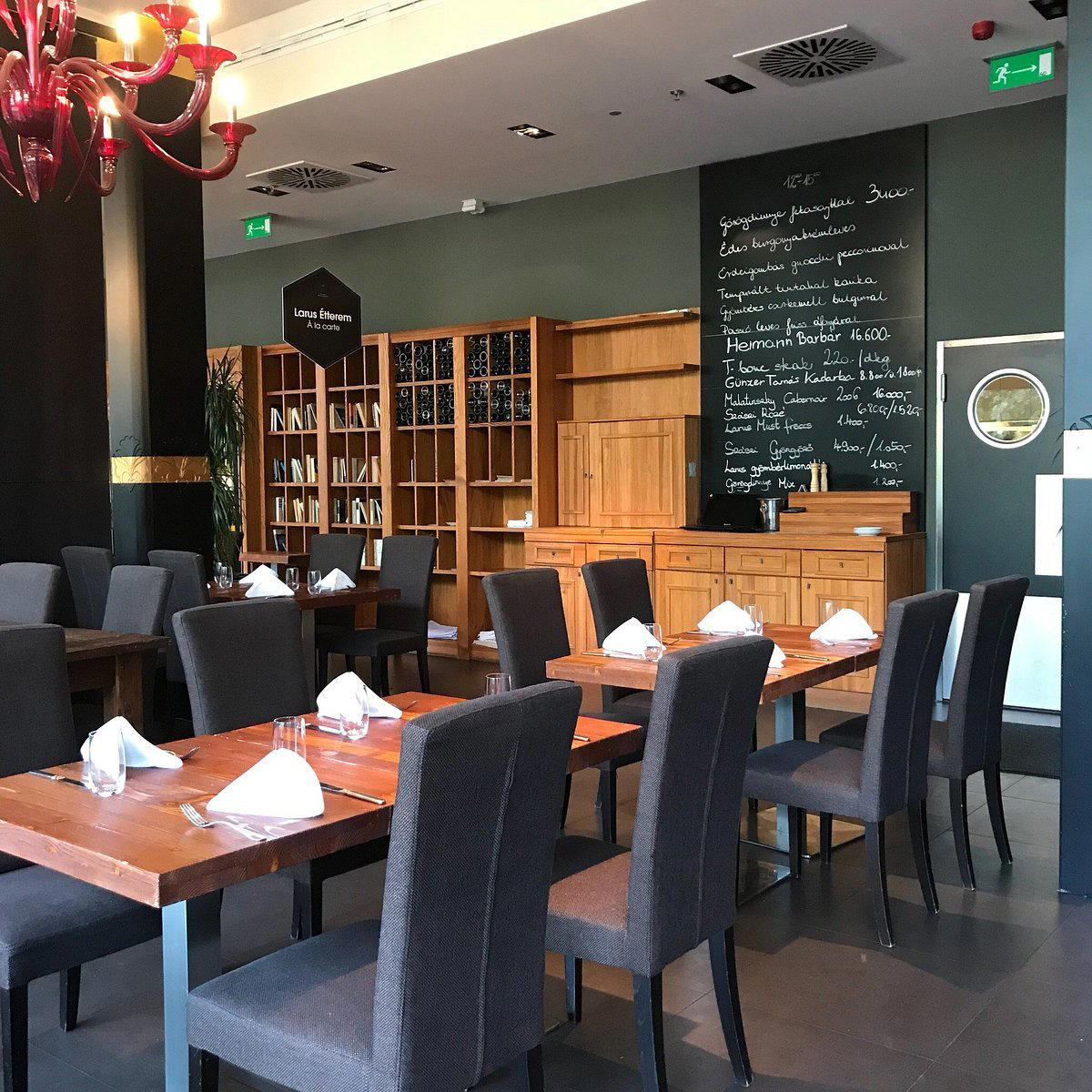
The Buda Hillside and What It Asks of a Restaurant
Budapest's serious restaurant scene has, for the better part of two decades, concentrated on the Pest side: along Andrássy út, around the inner districts, and in the ruin-bar corridors that have since been flanked by Michelin-flagged addresses. The Buda bank has always played a different role. Quieter, more residential, less trafficked by international visitors, it filters out the restaurants that depend on footfall and tourist volume. What remains tends to be places with a reason to exist independent of location advantage. Larus, on Csörsz utca in the 12th district, sits in that category.
The 12th district climbs into the Buda hills above the Vérmező park, a neighbourhood defined by villa streets, embassies, and locals who drive rather than walk to dinner. For a restaurant to hold its position there, the food and the room have to do the work that a central address would otherwise do for free. That structural pressure has historically produced either neighbourhood joints that survive on loyalty or more serious kitchens that use the quieter setting deliberately.
Where Local Ingredients Meet Imported Discipline
Hungarian fine dining over the past decade has been shaped by technique import and ingredient anchoring. Chefs trained in France, Spain, Denmark, and the United Kingdom returned with frameworks, not recipes, and applied them to a pantry that Central Europe does well: game from the Great Plain and the northern forests, freshwater fish from Lake Balaton and the Tisza, paprika in forms far more complex than the export powder, stone fruits from orchards that predate industrialised farming, and cured meats from traditions the region never abandoned.
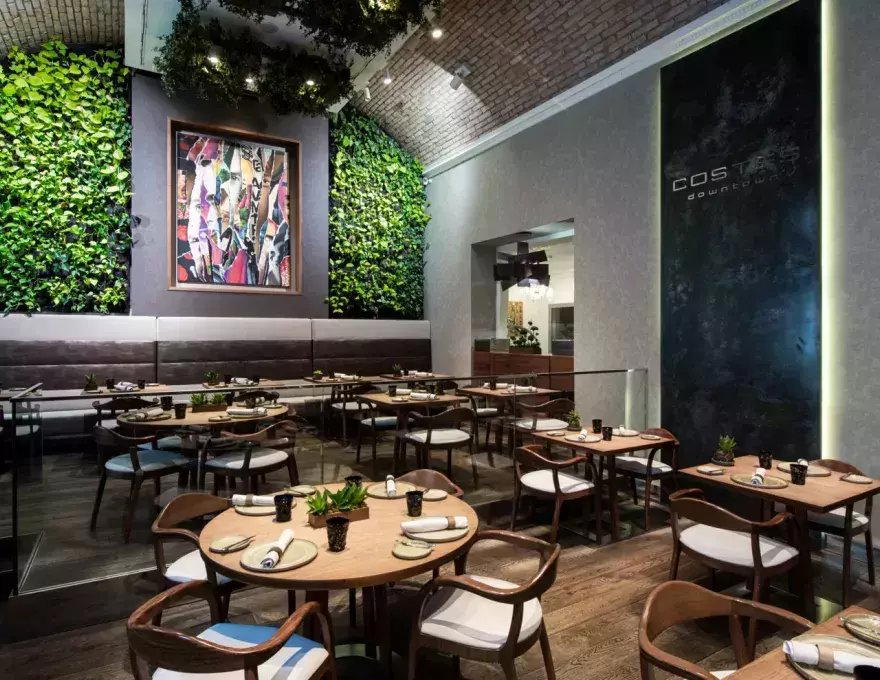
This intersection of imported method and indigenous product is where Budapest's most considered kitchens now operate. Borkonyha Winekitchen (€€€ · Modern Cuisine) demonstrated early that Hungarian wine and contemporary technique could share a menu without either compromising the other. Costes (€€€€ · Modern Cuisine) brought a Spanish-trained kitchen sensibility to Hungarian produce and held a Michelin star in doing so. Stand (€€€€ · Modern Cuisine) and Babel (€€€€ · Modern Cuisine) have extended that logic further, each finding a different register within the same broad ambition. Larus occupies this same productive tension, in a quieter corner of the city where the conversation is conducted at lower volume.
The wider Hungarian dining scene beyond Budapest rewards the same attention. Platán Gourmet in Tata applies similar local-ingredient seriousness to the lake town west of the capital. Pajta in Őriszentpéter takes the logic further into the countryside, where sourcing proximity is not a branding exercise but a practical reality. The pattern holds across Hungarian wine country too: Halasi Pince Panzió in Villány pairs southern Hungarian wine production with a table that takes the local larder seriously. BoriMami in Gyöngyös and Forst-Ház Étterem és Kávézó in Eger anchor the Eger wine corridor with kitchens that treat regional produce as a point of pride rather than a marketing note.
Seasonal Timing and the Buda Kitchen Logic
Autumn is the period when a kitchen committed to Hungarian produce has material to work with. Wild mushroom varieties arrive from the northern forests. Game seasons open across the Great Plain and the Transdanubian hills. The stone fruit preserves and ferments of summer give way to celeriac, quince, and walnut preparations that suit longer cooking. A restaurant in the hillside 12th district, drawing from local suppliers rather than central-market intermediaries, is well positioned to reflect those rhythms in real time.
Spring brings a different but equally productive moment: young herbs, river fish running before the summer heat, and the first asparagus from the Pécs region. A kitchen serious about Hungarian seasonality will shift register visibly between October and April. Planning a visit around those transitions can be worthwhile.
Placing Larus in the Budapest Price Tier
Budapest's fine-dining tier has consolidated around a recognisable set of addresses, most of them at the €€€€ price point where Michelin attention and tasting-menu formats cluster. Larus sits in this part of the market, where the room size, the sourcing ambition, and the kitchen complexity align with the restaurant's €€€ pricing. The peer comparison is with the Pest-side restaurants above: places where the cooking is doing serious work and the bill reflects that, but where the transaction is still grounded in hospitality rather than performance.
For those exploring the broader city dining scene, essência (€€€€ · Modern Cuisine) represents another address in this cohort, with its own approach to the European fine-dining vocabulary applied to a Budapest context.
For context from further afield, the technique-over-territory approach that defines Budapest's serious kitchens has parallels in cities with longer fine-dining histories. Le Bernardin in New York City built its reputation on exactly that discipline: letting the product lead while the technique stays invisible. Atomix in New York City demonstrates how Korean culinary logic, applied with French and American technique, produces something that reads as neither fusion nor compromise but as a third thing entirely. Budapest's leading kitchens are working through an analogous process with Hungarian materials.
Beyond the capital, the dining geography of Hungary extends to addresses worth factoring into a longer trip: Aranysárkány Vendéglő in Szentendre, a short ride up the Danube Bend, keeps a Hungarian culinary tradition that predates the current fine-dining moment. Classic Grill Serbian Restaurant Underground in Szeged reflects the southern borderland influence on Hungarian food culture. Astro Tea & Kávéház in Gyor and Almalomb in Hosszúhetény extend the map further. Even La Pizza Del Lupo in Onga sits within the broader regional food culture that connects Central European ingredient traditions across borders.
Planning Your Visit
Larus is located at Csörsz utca 18/b in Budapest's 12th district. Given its position in a residential neighbourhood rather than a central dining corridor, advance reservation is the practical assumption for any serious visit: kitchens at this level in Budapest run close to capacity on weekend evenings and fill quickly for weekend lunches when the pace suits longer meals. Advance reservation is recommended.
Comparable Spots
Comparable venues nearby, for context on price, style, and recognition.
| Venue | Cuisine | Price | Notes |
|---|---|---|---|
| LarusThis venue — the venue you are viewing | Seasonal European Bistro with Hungarian influences | $$$ | Not listed |
| LEO Bistro | Modern Hungarian Bistro | $$$ | Varhegy |
| Wang Mester Mozium | Authentic Chinese | $$$ | Huvosvolgy |
| Robinson | Mediterranean Steakhouse with Hungarian Influences | $$$ | Városliget |
| Déryné | Modern Hungarian Bistro with French Influences | $$$ | Krisztina körút |
| Hemingway | Hungarian and International Lakeside Dining | $$$ | Kis-Gellerthegy |
Continue exploring
More in Budapest
Restaurants in Budapest
Browse all →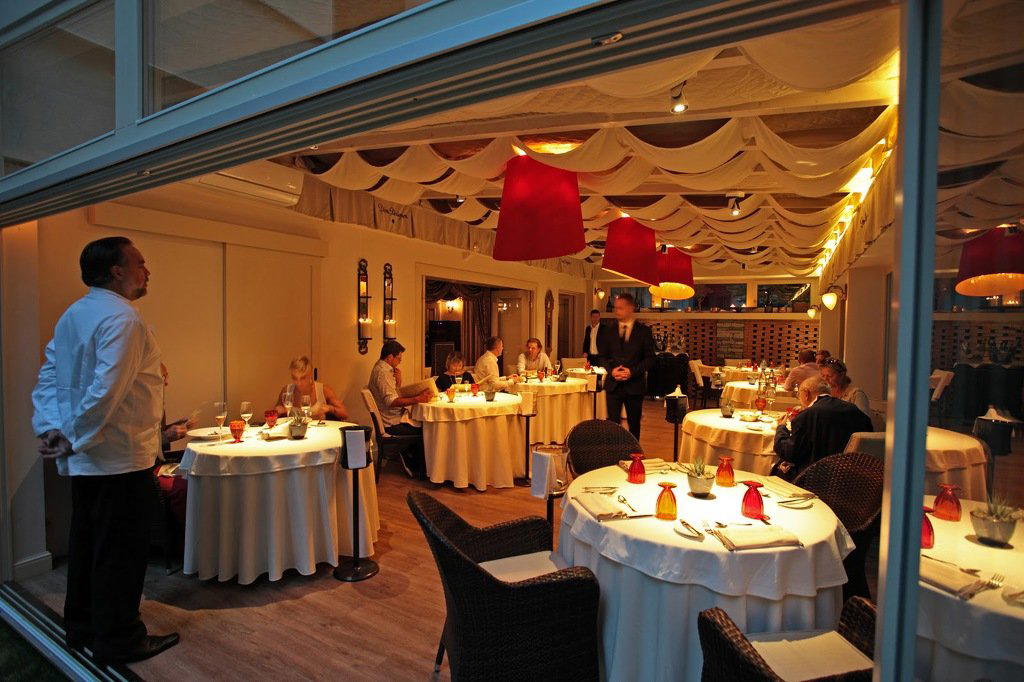
Bars in Budapest
Browse all →
Hotels in Budapest
Browse all →
At a Glance
- Elegant
- Cozy
- Scenic
- Romantic
- Sophisticated
- Business Dinner
- Date Night
- Family
- Group Dining
- Terrace
- Garden
- Extensive Wine List
- Local Sourcing
- Garden
- Street Scene
Current opening hours
- Monday
- 12–11 PM
- Tuesday
- 12–11 PM
- Wednesday
- 12–11 PM
- Thursday
- 12–11 PM
- Friday
- 12–11 PM
- Saturday
- 12–11 PM
- Sunday
- 12–4 PM
Hours can change for holidays and private events. Last verified .
Quiet tranquil park-side setting with comfortable terrace seating and welcoming attentive service.