Lars Amsterdam


1 Michelin Star · We're Smart World 4 Radishes
Our verdict
A Michelin-starred modern restaurant on Amsterdam's Danzigerkade waterfront, Lars Amsterdam earns its place in the city's upper dining tier through a cooking style that fuses French classical technique with Asian flavour architecture. Chef Lars Scharp's vegetable-focused Green Menu draws produce from a 400-square-metre rooftop urban farm, placing the kitchen at the intersection of local sourcing and global method.

Pearl is the En Primeur Club membership app, where members save venues, book tables and use the concierge.
Where the Harbour Meets the Kitchen
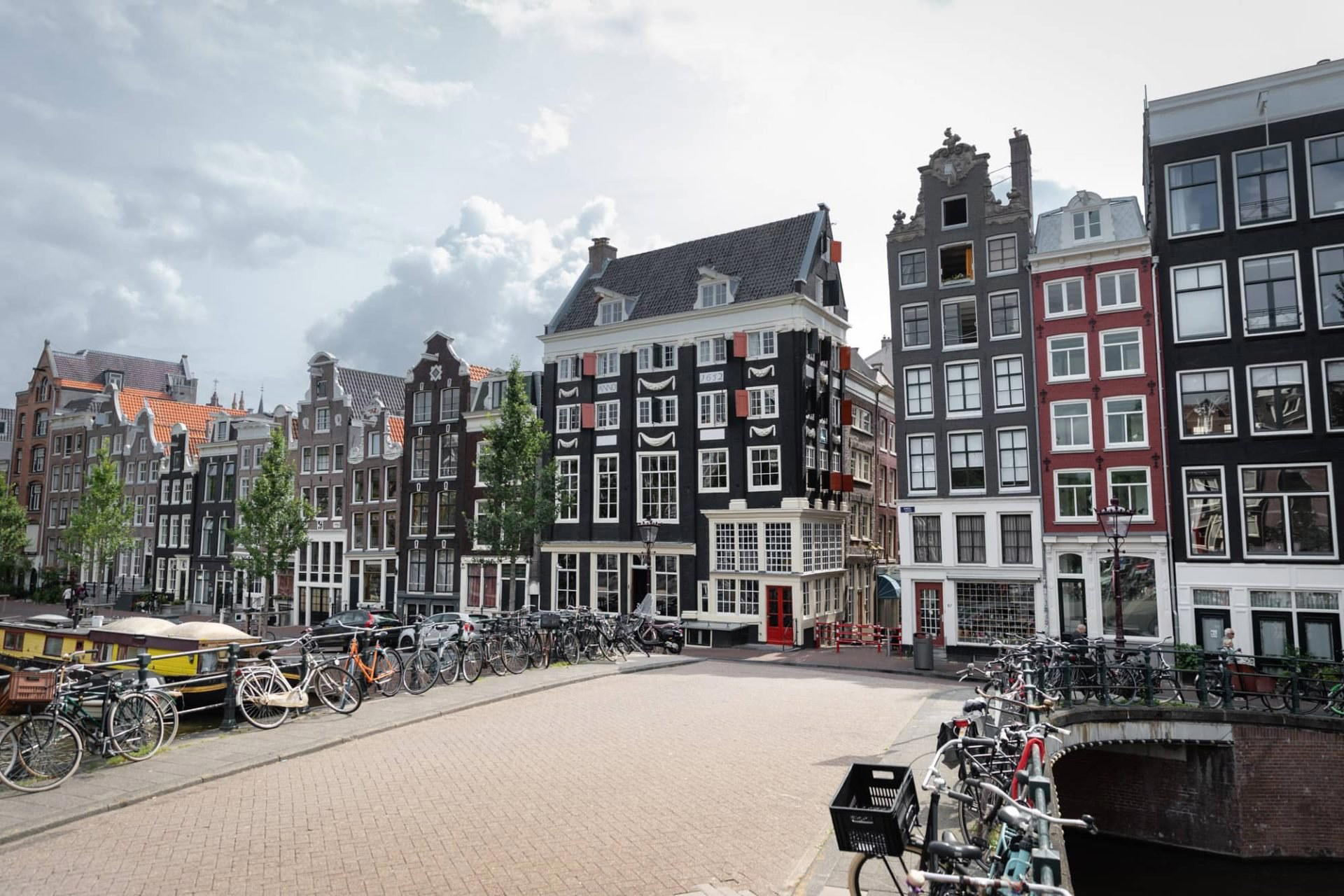
Danzigerkade sits on the western edge of Amsterdam's IJ waterfront, a stretch of former industrial quay that has been absorbing design studios, restaurants, and residential development over the past decade. Arriving at Lars Amsterdam in the early evening, the context does much of the work: warehouses repurposed into creative enterprises, cranes still visible against a low Dutch sky, a terrace that faces the harbour rather than any conventional dining street. The physical setting is not incidental to how the food reads. A kitchen working at this address, at this price point, is making an implicit argument about where serious Amsterdam dining is heading.
That argument has earned recognition. Lars Amsterdam holds a Michelin star (2024), placing it inside a cohort of Amsterdam restaurants that operate at the €€€€ tier and hold at least one star. Peers in that bracket include Ciel Bleu (€€€€ · Creative), Flore (€€€€ · Contemporary), The White Room by Jacob Jan Boerma, Restaurant Bougainville, and Restaurant Showw. Within that set, Lars Amsterdam carves a specific position: a kitchen with French classical foundations that uses Asian technique as a structural counterpart, and a sourcing model anchored to a 400-square-metre rooftop vegetable garden.
Local Soil, Global Method
The intersection of indigenous product and imported technique has become one of the defining tensions in northern European fine dining. Some kitchens resolve it by treating Asian elements as seasoning, adding a dash of miso or a yuzu vinaigrette to an otherwise European framework. Others pursue a more structural integration, where the logic of, say, Thai aromatic layering or Japanese umami construction is applied from the outset rather than folded in at the end.
The cooking at Lars Amsterdam belongs to the latter category. The kitchen operates with mastery of traditional French cuisine as its technical base, using that foundation not to produce classical French dishes but to destabilise expectations around them. A tartare built from yellowtail and North Sea shrimp is finished with a tom kha gai gel and a melon and kaffir lime vinaigrette, delivering an aromatic intensity that reads as Thai in its flavour logic while remaining precise in its French construction. Lamb prepared to medium-rare doneness carries a miso and walnut crust alongside scallops and an intense lamb gravy, producing a layering of umami and richness that moves between European and Japanese reference points without settling comfortably in either. The approach has its own internal coherence: complex sauces and technical execution borrowed from the French tradition, redirected through Asian flavour architecture.
Texture is a consistent thread in accounts of the kitchen's output. The balance of mouthfeel across courses, the temperature calibration, the precision of each element in relation to the others: these are the signals of a kitchen working at a level of control that Michelin recognition tends to reward.
The Green Menu and the Urban Farm
Vegetable-focused tasting menus have proliferated across European fine dining over the past several years, driven partly by sustainability pressure and partly by a genuine re-evaluation of what a centrepiece ingredient can be. The category has bifurcated: on one side, kitchens that treat vegetables as a replacement for meat, approximating familiar structures with plant-based components; on the other, kitchens that treat vegetables as primary material with their own logic, requiring a different set of techniques and a different understanding of flavour development.
Lars Scharp's Green Menu positions itself in the second category. The menu draws on produce from an urban farm, a rooftop vegetable garden of 400 square metres located close to the restaurant. At this scale, the garden functions as a sourcing mechanism that allows the kitchen to work with produce at a level of freshness and specificity that commercial supply chains rarely permit. Varieties can be selected for flavour rather than transportability. Harvest timing can be calibrated to service schedules. The relationship between kitchen and growing medium is direct enough to be operationally meaningful rather than simply communicative.
For travellers with strict dietary requirements, this is a material constraint to confirm before booking.
The Room and the Terrace
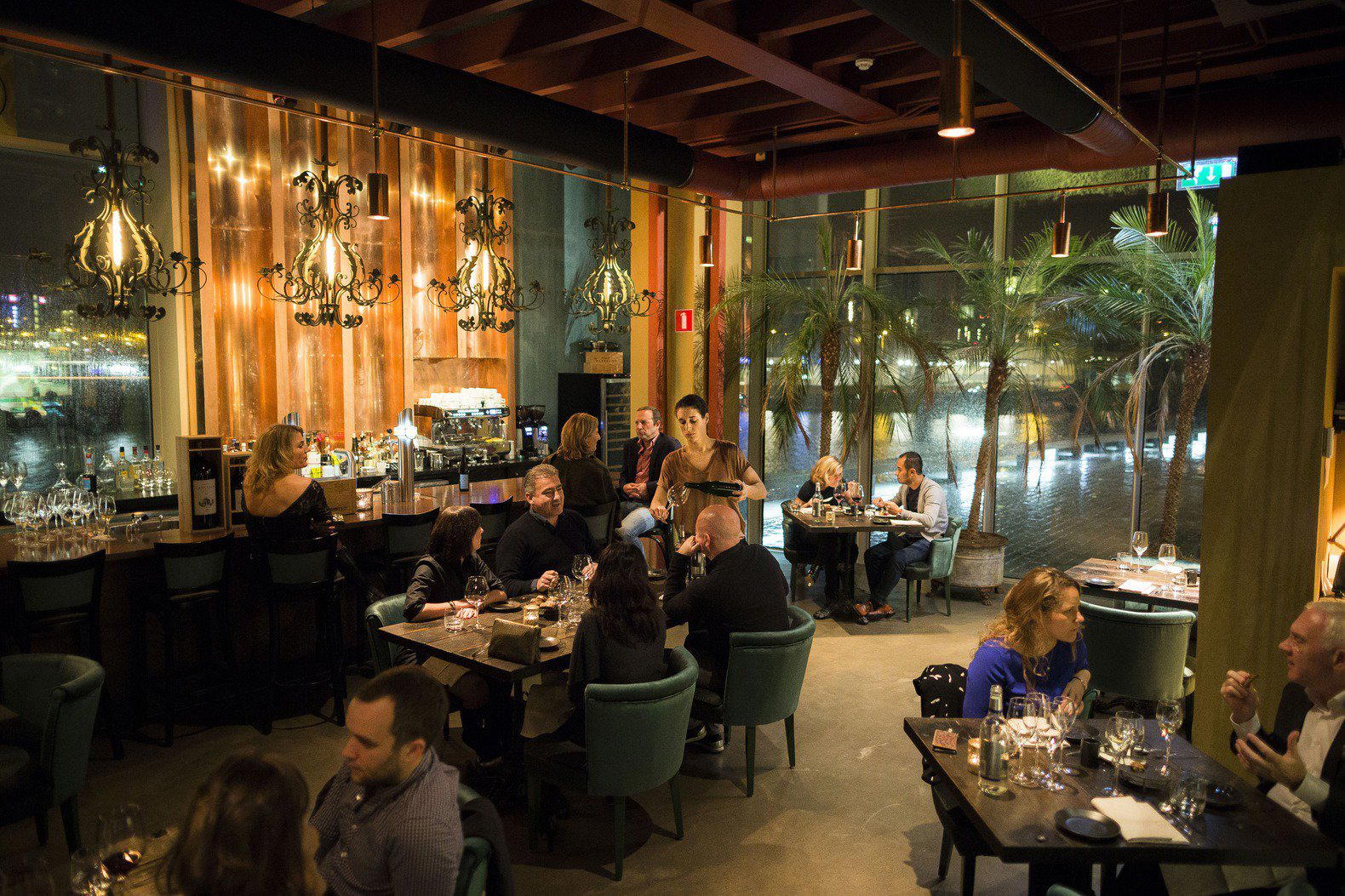
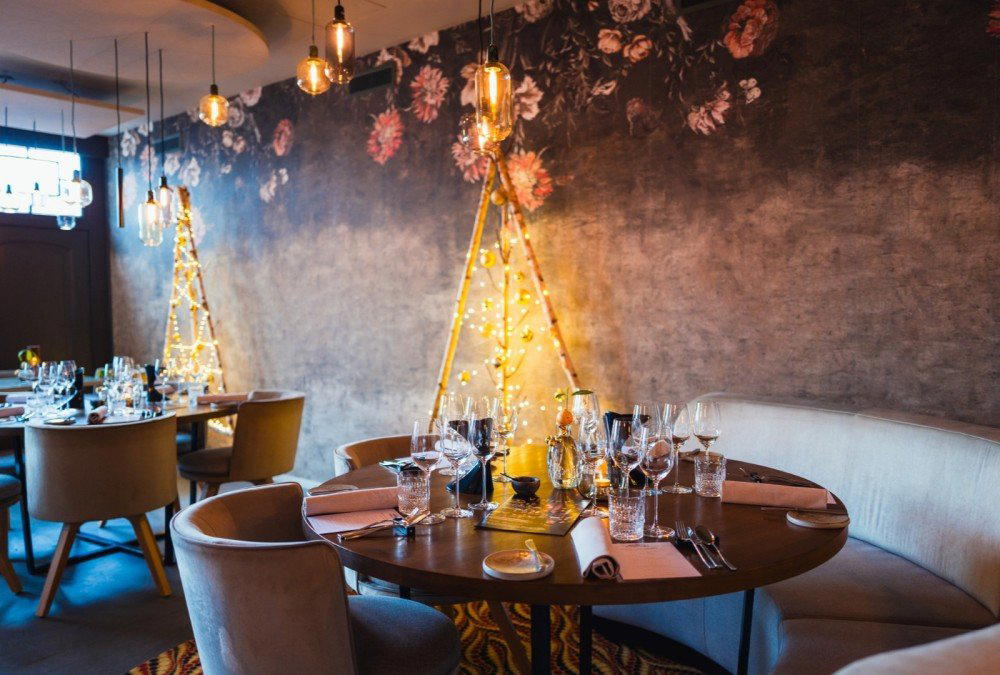
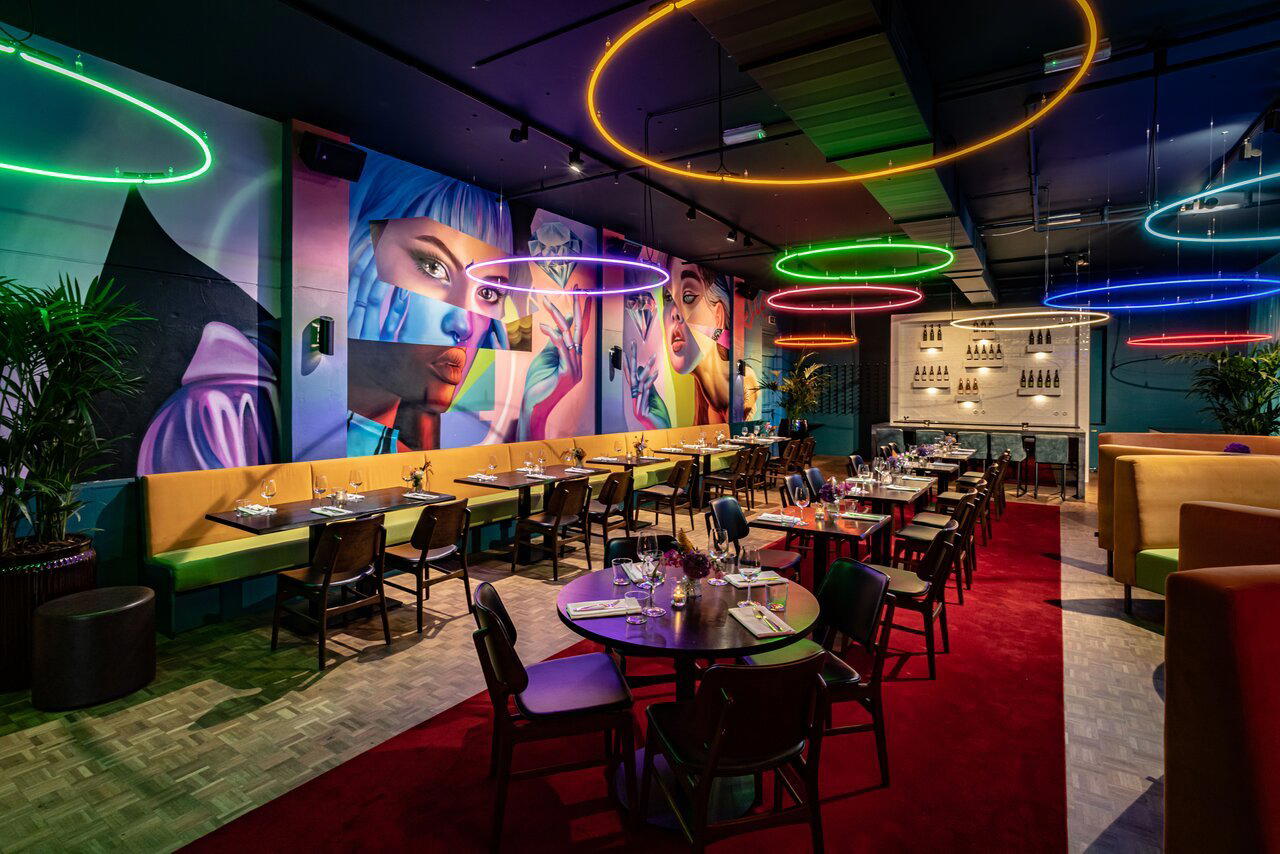
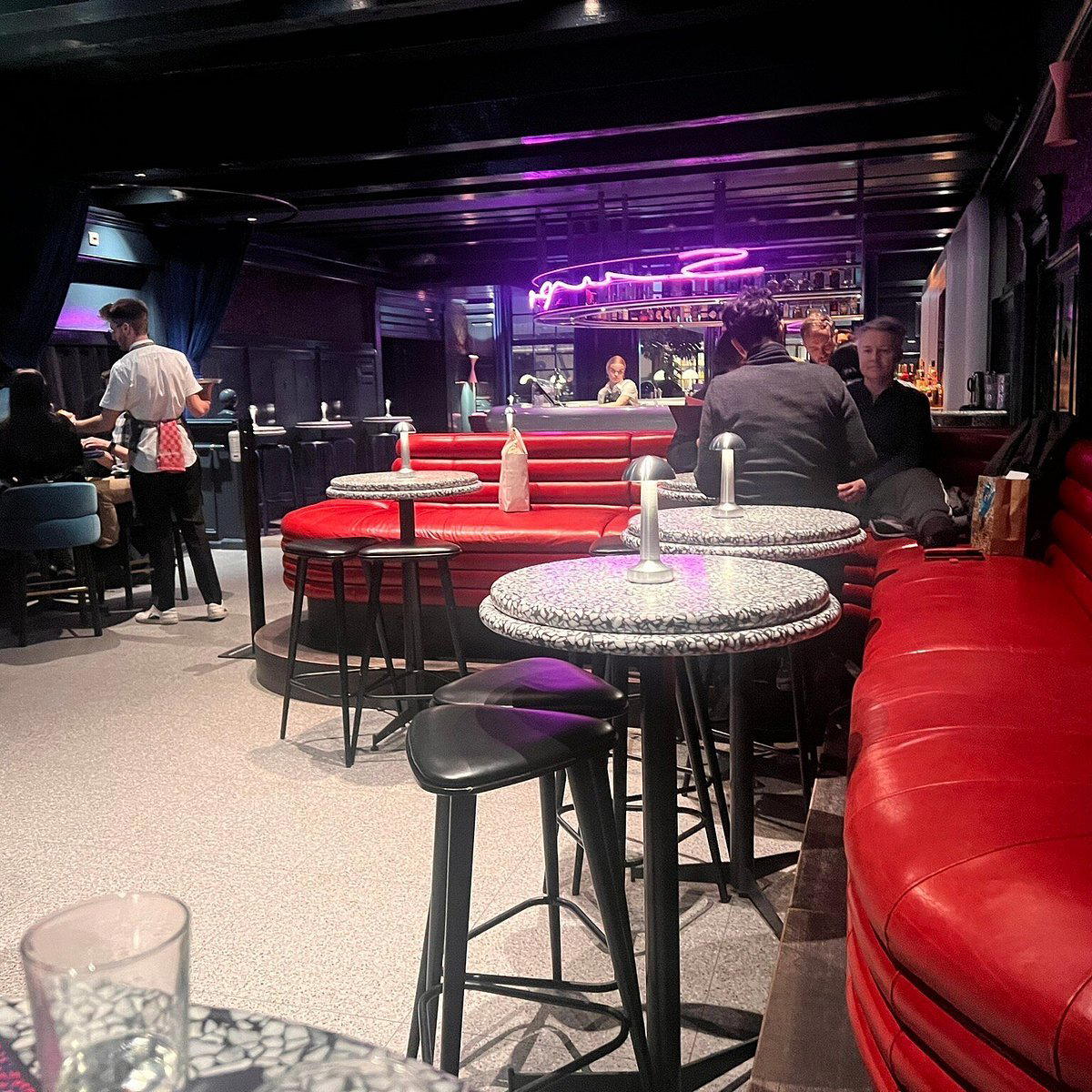
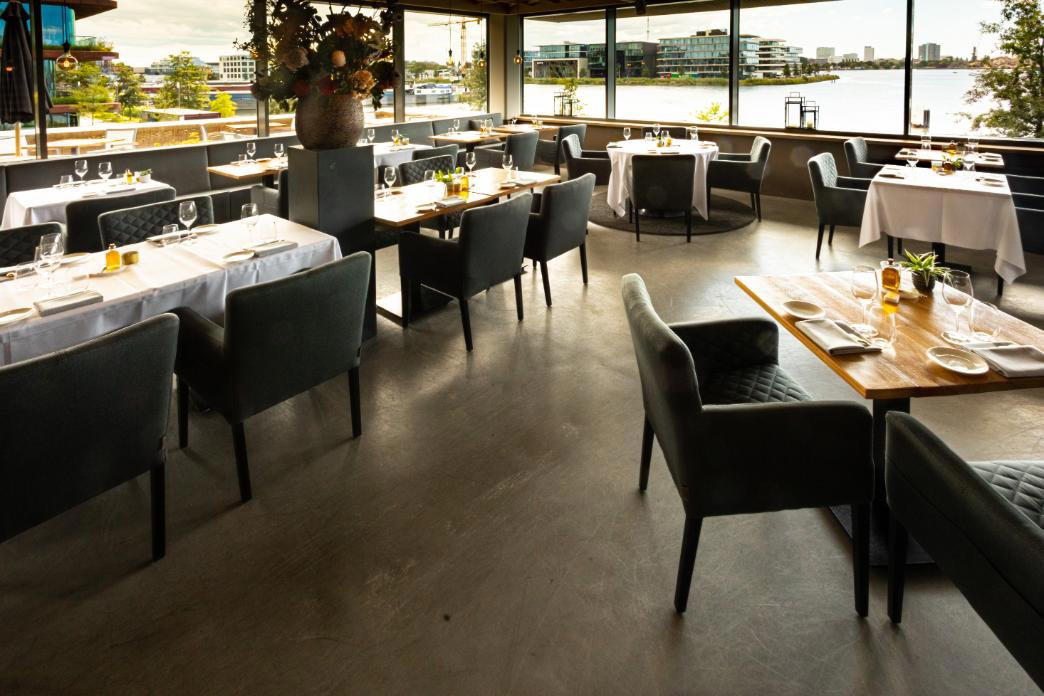
The restaurant occupies a spacious interior with a terrace facing the harbour. In a city where dining rooms tend toward the compact and the historic, the scale here is deliberate: the Danzigerkade address allows for a footprint that older canal-side locations rarely can. The terrace, in particular, positions the harbour and the surrounding urban development as a visual backdrop rather than an afterthought, which aligns with the broader character of the neighbourhood as a place in the process of defining itself.
Floor Wiggers serves as maître d', a pairing of kitchen and front-of-house that has its own significance in the Michelin tier. The service arc in a one-star environment is expected to carry weight alongside the food, and a named, stable maître d' is one signal of a front-of-house that takes its structural role seriously.
Lars Amsterdam in the Netherlands Fine Dining Picture
Amsterdam's Michelin-starred restaurants sit within a broader Dutch fine dining network that extends well beyond the city. Across the Netherlands, a number of significant kitchens have held stars for years or decades: De Librije in Zwolle, Aan de Poel in Amstelveen, De Bokkedoorns in Overveen, De Groene Lantaarn in Staphorst, De Lindehof in Nuenen, De Lindenhof in Giethoorn, Inter Scaldes in Kruiningen, and Parkheuvel in Rotterdam. Within Amsterdam itself, the one-star tier is occupied by a cluster of restaurants each working a distinct culinary register, from the Modern Dutch positioning of Bolenius to the organic sourcing model of De Kas at the €€€ level.
What distinguishes Lars Amsterdam within this field is the specificity of its technical identity. The European-Asian fusion territory is broad enough that many kitchens claim a version of it; fewer demonstrate the kind of deep classical French infrastructure that makes the Asian elements structurally integrated rather than decorative. The 2024 Michelin recognition signals that the kitchen is delivering at a level of consistency and creativity that places it in the upper tier of the Amsterdam scene, not merely as a new entrant but as a restaurant with a defined point of view.
Planning Your Visit
Lars Amsterdam operates a schedule that reflects the conventions of the upper tasting-menu tier in the Netherlands. The restaurant is closed on Mondays and Sundays. On Tuesday and Wednesday, service runs in the evening only, from 6 PM to 8:30 PM. From Thursday through Saturday, there is a lunch service (12 PM to 1:30 PM) in addition to the evening sitting. For travellers building a multi-day Amsterdam itinerary, the Thursday-to-Saturday lunch option is the most flexible access point, particularly if evenings are committed to other programming.
The address is Danzigerkade 179, 1013 AP Amsterdam. The Danzigerkade waterfront is accessible by tram and bicycle, with the harbour walk offering an approach that makes the neighbourhood context legible before you arrive at the door.
For a broader view of Amsterdam's dining and hospitality options, EP Club maintains full guides covering Amsterdam restaurants, Amsterdam hotels, Amsterdam bars, Amsterdam wineries, and Amsterdam experiences.
Frequently asked questions
What's the cuisine at Lars Amsterdam?
Does Lars Amsterdam have a Michelin star or similar recognition?
Lars Amsterdam has received recognition including: Overall a great experience, topping my already high expectations. Every dish was perfectly in balance, both in flavor, temperature and texture. Especially the textures stood out, presenting a surprisingly pleasant mouthfeel. Lars Scharp’s “….
What dish is Lars Amsterdam famous for?
No single dish defines the menu in the way a signature set-piece might at a more traditional fine dining address. The restaurant's awards record and reviewer notes point to the Green Menu as its most discussed offering, a vegetable-focused tasting course that draws produce from a 400-square-metre rooftop urban farm nearby. Dishes cited in recognition of the Michelin 1 Star (2024) include a yellowtail and North Sea shrimp tartare with tom kha gai gel and melon-kaffir lime vinaigrette, and a medium-rare lamb with miso-walnut crust, scallops, and lamb gravy, both illustrating Lars Scharp's method of applying classical French technique to European-Asian flavour combinations.
What should I budget for a meal at Lars Amsterdam?
Pricing at Lars Amsterdam is listed as €€€€.
What are the operating hours at Lars Amsterdam?
Hours at Lars Amsterdam: Monday closed Tuesday 6 PM-8:30 PM Wednesday 6 PM-8:30 PM Thursday 12 PM-1:30 PM 6 PM-8:30 PM Friday 12 PM-1:30 PM 6 PM-8:30 PM Saturday 12 PM-1:30 PM 6 PM-8:30 PM Sunday closed.
Cuisine-First Comparison
A quick peer reference to anchor this venue in its category.
| Venue | Cuisine | Price | Awards | Notes |
|---|---|---|---|---|
| Lars AmsterdamThis venue (the venue you are viewing) | Modern French Fine Dining | Not listed | 1 Michelin Star · We're Smart World 4 Radishes | Not listed |
| Ciel Bleu | Modern French Fine Dining | $200–300 | 2 Michelin Stars · La Liste Top Restaurants | Creative |
| Bolenius | Modern Dutch Farm-to-Table | $100–150 | 1 Michelin Star · We're Smart World Top 100 #18 | Modern Dutch, Creative |
| De Kas | Seasonal Farm-to-Table Fine Dining | $50–100 | 1 Michelin Star · Star Wine List | Organic |
| Wils | Michelin-Starred Fire-Cooked Modern European | $100–150 | 1 Michelin Star · We're Smart World 4 Radishes | World Cuisine |
| Gebr. Hartering | Modern Fusion Bistro | $50–100 | Michelin Plate · Star Wine List | French |
Recognition history
Dated appearances from independent guides and award organizations, with the underlying list record or original source where available.
Michelin 1 Star
Michelin
We're Smart World 4 Radishes
We're Smart World
Full recognition history (3 entries)
Michelin 1 Star
Michelin