Landhotel & Weingasthof Schwarzer Adler
In the Franconian wine village of Wiesenbronn, Landhotel & Weingasthof Schwarzer Adler occupies a position that few rural German establishments manage: a working inn with serious culinary roots planted directly in its agricultural surroundings. The Weingasthof format, part winery, part guesthouse, part regional kitchen, represents one of Germany's most coherent models of farm-to-table hospitality, where sourcing and setting are inseparable.
Pearl is the En Primeur Club membership app — saves, bookings, and concierge access live there. Same editors, same standards.
- Address
- Hauptstraße 21, 97355 Wiesenbronn, Germany
- Phone
- +49499325232
- Directions
- Get directions
 Saves & bookings on Pearl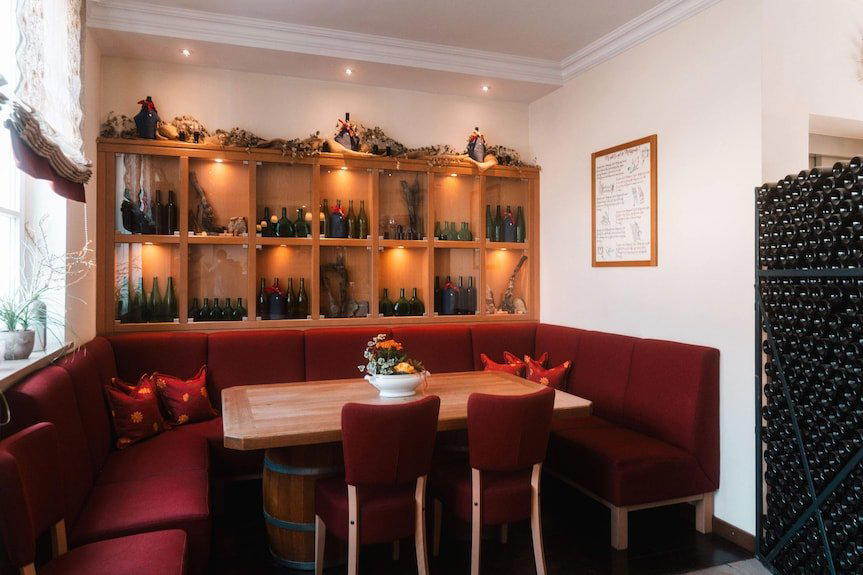
Where Franconian Wine Country Sets the Table
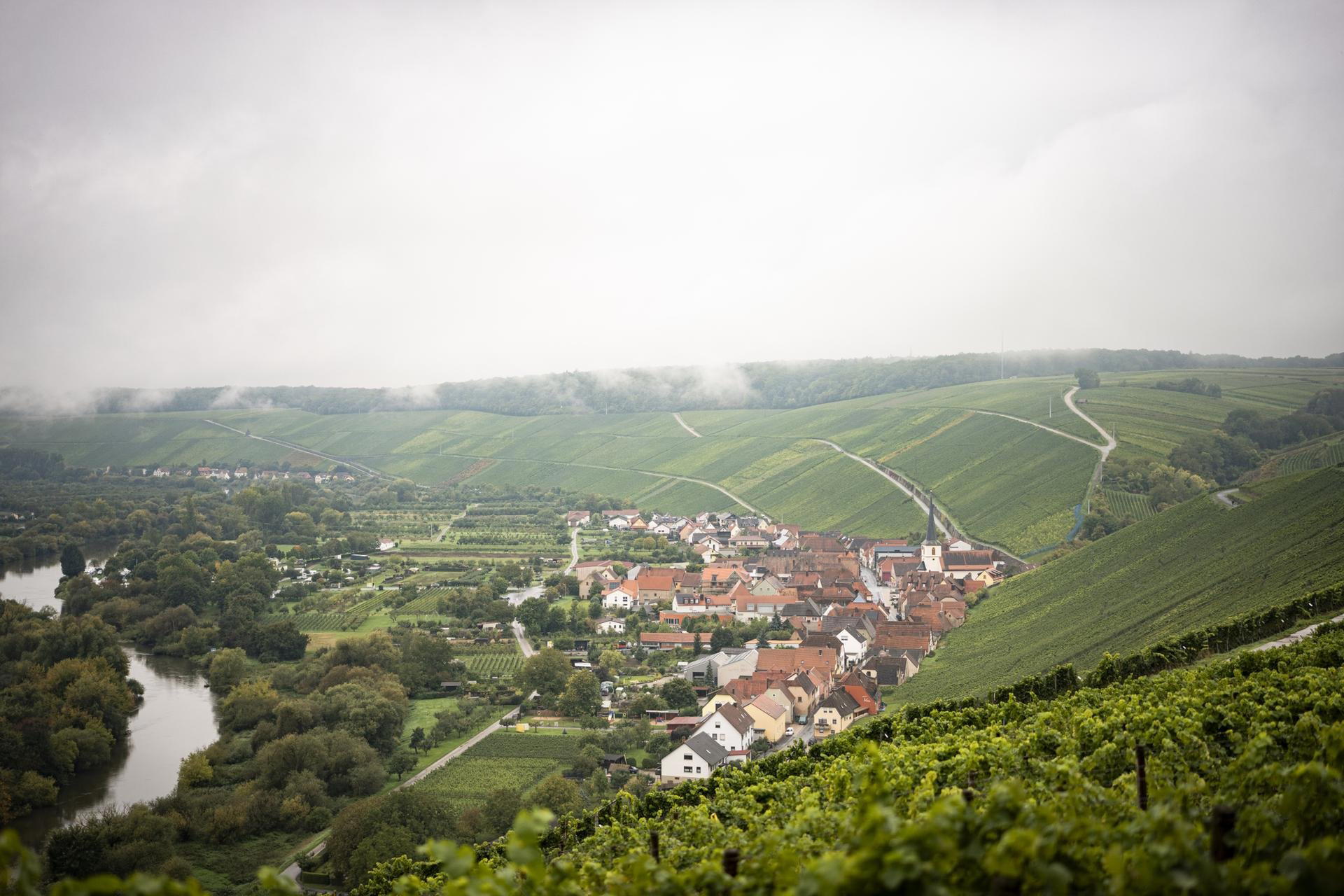
Wiesenbronn sits inside the Steigerwald, a quietly productive wine district in Lower Franconia that most international visitors pass without stopping. The village produces Silvaner, Müller-Thurgau, and Spätburgunder on chalky soils that give the wines a pronounced mineral edge, and its Weingasthöfe, inns operating directly from working estates, represent a hospitality model that has no real equivalent outside German wine country. Landhotel & Weingasthof Schwarzer Adler occupies that format at Hauptstraße 21, Wiesenbronn, presenting itself as both an overnight stop and a dining address in a village where the vineyard and the kitchen have always shared the same economy. For context on the wider Wiesenbronn dining scene, see our full Wiesenbronn restaurants guide.
The Weingasthof Tradition and Why Sourcing Is the Story
The Weingasthof format is worth understanding before you arrive. Unlike urban restaurants that build supply chains outward from a menu concept, a wine guesthouse in Franconia typically inverts that logic: the estate's own harvest and the surrounding agricultural calendar define what appears on the plate. Pork from local farms, carp from Franconian ponds, white asparagus from the sandy soils around Schwebheim, wild mushrooms from the Steigerwald forest edges, these are not decorative sourcing stories but structural constraints that shape the menu season by season. This is a materially different proposition from, say, the creative tasting menus at Aqua in Wolfsburg or the French-rooted precision of Schwarzwaldstube in Baiersbronn, where international sourcing networks and global technique are the foundation. At a Franconian Weingasthof, the constraints are local and the cooking answers to the land.
That framework makes places like Schwarzer Adler interesting to a specific kind of traveller: one who values the coherence of eating within a region's own food culture over the portable sophistication of European dining. Germany's Michelin-decorated urban and resort addresses, among them Vendôme in Bergisch Gladbach, Victor's Fine Dining by Christian Bau in Perl, and Waldhotel Sonnora in Dreis, operate at the summit of a different hierarchy. Rural Weingasthöfe are not competing in that register. They are making a different argument about what German hospitality can mean.
Approaching the Address
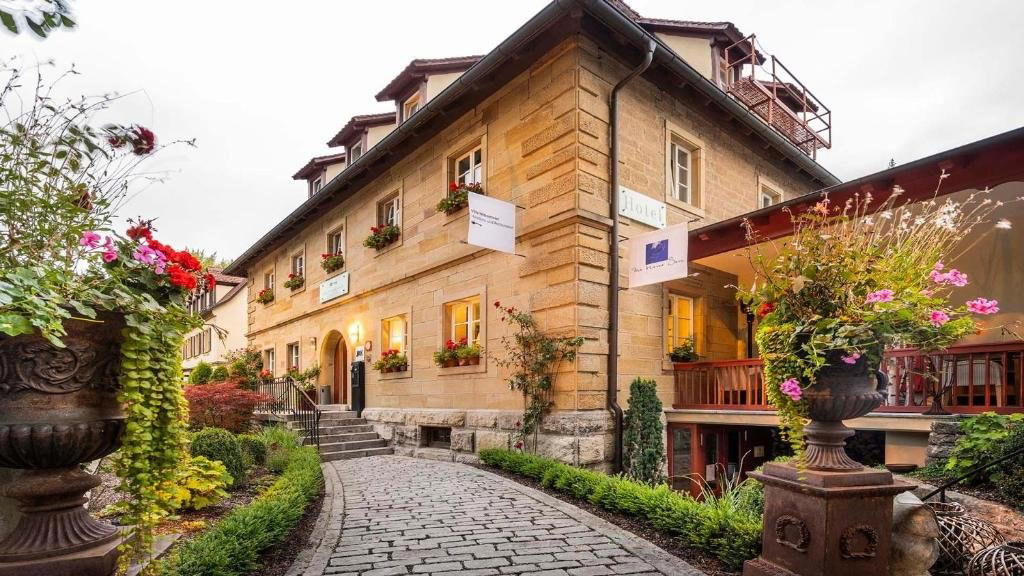
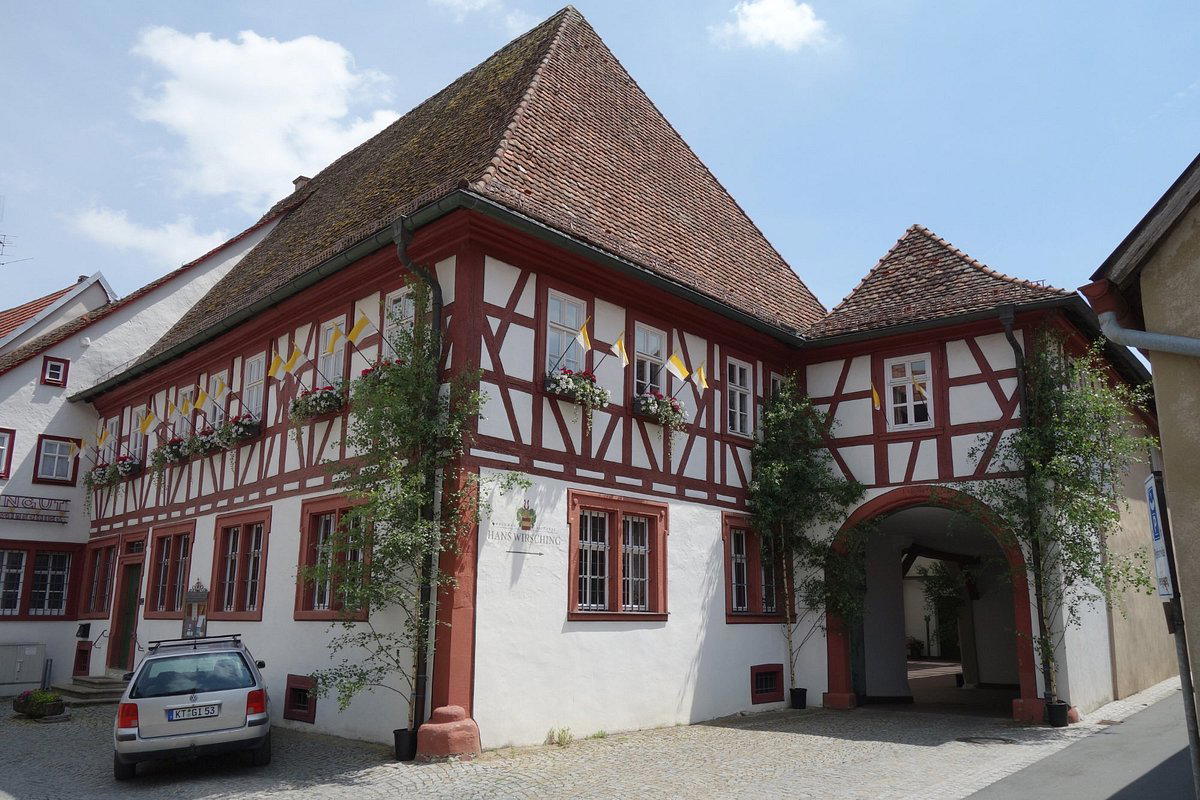
The physical approach to a Franconian village inn of this type tells you something before you cross the threshold. Wiesenbronn's main street is lined with half-timbered buildings and low garden walls, vineyards visible at the village edge. The Schwarzer Adler, the Black Eagle, a common heraldic name for German inns with centuries of precedent, sits on Hauptstraße in the way these establishments typically do: as part of the built fabric of the village rather than set apart from it. The architectural vocabulary is Franconian vernacular: pitched roofs, rendered facades, a domestic scale that signals a working inn rather than a destination resort. That physical modesty is itself a form of editorial statement about what the place prioritises.
Franconian Wine as the Through-Line
Lower Franconia holds Germany's largest concentration of Silvaner plantings, and Silvaner from the Steigerwald carries a particular character: relatively low aromatic intensity, firm acidity, and a dry finish that makes it one of the more food-compatible white wines produced in central Europe. A Weingasthof in this region is, among other things, a vehicle for understanding that wine in context, with regional dishes that were developed alongside it rather than imported to pair with it. Schäufele (braised pork shoulder), Fränkische Bratwurst with sauerkraut, freshwater fish preparations, and potato-based sides form the structural grammar of Franconian cooking, and Silvaner's relative neutrality makes it useful against all of them. For readers interested in how sourcing and terroir drive a different kind of dining, the contrast with concept-driven formats like CODA Dessert Dining in Berlin or the refined Korean-influenced approach at Atomix in New York City makes the regional model clearer.
Placing Schwarzer Adler in the Wider German Rural Dining Picture
Germany's rural dining tier has expanded over the past decade. Addresses like ES:SENZ in Grassau, Schanz in Piesport, and AURA by Alexander Herrmann & Tobias Bätz in Wirsberg demonstrate that Michelin-level ambition is no longer confined to major cities or established resort regions. That shift has also raised the standard expected of regional hospitality more broadly. A Weingasthof that trades on local sourcing and regional wine must now make that proposition credible against a backdrop where other rural German restaurants have proved what rigour looks like outside the city. The comparison set for Schwarzer Adler is not Restaurant Haerlin in Hamburg or JAN in Munich; it is other Franconian Weingasthöfe and village inns operating at a similar register of ambition and price. Within that peer group, longevity and community rootedness carry weight that awards tables cannot easily quantify.
Readers drawn to the sourcing-and-regionality argument in German cooking will also find it pursued at different scales elsewhere: Bagatelle in Trier works with Mosel-region producers, ammolite in Rust draws on Baden ingredients, and ATAMA by Martin Stopp in Sankt Ingbert reflects Saarland's cross-border food culture. Each represents a regional argument; Schwarzer Adler's argument is specifically Franconian. The benchmark for coastal sourcing-led precision at the highest international level remains Le Bernardin in New York City and AUGUST in Augsburg offers a Bavaria-rooted comparison point closer to home.
Planning a Visit
Wiesenbronn is accessible by car from Würzburg in under forty minutes, making it a practical day-trip or overnight destination from one of Franconia's larger cities. The Weingasthof format implies overnight stays are part of the experience: the combination of a wine-focused dinner and a guesthouse room is the intended unit of consumption, not just a meal-and-depart arrangement. Visitors planning around the Franconian wine calendar should note that late summer and early autumn bring harvest activity to the region, when the connection between vineyard and table is most legible. Advance contact is advisable, particularly on weekends.
Comparable Spots, Quickly
Comparable venues nearby, for context on price, style, and recognition.
| Venue | Cuisine | Price | Notes |
|---|---|---|---|
| Landhotel & Weingasthof Schwarzer AdlerThis venue — the venue you are viewing | Regional Franconian | $$ | Not listed |
| Spezerei | Traditional Franconian German | $$ | Innenstadt |
| Paulaner am alten Postplatz | Bavarian and Swabian | $$ | Gablenberg |
| Steinburgs Restaurant | Modern German Fine Dining | $$$ | Würzburger Stein |
| Café Zaunkönig | German Café with Breakfast and Bakery | $$ | Altstadt |
| malzraum | Bavarian Home-Style | $$ | Neuhausen |
Continue exploring
More in Wiesenbronn
Restaurants in Wiesenbronn
Browse all →
Hotels in Wiesenbronn
Browse all →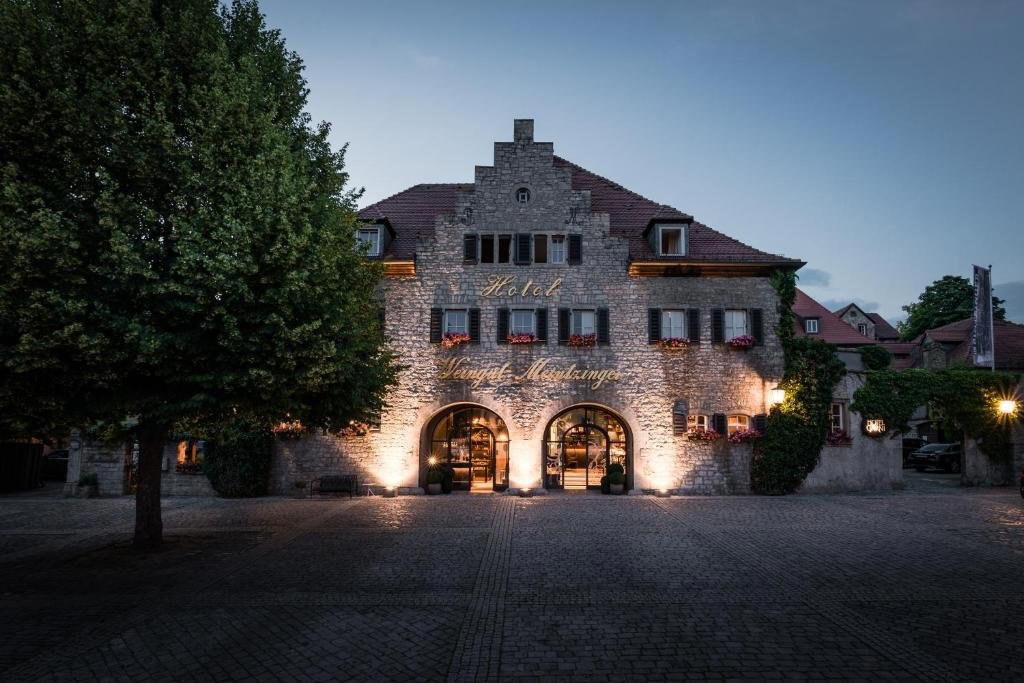

At a Glance
- Rustic
- Cozy
- Scenic
- Family
- Celebration
- Hotel Restaurant
- Terrace
- Wine Cellar
- Extensive Wine List
- Local Sourcing
- Vineyard
- Garden
Heimelig und herzlich mit fränkischer Gastfreundschaft, saisonaler regionaler Küche und Weinen aus dem eigenen Anbau.