Café Zaunkönig sits on Augsburger Strasse in Dachau, a town that carries more historical weight than most visitors expect and rewards those who look beyond the obvious itinerary. The café occupies a corner of everyday Bavarian life, the kind of neighbourhood fixture that serves the town rather than performing for tourists. For context on the wider dining picture in the area, see our full Dachau restaurants guide.
Pearl is the En Primeur Club membership app — saves, bookings, and concierge access live there. Same editors, same standards.
- Address
- Augsburger Str. 9, 85221 Dachau, Germany
- Phone
- +498131354762
- Website
- cafe-zaunkoenig.de
- Directions
- Get directions
 Saves & bookings on Pearl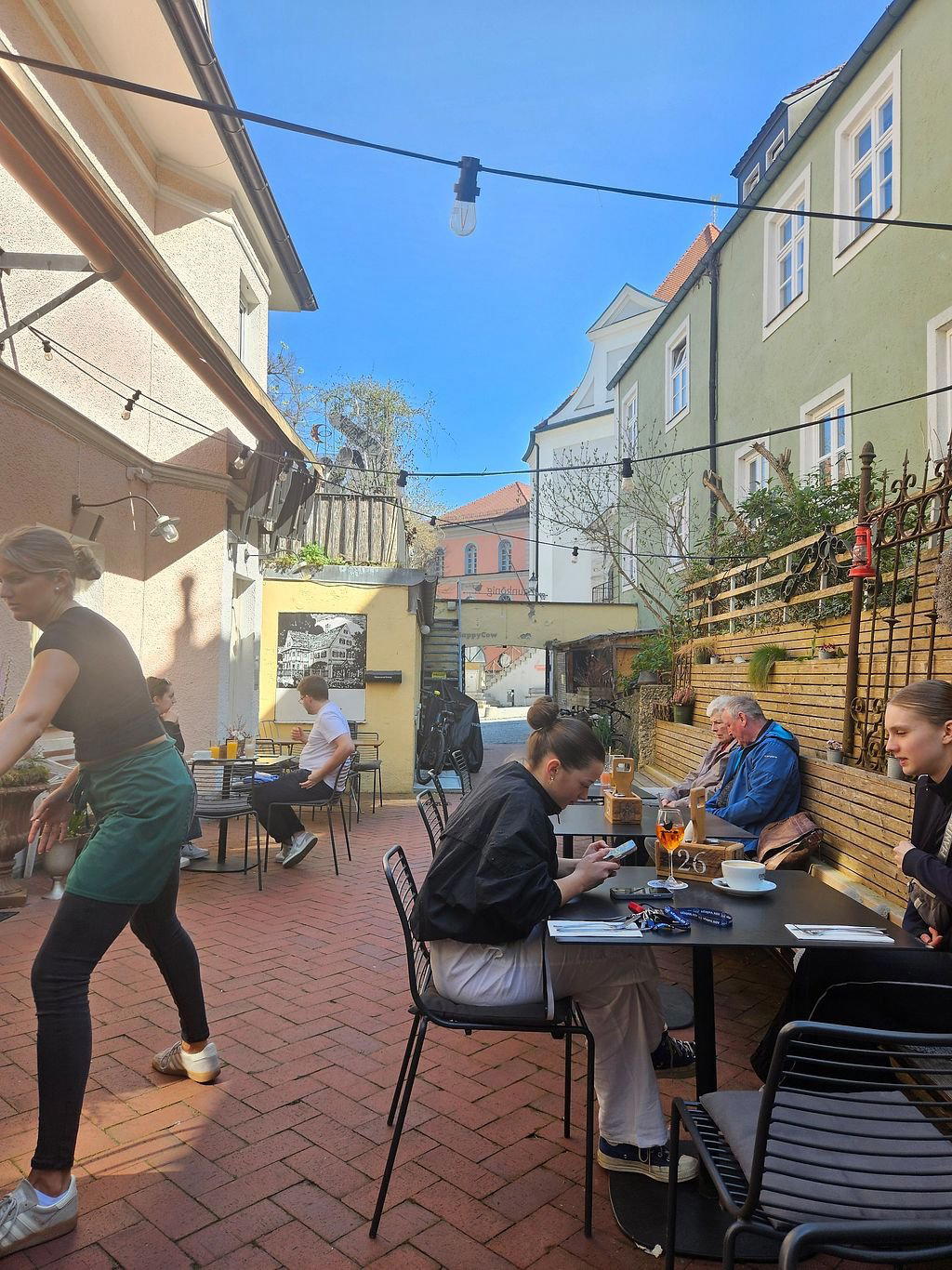
A Bavarian Town and Its Café Culture
Dachau sits roughly 16 kilometres northwest of Munich, close enough to the Bavarian capital that it functions partly as a commuter town, yet far enough to have developed its own civic rhythm. The town's association with the concentration camp memorial draws a particular kind of visitor traffic, but the residential core around Augsburger Strasse operates on a different register entirely: local bakeries, lunch counters, and neighbourhood cafés that serve the people who actually live here rather than those passing through on a memorial visit. Café Zaunkönig, at Augsburger Str. 9, occupies that second category. Its name, a German word for the wren, a small bird known for disproportionate presence, signals something about the scale at which places like this operate: modest in footprint, integral to the daily life of the neighbourhood.
The café tradition in Bavaria is older and more specific than the general European model. Unlike the Viennese Kaffeehaus, which institutionalised the coffeehouse as a space for intellectual debate and extended leisure, the Bavarian café developed along more practical lines, shaped by the region's agricultural calendar and the rhythms of market towns. A Bavarian café is a place you stop before the weekly market, linger after an errand, or return to on a Sunday afternoon when the larger restaurants feel like too much of a commitment. The format is democratic in the way that matters: accessible pricing, consistent hours, a menu that reads as familiar without being uninspired. That context is worth holding when considering where Café Zaunkönig fits in Dachau's dining picture.
Dachau's Dining Context
Dachau is not a dining destination in the way that Munich's Maxvorstadt or the Altstadt pull serious food tourists. The town's restaurant scene serves its residents first, and most of what exists operates at the neighbourhood level. Brusko Grill Restaurant Dachau and Nightingale Thai Cuisine and Bar represent the range that exists within the town proper, from direct grilled formats to Southeast Asian cooking that reflects the kind of culinary diversification visible across smaller German cities over the past decade. Café Zaunkönig fits into this picture as part of the everyday layer, the kind of venue that anchors a street rather than drawing visitors to it. For a fuller view of what the town offers, the full Dachau restaurants guide maps the scene in more detail.
Anyone arriving from Munich's more formally recognised dining tier will find the register here different by design. The Bavarian capital carries restaurants operating at the summit of Germany's fine-dining hierarchy: JAN in Munich represents the kind of creative, technique-driven cooking that competes with Germany's most recognised tables. That tier, which also includes places like Schwarzwaldstube in Baiersbronn, Aqua in Wolfsburg, and Vendôme in Bergisch Gladbach, operates on a completely different axis from a neighbourhood café in a commuter town. That distinction is not a criticism; it is simply a clarification of purpose. Germany's dining culture has always accommodated both ends of this spectrum, and the café format at the local level has its own integrity.
The Cultural Weight of the Everyday Café
Germany's café culture carries specific regional inflections that separate it from the broader European norm. In the south, and Bavaria in particular, the café functions as an extension of the Konditorei tradition, the specialist pastry and cake shop that developed in the eighteenth and nineteenth centuries as a response to both imported Viennese influence and local confectionery craft. The afternoon coffee stop, Kaffee und Kuchen, remains a social ritual in Bavarian towns that has survived the arrival of international chain formats with more durability than observers predicted two decades ago. Independent neighbourhood cafés in towns like Dachau tend to be the places where that ritual is most honestly preserved, without the self-consciousness of urban heritage branding.
The wren in the café's name also carries a small cultural resonance worth noting. In German folk tradition, the Zaunkönig is associated with resourcefulness and a certain defiant presence for something so small, a quality that Bavarian towns tend to project onto their local institutions. The name choice says something about how a place like this positions itself, not as an ambitious project but as a persistent, useful fixture.
Germany's Broader Dining Geography
For visitors using Dachau as a base while travelling more widely through Germany, understanding where neighbourhood venues sit within the country's broader dining structure helps calibrate expectations. Germany has a deep bench of formally recognised restaurants: Waldhotel Sonnora in Dreis, Restaurant Haerlin in Hamburg, Victor's Fine Dining by Christian Bau in Perl, ES:SENZ in Grassau, Schanz in Piesport, GästeHaus Klaus Erfort in Saarbrücken, and Bagatelle in Trier, among others. The wine-focused dining at L.A. Jordan in Deidesheim and the dessert-first format of CODA Dessert Dining in Berlin show how wide the contemporary German dining spectrum runs. Against that backdrop, a neighbourhood café in a small Bavarian town is neither competing nor aspiring to compete; it is serving a different need entirely.
For those planning a trip that combines regional exploration with formal dining, venues like Café Zaunkönig function as the connective tissue between destination meals, the place you go on an ordinary morning when the priority is coffee and a quiet hour rather than a performance. That role is undervalued in most travel writing, which tends to treat every meal as an occasion. The German café tradition at its most grounded is precisely the opposite of that, and towns like Dachau are where it survives most naturally.
Planning Your Visit
The restaurant is located at Augsburger Str. 9 in Dachau, reachable from Munich by S-Bahn on the S2 line in under 25 minutes. The town itself is manageable on foot once you arrive, and the café sits along one of the main commercial streets. International visitors who want to benchmark Bavarian café culture against the wider European context might find it instructive to compare with the community-dining formats common to tasting-menu destinations such as Lazy Bear in San Francisco or the classical formality of Le Bernardin in New York City: the distances between those formats and a Dachau neighbourhood café are not just geographic.
How Café Zaunkönig Dachau compares with similar nearby venues.
| Venue | Cuisine | Price |
|---|---|---|
| Nightingale Thai Cuisine & Bar | Thai | €€ |
| Gasthaus Weißenbeck | Farm to table | €€ |

At a Glance
- Cozy
- Brunch
- Casual Hangout
- Family
- Beer Program
- Local Sourcing
Current opening hours
- Monday
- 9 AM–3 PM
- Tuesday
- Closed
- Wednesday
- 9 AM–3 PM
- Thursday
- 9 AM–3 PM
- Friday
- 9 AM–3 PM
- Saturday
- 9 AM–3 PM
- Sunday
- 9 AM–3 PM
Hours can change for holidays and private events. Last verified .
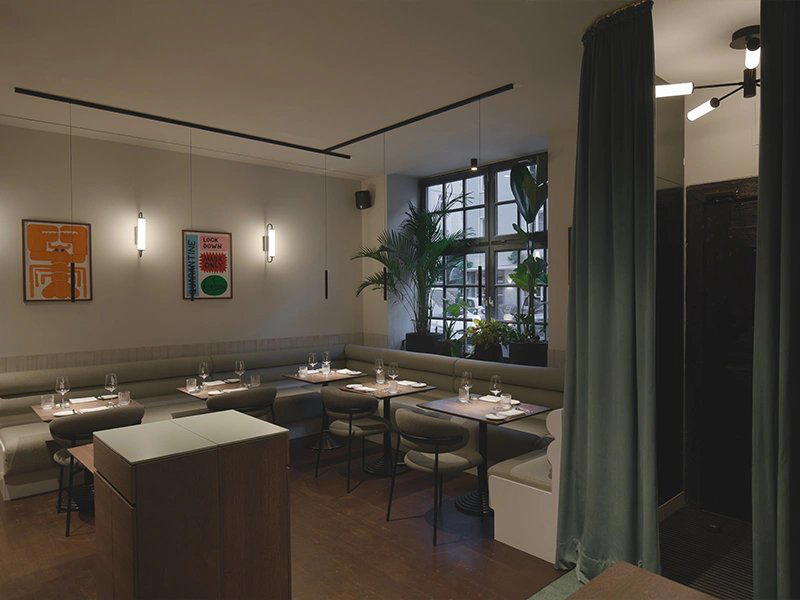
Cozy and cute atmosphere with many plants and a small outdoor area.