
Falstaff Winery - 5 Stars
Weingut Horst Sauer operates from Escherndorf in Franken, one of Germany's most distinct wine regions, where steep Muschelkalk slopes and a continental climate shape Silvaner and Riesling of uncommon tension and mineral depth. The winery sits on Bocksbeutelstraße 14 in Volkach, the traditional heart of Franken wine country.

Pearl is the En Primeur Club membership app, where members save venues, book tables and use the concierge.
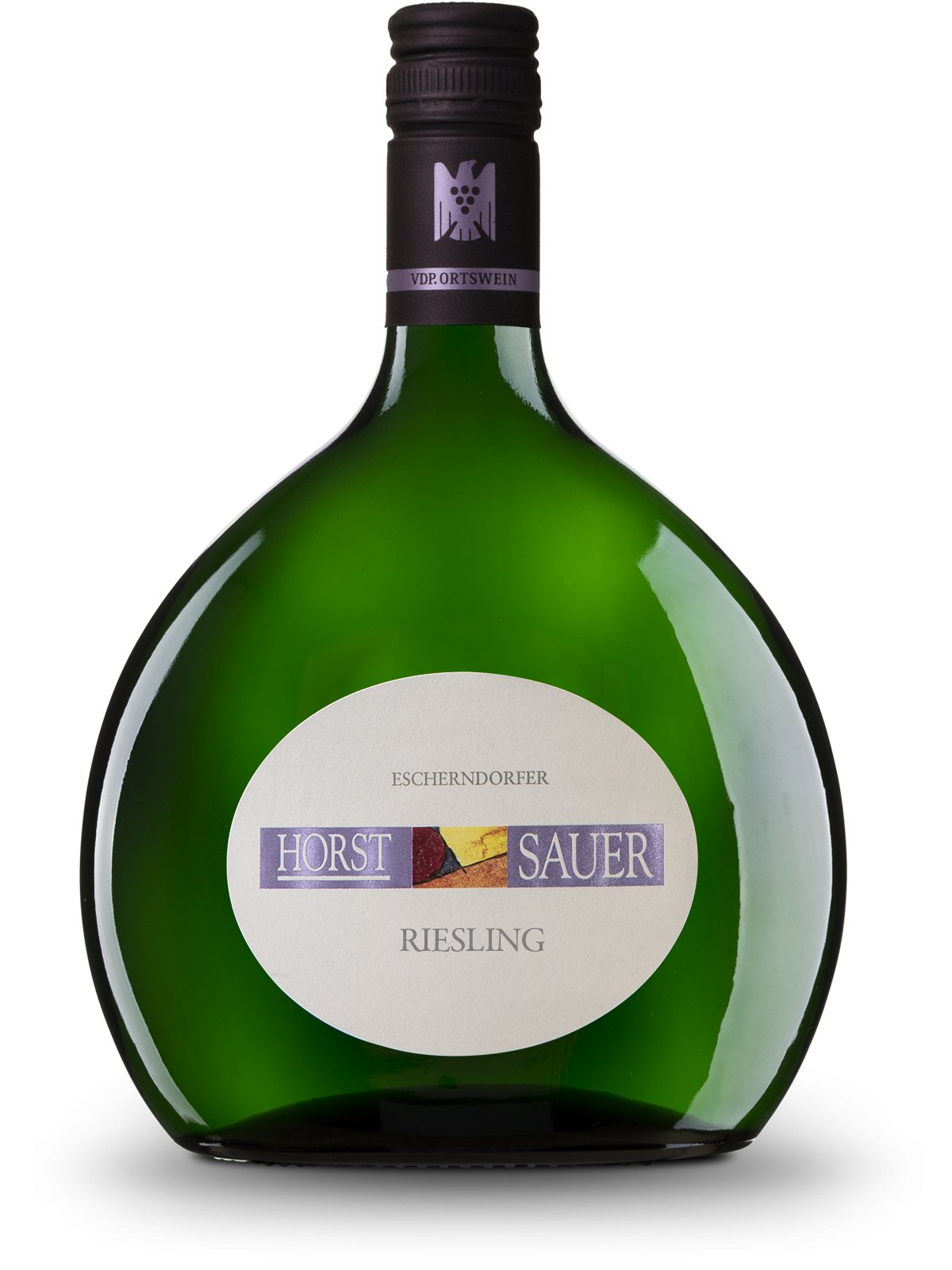
Escherndorf's Muschelkalk and the Case for Franken Silvaner
The Mainschleife, that tight oxbow loop the Main River carves through Franken's vineyard country, produces a particular kind of wine pressure. Growers here work steep, south-facing slopes of Muschelkalk, fossilised marine limestone laid down roughly 240 million years ago, under a climate that swings harder between heat and cold than most German wine regions expect. The result is fruit with structure before it has softness, wines that read more mineral than aromatic and age on a trajectory that can surprise even Burgundy-trained palates. Weingut Horst Sauer, based on Bocksbeutelstraße 14 in Volkach and drawing fruit from Escherndorf's celebrated sites, is one of the estates through which that terroir argument is most clearly made.
Germany's wine conversation tilts heavily toward the Mosel and Rhine corridors. Riesling from Brauneberg or Rüdesheim commands the column inches, and estates like Weingut Fritz Haag in Brauneberg or Weingut Georg Breuer in Rüdesheim am Rhein operate inside a well-documented critical framework. Franken occupies a different register: less internationally profiled, more regionally specific in its grape emphasis, and identified by a squat, flat-sided bottle, the Bocksbeutel, that signals origin as clearly as any appellation stamp. Within that regional identity, Escherndorf's Lump vineyard is the site most often cited when critics want to demonstrate what Franken's Muschelkalk can do at altitude and concentration.
That classification places the estate in a tier that reflects sustained quality across multiple vintages rather than a single exceptional release. In the context of Franken, where the number of internationally recognised estates remains smaller than in the Pfalz or Mosel, a Prestige-level rating is a meaningful credential. It positions Horst Sauer alongside estates whose wines are tracked by collectors and allocated by specialist importers, not simply stocked on open shelves.
The Pfalz offers a useful comparison. Estates like Weingut A. Christmann in Neustadt an der Weinstraße, Weingut Bassermann-Jordan in Deidesheim, and Weingut Dr. Bürklin-Wolf in Wachenheim an der Weinstraße operate within a Riesling-and-Pinot framework that is well-mapped by the international press. Franken estates earning comparable recognition do so from a smaller spotlight, which has historically kept allocation volumes accessible even as critical scores have risen. That window is narrowing.
Terroir First: Reading the Escherndorf Lump
The Escherndorf Lump is Franken's most discussed Einzellage for structural reasons: the Muschelkalk here is particularly dense, the slope exposure maximises heat accumulation during a short growing season, and the elevation creates cool nights that preserve acidity through ripening. Those three conditions working together produce Silvaner that sits outside the grape's reputation as neutral or blowsy. Properly grown on this site, Silvaner develops a salinity and tensile structure that separates it from softer expressions grown on heavier loam soils in the valley floor.
Riesling from the same site behaves differently than Mosel Riesling. It tends toward broader texture, less filigree aromatics, more stone and grip. The comparison point is not Brauneberg or Leiwen, where estates like Weingut Grans-Fassian or Weingut Clemens Busch in Pünderich work with slate-derived minerality and electric acidity, but something more compact and food-oriented. That character makes Franken Riesling a particularly strong pairing proposition for the kind of regional cuisine the Main Valley serves: freshwater fish, smoked meats, and hard Franconian cheeses.
The institutional history of Franken viticulture runs deep. Weingut Bürgerspital zum Heiligen Geist in Würzburg has been farming the region's hillsides for centuries, and the monastic model represented by estates like Kloster Eberbach in Eltville reminds visitors that Germany's wine culture was codified by religious institutions long before modern appellations existed. Horst Sauer operates within that long arc, drawing on established vineyard knowledge while representing the post-unification generation of German growers who pushed quality benchmarks sharply upward through the 1990s and 2000s.
The Bocksbeutel Road and How to Approach a Visit
The address, Bocksbeutelstraße, is not incidental. The road takes its name directly from the regional bottle format, and driving it through Escherndorf and Volkach is a shorthand tour of Franken's producer geography. The village of Escherndorf sits within the Volkach municipality, and the two names appear interchangeably in discussions of the estate's origins and vineyard holdings. Visitors arriving from Würzburg, roughly 25 kilometres to the west, pass through a sequence of vineyard villages that frames the visit with useful context before arrival.
Planning a visit to Weingut Horst Sauer warrants some advance thought. Prestige-tier estates in Germany's smaller regions do not always maintain open tasting rooms on the model of Napa or Bordeaux; direct contact in advance is standard practice, and allocations for leading Lagen wines are typically distributed to established customers and importers before any remainder reaches walk-in visitors. Neighbouring estate Weingut Rainer Sauer, also based in Escherndorf, operates from adjacent terroir and offers a point of direct comparison for anyone spending time in the area. For a broader picture of what the village and its surroundings offer, our full Escherndorf restaurants guide maps the surrounding food and drink scene.
The Mainschleife is a half-day's drive from Frankfurt and under two hours from Nuremberg. The harvest window, typically late September into October for Franken's higher-elevation sites, is when the region is most active and most accessible to visitors who want to see estate operations in context rather than an empty cellar in winter.
Where Horst Sauer Sits in the Broader German Premium Picture
German wine's quality tier has been consolidating. A handful of Mosel, Rhine, and Nahe estates dominate international auction results and critical allocation lists, while strong regional producers in less-profiled areas operate with excellent quality and comparatively lower global visibility. Estates like Weingut Battenfeld-Spanier in Hohen-Sülzen and Weingut Allendorf in Oestrich-Winkel occupy comparable positions in their respective regions: recognised at prestige level, working with serious terroir, but not yet at the secondary-market speculation tier that affects Mosel Grosses Gewächs from the most famous Einzellagen.
For collectors building a German cellar with depth beyond the Mosel, Franken's Muschelkalk Silvaner and Riesling represent a structurally distinct category. Horst Sauer is one of the addresses through which that category is most credibly accessed. The wines demand the same patience as serious German Riesling, they close down in the years immediately after release and open across a decade or more, which means buying early and holding is the approach that returns the most from the estate's leading Lagen.
Side-by-Side Snapshot
Comparable venues nearby, for context on price, style, and recognition.
| Venue | Cuisine | Price | Awards | Notes |
|---|---|---|---|---|
| Weingut Horst SauerThis venue (the venue you are viewing) | Silvaner, Riesling | $50–100 | Falstaff Winery - 5 Stars | Not listed |
| Weingut Rainer Sauer | Silvaner, Müller-Thurgau | Not listed | Falstaff Winery - 4 Stars | Escherndorf |
| Weingut August Kesseler | Pinot Noir, Riesling | Not listed | Falstaff Winery - 5 Stars | Assmannshausen |
| Weingut Rainer Schnaitmann | Pinot Noir, Lemberger | Not listed | Falstaff Winery - 5 Stars | Fellbach |
| Weingut Georg Breuer | Riesling, Pinot Noir | $30–50 | Falstaff Winery - 5 Stars | Rüdesheim |
| Bethel Heights Vineyard | Pinot Noir, Chardonnay | Not listed | Not listed | Eola-Amity Hills |
Recognition history
Dated appearances from independent guides and award organizations, with the underlying list record or original source where available.
Falstaff Winery - 5 Stars
Falstaff
Continue exploring
More in Volkach
Wineries in Volkach
All wineries in Volkach →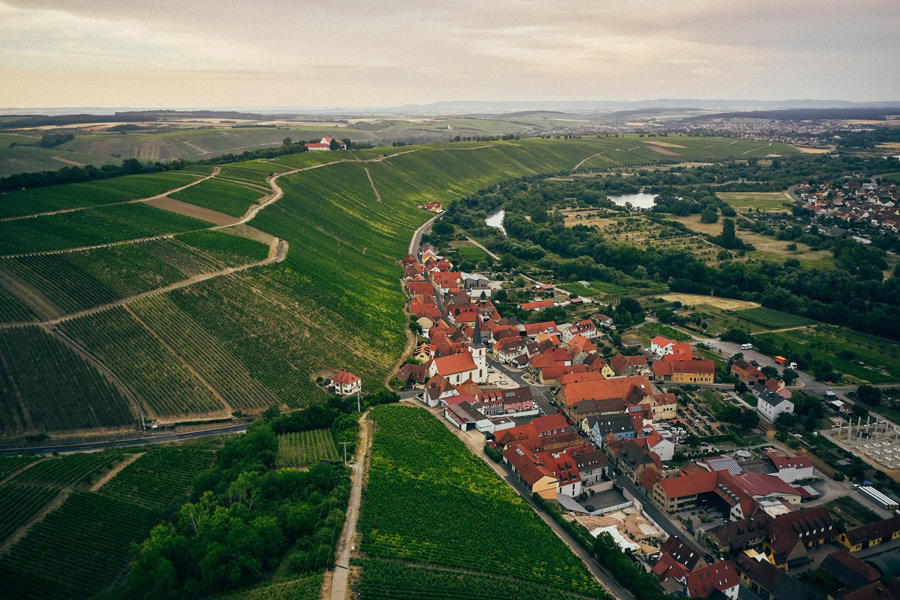

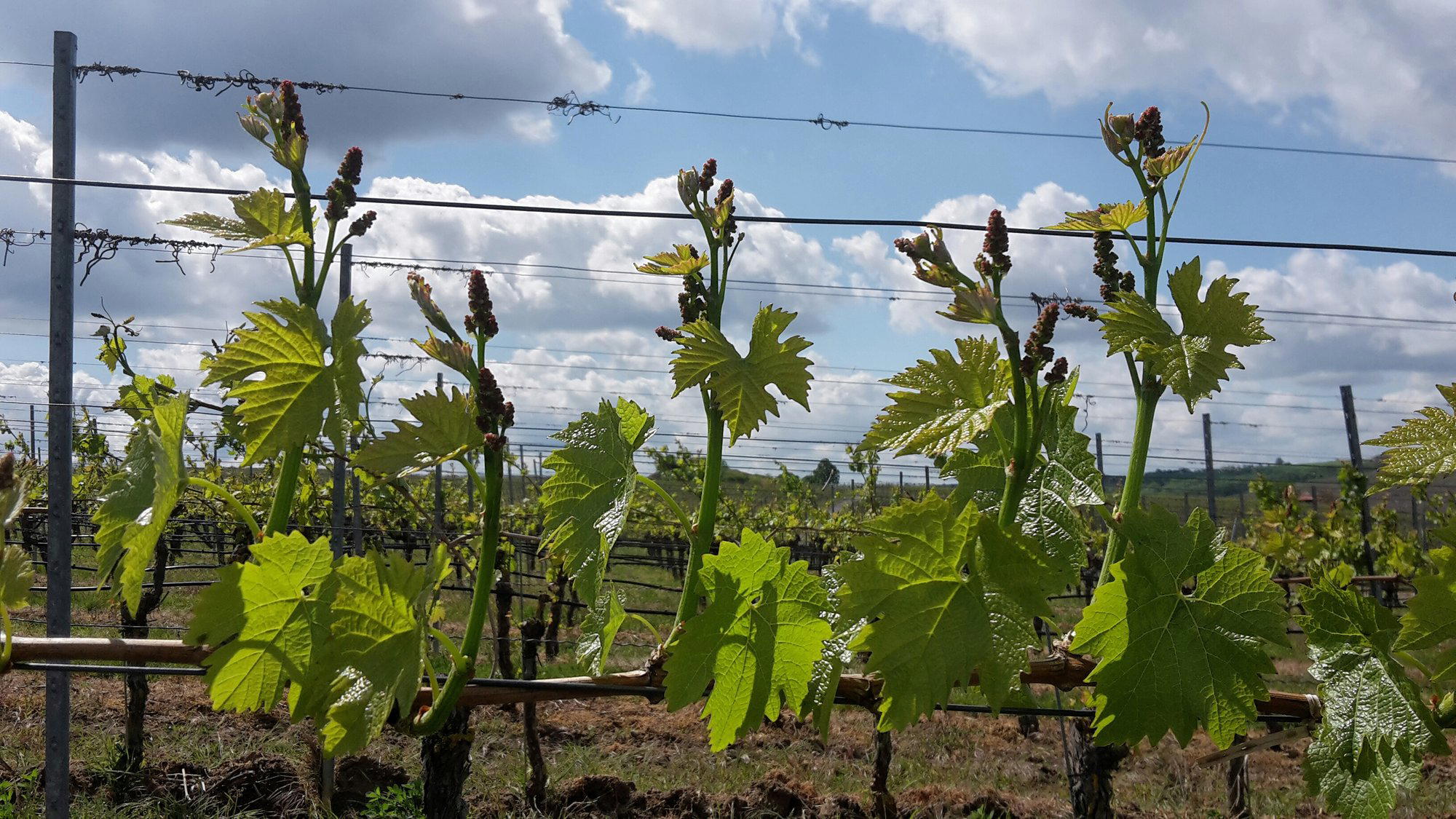
Bars in Volkach
Browse all →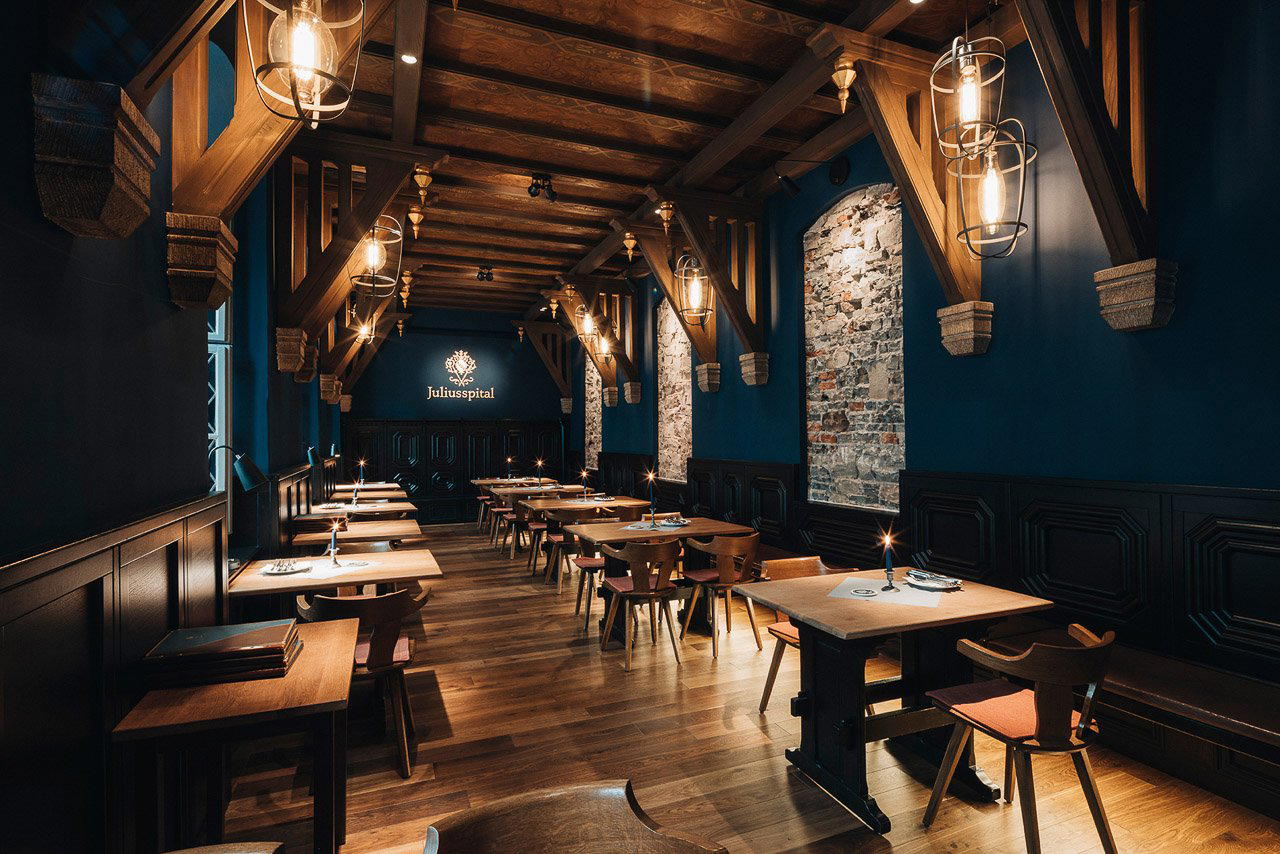
Details
- Classic
- Scenic
- Elegant
- Rustic
- Wine Education
- Romantic Getaway
- Special Occasion
- Vineyard Tour
- Barrel Room
- Estate Grounds
- Private Tasting
- Historic Building
- Sustainable
- Vineyard
- Mountain
- Silvaner
- Riesling
- Müller Thurgau
- Bacchus
- Scheurebe
- Spätburgunder
- Weissburgunder
- Pinot Noir
- Still White
- Still Red
- Dessert
- Private Tasting
- Vineyard Tour
- Cellar Tour
- German
- English
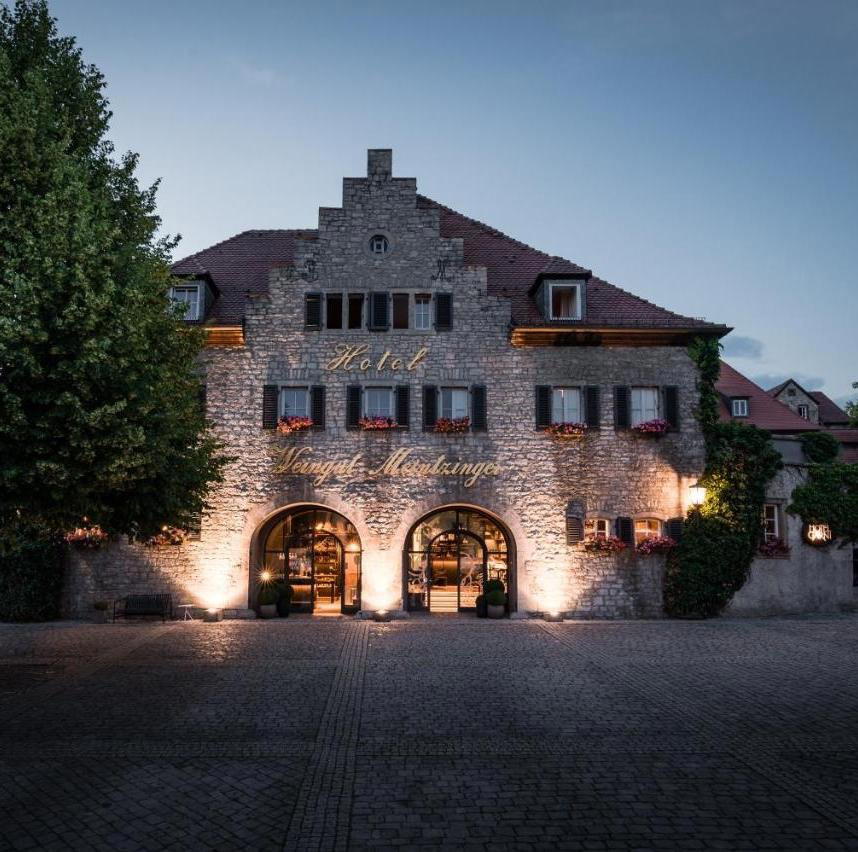
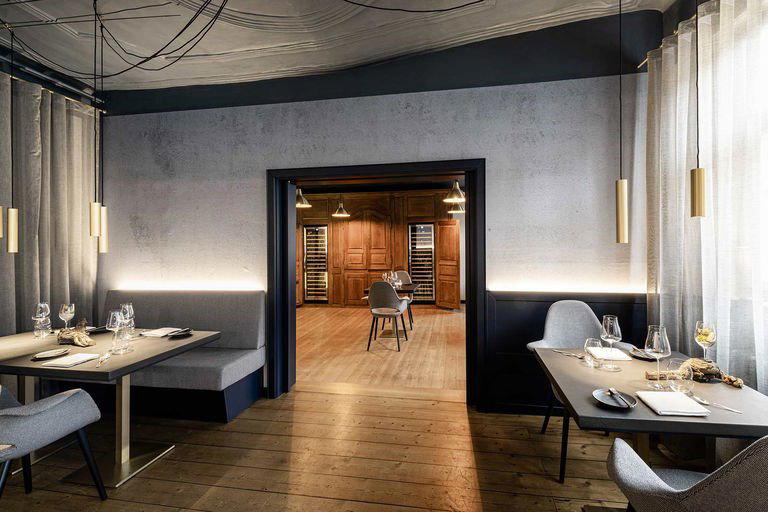
Modern four-story gravity-fed winery with architecturally dramatic design set against steeply rising vineyards; intimate tasting rooms with views of the Main Triangle terroir.