Spezerei occupies a considered address on Wöhrstraße in Erlangen, sitting in a different tier from the city's casual daytime spots and seasonal bistros. Where venues like Holzgarten lean into rustic informality, Spezerei signals a more composed approach to space and service. For visitors arriving from Frankfurt or Nuremberg, it represents one of the more deliberate dining propositions in a city that rarely makes national shortlists.
Pearl is the En Primeur Club membership app — saves, bookings, and concierge access live there. Same editors, same standards.
- Address
- Wöhrstraße 1, 91054 Erlangen, Germany
- Phone
- +4991314000432
- Website
- spezerei-erlangen.net
- Directions
- Get directions
 Saves & bookings on Pearl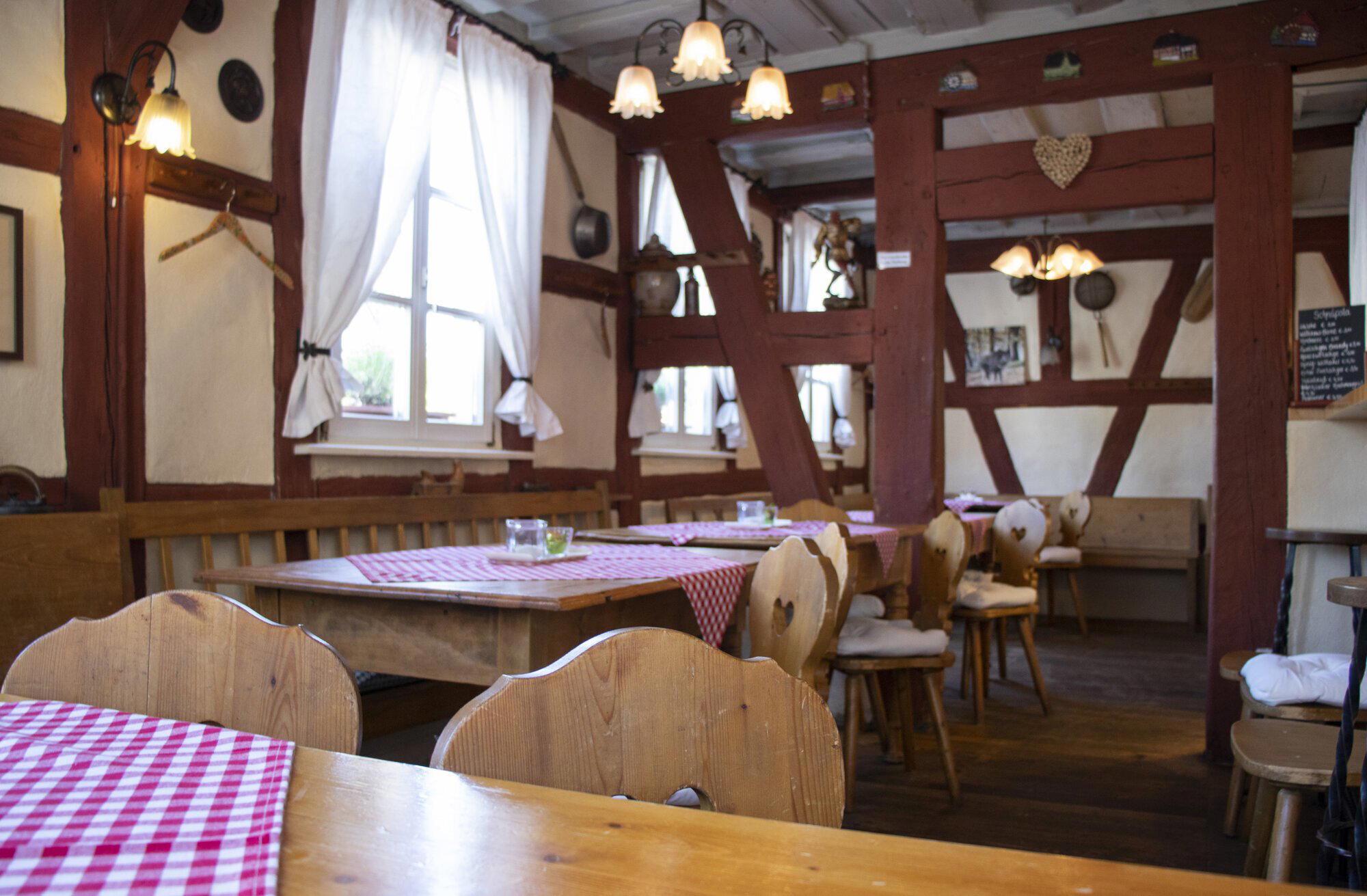
A Room That Sets the Tone
Erlangen does not perform for the camera. The city's dining rooms tend to reflect that same restraint: functional, occasionally handsome, rarely theatrical. Spezerei is a traditional Franconian German restaurant in Erlangen, Germany, where dining is generally priced around $20 per person. Against that backdrop, a venue whose address and name suggest deliberate curation, Spezerei, a word evoking spice, specialty, and something carefully chosen, occupies a particular position in the local imagination. That framing, conscious or not, shapes expectations before a guest crosses the threshold at Wöhrstraße 1.
Erlangen's dining scene is concentrated enough that word travels fast, and a space that reads as composed and purposeful generates a specific kind of loyalty. The address on Wöhrstraße places Spezerei within walking distance of the inner city, accessible without requiring the kind of suburban detour that characterises some of the region's more destination-oriented restaurants. For a visitor arriving by rail, Erlangen sits on the main Munich-to-Nuremberg corridor, with frequent ICE connections making it reachable from Nuremberg Hauptbahnhof.
Erlangen's Dining Tiers and Where Spezerei Sits
The city's restaurant offering is modest in scale but not uniform in quality. At the informal end, spots like Cigkoftem Erlangen and Cantine Erlangen serve a student and everyday local crowd, with price points and formats that prioritise throughput over occasion. Holzgarten (Seasonal Cuisine, €€) positions itself in the middle tier with a seasonal menu and outdoor character that suits the warmer months. Basilikum Restaurant and Das Muskat occupy further points on that spectrum. Spezerei reads as something more considered than any of these, the name, the address, and the framing all point toward a room designed to hold a specific kind of attention.
That positioning matters in the context of the broader Bavarian and Franconian dining scene. The region's serious cooking tends to concentrate in Nuremberg or to spread into destination properties at some distance from the city. Locally accredited fine dining in Erlangen is not a deep category. Visitors used to the reference points further afield, Aqua in Wolfsburg, JAN in Munich, or the Black Forest benchmark of Schwarzwaldstube in Baiersbronn, arrive in Erlangen with calibrated expectations. What Spezerei offers is a local answer to those expectations, scaled to a city that does not have the critical mass to sustain multiple Michelin-grade rooms.
Physical Space as Editorial Statement
In Germany's mid-sized cities, the physical language of a restaurant carries outsized weight. Spezerei's name implies exactly this kind of editorial restraint: the specialist who stocks fewer things, better chosen. The venues that sustain reputations in smaller German cities without the amplification of a Michelin listing or a prominent chef name tend to do it through consistency of environment, not just plate.
That approach finds parallels at a different scale in German dining. Rooms like CODA Dessert Dining in Berlin or Vendôme in Bergisch Gladbach demonstrate how a strong spatial identity anchors a dining proposition and communicates seriousness before the first course arrives. At the other extreme of that scale, rooms like ES:SENZ in Grassau and Victor's Fine Dining by Christian Bau in Perl show what happens when space and cuisine align at the highest register. Spezerei operates in a different bracket, but the underlying logic, that the room is an argument, not just a backdrop, applies across the category.
Regional Context and National Comparisons
Franconia's culinary identity is often reduced to its beer culture and its bratwurst, a shorthand that does not account for the more considered restaurants operating quietly in its university towns. Erlangen, with a population of around 115,000 and a large Friedrich-Alexander-Universität presence, has a dining public that skews educated and internationally mobile. That demographic supports restaurants that ask for more, in terms of attention, time, and price, than the standard regional offer. Spezerei's positioning, however it is ultimately read in the room, exists in direct dialogue with that audience.
At the national level, the gap between Germany's Michelin-decorated rooms and its secondary-city independents is pronounced. Houses like Waldhotel Sonnora in Dreis, Restaurant Haerlin in Hamburg, and Schanz in Piesport operate with the infrastructure and visibility that formal awards bring. Spezerei does not carry that infrastructure, which places it in a different conversation: the independent, city-specific room that succeeds or fails on local trust and repeat custom, without the review-cycle amplification that national recognition provides. For the right traveller, one who prefers a less-mediated dining experience to the known quantity of an awarded room, that is itself a form of appeal.
Planning a Visit
Erlangen is direct to reach by train, with regular ICE services from both Munich (roughly ninety minutes) and Frankfurt (around two hours), and the city centre is compact enough that Wöhrstraße 1 is accessible on foot from the station. For visitors comparing reference points in other cuisines and cities, the contrast with destinations like Le Bernardin in New York City or Atomix in New York City underscores how different the proposition of a mid-sized German city independent is: less spectacle, more intimacy, and a relationship with its local public that no amount of international press can replicate.
The Minimal Set
Comparable venues nearby, for context on price, style, and recognition.
| Venue | Cuisine | Price | Notes |
|---|---|---|---|
| SpezereiThis venue — the venue you are viewing | Not listed | $$ | Not listed |
| Mei | Not listed | $$ | Innenstadt, Authentic Chinese Noodle House |
| Swamy Indisches Restaurant | Not listed | $$ | Universitätsviertel, Traditional North Indian |
| Basilikum Restaurant | Altstadt, Mediterranean Bistro | $$$ | Not listed |
| Das Muskat | Not listed | $$$ | Hauptstraße, Organic German-Mediterranean |
| Cigkoftem Erlangen Inh. Z. Sunar | Erlangen, Vegan Turkish Çiğ Köfte | $ | Not listed |
Continue exploring
More in Erlangen
Restaurants in Erlangen
Browse all →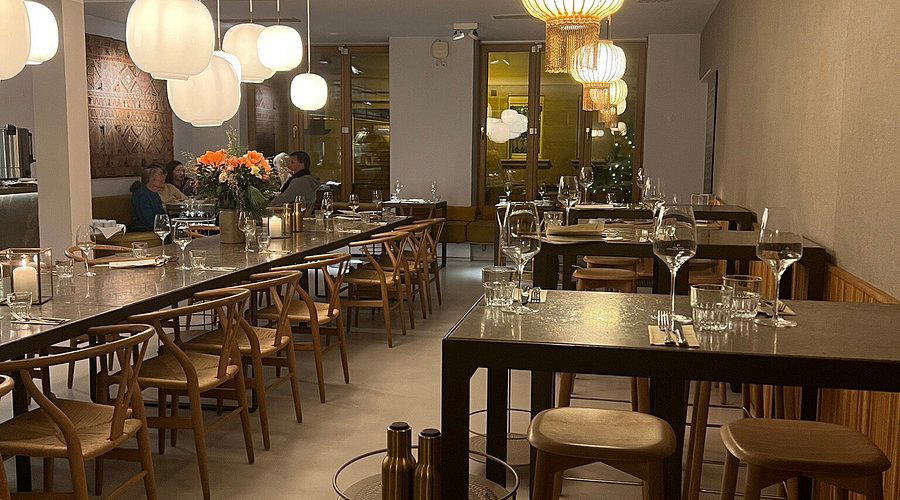
Bars in Erlangen
Browse all →
Hotels in Erlangen
Browse all →

At a Glance
- Cozy
- Rustic
- Classic
- Intimate
- Family
- Casual Hangout
- Historic Building
- Beer Program
- Local Sourcing
Current opening hours
- Monday
- Closed
- Tuesday
- Closed
- Wednesday
- 5:30–11 PM
- Thursday
- 5:30–11 PM
- Friday
- 5:30–11 PM
- Saturday
- 5:30–11 PM
- Sunday
- 11:30 AM–9 PM
Hours can change for holidays and private events. Last verified .
rustic, familial atmosphere with genuine Franconian charm and cozy ambiance.