Campo San Giacomo dell'Orio is one of Santa Croce's most lived-in squares, and La Patatina di San Giacomo fits that register precisely: a neighbourhood bacaro where the cicheti and fried snacks follow the Venetian tradition of eating standing up, glass in hand. This is the Venice that locals actually use, sitting at the less-visited end of the city's eating spectrum from the grand canal-facing dining rooms.
Pearl is the En Primeur Club membership app — saves, bookings, and concierge access live there. Same editors, same standards.
- Address
- Campo S. Giacomo dell'Orio, 1587, 30125 Venezia VE, Italy
- Phone
- +39415243692
- Website
- patachic.shop
- Directions
- Get directions
 Saves & bookings on Pearl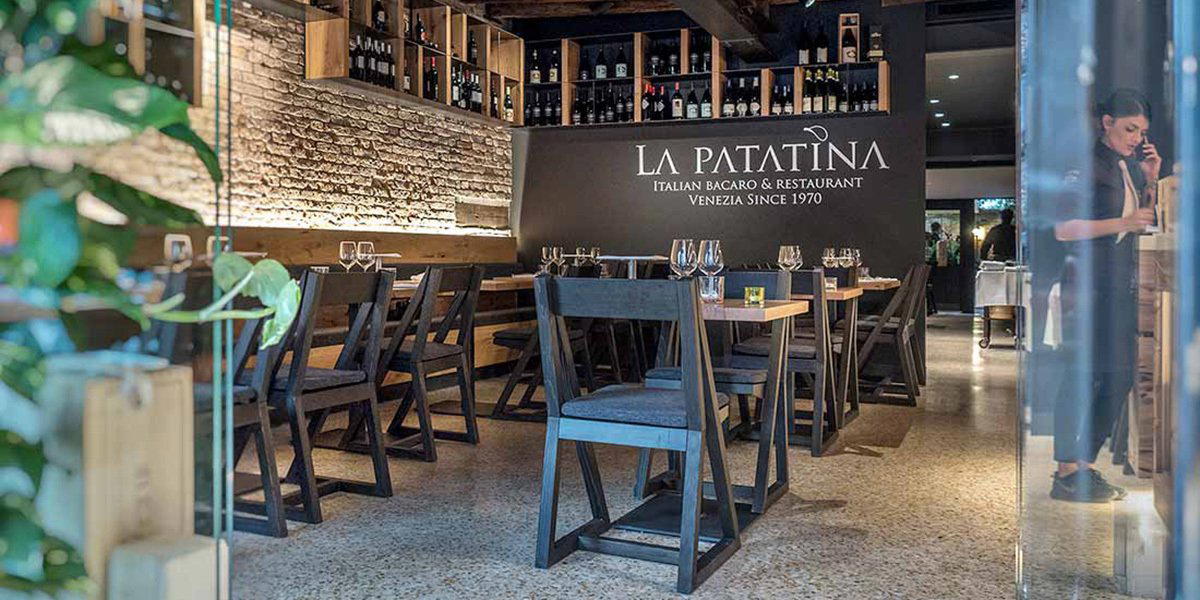
A Square That Still Belongs to Venice
La Patatina di San Giacomo is a restaurant in Venice's Santa Croce, on Campo S. Campo San Giacomo dell'Orio occupies a particular position in Santa Croce that most visitors never reach. Unlike the Rialto market's immediate surroundings or the well-worn path between San Marco and the Accademia, this campo retains the texture of a place that Venetians use daily: children cycling in the afternoon, older residents on benches, and the kind of low-key foot traffic that never quite arrives in waves. La Patatina di San Giacomo sits within that setting, and the setting matters more than most things you could say about the food.
Venice's eating culture divides, broadly, into two traditions that rarely overlap in practice. One is the canal-front dining room: white linen, expensive wine lists, fish presented in the contemporary Italian idiom. The other is the bacaro circuit, a format that predates restaurant dining as a category and that the city has practiced in essentially the same form for centuries. Bacari serve cicheti, small preparations eaten standing or perched at the counter, washed down with an ombra, a small glass of wine. The price point is low by design, not by accident. The format is democratic and fast, built around the rhythms of working life rather than the rhythms of tourism.
La Patatina di San Giacomo belongs to the second tradition. Its name signals the fried potato preparations that anchor this kind of Venetian snack eating, a category that sits alongside the salt cod mantecato, the sardines in saor, the polpette, and the prosecco-friendly small bites that define the cicheti table. This is not a cucina povera narrative in the romantic sense; it is simply what Venetians have eaten informally for a long time, and what the bacaro format continues to deliver at a scale and price that remains accessible.
Where This Fits in the Venetian Dining Picture
Venice's higher-end restaurant tier has consolidated around a handful of addresses in recent years. Glam Restaurant by Enrico Bartolini and Oro Restaurant represent the creative contemporary end, while Ristorante Quadri anchors the formal modern cuisine category on Piazza San Marco. Local and Wistèria cover the contemporary Italian middle tier. None of these are places where you stop in for a glass and a few bites between vaporetto rides. La Patatina operates in an entirely different register, one that complements rather than competes with those addresses.
Comparison venues in the Venetian mid-tier, places like Osteria alle Testiere and Corte Sconta at the €€€ level, occupy a more formal sit-down format with reservation requirements and structured menus. The bacaro sits below that tier in price and formality, but it is not a lesser version of the same thing. It is a different format with its own logic, its own pace, and its own claim on authenticity within Venetian food culture. Visitors who move between a canal-side dinner reservation and an afternoon cicheti stop at a campo bacaro are navigating two genuinely separate food traditions, not two ends of the same spectrum.
The Bacaro Tradition and Why Santa Croce Hosts It Well
The bacaro's persistence in Venice is partly structural. The city's geography, without cars, with small bridges and narrow calle connecting each sestiere, created a culture of neighbourhood stops rather than destination dining. The ombra tradition, drinking a small wine quickly at a counter before moving on, emerged from the practical realities of a city where you are always on foot and always passing through somewhere. Santa Croce's relative distance from the main tourist circuits means that its bacari have maintained a higher proportion of local custom than those immediately adjacent to the Rialto or San Marco.
Campo San Giacomo dell'Orio amplifies this effect. The square's size and the presence of the church of San Giacomo dell'Orio, one of the oldest in Venice, give it a gravitational quality that pulls residents without pulling tour groups in the same volume. The bacaro that operates in this context is serving a real neighbourhood function, not a simulated one. That distinction is increasingly rare in a city where tourist pressure on the food supply has been well-documented, and where many ostensibly traditional spots have quietly reoriented their menus and margins toward the higher-spending visitor.
Italy's broader fine dining conversation, at addresses like Osteria Francescana in Modena, Le Calandre in Rubano, or Piazza Duomo in Alba, operates in the same country but in a different category entirely. Even seafood-focused addresses like Uliassi in Senigallia or Quattro Passi in Marina del Cantone share more DNA with modern European fine dining than with the Venetian bacaro. Understanding that spectrum, from the neighbourhood counter to the multi-course tasting room, is part of reading Italian food culture accurately. For further context on Italy's full fine dining range, the work at Dal Pescatore in Runate, Enoteca Pinchiorri in Florence, Reale in Castel di Sangro, Atelier Moessmer Norbert Niederkofler in Brunico, and Enrico Bartolini in Milan illustrates how far the country's upper tier has travelled from its trattoria roots.
Planning a Visit
Campo San Giacomo dell'Orio is accessible on foot from the Santa Croce vaporetto stops; the square itself is signposted from the main pedestrian routes through the sestiere. Bacari in this part of Venice tend to operate in the morning through early afternoon and again in the early evening, following the rhythms of aperitivo and the cicheti hour rather than a restaurant's dinner service. Arriving between midday and 2pm or between 6pm and 8pm aligns with when the kitchen is active and the campo has its characteristic neighbourhood energy. No reservation is required or expected. Those visiting Venice in the context of a wider Italy trip looking for contrast at the formal dining end might also consult Le Bernardin in New York City or Atomix in New York City for reference points in how different cities handle the relationship between tradition and modern technique.
In Context: Similar Options
Comparable venues nearby, for context on price, style, and recognition.
| Venue | Cuisine | Price | Notes |
|---|---|---|---|
| La Patatina di San GiacomoThis venue — the venue you are viewing | Italian Pizza and Seafood with Vegan Options | $$ | Not listed |
| Dal Moro's Fresh Pasta To Go | Fresh Pasta To Go | $$ | Castello |
| pizzeria ai sportivi | Italian Pizza and Pasta | $$ | Dorsoduro |
| Alla Conchiglia | Venetian Seafood | $$ | Castello |
| Trattoria Ca' D'Oro - Cucina Tipica Veneziana | Traditional Venetian Trattoria | $$ | Cannaregio |
| Rossopomodoro | Neapolitan Pizza | $$ | San Marco |
Continue exploring
More in Venice
Restaurants in Venice
Browse all →
Bars in Venice
Browse all →
Hotels in Venice
Browse all →
At a Glance
- Cozy
- Romantic
- Elegant
- Date Night
- Casual Hangout
- Garden
- Historic Building
- Beer Program
- Garden
- Street Scene
Current opening hours
- Monday
- 11:30 AM–10:30 PM
- Tuesday
- 11:30 AM–10:30 PM
- Wednesday
- 11:30 AM–10:30 PM
- Thursday
- 11:30 AM–10:30 PM
- Friday
- 11:30 AM–10:30 PM
- Saturday
- 11:30 AM–10:30 PM
- Sunday
- 11:30 AM–10:30 PM
Hours can change for holidays and private events. Last verified .
Calm and romantic with soft background music, cozy outdoor garden seating and attentive service.