La Canica sits in Hortaleza, one of Madrid's quieter residential districts, at a remove from the centro's well-trodden dining circuit. The address alone signals a kitchen that relies on word-of-mouth rather than foot traffic. For travellers building a broader picture of Madrid's dining scene, it belongs on the same research list as the city's more decorated addresses.
Pearl is the En Primeur Club membership app — saves, bookings, and concierge access live there. Same editors, same standards.
- Address
- Av. de los Andes, 25, Hortaleza, 28043 Madrid, Spain
- Phone
- +34913201503
- Website
- lacanicamadrid.com
- Directions
- Get directions
 Saves & bookings on Pearl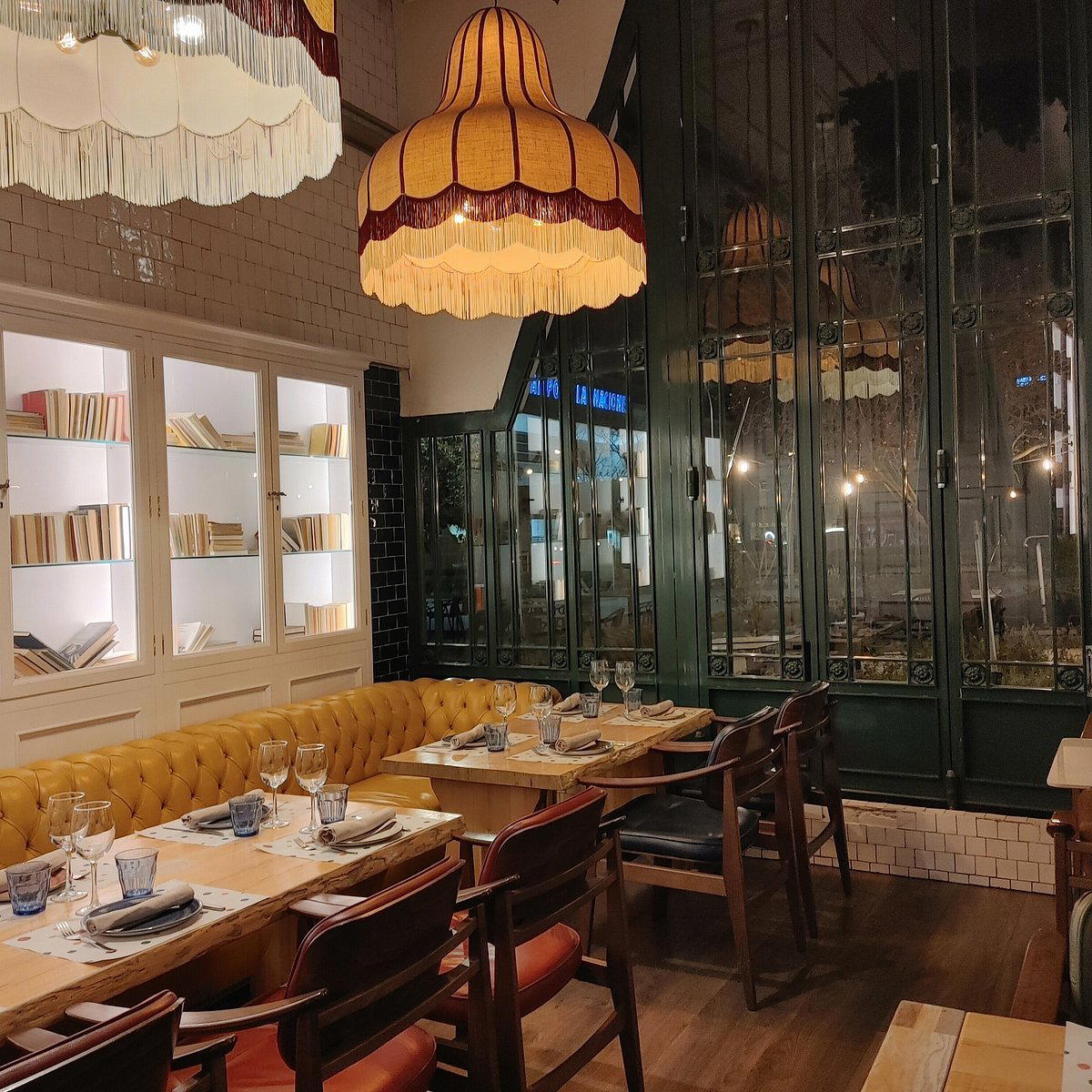
Hortaleza and the Geography of Madrid's Neighbourhood Restaurants
Madrid's dining scene has long been understood through its centre: the tasting-menu temples around Palacio, the market-adjacent tapas bars of La Latina, the high-concentration restaurant district that runs through Chueca and Salamanca. Hortaleza, the residential district in the city's northeast where La Canica sits on Avenida de los Andes, occupies a different register entirely. Neighbourhoods like this one tend to sustain a specific type of restaurant: places built for regulars rather than reservation platforms, where the kitchen's relationship with the local market determines the menu more than a PR calendar does.
That geography matters when placing La Canica in Madrid's wider picture. The city's top tier, anchored by addresses like DiverXO, Coque, and Deessa, competes on Michelin recognition, destination dining logic, and international visibility. A neighbourhood restaurant in Hortaleza competes on something else: consistency, value relative to its residential comparable set, and an ability to hold a local clientele that has many alternatives in its own postal code.
The Madrid Context: Local Ingredients, Imported Methods
Spain's broader culinary evolution over the past two decades has been shaped by a productive tension between indigenous product and technique drawn from outside the peninsula. The Basque Country codified this earliest, with Arzak and later Mugaritz demonstrating how classical French discipline could be applied to local txangurro, kokotxas, and wild mushrooms without erasing what was distinctly regional about them. Catalonia followed through El Celler de Can Roca and Cocina Hermanos Torres. Valencia developed its own lane, with Ricard Camarena and Quique Dacosta building around Mediterranean produce and Valencian rice culture. Further south, Aponiente has taken that logic to its furthest extreme, treating the Atlantic as both larder and subject.
Madrid sits differently in this picture. The capital has historically been a receiver of talent and product rather than a single-region kitchen: Castilian lamb and suckling pig sit alongside Galician seafood, Extremaduran pork, and La Mancha's saffron and manchego within the same city's dining ecosystem. DSTAgE and Paco Roncero have shown how that assembled-larder approach can translate into technically ambitious tasting menus. At neighbourhood level, the same logic applies differently: the kitchen's access to a wide, national supply chain becomes less about spectacle and more about daily selection and seasonal honesty.
This is the editorial angle through which La Canica is worth considering. In a city where the intersection of imported culinary method and Spanish raw material is an ongoing conversation, a Hortaleza neighbourhood address participates in that conversation at the granular end: not through fermentation laboratories or dehydration rigs, but through decisions made at the market each morning. Azurmendi in the Basque Country and Martín Berasategui in Lasarte-Oria make this argument at three-star level; neighbourhood kitchens make it in a different key, but the underlying logic connects.
What the Address Signals
Avenida de los Andes, 25 is not an address designed to attract destination diners. Hortaleza's residential character means the customer base is locally rooted, and the competitive set is defined by neighbouring establishments rather than the city's centrist restaurant corridor. That framing is useful for the visiting diner: it suggests a kitchen calibrated to repeat visits, where the ratio of quality to price is shaped by local expectation rather than tourist tolerance.
For comparative context, the Madrid restaurants that operate at the decorated end of the spectrum, addresses like DiverXO or Coque, set the ceiling for what the city's dining culture can produce. The neighbourhood tier, where the restaurant sits, fills in the texture beneath that ceiling. International diners planning a Madrid trip who have already secured tables at the city's Michelin-ranked addresses would do well to build at least one neighbourhood meal into the itinerary. The contrast in register is instructive.
It is also worth noting how Madrid's neighbourhood dining compares to peer European capitals. Paris has its bistrots de quartier, London its local gastropubs, Rome its trattorie di zona. Madrid's equivalent, the barrio restaurant sustained by local loyalty, tends toward a certain directness: product-driven menus, compact wine lists weighted toward Spanish regions, and a format that prioritises eating well over theatrical presentation. That directness has its own discipline, and it is not always easy to sustain in a city where rents and ingredient costs are rising.
Spain's Wider Stage
Placing the restaurant in its fullest context means acknowledging where Madrid's neighbourhood dining sits relative to Spain's broader restaurant culture. The peninsula's most technically ambitious kitchens, from Atrio in Cáceres to the Basque coast's constellation of starred addresses, define one pole. The neighbourhood restaurant in a residential district defines another. Between those poles, most of the actual eating in Spain happens: at lunch, at mid-week dinners, at tables where the wine comes from a brief regional list and the menu changes with what arrived from the market that morning.
For international visitors whose reference points for Spanish fine dining are shaped by destination restaurants like Le Bernardin or Atomix in New York, the neighbourhood register can be a recalibration. Spain's culinary authority does not sit entirely in its starred rooms; it also lives in kitchens that are harder to find, shorter on English menus, and less represented in the international dining press. The restaurant's Hortaleza address places it in that less-legible but genuinely interesting category.
Know Before You Go
Address: Av. de los Andes, 25, Hortaleza, 28043 Madrid, Spain
District: Hortaleza, northeast Madrid. A residential neighbourhood requiring a taxi or Metro rather than a walk from central hotels.
Price range: Moderate.
Booking: Reservations are recommended.
Hours: Mon to Thu and Sun 1 PM to 12 AM; Fri and Sat 1 PM to 1 AM.
Cuisine Context
Comparable venues nearby, for context on price, style, and recognition.
| Venue | Cuisine | Price | Notes |
|---|---|---|---|
| La CanicaThis venue — the venue you are viewing | Modern Spanish Tapas | $$ | Not listed |
| Candela Bernabéu | Traditional Spanish Tapas & Cervecería | $$ | El Viso |
| Alegrias | Spanish Tapas | $$ | Malasana |
| El Imparcial | Modern Spanish Tapas | $$ | Embajadores |
| La Bobia | Traditional Asturian Tapas & Cider | $$ | Embajadores |
| Triana | Andalusian Tapas | $$ | Ibiza |
Continue exploring
More in Madrid
Restaurants in Madrid
Browse all →
Bars in Madrid
Browse all →
Hotels in Madrid
Browse all →


At a Glance
- Modern
- Cozy
- Group Dining
- Casual Hangout
- Open Kitchen
- Terrace
- Street Scene
Current opening hours
- Monday
- 1 PM–12 AM
- Tuesday
- 1 PM–12 AM
- Wednesday
- 1 PM–12 AM
- Thursday
- 1 PM–12 AM
- Friday
- 1 PM–1 AM
- Saturday
- 1 PM–1 AM
- Sunday
- 1 PM–12 AM
Hours can change for holidays and private events. Last verified .
New York feel with wooden and glass cabinets, long tables and benches, and retractable street-facing system creating a terrace atmosphere.