Located on Calle de Narváez in Madrid's Retiro district, Triana sits within one of the city's most residential and food-serious neighbourhoods. The address places it at a deliberate remove from the tourist-facing centro, signalling a restaurant oriented toward a local dining public with considered expectations. EP Club places it in the context of Madrid's broader modern Spanish dining scene.
Pearl is the En Primeur Club membership app — saves, bookings, and concierge access live there. Same editors, same standards.
- Address
- C. de Narváez, 39, Retiro, 28009 Madrid, Spain
- Phone
- +34914095683
- Website
- trianarestaurante.es
- Directions
- Get directions
 Saves & bookings on Pearl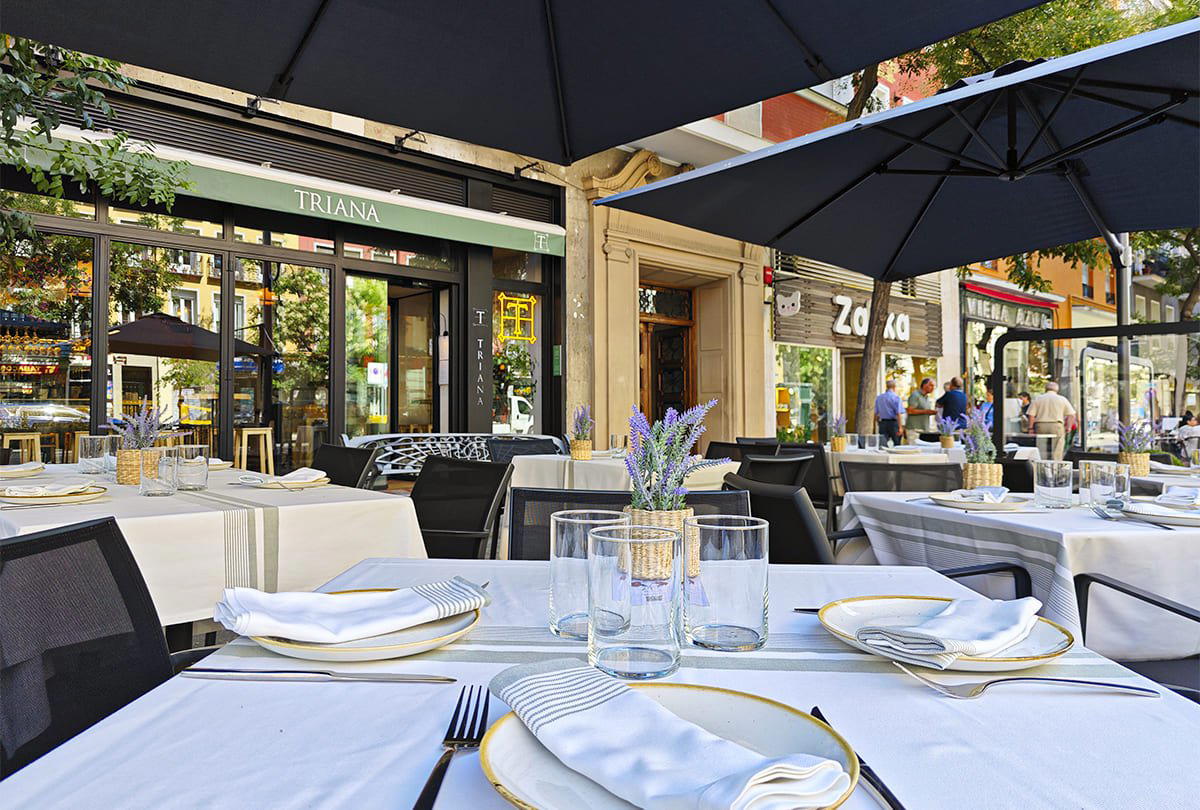
A Retiro Address in a City That Takes Dining Seriously
Madrid's restaurant culture has never been monolithic. The city operates across at least three distinct registers: the grand old houses of cocido and roast suckling pig that anchor national tradition; the progressive tasting-menu operations that compete on an international stage; and a quieter, neighbourhood-rooted tier of restaurants where the cooking is careful, the room is local, and the ambition is expressed through consistency rather than spectacle. Triana, at Calle de Narváez 39 in the Retiro district, belongs to that third register. Its address is instructive. Narváez runs through one of Madrid's most composed residential quarters, east of the Retiro park and well outside the orbit of the tourist-facing centro. Restaurants in this part of the city don't survive on passing trade. They build and retain a local clientele, which means the cooking has to earn repeat visits rather than first-time novelty.
The Retiro District and What It Demands of Its Restaurants
Retiro is not a dining destination in the way that Chueca or the streets around the Mercado de San Miguel are framed for visitors. It is a neighbourhood where madrileños live, and where they eat regularly rather than ceremonially. That context shapes what a restaurant on Narváez must do. The room cannot lean on spectacle as a substitute for cooking. The menu cannot rely on trend-chasing to fill seats on a Tuesday. This dynamic, the pressure of a residential, repeat-visit clientele, tends to produce a different kind of restaurant from the ones that open in high-footfall zones. It produces places that understand their regulars, that calibrate their offer to the rhythms of neighbourhood life, and that build a reputation through accumulated trust rather than launch-week press coverage.
In the broader architecture of Madrid dining, this positions Triana in a comparable set that includes thoughtful neighbourhood restaurants across the city's more residential quarters: Chamberí, Salamanca, La Latina on a quieter night. These are not the venues that appear at the summit of international tasting-menu rankings alongside DiverXO or Coque, but they are the venues where the actual texture of a city's food culture becomes legible. The high-end progressive operations, Deessa, DSTAgE, Paco Roncero, tell you where Spanish fine dining is heading technically. Places like Triana tell you how a neighbourhood eats on a Wednesday evening.
Reading the Menu: What Structure Reveals About Intent
In Madrid, menu architecture has become one of the clearest signals of a restaurant's positioning. The tasting-menu format, now standard at the city's upper-tier addresses, imposes a particular rhythm on the meal and a particular relationship between kitchen and guest. The à la carte format, by contrast, places the guest in control of pacing and selection, and demands that a kitchen produce consistently across a wider range of dishes rather than executing a single rehearsed sequence. Restaurants operating in the neighbourhood tier typically use the à la carte model precisely because their clientele is not booking three months ahead for a single set experience. They are choosing where to eat that night, and they want the option to order grilled fish without committing to twelve courses.
Where Triana sits within this framework matters for anyone planning a visit. The Narváez address and the Retiro district context both point toward a restaurant built around regular custom, which in Madrid's dining grammar typically means accessible pricing relative to the tasting-menu tier, a wine list oriented toward drinkability rather than cellar theatre, and a kitchen vocabulary rooted in Spanish product and technique. Spain's broader fine-dining conversation, from El Celler de Can Roca in Girona to Arzak in San Sebastián, draws heavily on Basque and Catalan foundations. Madrid's neighbourhood tier, by contrast, tends to draw on Castilian tradition, roasts, braised meats, pulses, seasonal vegetables from the meseta, while absorbing the influence of the Andalusian, Galician, and Levantine communities that have shaped the city's food over decades.
The name Triana itself carries that Andalusian charge. Triana is the historic barrio of Seville, the neighbourhood across the Guadalquivir associated with flamenco, ceramics, and a culinary identity built around fresh fish, fried food, and the kind of direct, product-led cooking that doesn't announce itself through technique. Whether that reference is literal or atmospheric, it orients the restaurant within a recognisable Spanish culinary register, one that values the quality of the raw ingredient over the complexity of its transformation. In this, it echoes the approach of restaurants across southern Spain, from Aponiente in El Puerto de Santa María at one extreme to the tapas bars of the Triana barrio itself at the other.
Placing Triana in the Madrid Dining Map
For a visitor orienting themselves in Madrid's restaurant scene, the practical question is where Triana sits relative to the city's different tiers and what kind of visit it suits. The progressive tasting-menu operations require forward planning, significant budget, and an appetite for long, structured meals. The neighbourhood tier operates differently: it rewards spontaneity, suits solo diners and couples as much as groups, and tends to offer better value per plate than the destination-dining addresses. Venues in this bracket are where you eat when you want to understand how the city actually feeds itself, as opposed to how it performs for international critics and the full Madrid restaurant guide coverage that follows awards season.
In the wider Spanish context, the neighbourhood restaurant tier in Madrid is underrepresented in international coverage compared with the headline addresses. Operations like Martin Berasategui in Lasarte-Oria, Azurmendi in Larrabetzu, Mugaritz in Errenteria, Quique Dacosta in Dénia, Ricard Camarena in València, Cocina Hermanos Torres in Barcelona, and Atrio in Cáceres attract sustained international attention. The Retiro neighbourhood restaurant, by design, does not. That is part of its function. For comparison, the same dynamic operates in cities like New York, where destination addresses such as Le Bernardin and Atomix coexist with a dense layer of neighbourhood restaurants that sustain the city's actual daily food culture without attracting the same critical apparatus.
Planning Your Visit
Triana is located at Calle de Narváez 39 in the Retiro district of Madrid, postcode 28009. The nearest metro access is via the Ibiza or Sainz de Baranda stations on Line 9, placing the restaurant within a direct walk from both. For specific hours, current pricing, and reservation availability, contact the restaurant directly. As a neighbourhood restaurant in a residential quarter, confirming in advance remains the practical approach, particularly for weekend evenings when Retiro's dining rooms fill with local regulars.
Cost Snapshot
Comparable venues nearby, for context on price, style, and recognition.
| Venue | Cuisine | Price | Notes |
|---|---|---|---|
| TrianaThis venue — the venue you are viewing | Ibiza, Andalusian Tapas | $$ | Not listed |
| Patio de Leones | Not listed | $$ | Recoletos, Traditional Spanish Tapas & Tavern |
| El Patio de Atocha | Not listed | $$ | Barrio de las Letras, Modern Spanish Fusion |
| Don Benito San Roque | Trafalgar, Andalusian Tapas | $$ | Not listed |
| La Ventita del Foodie by AYANTO | Not listed | $$ | Ibiza, Authentic Canarian Tapas & Gourmet Products |
| Llauna | Not listed | $$ | Almagro, Catalan & Spanish Mediterranean with Wood-Fired Specialties |
Continue exploring
More in Madrid
Restaurants in Madrid
Browse all →
Bars in Madrid
Browse all →
Hotels in Madrid
Browse all →



At a Glance
- Cozy
- Lively
- Rustic
- Group Dining
- Casual Hangout
- Family
- Terrace
- Open Kitchen
Current opening hours
- Monday
- 12:30 PM–12:30 AM
- Tuesday
- 12:30 PM–12:30 AM
- Wednesday
- 12:30 PM–12:30 AM
- Thursday
- 12:30 PM–12:30 AM
- Friday
- 12:30 PM–12 AM
- Saturday
- 12:30–1 AM, 12:30 PM–12 AM
- Sunday
- 12:30–1 AM, 12:30 PM–12:30 AM
Hours can change for holidays and private events. Last verified .
Joyful and welcoming atmosphere with Andalusian decor featuring wicker chairs, wrought iron lanterns, and a heated outdoor terrace.