
Our verdict
The bowl here is a reference point for pork-bone broth in a neighbourhood otherwise defined by crêpe stands and streetwear drops.

Pearl is the En Primeur Club membership app, where members save venues, book tables and use the concierge.
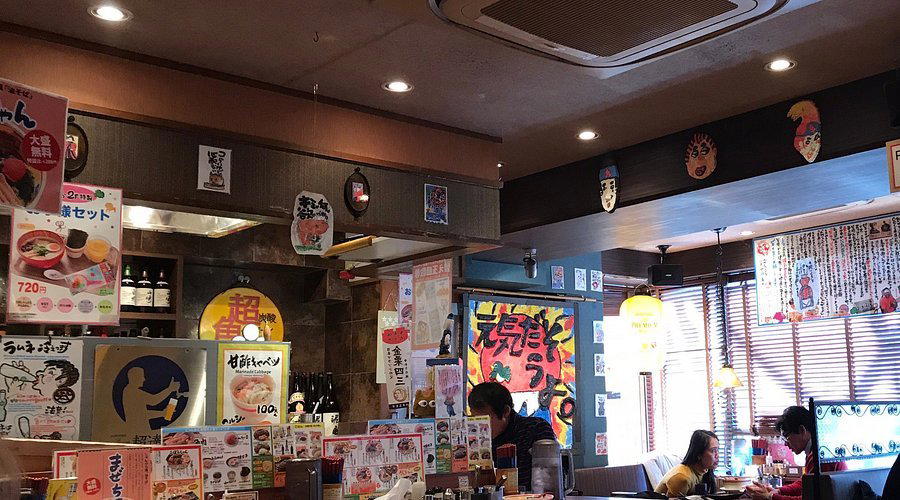
The menu
What to order
- Jangara Ramen
- Vegan ramen
- Black garlic ramen
Harajuku's Ramen Anchor
The stretch of Jingumae running south from Harajuku Station is one of Tokyo's more disorienting commercial corridors: a place where a Shinto shrine sits within earshot of international fashion retail, where teenagers queue for crêpes outside buildings housing serious gallery spaces. Food in this pocket of Shibuya tends toward the quick, the photogenic, and the transient. Ramen, in the Hakata tradition specifically, sits outside that logic entirely. It asks for concentration, not curation. Kyushu Jangara Ramen, at the ground floor of a building on Jingumae 1-chome, has been the neighbourhood's answer to that question for long enough that its presence now reads less as a discovery and more as a fixed coordinate.
Hakata-style tonkotsu is a regional tradition from northern Kyushu that trades on a single, hard-won technique: pork bones boiled at high heat for long enough that the broth turns opaque and rich with collagen, with a density that coats the bowl rather than filling it. The ramen boom that reshaped Tokyo's mid-range dining conversation over the past two decades brought many regional styles into the capital, but Hakata tonkotsu arrived with a credibility advantage. Its flavour profile is direct and unambiguous in a way that rewards repeat visits rather than one-time curiosity. Kyushu Jangara sits in that tradition squarely, in a city that now has reference options for nearly every regional ramen school.
The Jingumae Address and What It Implies
Location in Tokyo's dining culture carries weight beyond geography. A ramen shop holding ground in Jingumae, surrounded by a consumer economy built around novelty and turnover, signals something about its operating model. Venues in this corridor that depend entirely on foot traffic from tourists or weekend crowds rarely sustain the kind of consistent quality signal needed to register on serious dining indices. The regulars here are not the same people buying crepe cones fifty metres away.
The Harajuku address also places it in a different access tier from Tokyo's serious ramen destinations that require suburban train journeys or long queues in residential wards. For visitors staying in the Omotesando-Shibuya corridor, which takes in a significant share of Tokyo's better hotel stock, Kyushu Jangara is among the more accessible OAD-ranked casual bowls in the city. That is a practical fact worth weighing against the bowl's credentials. For more on where to stay in this part of the city, see our full Tokyo hotels guide.
Tonkotsu in Tokyo's Ramen Field
Tokyo's ramen scene is large enough to have developed genuine internal competition by style. The city's default ramen tradition is shoyu-based, with a lighter, soy-forward broth built on chicken or dashi stocks. Hakata tonkotsu entered as a regional import and has held its ground by operating on entirely different sensory terms. The two styles do not compete directly for the same customer in the same mood; they occupy separate decision contexts. Where shops like Afuri have built recognition around a yuzu-inflected shio broth at the lighter end of the spectrum, Kyushu Jangara works at the opposite register, where richness and opacity are the point rather than a compromise.
Within the OAD Casual Japan ranking, Kyushu Jangara sits in a field that includes a wide range of ramen schools and price points. A movement from 83rd to 101st between 2024 and 2025 is a modest shift in a competitive index and does not change the shop's standing as a named reference within its category. The OAD list draws on votes from dedicated eaters rather than general public polling, which gives its rankings a different evidential weight than aggregated review platforms. Holding a position inside the top 101 across two consecutive cycles carries more signal than a single-year appearance. For comparison, see how Tokyo specialists like Fuunji, Chukasoba Ginza Hachigou, Chukasoba KOTETSU, and Chuogo Hanten Mita occupy adjacent positions across the city's noodle categories.
Hours, Access, and Planning Notes
The Jingumae location operates seven days a week, 10am to 10pm, which is a notably broad window by the standards of serious Tokyo ramen shops, where many operate single sessions, close mid-afternoon, or shut on rotating weekdays. That operational structure makes Kyushu Jangara accessible at hours when OAD-ranked noodle destinations in other parts of the city are not open, including the early evening period when visitors arriving from afternoon itineraries are looking for a substantial meal before the later dining shift begins.
The Harajuku-Jingumae corridor is well-served by both the JR Yamanote Line at Harajuku Station and the Tokyo Metro Chiyoda Line at Meiji-Jingumae. Both are within walkable distance of the 1-chome address.
For visitors building a broader Tokyo dining itinerary that extends beyond ramen, the city's other reference categories include fine kaiseki at Gion Sasaki in Kyoto or three-star French at HAJIME in Osaka if the trip extends to the Kansai region. For ramen outside Japan, the style has found serious practitioners at places like Afuri Ramen in Portland and Akahoshi Ramen in Chicago, both of which handle the bowl with more rigour than most international outposts manage. For creative dining in other Japanese cities, akordu in Nara, Goh in Fukuoka, 1000 in Yokohama, and 6 in Okinawa represent the range of what serious Japanese dining looks like outside Tokyo. See also our full Tokyo restaurants guide, our full Tokyo bars guide, our full Tokyo wineries guide, and our full Tokyo experiences guide.
Quick reference: Kyushu Jangara Ramen, Jingumae 1-chome, Harajuku, Tokyo. Open daily 10am–10pm. Walk-in only; no booking.
Frequently asked questions
What should I order at Kyushu Jangara Ramen?
The kitchen operates in the Hakata tonkotsu tradition, which means pork-bone broth is the throughline across the menu. Order from that core. The OAD Casual Japan ranking, held across 2024 and 2025, was built on the kitchen's noodle work rather than peripheral items, so the ramen bowls themselves are the reason to be here. Additions such as extra noodles (kaedama) are standard practice in Hakata-style shops and are worth using if the format allows it.
Is Kyushu Jangara Ramen better for a quiet night or a lively one?
Tokyo's OAD-ranked casual noodle shops at this address tier do not typically operate at a quiet register. The Jingumae location sits on a busy commercial street in a neighbourhood with consistent foot traffic, and the ramen counter format generally produces an energetic, rapid-turnover environment. This is not the place for a long, contemplative dinner. It is the place for a focused bowl in a room where other people are doing the same thing with some urgency. Think of it as the lively end of the register by default.
Is Kyushu Jangara Ramen child-friendly?
The walk-in ramen counter format, accessible pricing implied by the casual category ranking, and central Harajuku location make it a reasonable option for families with children who eat noodles.
A quick peer list to put this venue’s basics in context.
| Venue | Cuisine | Price | Awards | Notes |
|---|---|---|---|---|
| Kyushu Jangara RamenThis venue (the venue you are viewing) | Kyushu-Style Ramen | $10–20 | Not listed | Not listed |
| Harutaka | Edo-Style Omakase Sushi | $200–300 | 3 Michelin Stars · World's 50 Best #76 | Sushi |
| RyuGin | Modern Kaiseki | $500+ | 3 Michelin Stars · World's 50 Best #41 | Kaiseki, Japanese |
| L'Effervescence | Modern French with Japanese Influences | $200–300 | 3 Michelin Stars · World's 50 Best #69 | French |
| HOMMAGE | Modern French with Japanese Influences | $150–200 | 2 Michelin Stars · World's 50 Best #78 | Innovtive French, French |
| MAZ | Innovative Peruvian-Japanese Fusion | $150–200 | 2 Michelin Stars · World's 50 Best #28 | Innovative |
Recognition history
Dated appearances from independent guides and award organizations, with the underlying list record or original source where available.
Opinionated About Dining Casual in Japan Ranked #68
Opinionated About Dining
Full recognition history (3 entries)
Opinionated About Dining Casual in Japan Ranked #101
Opinionated About Dining
Opinionated About Dining Casual in Japan Ranked #83
Opinionated About Dining
Continue exploring
More in Tokyo
More from Chef Various
Browse all →
Restaurants in Tokyo
All restaurants in Tokyo →


Bars in Tokyo
All bars in Tokyo →


Details
- Cozy
- Lively
- Trendy
- Casual Hangout
- Solo
- After Work
- Late Night
- Open Kitchen
- Sake Program
- A La Carte
- Counter Dining
- Vegetarian Friendly
- Vegan Options
Current opening hours
- Monday
- 10 AM–10 PM
- Tuesday
- 10 AM–10 PM
- Wednesday
- 10 AM–10 PM
- Thursday
- 10 AM–10 PM
- Friday
- 10 AM–10 PM
- Saturday
- 10 AM–10 PM
- Sunday
- 10 AM–10 PM
Hours can change for holidays and private events. Hours as of .
Cramped, atmospheric counter seating with warm, busy ramen shop feel and open kitchen.