
Opened in December 2023 in Akasaka, Jigen Do earned a Tabelog Award Bronze and a place in the Tabelog Japanese Cuisine Tokyo 100 within its first two years, a rapid trajectory that places it among the more closely watched kaiseki-adjacent omakase counters in the capital. The course, priced at JPY 50,000 per person plus a 10% service charge, centres on live-fire technique across wood, charcoal, and straw, with ingredient pairings that shift with seasonal availability.
Pearl is the En Primeur Club membership app — saves, bookings, and concierge access live there. Same editors, same standards.
- Address
- Japan, 〒107-0052 Tokyo, Minato City, Akasaka, 3 Chome−9−2 No.R赤坂見附 1F
- Website
- instagram.com
- Directions
- Get directions
 Saves & bookings on Pearl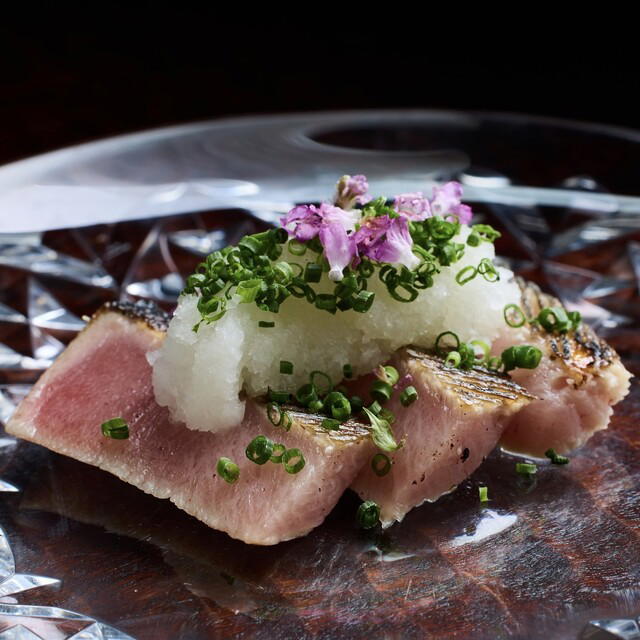
Akasaka's Fire-Driven Omakase and What It Says About Tokyo's Direction
The approach to No.R Akasaka Mitsuke on a weeknight carries the specific energy of a district that has never fully decided whether it belongs to the political class or the hospitality trade. Akasaka sits between the Cabinet Office and the entertainment corridors of Roppongi, drawing a clientele that tends toward discretion over spectacle. The building's ground-floor setting reinforces that register: no elaborate facade, no street-level theatre.
In a city where kaiseki and Japanese-cuisine omakase counters spend years building review volume before entering award consideration, clearing both thresholds inside two years signals a clarity of concept that the Tokyo dining public registered quickly.
The Metropolitan Frame: Tokyo Cooking vs. Kyoto Tradition
Any serious consideration of premium Japanese cuisine in 2025 involves the Tokyo-Kyoto axis. The two cities have been trading positions on this question for decades, and the answer keeps shifting. Kyoto's kaiseki tradition, rooted in the precision of multi-course seasonal cooking, has long been the reference point, venues like Gion Sasaki in Kyoto and Mitsuyasu in Kyoto represent that lineage at its most considered. Tokyo, by contrast, has historically absorbed those traditions and recombined them with speed, ingredient access, and a willingness to borrow from other cooking cultures.
What has happened more recently is that a cohort of Tokyo restaurants has moved toward a different kind of differentiation: not the Franco-Japanese cross-pollination that defined an earlier generation, but a return to Japanese heat sources, firewood, binchotan charcoal, straw, as the technical spine of a course. This is not the same as Kyoto refinement. It is something more assertive, more tied to the drama of combustion and the volatility of live fire. Venues across Tokyo's premium tier have been exploring this register, and Jigen Do sits explicitly within that current. The Tabelog description notes the deliberate use of wood, charcoal, and straw to create aromatic layering across the course, with ingredient pairing built around the heat source rather than defaulting to it as garnish.
This positions Jigen Do at an interesting distance from both Kyoto traditionalism and from the kaiseki-French hybrids that still occupy much of Tokyo's Michelin-visible upper tier, places like RyuGin (three Michelin stars) or the more technique-forward French-influenced approaches. The fire-centred course is a Tokyo answer to Kyoto's water-and-season approach, one that privileges texture and aroma through heat over the controlled minimalism of dashi and raw preparation.
comparable set and Positioning
At JPY 50,000 per person for the omakase course (plus a 10% service charge, with prices subject to seasonal ingredient variation), Jigen Do occupies the same price tier as particularly serious Japanese-cuisine counters in the city. The course price increased from JPY 44,000 to JPY 50,000 in October 2025, a step consistent with the trajectory of Tokyo's mid-to-upper omakase segment as a whole, where sustained demand and ingredient cost pressure have moved floor prices upward across the category.
Within the Tabelog Bronze cohort, Jigen Do sits alongside counters that have earned similar recognition across different cuisine formats. The relevant comparison set in Japanese cuisine includes venues like Kashiwade no Tsukasa Suikouan, Kawada, and Kizan, each representing a distinct approach to the premium Japanese omakase format in Tokyo. Onarimon Haru offers another point of comparison in the city's evolving Japanese cuisine tier.
The restaurant operates on a reservation-only basis, with no walk-in availability. Given its location in Akasaka and its profile among Tokyo's regular haute-dining audience, forward planning is necessary.
The Course Structure and What the Format Implies
The omakase format, at one price point with a single seasonal course, is now standard at this tier of Tokyo dining. What distinguishes individual venues within that format tends to come down to the specific technical programme and the coherence of ingredient logic across the meal. The restaurant's Tabelog record emphasises the 'well-suited pairing of ingredients' as a stated focus, with the fire-source selection serving as an organising principle rather than a stylistic flourish.
Inclusion of sake (nihonshu) as the listed drink offering aligns the beverage programme with traditional Japanese pairing rather than a wine-led approach. This is a meaningful signal in a city where some premium Japanese-cuisine counters have moved toward hybrid sake-and-natural-wine lists as a way of broadening the experience.
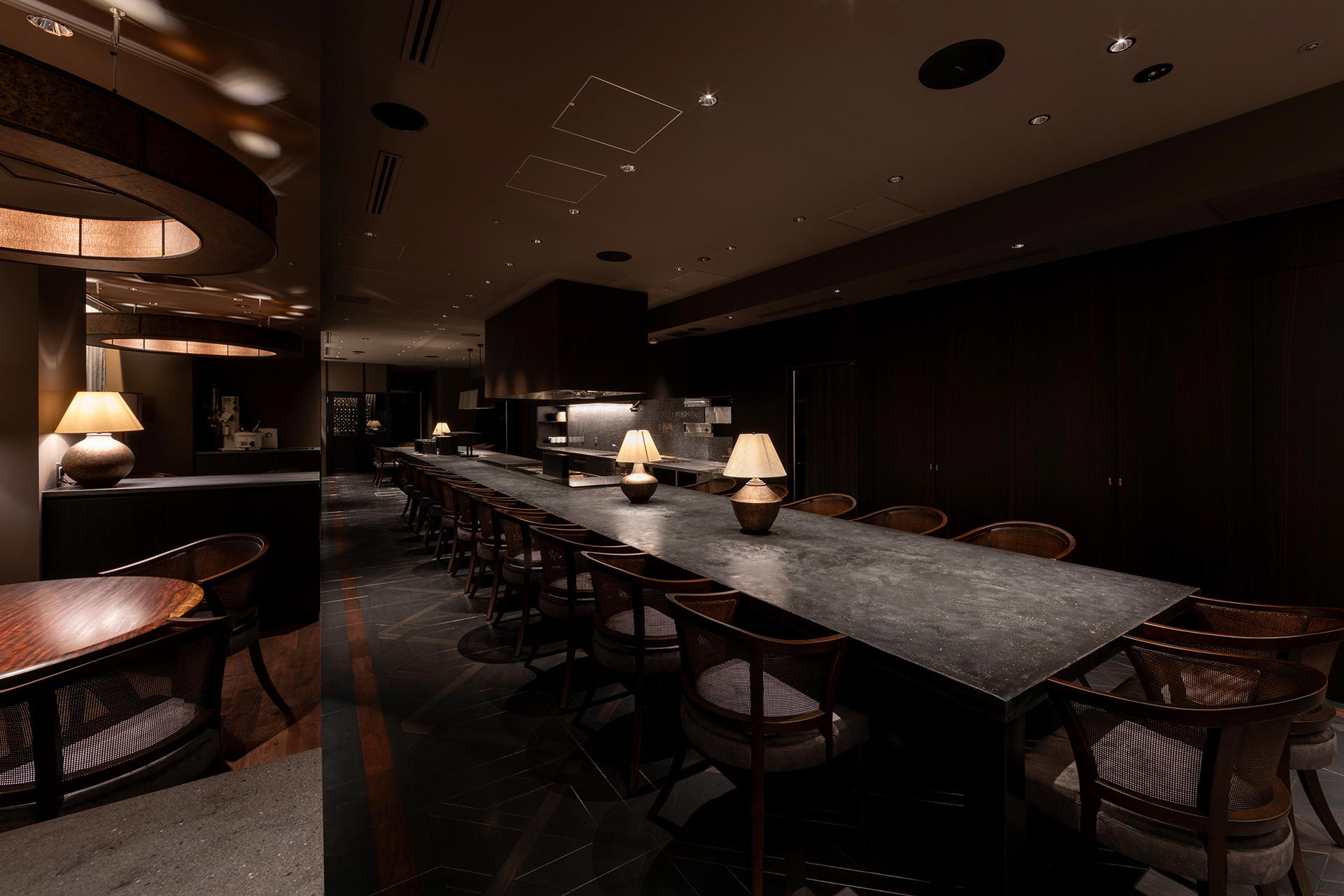
Space is described as 'relaxing', with no private rooms available but the venue available for private use. No seat count is publicly listed. The non-smoking designation and absence of parking are consistent with the inner-Tokyo counter format.
Tokyo's Omakase Scene in 2025 and Where Jigen Do Fits
Tokyo's premium Japanese cuisine tier has never been more competitive. The city now fields a serious challenge from Osaka, HAJIME in Osaka demonstrates what that city's upper-tier cooking can achieve, and from an increasingly sophisticated regional dining circuit. Goh in Fukuoka, akordu in Nara, 1000 in Yokohama, and 6 in Okinawa represent a geography of serious dining that no longer concedes the conversation to the capital. Beppu Hirokado in Oita adds another regional reference point for Japanese-cuisine cooking with a distinct local character.
Against that backdrop, Tokyo's advantage remains the density of its counter culture and the speed with which strong operators gain recognition. The city's review infrastructure and the concentrated presence of a dining audience that eats at this tier regularly means that quality registers faster here than it does in any other Japanese city.
For visitors constructing a serious dining itinerary in Tokyo, the restaurant represents a specific and coherent choice: a fire-technique-led Japanese-cuisine omakase in a quiet Akasaka setting, at the price point where the city's most considered cooking tends to operate. It is a different experience from the French-influenced kaiseki at L'Orangerie Koh-An and from the sushi omakase format, the heat-source focus gives the course a character that is distinctively its own within the category.
Planning Your Visit
Reservations: Reservation only; no walk-in availability. Book through Tabelog or equivalent Japanese reservation channels. No official website is listed. Location: No.R Akasaka Mitsuke 1F, 3-9-2 Akasaka, Minato, Tokyo; 113 metres from Akasaka Mitsuke station. Budget: Omakase course JPY 50,000 per person (tax included) plus a 10% service charge; seasonal ingredient fluctuation may affect final pricing. Payment: Credit cards accepted; QR code payments accepted (d Barai); electronic money not accepted. Private use: The full venue is available for private hire; private rooms are not available within a shared-seating format. Smoking: Non-smoking throughout.
The Essentials
Comparable venues nearby, for context on price, style, and recognition.
| Venue | Cuisine | Price | Notes |
|---|---|---|---|
| Jigen DoThis venue — the venue you are viewing | Minato, Handmade Soba and Duck Dishes | $$ | Not listed |
| 81 | Taitō, Japanese Ramen | $$ | Not listed |
| Menya Hanabi (麺屋はなび 新宿店) | Minami Shinjuku, Taiwan Mazesoba | $$ | Not listed |
| Akasaka Musashi | Minato, Japanese Shabu-shabu & Sukiyaki | $$ | Not listed |
| Jo Kigen | Not listed | $$ | Minato, Standing Japanese sake & seafood bar |
| Umezu | Minato, Japanese Izakaya | $$ | Not listed |
Recognition history
Dated appearances from independent guides and award organizations, with the underlying list record or original source where available.
Tabelog Bronze #145
Tabelog
Tabelog 100 #69 · No. 69
Tabelog · Tabelog 100 - Japanese cuisine - TOKYO - 2025













At a Glance
- Quiet
- Cozy
- Intimate
- Date Night
- Casual Hangout
- Group Dining
- Open Kitchen
- Sake Program
- Local Sourcing
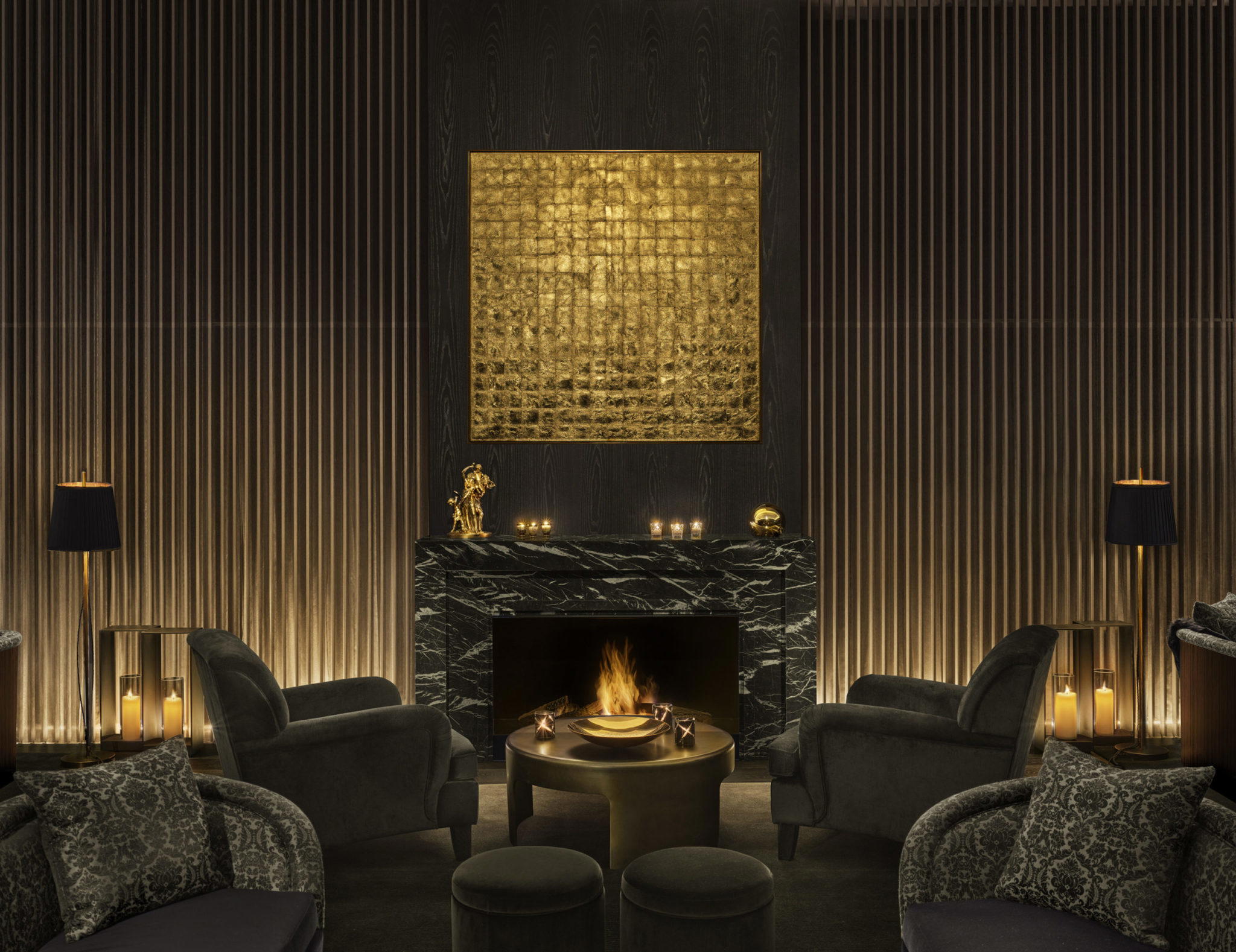
Serene Japanese-style setting in a quiet backstreet with warm lighting and wood-toned interior creating a relaxing, nostalgic atmosphere.