1 Michelin Star · Tabelog 100 #87
Our verdict
KushinGarando occupies the fourth floor of a Kitashinchi building in Osaka's premier entertainment district, serving regional Chinese cooking shaped by Japanese seasonal rhythms. Chef Hiroaki Osawa's menu draws on China's provincial traditions while weaving in local fruit, wagyu, and seasonal produce. The restaurant's communal format, guests assembling together after dinner for Chinese tea, places it in a distinct tier of Osaka's premium Chinese dining scene.

Pearl is the En Primeur Club membership app, where members save venues, book tables and use the concierge.
The menu
What to order
- Miyazaki Beef Hot Pot
- Peach Bun with Smoked Duck
- Drunken Crab with Baked Apples and Pears
- Roast Fillet of Wagyu Beef
- Char Siu Melon Bread
A Fourth-Floor Room Where China Meets the Japanese Calendar
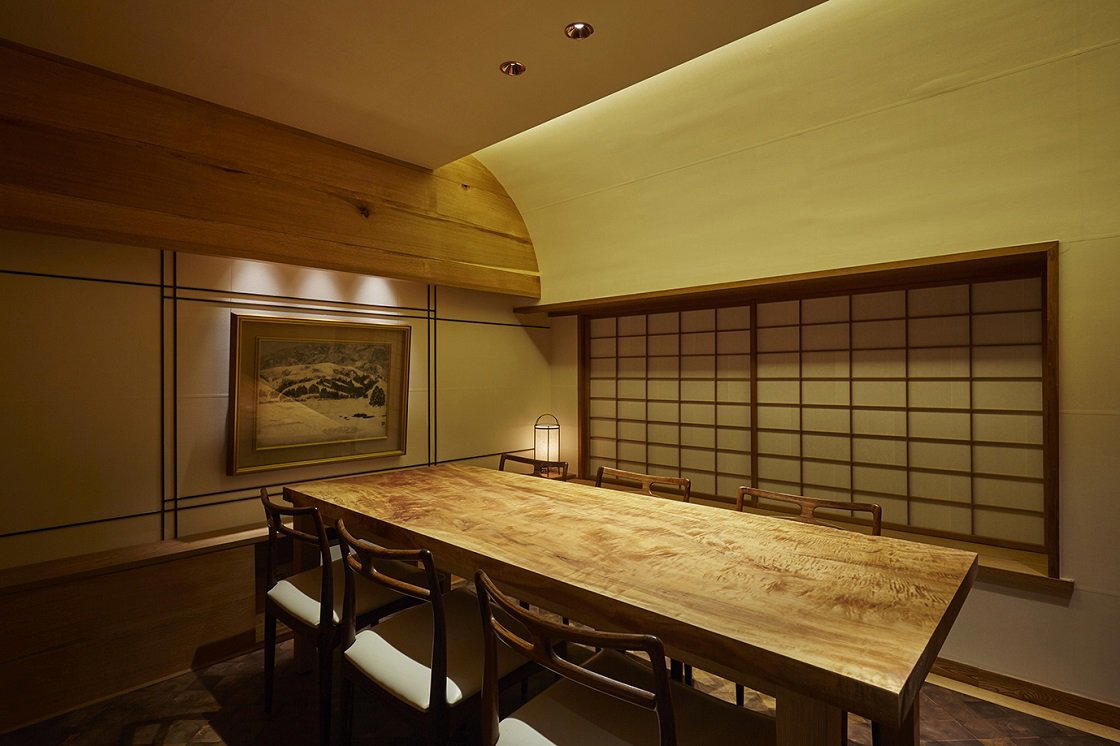
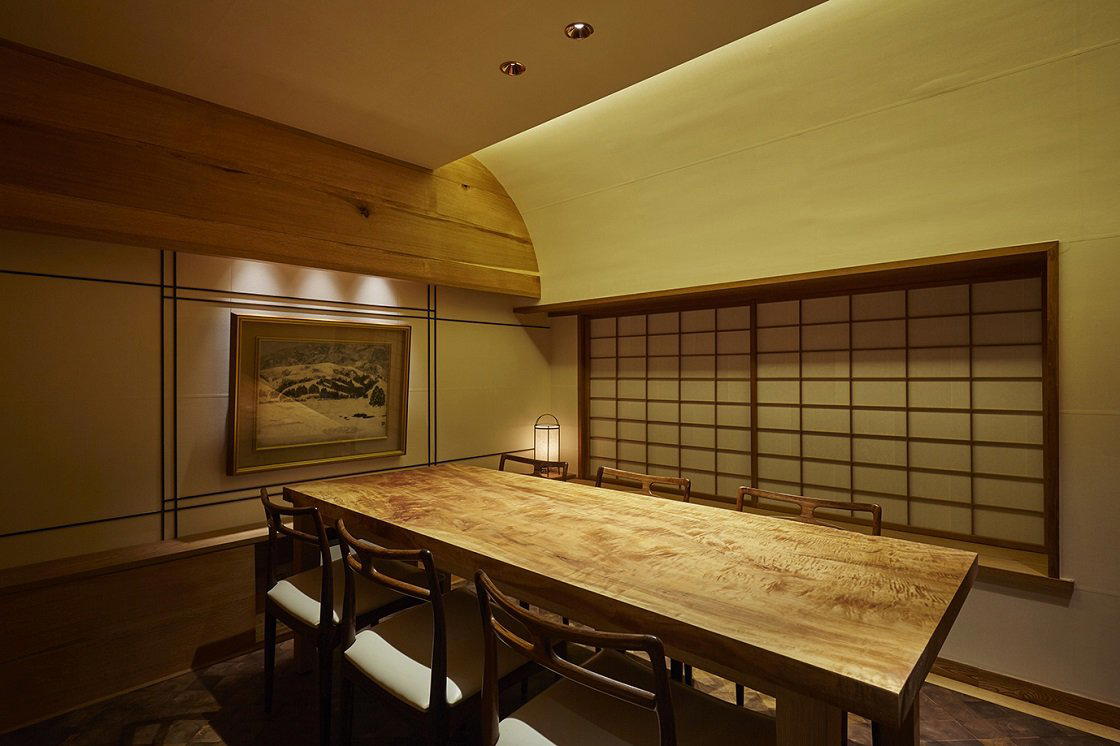
Kitashinchi, Osaka's most concentrated strip of high-end dining and entertainment, has a way of hiding its most considered restaurants several floors above street level. KushinGarando sits on the fourth floor of a building in Sonezaki Shinchi, the kind of address that rewards those who already know what they are looking for. The room draws on the word Garando, which translates roughly as 'a place where people meet', and the design philosophy behind it extends beyond hospitality convention into something closer to a ritual of assembly. Guests are seated together, courses arrive for the table at once, and the meal closes not with individual checks and quiet departures but with a shared pot of Chinese tea and the slower conversation that follows.
That communal structure is not incidental. The name's second component, Garan, carries a Buddhist connotation: a place where monks gather. The house format stages the meal as a collective experience, which marks a deliberate departure from the private-room kaiseki model that dominates Osaka's ¥¥¥ tier. Where venues like Kamigatachuka SHINTANI have refined Kansai-Chinese into something closer to a personal tasting sequence, KushinGarando leans into the sociability that is, historically, central to Chinese banquet culture.
Regional China, Read Through Osaka's Seasons
Osaka's premium Chinese dining scene has consolidated around a small number of formats. There are the strictly Cantonese houses, the Sichuan specialists, the newer wave of Japanese-trained chefs applying kaiseki discipline to Chinese ingredients, and a fourth category that resists easy classification: restaurants where the regional logic of Chinese cooking serves as structure, but the actual ingredients and flavour rhythm are calibrated to what is available in Japan, season by season. KushinGarando falls into that fourth category.
Chef Hiroaki Osawa's approach is to treat Chinese regional cooking as a framework rather than a constraint. The appetiser assortment at any given meal offers what the restaurant describes as 'a tour of China's regions', each preparation drawing on the logic of a specific provincial tradition. This is not fusion in the reductive sense. It is closer to the way Huaiyang cooking has always cross-pollinated with Shanghai's urban palate, or how Cantonese chefs working outside Guangdong have historically adapted to local produce without abandoning the structural principles of their training.
The seasonal calibration is direct and specific. Drunken crab, a Shanghainese preparation associated with autumn's hairy crab season, arrives alongside baked apples and pears, a pairing that uses the fruit's acidity and natural sweetness to shift the dish's register. Wagyu beef roasted and finished with chilli oil draws on Sichuan heat logic while anchoring the protein in Japan's most recognisable premium ingredient. Osawa's use of fruit sourced to season is not decorative; it is structural, providing the sourness and sweetness that Chinese cooking uses to create rhythm across a long meal.
Technical variation appears throughout. A beef and green pepper stir-fry, a dish that in its standard form depends on high-heat wok technique, is here cooked over low heat, changing the texture relationship between the meat and the vegetable. Crispy pork, typically served as a standalone piece, arrives wrapped in a thin crepe, shifting its function from protein centrepiece to a more nuanced textural contrast. These are not novelties for their own sake; they reflect the kind of considered variation that separates a kitchen working seriously with a tradition from one merely reproducing it.
For broader context on how Osaka's Chinese dining scene positions itself relative to the city's dominant kaiseki culture, Chi-Fu and Chugokusai S. Sawada offer useful reference points at adjacent positions in the market. Beyond Osaka, Restaurant Tim Raue in Berlin and Mister Jiu's in San Francisco represent how other cities have approached the question of Chinese cooking outside China, each with different answers about how much to adapt and how much to preserve.
Where KushinGarando Sits in Osaka's Premium Tier
At ¥¥¥, KushinGarando prices within the same band as several of Osaka's most decorated restaurants, including the three-Michelin-star kaiseki house Kashiwaya Osaka Senriyama and the three-star kaiseki counter Taian. It does not compete with those venues on format or tradition. What it shares with them is a commitment to the evening as a sustained, structured experience rather than a transactional meal.
The comparison set for KushinGarando within Chinese cooking in Osaka is a small one. Atelier HANADA by Morimoto and Az operate in adjacent creative registers, though across different culinary traditions. Kitashinchi's premium Chinese addresses tend to build their reputations through repeat visits and word of mouth rather than through the kind of media attention that drives volume bookings.
The cooking is presented with theatre before a single dish is plated: ingredients are brought to the table piled on a large plate for guests to see before preparation begins. This is a technique with roots in Cantonese banquet tradition, where ingredient transparency signals quality and builds anticipation across a long meal. It also reinforces KushinGarando's central proposition: that the meal is an event to be experienced together, not a sequence of personal servings to be consumed in parallel.
The Wider Osaka and Japan Context
For those building a broader itinerary around Japan's dining scene, Osaka's Chinese cooking occupies a specific niche within a city whose premium restaurant culture is otherwise dominated by Japanese forms. Visitors who have been to Harutaka in Tokyo, Gion Sasaki in Kyoto, or akordu in Nara will find KushinGarando a sharp contrast in both register and cultural reference. Goh in Fukuoka and 1000 in Yokohama round out a national picture of how Japan's regional cities are developing their own premium dining identities beyond Tokyo. 6 in Okinawa extends that picture further into the country's south.
For full coverage of Osaka's dining, drinking, and accommodation options, see our full Osaka restaurants guide, our full Osaka hotels guide, our full Osaka bars guide, our full Osaka wineries guide, and our full Osaka experiences guide.
Know Before You Go
- Location: 零北新地 4F, Sonezaki Shinchi 1-5-18, Kita Ward, Osaka 530-0002
- District: Kitashinchi, Osaka's primary high-end dining and entertainment zone
- Price range: ¥¥¥
- Cuisine: Regional Chinese, seasonally adapted to Japanese produce
- Format: Communal dining; guests seated together, courses served simultaneously, post-dinner Chinese tea
- Booking: Contact details not publicly listed; approach via the building concierge or a local dining concierge service
What do regulars order at KushinGarando?
The appetiser assortment is the entry point most frequently cited in connection with the restaurant's regional Chinese premise: a selection of preparations each rooted in a different provincial tradition, arriving together as a single composed course. Among the main dishes, the drunken crab with baked apple and pear and the roast wagyu with chilli oil are the most documented examples of Osawa's seasonal-fruit technique, and they represent the kitchen's approach most directly. The crispy pork in crepe is the preparation that most clearly illustrates the technical variation running through the menu. For those drawn specifically to the communal format, the post-dinner tea service is the moment the room's design logic becomes fully apparent.
Frequently asked questions
What kind of cuisine does KushinGarando serve?
Is KushinGarando expensive?
Pricing at KushinGarando is listed as ¥¥¥.
What awards or recognition does KushinGarando have?
KushinGarando has received recognition including: The restaurant aspires to cheerful Chinese fare that delights with fun and surprises. The appetiser assortment offers a tour of China’s regions, each inspired by hometown cooking. A touch of variation appears in every dish: beef and green p….
What do regulars order at KushinGarando?
The appetiser assortment is the most cited entry point: a selection of preparations that traces China's regional cooking traditions, each dish referencing a specific hometown style. Beyond that, the kitchen's signature approach involves dishes like beef and green pepper stir-fry cooked over low heat and crispy pork wrapped in crepe, where a single technique variation defines the plate. Chef Hiroaki Osawa's fruit-integrated dishes, such as drunken crab with baked apple and pear or wagyu fillet with chilli oil, illustrate how the menu shifts with Japan's seasons rather than following a fixed format.
Credentials Lens
| Venue | Cuisine | Price | Awards | Notes |
|---|---|---|---|---|
| KushinGarandoThis venue (the venue you are viewing) | Innovative Seasonal Chinese with Japanese Influences | $150–200 | 1 Michelin Star · Tabelog 100 #87 | Not listed |
| HAJIME | Avant-Garde Japanese Fine Dining | $300–500 | 3 Michelin Stars · World's 50 Best #83 | French, Innovative |
| La Cime | Modern French with Japanese Ingredients | $150–200 | 2 Michelin Stars · World's 50 Best #13 | French |
| Kashiwaya Osaka Senriyama | Seasonal Kaiseki Omakase | $200–300 | 3 Michelin Stars · La Liste Top Restaurants | Japanese |
| Taian | Traditional Japanese Kaiseki Omakase | $150–200 | 3 Michelin Stars · La Liste Top Restaurants | Kaiseki, Japanese |
| Fujiya 1935 | Modern Japanese with European influences | $100–150 | 2 Michelin Stars · La Liste Top Restaurants | Innovative |
Recognition history
Dated appearances from independent guides and award organizations, with the underlying list record or original source where available.
Michelin 1 Star
Michelin
Tabelog 100 #87 · No. 87
Tabelog · Tabelog 100 - Chinese cuisine - WEST - 2026
Full recognition history (3 entries)
Michelin 1 Star
Michelin