
A Michelin-starred French counter restaurant in Osaka's Kitahama district, LE PONT DE CIEL marks fifty years in operation with a format shift that places it at the intersection of classical French technique and live-fire cooking. The open counter frames the kitchen as theatre, with firewood driving the preparation of vegetables, fish, and meat across a ¥¥¥ tasting format that sits in a distinct tier below Osaka's more expensive French flagships.
Pearl is the En Primeur Club membership app — saves, bookings, and concierge access live there. Same editors, same standards.
- Address
- Japan, 〒541-0041 Osaka, Chuo Ward, Kitahama, 3 Chome−5−29 B1
- Phone
- +81 6-6233-5005
- Website
- pont-de-ciel.co.jp
- Directions
- Get directions
 Saves & bookings on Pearl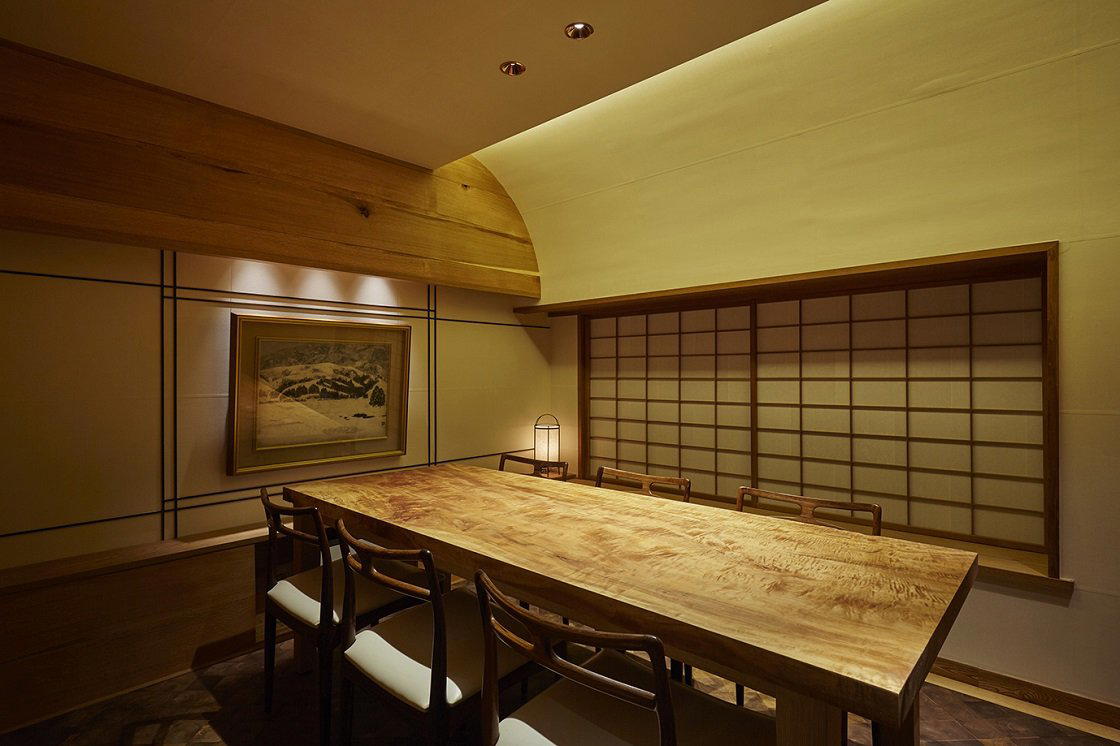
Fire, Counter, and Five Decades: How LE PONT DE CIEL Reframed Osaka French Dining
Descend below street level into Kitahama's B1 corridor and the first thing that registers is heat and the particular smell of burning hardwood. It is not the neutral, climate-controlled approach that defines many formal French restaurants in Japan; it is an immediate signal that something combustible is central to what happens here. LE PONT DE CIEL has been feeding Osaka for fifty years, and its decision to mark that anniversary by converting to a counter format, with an open kitchen and live-fire cooking at its heart, reads as a deliberate statement of intent.
What the Michelin Recognition Actually Signals
Osaka's French dining scene is among the more competitive in Japan. HAJIME sits at ¥¥¥¥ with three Michelin stars and a conceptual, art-inflected approach. La Cime operates at the same price tier with a technique-driven menu that has earned sustained critical attention. Différence and Point represent a mid-to-upper tier of French cooking that takes Kansai produce seriously without the theatrical architecture of the city's multi-star flagships. LE PONT DE CIEL holds its Michelin one star in the 2024 guide at a ¥¥¥ price point, which positions it as the accessible entry in the city's decorated French cohort.
That price gap is not simply a budget consideration; it describes a different kind of dining proposition. At ¥¥¥¥ establishments, the format is typically long, multi-course, and choreographed to a precise sequence. At the ¥¥¥ level, there is still craft and ambition on the plate, but the rhythm of the meal tends to be tighter, and the setting less ceremonial. The counter format at LE PONT DE CIEL amplifies that distinction: this is French cooking watched and experienced at close range, without the remove that white-tablecloth service creates.
Across Japan's decorated French scene, the restaurant is in interesting company. Sézanne in Tokyo has positioned itself as a reference point for contemporary French cooking in Japan, operating at the summit of the market. Hotel de Ville Crissier in Switzerland represents the classical European tradition that trained many of the chefs now working across Japan's French kitchens. The restaurant's longevity, half a century in operation, means it predates many of the trends it now appears to be absorbing.
The Counter French Format and What It Changes
Counter dining arrived in Japan most visibly through the sushi and kaiseki traditions. The format gives diners a direct sightline into preparation, creates an implicit dialogue between kitchen and guest, and compresses the social distance that formal table service maintains. Applying that model to French cooking is a meaningful departure. It means flames are visible, the sequence of service is transparent, and the warmth, literal and social, is harder to suppress.
The counter French format has precedents in Osaka and Tokyo, but it remains a minority position within decorated French dining. Most Michelin-starred French restaurants in Japan retain conventional table arrangements, treating the kitchen as a separate, sealed operation. Converting to counter service after fifty years in a more traditional format is a structural commitment to a different relationship between cook and diner.
Firewood cooking is the technical anchor of the current menu approach. Roasting vegetables over wood produces a caramelisation and char that convection ovens cannot replicate. Smoking fish with hardwood introduces a depth that differs from brined or cold-smoked preparations. Wrapping meat in flame, rather than finishing in a pan or resting in residual oven heat, produces a crust with a specific texture and flavour. These are techniques with roots in both classical French cuisine and in the wood-fire traditions common to rural French cooking, and they translate to a counter setting where the process itself becomes part of what the diner is paying to observe.
Kitahama and Its Place in Osaka Dining Geography
Kitahama is the financial and commercial district running along the north bank of the Dojima River, a few minutes on foot from the older wholesale market streets of Minami. It is not Osaka's primary fine dining concentration, that distinction belongs to Namba and Shinsaibashi to the south, and to Fukushima to the west, but it has accumulated a tier of serious restaurants that serve the district's professional class without the theatre of the tourist-facing areas. The B1 address places the restaurant in a subterranean setting that Osaka's dining culture uses often, where basement rooms acquire an intimacy that street-level spaces do not always generate.
Osaka's French scene sits within a broader Kansai dining conversation that extends to Gion Sasaki in Kyoto and akordu in Nara, where Western and Japanese techniques overlap in different configurations. Farther afield, Goh in Fukuoka and 1000 in Yokohama represent the range of serious cooking available across Japan's regional cities, and Harutaka in Tokyo anchors the capital's top tier. 6 in Okinawa completes the picture of Japan's geographic spread of recognised restaurants.
Within Osaka's French cohort, the restaurant occupies a different trajectory from younger peers. La Bécasse and nent represent different generational approaches to the same French tradition in the city, while Fujiya 1935 has developed a more conceptual, innovative direction. The restaurant's longevity and its pivot to live-fire counter cooking places it in a distinct position: an established restaurant choosing structural change rather than incremental refinement.
Planning a Visit
Know Before You Go
- Address: 3 Chome-5-29 B1, Kitahama, Chuo Ward, Osaka 541-0041
- Price tier: ¥¥¥¥
- Awards: Michelin 1 Star (2024 Guide)
- Format: Counter French, open kitchen, firewood cooking 5 (282 reviews)
- Booking:
What to Order at LE PONT DE CIEL
The kitchen's defining technique is firewood, and the menu is structured around it. Vegetables passing through live-fire heat arrive with a depth that cold-plated preparations do not produce. Smoked fish preparations carry the particular resonance of hardwood rather than commercial liquid smoke. Meat finished in direct flame reads differently in texture and crust from conventionally pan-finished or oven-roasted proteins. Given that these are the stated structural commitments of the current format, one direct way to engage with the restaurant's proposition is to approach the menu as a study in what fire does to French classical ingredients, rather than to seek out a single signature plate. The counter seat makes that approach natural: what arrives in front of you is shaped by what was happening over the flame when it was prepared.
Price Lens
Comparable venues nearby, for context on price, style, and recognition.
| Venue | Cuisine | Price | Awards | Notes |
|---|---|---|---|---|
| LE PONT DE CIELThis venue — the venue you are viewing | Chūō, Modern French Fine Dining | $$$$ | Michelin 1 Star | Not listed |
| SINAE | Not listed | $$$$ | Michelin 1 Star | Chūō, Modern French with Japanese Influences |
| ad hoc | Not listed | $$$$ | Michelin 1 Star | Fukushima, Modern French with Japanese Sensibilities |
| Pierre | Not listed | $$$$ | Michelin 1 Star | Kita, Modern French with Japanese Influences |
| La Bécasse | Chūō, Modern French Omakase | $$$$ | Michelin 1 Star | Not listed |
| agnel d'or | Not listed | $$$$ | Michelin 1 Star | Nishi, Modern French with Japanese Ingredients |
Recognition history
Dated appearances from independent guides and award organizations, with the underlying list record or original source where available.
Michelin 1 Star
Michelin
Michelin 1 Star
Michelin
Continue exploring
More in Osaka
Restaurants in Osaka
Browse all →




Bars in Osaka
Browse all →


Hotels in Osaka
Browse all →




Wineries in Osaka
Browse all →
At a Glance
- Elegant
- Sophisticated
- Intimate
- Date Night
- Special Occasion
- Celebration
- Business Dinner
- Open Kitchen
- Private Dining
- Design Destination
- Extensive Wine List
- Sommelier Led
- Sake Program
Current opening hours
- Monday
- Closed
- Tuesday
- 11:30 AM–7:30 PM
- Wednesday
- 11:30 AM–7:30 PM
- Thursday
- 11:30 AM–7:30 PM
- Friday
- 11:30 AM–7:30 PM
- Saturday
- 11:30 AM–7:30 PM
- Sunday
- Closed
Hours can change for holidays and private events. Last verified .
Refined and elegant space with natural materials, contemporary art installations, and a chic, relaxing atmosphere evoking a sophisticated hideout.