1 Michelin Star · Tabelog 100 #58
Our verdict
Différence in Osaka's Nishi Ward holds a 2024 Michelin star for its French-with-Japan concept, built entirely around ingredients grown and raised in Japan. The all-white dining room creates a deliberate remove from everyday life, while the kitchen articulates seasonality through vegetable-infused desserts and pastries that fuse yokan and daifuku with French pastry tradition.

Pearl is the En Primeur Club membership app, where members save venues, book tables and use the concierge.
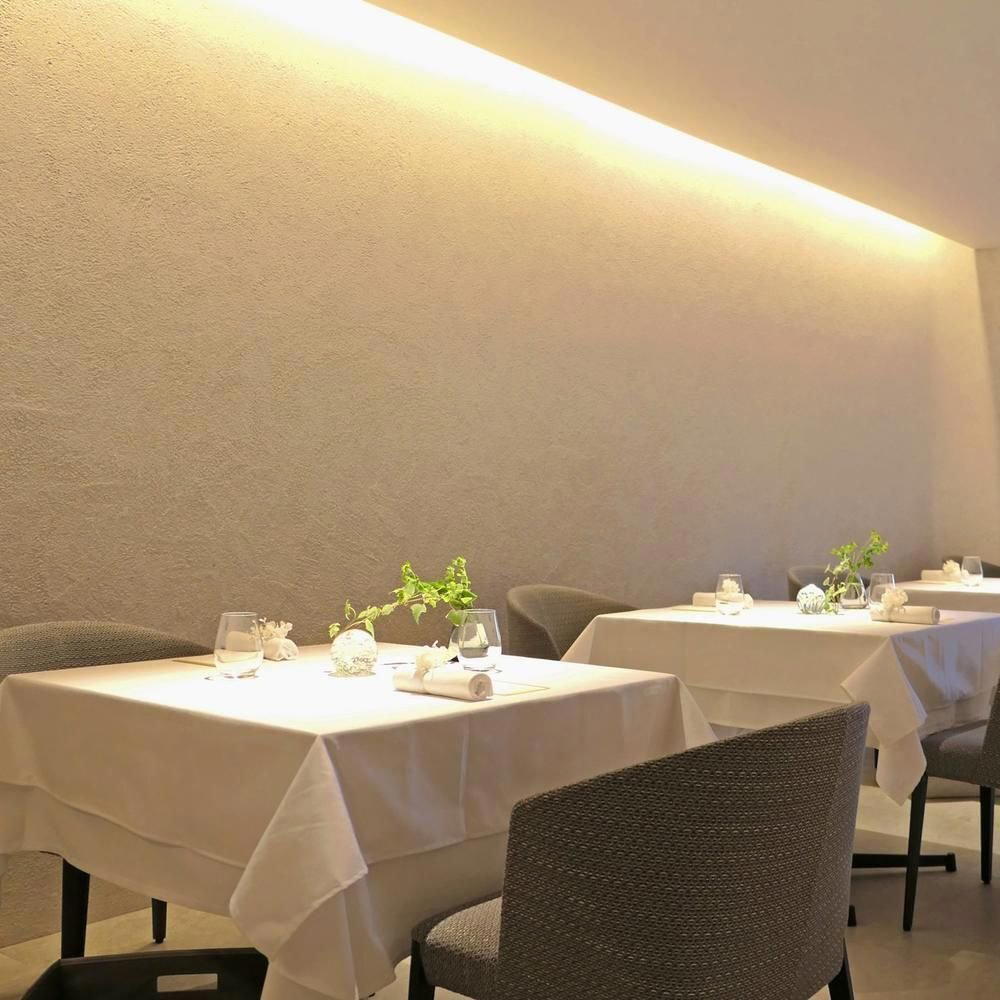
A White Room in Utsubo: What the Dining Room Signals Before the Food Arrives
Osaka's French dining scene has long operated in the shadow of its more celebrated kaiseki tradition, yet the city now holds some of the most considered French addresses in Japan. The prefecture-wide Michelin guide has progressively recognised a tier of French restaurants that draw on Japanese produce and sensibility without collapsing into fusion for its own sake. Différence, on Utsubohonmachi in Nishi Ward, belongs to that tier. It earned a Michelin star in 2024 and sits at the ¥¥¥ price point, positioned below the city's top-end French houses such as La Cime (¥¥¥¥, two stars) and LE PONT DE CIEL, and at a comparable level to restaurants where the proposition is precision without excess.
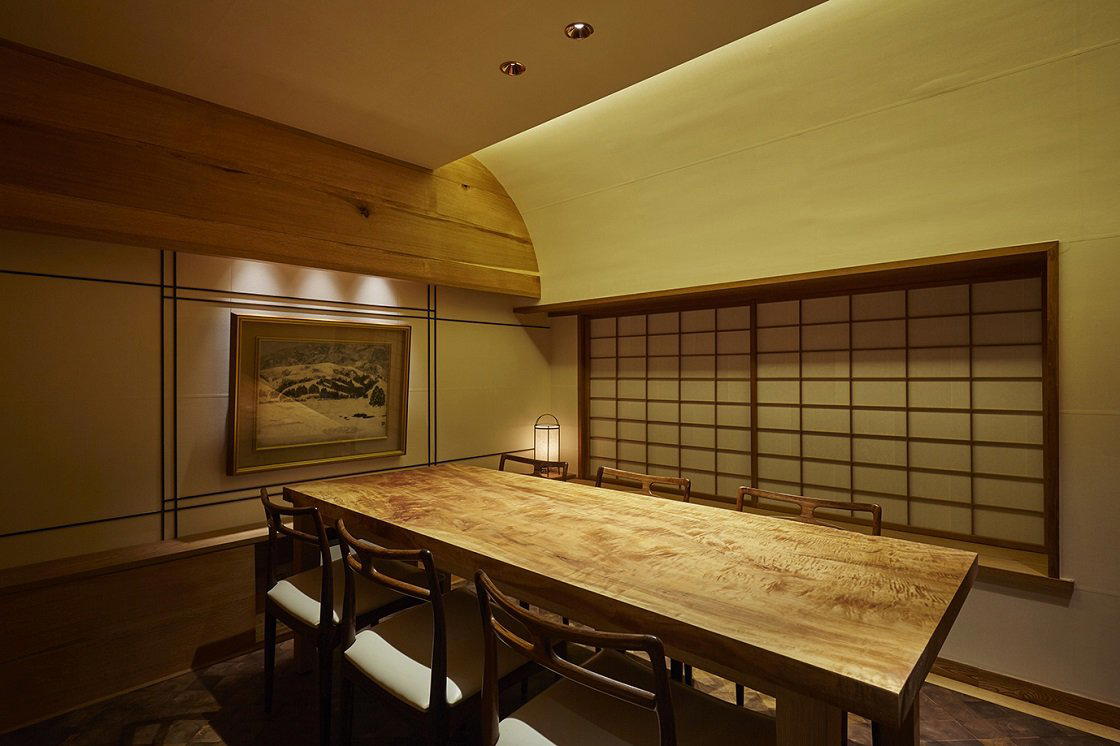
The dining room itself is a deliberate editorial statement. Uniformly white, with what the restaurant describes as an otherworldly quality, the space is designed to create distance from the texture of ordinary daily life, the name, Différence, refers directly to this intention: a space set apart from routine concerns. In a city where restaurant environments often compete on warmth, wood grain, and ambient noise, this approach is notably restrained. The visual quiet of the room becomes the frame through which the food is understood, and in that sense the architecture and the cooking share the same logic.
The Logic of the Menu: French Structure, Japanese Ingredients
The formal vocabulary here is French. The sequence follows the conventions of multi-course French dining: structured progression, controlled pacing, a meal shaped by the kitchen's internal logic rather than assembled à la carte. What distinguishes Différence within that format is its sourcing commitment: ingredients are grown and raised in Japan, and the menu is built around what that constraint produces at any given time of year. This is not a conceptual gesture. It is the operational reality that determines what arrives at the table course by course.
In the current wave of French restaurants across Japan, this kind of sourcing framework has become something of a competitive marker. L'Effervescence in Tokyo occupies a similar philosophical position in the capital's French scene, using Japanese producers as the primary creative material. The same instinct, treating France as a structural language and Japan as the vocabulary, runs through a number of Osaka's better-regarded addresses. What makes Différence worth attention is that this approach, combined with Michelin recognition and a ¥¥¥ price position, makes it one of the more accessible points of entry into Osaka's serious French tier.
The dessert and pastry program is where the kitchen most visibly diverges from the European template. Vegetables are incorporated into desserts to carry seasonal meaning, not as novelty, but as a way of using the pastry course to close the seasonal argument the savoury courses open. More distinctively, the kitchen combines yokan (the dense sweet bean jelly of Japanese confectionery tradition) and daifuku (the soft mochi rice cake filled with sweetened paste) with French pastry technique. These are not decorative references to Japanese culture. They are two well-established confectionery forms with their own textural logic, brought into conversation with French method. The result, according to the restaurant's own description, produces something that reads as neither purely French nor purely Japanese, which is presumably where the name finds its operational meaning.
Where Différence Sits in Osaka's French Tier
To understand what Différence represents, it helps to map it against the full range of Osaka's French dining. At the upper end, Hajime operates at ¥¥¥¥ with three Michelin stars and an innovative approach that places it in an entirely different competitive category. La Cime and La Bécasse occupy high positions within the ¥¥¥¥ bracket. Différence's one-star recognition at ¥¥¥ positions it as the kind of address that rewards diners who want Michelin-level rigour without the full financial commitment of the city's leading tables. For comparison, Osaka's three-star kaiseki houses such as Kashiwaya and Taian operate at the same ¥¥¥ price tier, which means Différence competes, in spending terms, with the city's most established traditional formats while offering a French framework instead.
This positioning matters when planning a broader Osaka dining itinerary. If a visit to nent or Point is already on the schedule, Différence fills a distinct slot, specifically French in structure, specifically Japanese in ingredient provenance, that those addresses do not replicate. For travellers building an itinerary that spans the Kansai region, comparable sourcing-led French approaches can be found at akordu in Nara, while Tokyo's equivalent conversation about French technique and Japanese produce plays out at L'Effervescence and, with Japanese focus, at Harutaka. Further afield, the pure French reference point at the highest technical level is Hotel de Ville Crissier in Crissier, against which Osaka's French scene consistently benchmarks its classical standards.
The Utsubohonmachi address, in Nishi Ward, places Différence in a relatively quiet commercial and residential zone west of the city centre. Utsubo Park is close by, the area has a different pace from the density of Namba or Shinsaibashi, which suits the restaurant's stated intention of providing a remove from daily life. Arriving in this neighbourhood, rather than in one of Osaka's more trafficked dining corridors, is itself part of the experience's internal logic.
Planning a Visit
Différence operates at the ¥¥¥ tier, which in Osaka's fine dining context typically corresponds to a multi-course prix fixe rather than à la carte. Reservation lead times at this tier of Michelin-recognised Osaka restaurant tend to extend to several weeks, particularly for dinner sittings and weekend slots; booking well in advance of arrival is advisable. No booking method details are available in the public record, so checking directly via search or a concierge with local contacts is the practical approach.
For those building a broader picture of Osaka's table: our full Osaka restaurants guide maps the city's full dining range. Our full Osaka hotels guide, bars guide, wineries guide, and experiences guide cover the full stay. Elsewhere in Japan, Gion Sasaki in Kyoto, Goh in Fukuoka, 1000 in Yokohama, and 6 in Okinawa each represent distinct regional approaches worth considering within an extended Japan itinerary.
Frequently asked questions
Can I bring kids to Différence?
Différence operates at the ¥¥¥ fine dining tier with a structured multi-course format and a dining room designed around calm and quiet, the concept explicitly frames the space as a retreat from everyday life. That context makes it a poor fit for young children. Older children comfortable with formal, paced French dining would be less disruptive to the experience.
What is the atmosphere like at Différence?
The dining room is uniformly white and described in the venue's own concept as an otherworldly milieu, a deliberate contrast to the outside world rather than an extension of Osaka's typically energetic dining scene. The mood is composed and unhurried, consistent with a Michelin-starred French format that prioritises controlled pacing over conviviality.
What kind of recognition has Différence received?
Différence has received recognition including: The inspiration for the name ‘Différence’, is a desire to provide a space to spend time away from the quotidian cares of life. The uniform white of the dining room, with its otherworldly milieu, reflects this aesthetic. The concept is ‘Fren….
What dish is Différence famous for?
The kitchen's most discussed departures from conventional French cooking are its vegetable-infused desserts, which anchor the menu's seasonal logic, and pastries that merge yokan and daifuku, two Japanese confections not typically found in French patisserie. These courses are the clearest expression of the venue's 'French with a sense of Japan' concept.
What type of food is Différence known for?
What price level is Différence?
Pricing at Différence is listed as ¥¥¥.
How do I find Différence?
Différence is located at 1 Chome-16-12 Utsubohonmachi, Nishi Ward, Osaka, 550-0004, Japan, Osaka.
Similar Picks
| Venue | Cuisine | Price | Awards | Notes |
|---|---|---|---|---|
| DifférenceThis venue (the venue you are viewing) | French with a Sense of Japan | $150–200 | 1 Michelin Star · Tabelog 100 #58 | Not listed |
| HAJIME | Avant-Garde Japanese Fine Dining | $300–500 | 3 Michelin Stars · World's 50 Best #83 | French, Innovative |
| La Cime | Modern French with Japanese Ingredients | $150–200 | 2 Michelin Stars · World's 50 Best #13 | French |
| Kashiwaya Osaka Senriyama | Seasonal Kaiseki Omakase | $200–300 | 3 Michelin Stars · La Liste Top Restaurants | Japanese |
| Taian | Traditional Japanese Kaiseki Omakase | $150–200 | 3 Michelin Stars · La Liste Top Restaurants | Kaiseki, Japanese |
| Fujiya 1935 | Modern Japanese with European influences | $100–150 | 2 Michelin Stars · La Liste Top Restaurants | Innovative |
Recognition history
Dated appearances from independent guides and award organizations, with the underlying list record or original source where available.
Michelin 1 Star
Michelin
Tabelog 100 #58 · No. 58
Tabelog · Tabelog 100 - French - WEST - 2025
Full recognition history (3 entries)
Michelin 1 Star
Michelin