A Lenin Avenue Address in Siberia's Oldest University City Tomsk occupies a particular position in the Russian interior: founded in 1604 as a Cossack fort on the Tom River, it grew into a centre of merchant wealth and academic life before the...
Pearl is the En Primeur Club membership app — saves, bookings, and concierge access live there. Same editors, same standards.
- Address
- Lenin Ave, 77а, Tomsk, Tomsk Oblast, Russia, 634050
- Phone
- +73822990009
- Website
- tsk.rebrorussia.ru
- Directions
- Get directions
 Saves & bookings on Pearl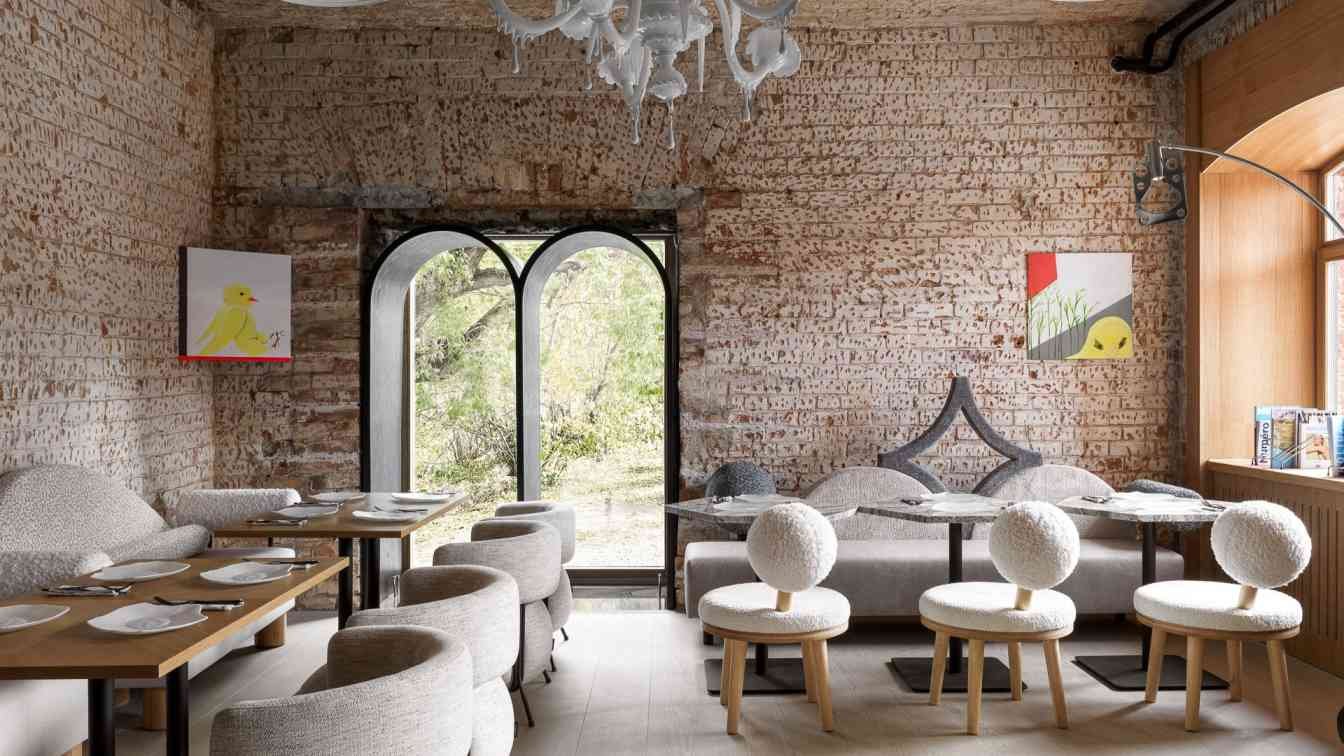
A Lenin Avenue Address in Siberia's Oldest University City
Tomsk occupies a particular position in the Russian interior: founded in 1604 as a Cossack fort on the Tom River, it grew into a centre of merchant wealth and academic life before the Trans-Siberian Railway bypassed it in favour of Novosibirsk. That historical detour left the city with an unusually preserved wooden architecture heritage and a self-sufficient cultural identity that shapes how its restaurants operate. Dining here is less influenced by Moscow's trend cycles and more by a local appetite for substance over spectacle. REBRO sits on Lenin Avenue at number 77a, the city's main ceremonial corridor, placing it in the company of institutional facades and the slow foot traffic of a city that takes its evenings seriously.
The Cultural Weight of Russian Cooking in Siberia
Russian cuisine in Siberia carries a different register than its western counterparts. The Siberian table was historically shaped by necessity and abundance in equal measure: long winters demanded preservation, fermentation, and fat-rich preparations, while the rivers and taiga provided fish, game, and foraged ingredients that the European Russian kitchen rarely encountered at the same scale. Pelmeni, the region's most exported contribution to global Russian food culture, originated in the Ural-Siberian corridor and arrived in Tomsk long before they reached St. Petersburg menus. In contemporary Russian dining, there is a growing editorial conversation about what authenticity looks like in a city like Tomsk versus what it looks like in the capital. Venues such as Twins Garden in Moscow have built internationally recognised programs around modern Russian sourcing, while 1913 in Saint Petersburg leans into pre-revolutionary Russian culinary tradition as its framing device. Tomsk's dining rooms operate without that pressure to perform for an international audience, which tends to produce a more direct expression of regional cooking.
Where REBRO Sits in Tomsk's Dining Scene
Tomsk's restaurant scene is smaller in scale than Siberia's larger neighbours. Novosibirsk, 280 kilometres to the southwest, has a broader range of formats from casual chains like Burger Records to more developed independent dining, and Omsk's scene includes venues like Grisha that have earned regional recognition. Within Tomsk itself, Kukhterin represents the city's other end of the dining spectrum. REBRO occupies the Lenin Avenue corridor, which functions as Tomsk's primary dining and retail axis. A central address in a mid-sized Siberian city signals an orientation toward a broad urban audience rather than a specialist niche, and the surrounding context of administrative buildings, university facilities, and pedestrian traffic patterns the kind of all-day, multi-occasion venue that a city of Tomsk's size typically sustains.
The Broader Pattern: Russia's Regional Dining Shift
Across Russia's non-capital cities, the past decade has seen a consolidation of serious dining into a smaller number of addresses per city, with those venues absorbing demand that once spread across a larger number of undifferentiated establishments. Yekaterinburg's Khmeli Suneli demonstrates how Georgian cuisine has become a reliable anchor for quality-oriented restaurants across the Urals and Siberia, a trend visible in Krasnodar too with venues like Alanskaya Kukhnya drawing on Caucasian food traditions. The phenomenon is not limited to ethnically specific kitchens: in Nizhny Novgorod, Dzhani Restorani points to a similar appetite for regionally inflected cooking outside the two capitals. St. Petersburg venues like Lev I Ptichka and Made in China show how that city absorbs both local and international references into its dining identity. Tomsk participates in this broader shift from the Siberian side, where access to premium imported product is more constrained but local sourcing from the Tom River basin and surrounding taiga region provides distinct raw material.
Atmosphere and Physical Setting
Lenin Avenue in Tomsk is a wide Soviet-era boulevard that has been overlaid with decades of commercial and cultural activity. The address at 77a places REBRO in a section of the avenue where institutional scale buildings give way to smaller-footprint commercial ground floors. Siberian restaurant interiors in this register tend to favour warmth against the climatic reality of a city where January averages well below minus fifteen degrees Celsius, making the physical environment a functional as much as aesthetic consideration. The dining room character of a venue on this corridor reflects the city's particular mix of students from Tomsk State University, academic and administrative professionals, and a merchant-class heritage that the city's preserved wooden mansions still visibly represent. That mix produces a dining room that tends toward animated conversation rather than hushed formality, a dynamic that distinguishes the Siberian provincial restaurant from its Moscow counterpart, where social performance at the table carries different weight.
Comparable Reference Points Beyond Russia
For readers calibrating expectations against internationally known fine dining, the relevant comparison is less with starred venues like Le Bernardin in New York City or Atomix and more with the category of serious regional restaurants that anchor a city's dining identity without seeking international validation. Cafe Pushkin in Moscow provides a useful contrast: it operates as a self-conscious reconstruction of pre-revolutionary Russian hospitality at a tourist-facing scale. The regional Siberian dining room has no equivalent motivation and typically produces a more unselfconscious expression of what the local kitchen actually does. Venues from Volgograd's Knyagininskiy Dvor to Voronezh's krevetka and Syktyvkar's Konditerskaya Kuzina illustrate the diversity of what serious regional dining looks like across Russia's non-capital geography, and Tomsk belongs to that peer group rather than to the capital dining tier. Dodo Pizza in Kirov represents the opposite end of the format range, useful context for understanding how wide the provincial Russian dining spectrum runs.
Planning Your Visit
REBRO is located at Lenin Avenue 77a in central Tomsk, reachable on foot from the city's main hotel cluster and from Tomsk State University. Tomsk is served by Bogashevo Airport, approximately 20 kilometres from the city centre, with connections to Moscow and Novosibirsk.
A Pricing-First Comparison
Comparable venues nearby, for context on price, style, and recognition.
| Venue | Cuisine | Price | Notes |
|---|---|---|---|
| REBROThis venue — the venue you are viewing | center, American Burgers & Grill | $$ | Not listed |
| Kukhterin | Central Tomsk, Siberian Russian Cuisine | $$$ | Not listed |
| Burger Records | Sibirskaya, Music-Themed Gourmet Burgers | $$ | Not listed |
| O'Learys | Not listed | $$ | Sheremetyevo Airport, American Sports Bar |
| Cococo | Not listed | $$$ | Admiralteysky, Modern Russian Fine Dining |
| Paloma Cantina | Nevskiy, Authentic Mexican Cantina | $$ | Not listed |
Continue exploring
More in Tomsk
Restaurants in Tomsk
Browse all →
At a Glance
- Trendy
- Lively
- Modern
- Casual Hangout
- Group Dining
- Open Kitchen
Current opening hours
- Monday
- 12–11 PM
- Tuesday
- 12–11 PM
- Wednesday
- 12–11 PM
- Thursday
- 12–11 PM
- Friday
- 12–11 PM
- Saturday
- 12–11 PM
- Sunday
- 12–11 PM
Hours can change for holidays and private events. Last verified .
Cool, stylish interior with a lively, energetic atmosphere.