Our verdict
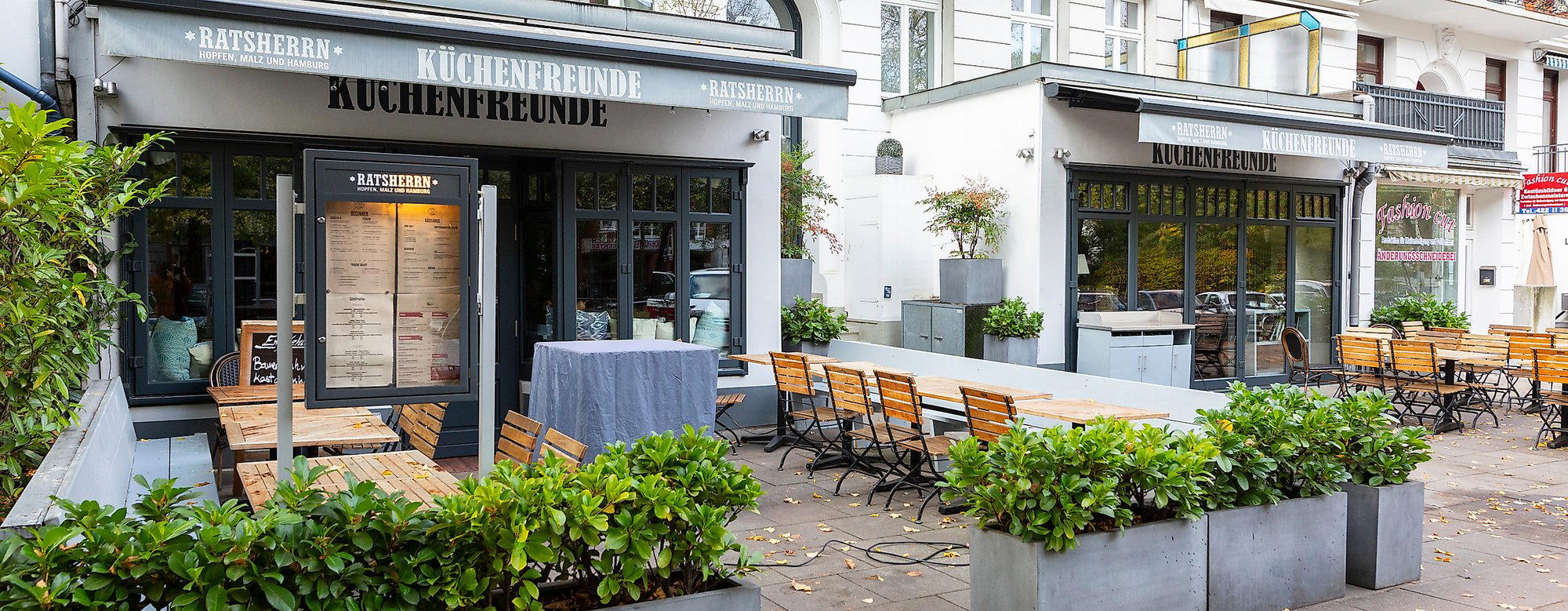
Küchenfreunde occupies a residential stretch of Hoheluft-West at Lehmweg 30, positioning itself as a neighbourhood-rooted alternative to Hamburg's trophy-tier fine dining. Where the city's top tables trend toward grand-format tasting menus and international reference points, this address has tracked a quieter trajectory — one shaped more by the rhythms of its immediate surroundings than by award-season ambition.

Pearl is the En Primeur Club membership app — saves, bookings, and concierge access live there. Same editors, same standards.
- Address
- Lehmweg 30, 20251 Hamburg, Germany
- Phone
- +494049021965
- Hours
- Mon–Fri 12–3 PM, 5:30–11 PMSat 5:30–11 PMSun Closed
- Website
- kuechenfreunde.net
- Directions
- Get directions
- Booking
- Book on OpenTable
The menu
What to order
- Wiener Schnitzel
- Currywurst
- Rinderfilet
A Neighbourhood Address in a City of Grand Dining Rooms
Hamburg's fine dining map has consolidated around a familiar set of reference points: the French classicism of Restaurant Haerlin, the theatrical creativity of The Table Kevin Fehling, and the Mediterranean-inflected ambition of bianc. These are restaurants that orient themselves outward, toward international peer sets and the metrics that define serious fine dining at the upper price tiers. Küchenfreunde, at Lehmweg 30 in Hoheluft-West, has followed a different logic entirely. The address sits in a residential district — the kind of Hamburg neighbourhood defined by tree-lined streets, independent cafés, and a population that treats eating well as a daily habit rather than a special occasion. That context shapes what a restaurant here can be and, equally, what it has little incentive to become.
What the Address Tells You Before You Sit Down
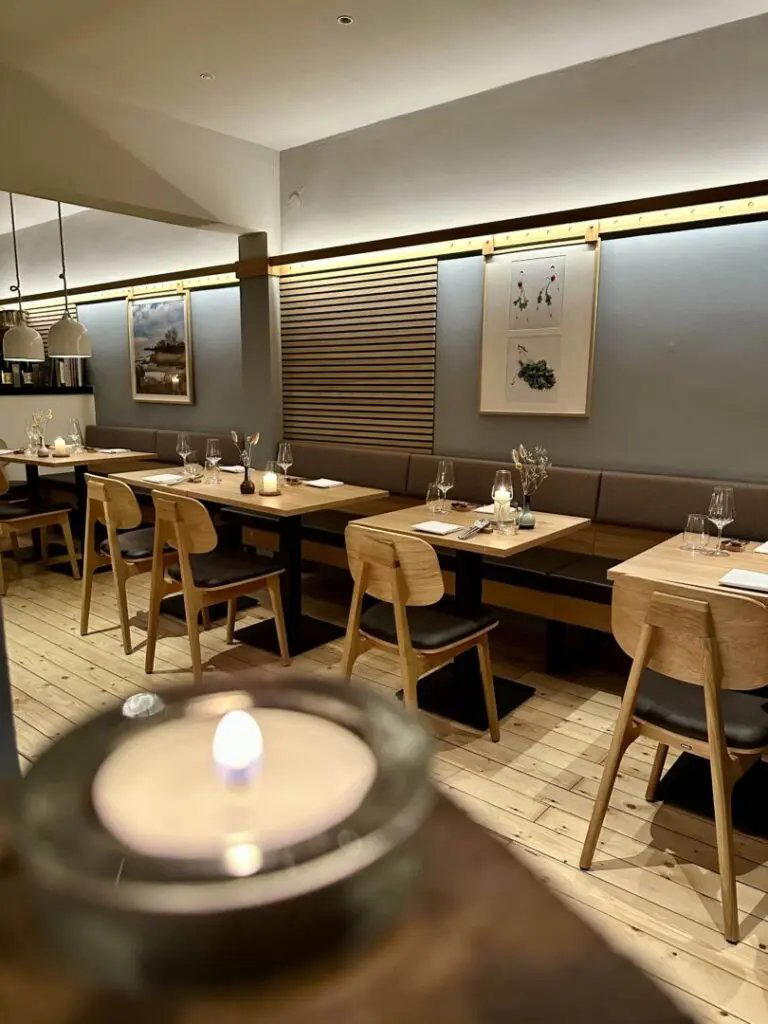
Arriving at Lehmweg 30, the surrounding blocks communicate something immediately: this is not the Alster waterfront, not the inner city gallery district, and not a corridor known for hotel dining. Hoheluft-West is a residential quarter in the northwestern arc of central Hamburg, and the dining culture that has taken root here reflects that — less event-driven, more routine. Restaurants in this kind of neighbourhood typically evolve differently from destination venues. They develop regulars before they develop reputations, and their menus tend to track the preferences of a local clientele rather than the demands of an international audience arriving once. That pattern of evolution, from neighbourhood fixture toward something with a broader identity, is one of the more interesting dynamics in any food city, and it is the frame through which Küchenfreunde makes most sense.
For broader context on where this address sits within Hamburg's dining scene, our full Hamburg restaurants guide maps the city's tiers and neighbourhoods in detail.
Reinvention as a Residential Restaurant's Natural State
The evolution of a neighbourhood restaurant rarely follows the straight line of a fine dining institution. There is no founding manifesto, no single chef philosophy that calcifies into a brand. Instead, there are adjustments: a menu that tightens around what sells and what the kitchen executes well, a room that settles into its own atmosphere after enough evenings of use, a relationship with suppliers that sharpens based on what is actually available rather than what was originally intended. This kind of organic reinvention is, in many ways, more demanding than the deliberate pivots of a high-profile restaurant. It happens quietly, without press announcements, shaped by the feedback loop between a kitchen and its regulars.
Across Germany, the restaurants that have navigated this kind of evolution most successfully share a few common traits: a cooking style that sits somewhere between accessible and considered, a room that feels inhabited rather than designed, and a price point that allows for repeat visits rather than once-a-year occasions. At the fine dining end of the German spectrum, venues like Aqua in Wolfsburg, Schwarzwaldstube in Baiersbronn, and Victor's Fine Dining by Christian Bau in Perl have built their identities around clear creative positions and verifiable award credentials. Küchenfreunde operates in a different register, one where the question is not which Michelin category to target, but how to remain relevant to a neighbourhood that will always have other options within walking distance.
Hamburg's Mid-Tier and What It Demands
Hamburg's restaurant scene is better understood as a series of distinct tiers than as a single market. At the leading, venues like 100/200 Kitchen and Lakeside compete on creativity and format. Below them, a substantial mid-tier operates on different criteria: cooking quality that justifies the trip across town, atmosphere that makes the room feel earned rather than empty, and a price point that places the meal within reach of regular use rather than special occasion budgeting. Comparison venues in Hamburg's mid-tier, such as Heimatjuwel with its German-creative positioning at the €€€ price range, illustrate the kind of competitive set that a neighbourhood address like Küchenfreunde finds itself adjacent to, whether by design or simply by geography.
The broader German context is instructive here. Cities like Berlin have developed strong neighbourhood dining cultures where restaurants evolve over years into institutions without ever acquiring formal recognition. CODA Dessert Dining in Berlin represents one end of that spectrum, a highly conceptual format that has found its audience. Neighbourhood restaurants like Küchenfreunde operate at the other end, where the audience finds the restaurant rather than the other way around.
Planning a Visit: Practical Considerations
Lehmweg 30 is accessible by public transport from central Hamburg, with the Hoheluft-West neighbourhood served by U-Bahn and bus connections that place it within reasonable reach of the city centre. The area is walkable once you arrive, with the surrounding streets offering a sense of the residential character that defines this part of the city. Given the absence of current booking data in the public record, contacting the venue directly before visiting is the most reliable approach, particularly for weekend evenings when neighbourhood restaurants in Hamburg's mid-tier tend to fill earlier than their city-centre counterparts. Dress expectations at this kind of address typically align with the neighbourhood rather than with the formality of Hamburg's grand dining rooms, though specific guidance from the venue is advisable.
Visitors interested in comparing the Hoheluft-West experience against Hamburg's more formal fine dining should consider Restaurant Haerlin or The Table Kevin Fehling as reference points for what the city's top tier looks like at full stretch. For a sense of how German creative cooking operates in other cities, JAN in Munich, Vendôme in Bergisch Gladbach, ES:SENZ in Grassau, Schanz in Piesport, Bagatelle in Trier, and Waldhotel Sonnora in Dreis each offer useful comparison. For international reference on what a strong neighbourhood-rooted restaurant identity can become at scale, Le Bernardin in New York City and Atomix in New York City demonstrate how distinct positioning compounds over time.
Frequently asked questions
What's the address for Küchenfreunde?
Küchenfreunde is located at Lehmweg 30, 20251 Hamburg, Germany, Hamburg.
How does Küchenfreunde fit into Hamburg's dining scene compared to the city's award-recognised restaurants?
Küchenfreunde holds no documented Michelin stars or equivalent awards, placing it outside Hamburg's formal fine dining tier, which includes starred venues concentrated in the inner city and around the Alster. Operating from Lehmweg 30 in Hoheluft-West, it occupies the neighbourhood segment of Hamburg's restaurant market — a sector that prioritises repeat local custom over critic-driven recognition. That positioning is its clearest differentiator from the city's destination dining addresses.
What dish is Küchenfreunde famous for?
The restaurant operates at Lehmweg 30 in Hamburg's Hoheluft-West, a residential neighbourhood context that typically favours rotating, market-led cooking over fixed set pieces. For current menu specifics, contacting the venue directly is advisable.
Can I walk in to Küchenfreunde?
Neighbourhood restaurants in Hamburg's Hoheluft-West district tend to be compact and community-facing, which often means limited covers and some demand for advance booking, particularly on weekend evenings. Checking ahead is the safer approach.
What's the defining dish or idea at Küchenfreunde?
The name itself — Küchenfreunde translates roughly as 'kitchen friends' — points toward an informal, convivial register rather than a tasting-menu formality. The Lehmweg 30 address in a residential Hamburg quarter reinforces that positioning: this is cooking oriented around neighbourhood regulars, not destination dining theatre.
Is Küchenfreunde good for vegetarians?
Check the venue's official channels for the latest details.
Should I splurge on Küchenfreunde?
The Hoheluft-West address and residential format suggest a mid-range neighbourhood proposition rather than a high-outlay occasion restaurant, but that should be verified directly before booking.
A Tight Comparison
Comparable venues nearby, for context on price, style, and recognition.
| Venue | Cuisine | Price | Awards | Notes |
|---|---|---|---|---|
| KüchenfreundeThis venue — the venue you are viewing | Modern German Bistro | $30–50 | Not listed | Not listed |
| Alt Helgoländer Fischerstube | Traditional North German Seafood | $20–30 | Not listed | Altona-Altstadt, Traditional North German Seafood |
| Schifferbörse Restaurant | Traditional Northern German Seafood | $30–50 | Not listed | St. Georg, Traditional Northern German Seafood |
| Zum Alten Lotsenhaus | Regional German | $50–100 | Not listed | Neumuehlen, Classic Hamburg Fish Restaurant |
| Café Kaltehofe | German Café with Hearty Dishes and Cakes | $10–20 | Not listed | Peute, German Café with Hearty Dishes and Cakes |
| Heimat, Hamburg | Modern German Regional | $50–100 | Star Wine List | HafenCity, Modern German Regional |