

Michelin Plate · Tabelog 100 #90
Our verdict
A French restaurant on Ueno's Satake Shopping Street, KOTARO Hasegawa DOWNTOWN CUISINE brings together classical French technique and the working-class memory of a Tokyo shitamachi neighbourhood. The tableware is Japanese, the inspiration is local, and the Michelin Plate recognition in both 2024 and 2025 places it among the city's more considered mid-tier French addresses.

Pearl is the En Primeur Club membership app, where members save venues, book tables and use the concierge.
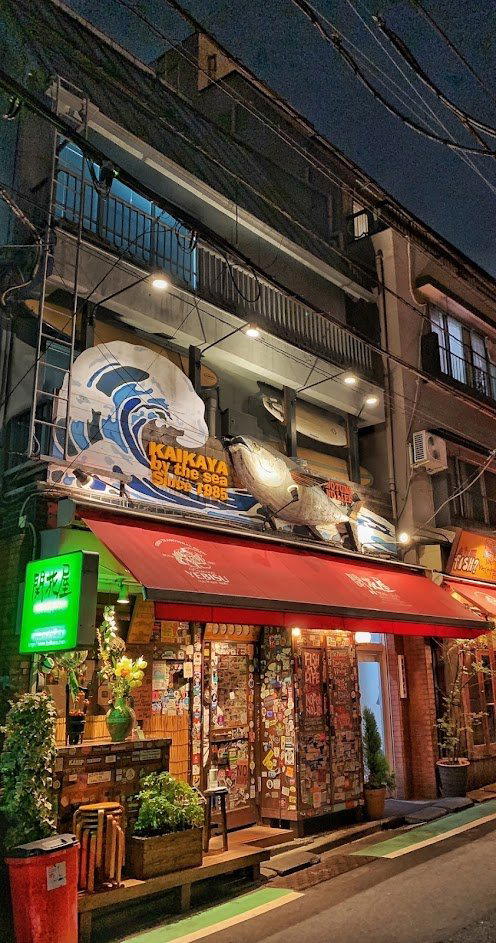
A Shopping Street, a French Kitchen, and the Weight of Neighbourhood Memory
The approach to KOTARO Hasegawa DOWNTOWN CUISINE tells you something about where Tokyo's French dining scene has arrived. Satake Shopping Street in Taito City is not the address you associate with classical French cooking. Ueno and its surrounding shitamachi districts have long operated on a different register from Minami-Aoyama or Nishi-Azabu, where Tokyo's French restaurant concentration has historically been thickest. The fact that a Michelin Plate-recognised French kitchen now sits along this pedestrian shopping arcade, one that has served local residents through generations of post-war reconstruction and neighbourhood commerce, is its own editorial statement about where French cuisine in this city has moved.
That movement matters. Tokyo's French dining tier has spent two decades sorting itself into distinct brackets. At the upper end, three-star houses like L'Effervescence and Sézanne compete on global terms, priced and formatted accordingly. Below them, a ¥¥¥¥ band of two-star and highly decorated addresses holds the serious tasting-menu market. KOTARO Hasegawa occupies a different, and arguably more interesting, tier: the ¥¥¥ bracket where the question is not whether cooking will be technically accomplished, but whether a restaurant has found a genuine reason to exist beyond replicating the format above it.
The Bistro Tradition and What It Actually Means
The bistro, in its original Parisian form, was never about grandeur. It was the neighbourhood restaurant, the place where the working quarter fed itself on honest cooking, using seasonal produce at a price that assumed regular return visits rather than once-a-year occasions. That tradition has been fetishised, exported, and in many cities diluted into a design aesthetic detached from any real neighbourhood relationship. The more interesting question, when you encounter a French kitchen operating in a residential and commercial quarter like Taito, is whether the neighbourhood relationship is legit or decorative.
At KOTARO Hasegawa, the evidence points toward something genuine. The concept's origin story runs through a world cooking competition in which the chef developed a platform specifically to represent Japanese culture through French technique. The Japanese vessels laid out on each table are not surface decoration; they reference the working-class neighbourhood that surrounds the building. The bistro tradition, at its most functional, asks a cook to make something honest for the people nearby. Here, the local reference is embedded in the format rather than bolted on after the fact.
That said, the bistro concept has always been elastic. What defines the tradition more than any single element is the relationship between technique and accessibility, classical skills applied without the ceremony of a tasting-menu counter, at a price point that doesn't require an occasion to justify. Among Tokyo's French addresses, Florilège and ESqUISSE sit in a technically intensive, more formal tier; Château Restaurant Joël Robuchon represents the maximalist end of the spectrum. KOTARO Hasegawa positions itself closer to the accessible end, where cooking is the point and atmosphere is the neighbourhood itself.
What Michelin Plate Recognition Actually Signals
Two consecutive Michelin Plate awards, 2024 and 2025, place KOTARO Hasegawa in a specific bracket within the Guide's hierarchy. The Plate designation recognises cooking that inspectors consider good by Michelin standards without yet reaching the starred tier. In Tokyo's French category, that is a meaningful threshold: the city's inspector density is high, and the Plate represents considered, positive inclusion rather than automatic listing. For a ¥¥¥ restaurant on a shopping street in Taito, consecutive Plate recognition is a legible signal that the kitchen is performing consistently above the neighbourhood baseline.
That ratio tends to characterise neighbourhood restaurants that function as intended: returning locals who find consistent value rather than one-time visitors chasing spectacle.
Tokyo French Dining in Context
Tokyo holds more Michelin-starred French restaurants than Paris, a fact that has been true for long enough that it no longer surprises. What the city has developed alongside its starred French tier is a broader ecosystem of technically trained cooks working at accessible price points, often in residential or commercial neighbourhoods rather than hotel dining rooms or luxury retail districts. Den in Jinbocho is a comparable reference point for the ¥¥¥ bracket in the Japanese-French crossover category, though with a different sensory register. Across Japan, the pattern repeats: HAJIME in Osaka and akordu in Nara represent how French and European technique has embedded in Japanese cities well outside the capital.
Globally, the bistro's neighbourhood-rooted model has had a complicated recent history. In cities like Singapore, French restaurants such as Les Amis operate at a formal, high-investment register that positions French dining as luxury rather than neighbourhood staple. At Hotel de Ville Crissier in Switzerland, the French tradition expresses itself through a different kind of regional rootedness entirely. KOTARO Hasegawa's framing, French cooking as an act of thanks to a working-class Japanese neighbourhood, occupies a distinct position in that global conversation.
Planning Your Visit
The restaurant is located at 4 Chome-2-11 Taito, Taito City, within walking distance of Ueno and Okachimachi stations. Taito City sits in Tokyo's shitamachi east, a part of the city with its own density of dining and shopping that functions independently of the restaurant clusters in Shibuya or Roppongi. For visitors building a wider Tokyo programme, our full Tokyo restaurants guide covers the range of the city's dining, and our full Tokyo hotels guide can help with accommodation positioning. For dining across other Japanese cities, Gion Sasaki in Kyoto, Goh in Fukuoka, 1000 in Yokohama, and 6 in Okinawa each represent the regional range of serious cooking in Japan. Tokyo's wider food and drink scene is covered through our Tokyo bars guide, wineries guide, and experiences guide.
Price range: ¥¥¥. Address: 4 Chome-2-11 Taito, Taito City, Tokyo 110-0016.
Frequently asked questions
What do people recommend at KOTARO Hasegawa DOWNTOWN CUISINE?
What the Michelin Plate recognition across two consecutive years signals is consistent kitchen quality rather than isolated high points. The restaurant's framing around Japanese vessels and neighbourhood-referencing plating suggests the visual and tactile elements of the meal are as considered as the cooking itself. For dish-level intelligence, direct contact with the restaurant or recent diner accounts on Japanese review platforms would provide more current detail than any generalised recommendation. The ¥¥¥ price point, the Satake Shopping Street location, and the bistro-adjacent format collectively suggest a meal calibrated around honest French execution with a strong local identity, rather than a tasting-menu format built for special-occasion performance.
Nearby-ish Comparables
A short peer table to compare basics side-by-side.
| Venue | Cuisine | Price | Awards | Notes |
|---|---|---|---|---|
| KOTARO Hasegawa DOWNTOWN CUISINEThis venue (the venue you are viewing) | French Fine Dining | $100–150 | Michelin Plate · Tabelog 100 #90 | Not listed |
| Harutaka | Edo-Style Omakase Sushi | $200–300 | 3 Michelin Stars · World's 50 Best #76 | Sushi |
| RyuGin | Modern Kaiseki | $500+ | 3 Michelin Stars · World's 50 Best #41 | Kaiseki, Japanese |
| L'Effervescence | Modern French with Japanese Influences | $200–300 | 3 Michelin Stars · World's 50 Best #69 | French |
| HOMMAGE | Modern French with Japanese Influences | $150–200 | 2 Michelin Stars · World's 50 Best #78 | Innovtive French, French |
| MAZ | Innovative Peruvian-Japanese Fusion | $150–200 | 2 Michelin Stars · World's 50 Best #28 | Innovative |
Recognition history
Dated appearances from independent guides and award organizations, with the underlying list record or original source where available.
Michelin Plate
Michelin
Tabelog 100 #90 · No. 90
Tabelog · Tabelog 100 - French - TOKYO - 2025
Full recognition history (4 entries)
Michelin Plate
Michelin
Michelin Plate
Michelin
Continue exploring
More in Tokyo
Restaurants in Tokyo
All restaurants in Tokyo →


Bars in Tokyo
All bars in Tokyo →


Details
- Elegant
- Intimate
- Minimalist
- Special Occasion
- Chefs Counter
- Sake Program
- Set Menu
Current opening hours
- Monday
- 6–8:30 PM
- Tuesday
- 6–8:30 PM
- Wednesday
- 6–8:30 PM
- Thursday
- 6–8:30 PM
- Friday
- 6–8:30 PM
- Saturday
- 6–8:30 PM
- Sunday
- Closed
Hours can change for holidays and private events. Last verified .
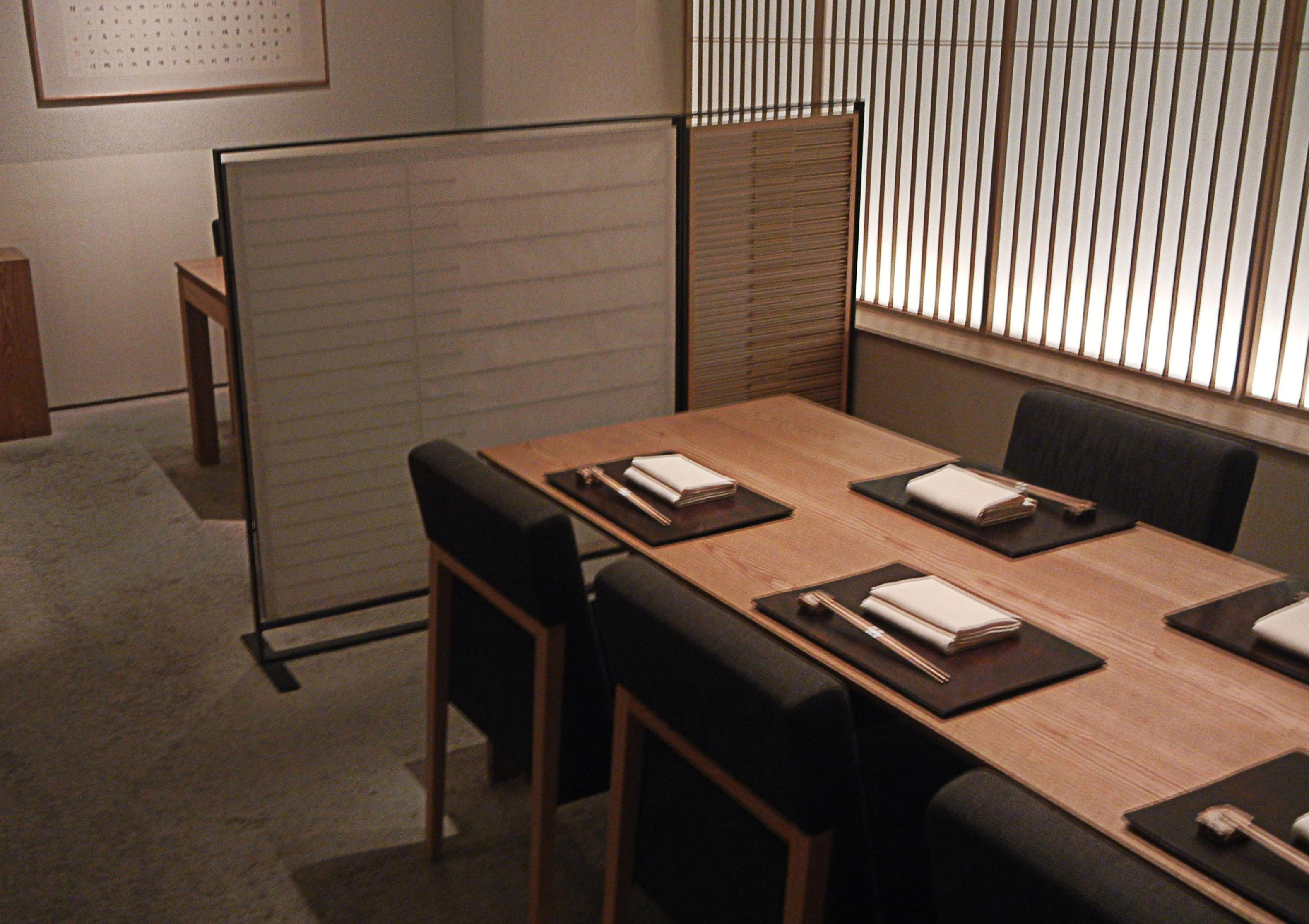
Simple interior with beautiful antique Japanese plates; elegant yet contrasting its working-class neighborhood setting.