Kooby Kebab occupies a quiet address on Calle de Clara del Rey in Chamartín, one of Madrid's more residential northern districts, where the city's everyday eating culture operates well outside the fine-dining circuit. While Madrid's celebrated tasting-menu scene dominates international coverage, neighbourhood kebab counters like Kooby serve a different and no less deliberate function in the city's daily food life.
Pearl is the En Primeur Club membership app — saves, bookings, and concierge access live there. Same editors, same standards.
- Address
- C. de Clara del Rey, 9, Chamartín, 28002 Madrid, Spain
- Phone
- +34661247100
- Directions
- Get directions
 Saves & bookings on Pearl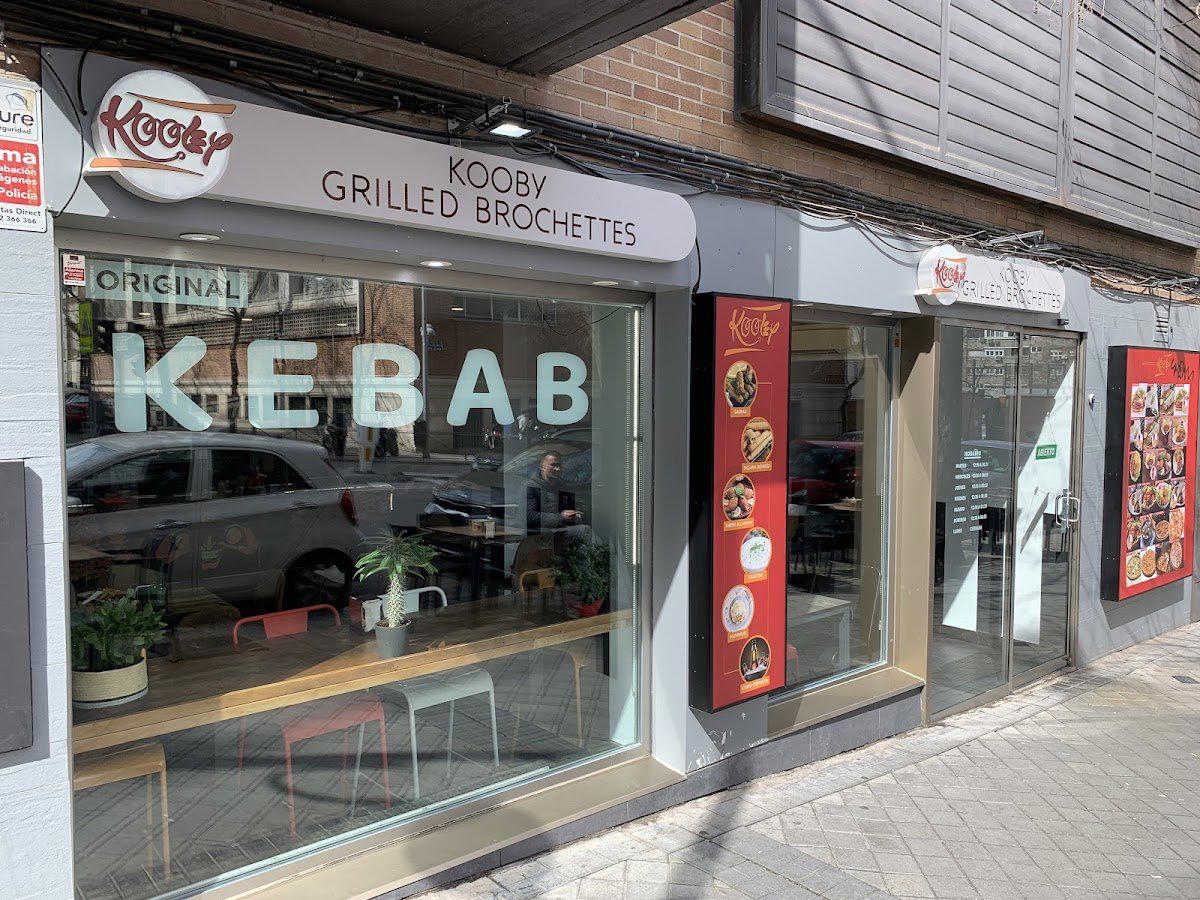
Chamartín's Everyday Eating Register
Madrid's food conversation tends to orbit a tight cluster of creative tasting rooms. DiverXO, Coque, and Deessa occupy the upper tier of that world, drawing reservation requests months in advance and pricing their menus well into three figures per head. That circuit is real and worth understanding. The city's residential districts, particularly the northern belt that includes Chamartín, run on a parallel and quieter economy of neighbourhood counters, family-run spots, and informal fast-casual formats.
Kooby Kebab is a restaurant serving Middle Eastern brochettes and kebabs at Calle de Clara del Rey, 9, Chamartín, Madrid. The surrounding neighbourhood doesn't draw the same foot traffic as Malasaña or Chueca, and that geographic positioning shapes what a place like Kooby is and who it serves.
The Kebab Counter in a City of Tasting Menus
Across European cities with active fine-dining ecosystems, the kebab format occupies a specific and consistent cultural position. It operates outside the reservation economy, outside the dress-code conversation, and outside the occasion-dining framework that governs much of the premium restaurant world. In Madrid specifically, that contrast is sharp. On one end, DSTAgE and Paco Roncero serve elaborate multi-course experiences built around seasonal produce, technique, and narrative. On the other end, the city's kebab counters serve hunger, convenience, and value in formats that require no planning and no occasion.
That division matters for anyone thinking about how to structure a stay in Madrid. The city's premium dining scene is internationally competitive. Spain's broader restaurant geography, which includes El Celler de Can Roca in Girona, Arzak in San Sebastián, and Mugaritz in Errenteria, positions the country at the summit of European gastronomy by any verifiable measure. But that prestige layer doesn't define the full texture of eating in any Spanish city. Neighbourhood counters, regardless of format, are where daily life actually happens.
Occasion Framing: What Kooby Is and Isn't For
Applying an occasion-dining lens to a kebab counter has limits. Venues like Aponiente in El Puerto de Santa María, Azurmendi in Larrabetzu, or Martin Berasategui in Lasarte-Oria are built for milestone meals: anniversaries, significant birthdays, once-a-decade splurges. Their formats are designed to signal importance through pacing, service ratio, and ceremony. A kebab counter in Chamartín operates on the opposite logic. Its occasion is the ordinary one: a late afternoon in a residential neighbourhood, a quick meal between other things, the kind of eating that doesn't require justification.
That ordinariness is not a limitation. For a visitor spending several days in Madrid, integrating the city's everyday food infrastructure alongside its celebrated restaurants gives a fuller picture of how the city functions. Spending an evening at Cocina Hermanos Torres or Quique Dacosta requires planning, budget allocation, and a kind of attention that exhausts if sustained across every meal. The neighbourhood counter is where that register resets.
Chamartín as a Residential Eating District
Chamartín is the kind of district that international visitors to Madrid often bypass in favour of the historic centre or the more photographed neighbourhoods south of Gran Vía. That's a reasonable orientation for a short visit, but it means missing a significant portion of how a large and economically varied city feeds itself. The 28002 zone, where Kooby Kebab sits, is primarily residential, with a commercial layer built around local needs. The eating options in this area tend toward the functional: places that serve the people who live and work nearby, priced and paced accordingly.
For the kebab format specifically, Chamartín represents a consistent demand base. Madrid's immigrant population has shaped the city's döner and shawarma counter culture in ways that parallel similar dynamics in London, Berlin, and Paris. The format arrived through migration and has stayed because it addresses a genuine gap in the speed-to-value equation that few other formats match at the same price point.
Spain's Broader Eating Context
Placing Kooby Kebab inside Spain's wider restaurant conversation requires acknowledging the gap in register. The country's Michelin presence is concentrated in the Basque Country, Catalonia, and along the Mediterranean coast, with venues like Ricard Camarena in València and Atrio in Cáceres representing regional diversity within that premium tier. Madrid itself hosts several of Spain's most decorated tables.
The restaurant occupies none of that territory. Its relevance is local, informal, and structured around different criteria entirely. That's not a criticism; it's a description of function. Not every eating moment in a city requires a reservation, a pairing, or a chef with documented lineage. Some require a counter, a quick decision, and something hot in hand before the next thing on the list.
Planning a Visit
The restaurant is located at Calle de Clara del Rey, 9, Chamartín, 28002 Madrid. The address is accessible from the Chamartín railway station and the surrounding residential grid, making it a practical option for those staying in or passing through the northern district. Reservations: not applicable for a counter format of this type; walk-in is the expected mode. Dress: no dress code applies. Budget: the restaurant is in the low price tier. Booking: no booking infrastructure is indicated; visit during the restaurant's regular opening hours.
Compact Comparison
Comparable venues nearby, for context on price, style, and recognition.
| Venue | Cuisine | Price | Notes |
|---|---|---|---|
| Kooby KebabThis venue — the venue you are viewing | Not listed | $ | Not listed |
| Chocolatería San Ginés | Not listed | $ | Sol, Traditional Spanish Churros con Chocolate |
| Rasif | La Latina, Lebanese Street Food | $$ | Not listed |
| LIBAGARDEN | Las Tablas, Authentic Lebanese | $$ | Not listed |
| La Cochinita Loca | Palacio, Authentic Mexican Taqueria | $ | Not listed |
| Cesar's burgers | Atocha, Modern American Smash Burgers | $ | Not listed |
Continue exploring
More in Madrid
Restaurants in Madrid
Browse all →
Bars in Madrid
Browse all →
Hotels in Madrid
Browse all →




At a Glance
- Casual Hangout
Current opening hours
- Monday
- 12 PM–12:30 AM
- Tuesday
- 12 PM–12 AM
- Wednesday
- 12 PM–12 AM
- Thursday
- 12 PM–12 AM
- Friday
- 12 PM–1 AM
- Saturday
- 12 PM–1 AM
- Sunday
- 12 PM–12:30 AM
Hours can change for holidays and private events. Last verified .
Casual fast-food atmosphere suitable for quick meals.