
Michelin Plate
Our verdict
A small kappo and ryotei-trained kitchen in Higashiyama, Kyoto, where the proprietor's background in traditional Japanese cooking shapes a menu built around seasonal simmered dishes and minimal food travel from station to plate. The preparation area sits directly adjacent to the fry stations, a deliberate layout that keeps timing precise. Booking ahead is advised for this intimate, husband-and-wife-run room.

Pearl is the En Primeur Club membership app, where members save venues, book tables and use the concierge.
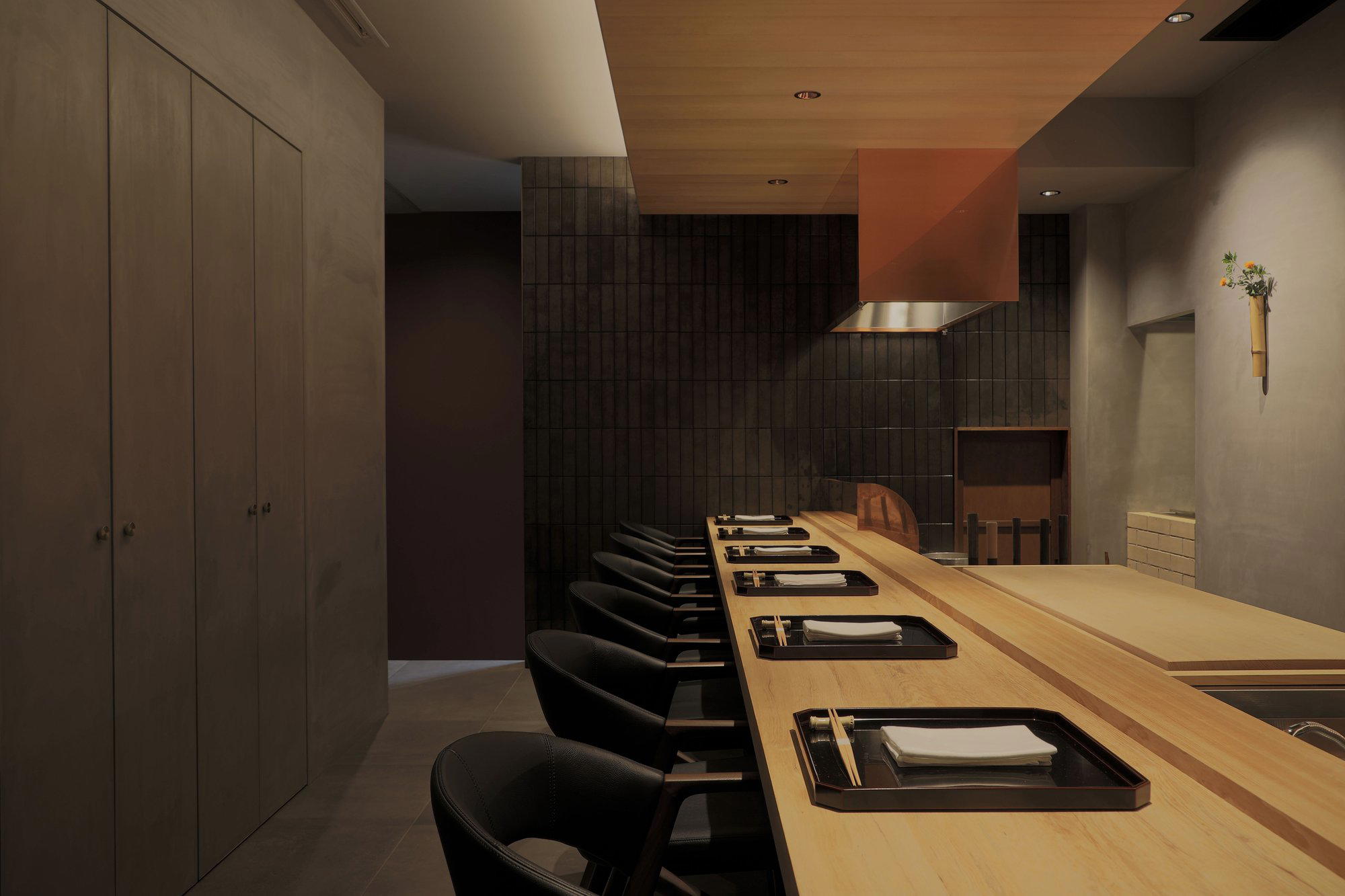
A Particular Kind of Quiet in Higashiyama
Higashiyama is the part of Kyoto that most visitors see first and understand last. The ward runs along the base of the Higashiyama mountain range, threading through preserved machiya streetscapes and temple approaches that have changed less in the past century than almost anywhere else in urban Japan. The dining rooms here tend toward the intimate: small counters, family-run operations, proprietors who chose the neighbourhood deliberately rather than by default. Our full Kyoto restaurants guide maps the broader spread of the city's dining, but Higashiyama has its own internal logic, one that rewards slower, more considered visits over ticking off names.
Konno sits within that logic. The address, Yumiyacho 38, a residential pocket in the eastern ward, is not a destination address in the way that a Gion counter or a Kawaramachi dining room might be. There is no glowing signage or curated approach path designed to prime expectations. What there is, according to the records available to us, is a kitchen run by a proprietor with direct experience in both ryotei and kappo formats, and a room where his wife manages the front of house while he works the stations. That division of responsibility is common in Kyoto's smaller dining rooms, but the execution of it varies enormously. Here, it seems deliberate and settled.
What the Kitchen Communicates
Kyoto's traditional cooking vocabulary is one of restraint, and that restraint is harder to execute well than most outsiders assume. The city's kaiseki tradition has been documented and debated extensively, but the quieter registers, the kappo counter, the neighbourhood ryotei, the single-proprietor room working from market produce without the infrastructure of a larger kitchen brigade, are where you see whether a cook actually understands the principles or is simply applying a surface grammar.
The preparation area at Konno sits adjacent to the fry stations, a layout detail that is more significant than it sounds. In any kitchen that works with tempura or agemono, the distance between the frying station and the plate matters. Oil temperature drops fast; batter textures shift within seconds of leaving the oil. Designing the kitchen so that these distances are minimised is a choice that prioritises the guest's experience of the food over the kitchen's operational convenience. It is the kind of decision that tends to come from someone who has spent time on the receiving end of food that arrived even slightly past its moment.
The proprietor's background includes time at a ryotei and a kappo, two formats that occupy adjacent but distinct positions in Kyoto's dining hierarchy. Ryotei cooking tends toward formality and multi-course progression; kappo is more open, more responsive, with the cook visible and the menu shaped by conversation and timing. A cook who has trained across both formats understands how to read the room and adjust accordingly, which in a small kitchen without a brigade means the food is less dependent on set-piece execution and more attuned to the specific evening.
Takiawase, a simmered assortment of vegetables, each component cooked separately to preserve its individual character before being presented together, is the dish most frequently cited in connection with Konno. In kaiseki and kappo contexts, takiawase functions as a quiet proof-of-concept: it is not flashy, it does not involve expensive primary ingredients, and it cannot be rescued by seasoning. What it requires is patience, precision with heat, and a genuine interest in the native flavour of each vegetable rather than a desire to impose something on it. That this dish draws specific mention speaks to where the kitchen's priorities sit.
For broader context across Kyoto's kaiseki register, Gion Sasaki and Hyotei represent the three-Michelin-star tier, while Mizai and Kikunoi Honten anchor the mid-upper range. Isshisoden Nakamura offers a longer historical frame. Konno does not operate in competition with those rooms; it is a different scale, a different register, and addresses a different kind of visit.
The Booking Question
Small Kyoto kitchens operated by a single proprietor and a spouse occupy a specific planning challenge for visitors. They do not always appear on the major international booking platforms, they may not maintain English-language reservations infrastructure, and their capacity, by definition limited, means that walk-in access is rarely practical. The neighbourhood context compounds this: Yumiyacho is not a high-footfall street where a turned-away guest can easily redirect to a neighbouring option of comparable character.
The editorial angle here is not anxiety-inducing but it is honest: rooms like this require advance planning, ideally with the assistance of a hotel concierge who has existing relationships with smaller Higashiyama restaurants, or a specialist booking service with on-the-ground Kyoto access. The lead time required will depend on season, Kyoto's spring (late March through May) and autumn (October through November) periods are when accommodation and dining in the city become materially harder to secure, with several weeks of notice often insufficient for well-regarded small rooms. Visiting outside those windows, particularly in summer or the quieter winter months, allows for more flexibility.
The same planning logic applies to other concentrated small-format dining cities. Harutaka in Tokyo and akordu in Nara illustrate how proprietor-driven rooms across the Kansai and Kanto regions share this booking dynamic regardless of cuisine format. Further afield, HAJIME in Osaka and Goh in Fukuoka show how similar patterns hold across Japan's major dining cities. Outside Japan entirely, Le Bernardin in New York City and Atomix in New York City demonstrate that the planning discipline required for small, serious rooms is not unique to Japan, it is a structural feature of dining at this level anywhere. 1000 in Yokohama and 6 in Okinawa extend that pattern to less-visited Japanese cities where small rooms operate with even less international booking infrastructure.
Planning Logistics at a Glance
| Factor | Konno (Higashiyama, Kyoto) | Comparable Kyoto Small Rooms |
|---|---|---|
| Format | Kappo/ryotei-trained, proprietor-led | Varies, kappo, kaiseki, counter sushi |
| Booking approach | Advance reservation advised; concierge support recommended | Most require reservation; some Japan-only platforms |
| Peak booking pressure | Spring (late March–May), Autumn (Oct–Nov) | Same seasonal peaks apply city-wide |
| Language accessibility | Japanese-primary; English booking may require intermediary | Variable; larger venues more likely to have English support |
| Walk-in viability | Low; limited capacity | Generally low across serious small rooms |
Placing the Visit
Kyoto rewards visitors who approach it as a city with distinct neighbourhoods rather than a single heritage site. Higashiyama, the area immediately surrounding Konno's address, is walkable to Chion-in and Shoren-in temples, and the Ninenzaka and Sannenzaka preserved streets are within easy reach. For those building a Kyoto stay around both dining and setting, our full Kyoto hotels guide covers accommodation options across the city's main districts, and our guides to Kyoto bars, Kyoto wineries, and Kyoto experiences provide the surrounding context for a full itinerary.
A meal at a small, proprietor-run Kyoto room is less about the individual dishes, though those matter, and more about what the format itself communicates. The proximity of the preparation space to the cooking stations, the proprietress engaging with guests while her husband focuses on the kitchen, the careful handling of simmered vegetables that no amount of plating can disguise if the cooking is wrong: these are the details that define why some visitors come to Kyoto specifically to eat at rooms that do not appear on international awards lists. The experience is not a lesser version of the kaiseki palaces, it is a different conversation entirely.
Frequently asked questions
What do regulars order at Konno?
The dish most clearly associated with the kitchen, based on, is takiawase, a simmered vegetable preparation where each ingredient is cooked separately to preserve its individual flavour before being combined in the bowl. This is a foundational Kyoto dish that appears across kaiseki and kappo menus but is direct to assess for quality: the vegetables should carry their own flavour rather than being subsumed by the dashi. The proprietor's ryotei and kappo background is most directly legible in this kind of preparation. Beyond that specific dish, the menu is shaped by what is at the market and what the kitchen can cook from station to plate without delay, given the deliberately compact layout.
Is Konno reservation-only?
For a small, proprietor-run room in Higashiyama with limited capacity, advance reservation is the practical standard rather than the exception. Kyoto's dining culture at this level does not lend itself to walk-in visits, and the neighbourhood address, Yumiyacho 38, is not on a major foot-traffic corridor where a turned-away guest would find immediate alternatives. Reservations at smaller Kyoto rooms often require Japanese-language communication or the support of a hotel concierge with local relationships. During spring and autumn, Kyoto's two peak tourism seasons, the lead time for any serious small room in the city extends considerably. Booking through your hotel or a specialist Kyoto dining service is the most reliable approach.
Cost and Credentials
Comparable venues nearby, for context on price, style, and recognition.
| Venue | Cuisine | Price | Awards | Notes |
|---|---|---|---|---|
| KonnoThis venue (the venue you are viewing) | Modern Japanese Omakase | $150–200 | Michelin Plate | Not listed |
| wabiya | Modern Kyoto Yakitori | $100–150 | Michelin Plate | Shimogyō, Modern Kyoto Yakitori |
| Saeki | Modern Edomae Omakase | Not listed | Tabelog Bronze #378 | Nakagyō, Modern Edomae Omakase |
| Tempura Mizuki | Michelin-Starred Tempura | $200–300 | Michelin Plate | Nakagyō, Michelin-Starred Tempura |
| Koryori Takaya | Kappo Omakase | $100–150 | Michelin Plate | Shimogyō, Kappo Omakase |
| Ryoriya EN | Traditional Kyoto Kaiseki | $150–200 | Michelin Plate | Shimogyō, Traditional Kyoto Kaiseki |
Recognition history
Dated appearances from independent guides and award organizations, with the underlying list record or original source where available.
Michelin Plate
Michelin
Continue exploring
More in Kyoto
Restaurants in Kyoto
All restaurants in Kyoto →
Bars in Kyoto
All bars in Kyoto →
Hotels in Kyoto
All hotels in Kyoto →
Wineries in Kyoto
Browse all →
Details
- Intimate
- Elegant
- Sophisticated
- Modern
- Date Night
- Special Occasion
- Celebration
- Chefs Counter
- Open Kitchen
- Sake Program
- Sommelier Led
- Local Sourcing
- Omakase
- Counter Dining
- Wine
- Sake
- Allergy Accommodating
Current opening hours
- Monday
- Closed
- Tuesday
- 6–11 PM
- Wednesday
- 12–2 PM, 6–11 PM
- Thursday
- 12–2 PM, 6–11 PM
- Friday
- 12–2 PM, 6–11 PM
- Saturday
- 12–2 PM, 6–11 PM
- Sunday
- 12–2 PM, 6–11 PM
Hours can change for holidays and private events. Hours as of .
Stylish, serene Japanese setting with tranquil beauty; contemporary ceramics and refined, minimalist design create a calm, sophisticated atmosphere for special occasions.