Located inside the Rindermarkthalle in Hamburg's St. Pauli district, kofookoo occupies one of the city's most characterful market settings. The restaurant draws on West African culinary traditions, placing it in a distinctly different register from Hamburg's Michelin-heavy fine dining circuit. For visitors seeking context beyond the city's creative European mainstream, it represents a genuinely different conversation about what Hamburg eats.
Pearl is the En Primeur Club membership app — saves, bookings, and concierge access live there. Same editors, same standards.
- Address
- Neuer Kamp 31 Rindermarkthalle, 20359 Hamburg, Germany
- Phone
- +494036036818
- Website
- sushigrillbar.kofookoo.de
- Directions
- Get directions
 Saves & bookings on Pearl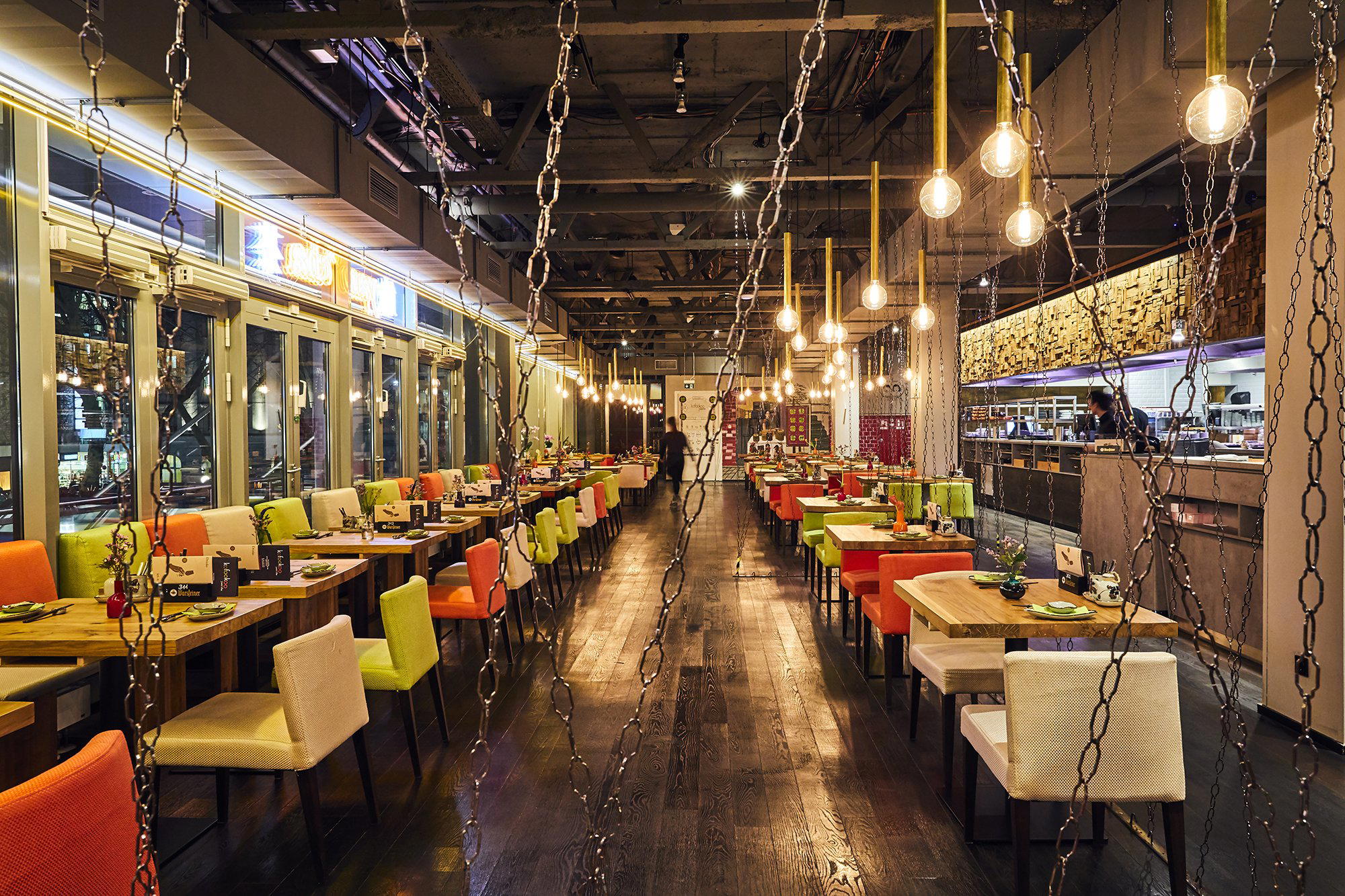
A Market Hall and a Different Kind of Hamburg Dining
The Rindermarkthalle on Neuer Kamp has the bones of a 19th-century cattle market and the current energy of a food hall that Hamburg's St. Pauli neighbourhood has absorbed into its identity. Entering the iron-and-glass structure, the sounds and smells of multiple kitchens overlap — this is not a white-tablecloth environment, and it does not pretend to be. Within that setting, kofookoo occupies a position that is editorially interesting precisely because it diverges so sharply from the culinary conversation happening a few kilometres away at venues like Restaurant Haerlin or The Table Kevin Fehling, where the ambition is Franco-European and the format is tasting menu. kofookoo is asking different questions.
West African Cuisine and What It Means in a Northern European Port City
Hamburg's status as one of Germany's principal port cities has always meant the city absorbed outside influences faster than most of the country. That history runs through the Speicherstadt warehouses, through the trade routes that made the city wealthy, and — less formally, through the communities that settled around the port. West African cooking in a Hamburg market hall is not an anomaly when you understand that context. It is, in a sense, a logical extension of what the city has always done: absorb, adapt, and make room.
West African culinary traditions are among the most misrepresented in European dining contexts. The continent's cuisines are extraordinarily varied, from the groundnut-based stews of Senegal and The Gambia to the fermented flavours and palm oil-rich preparations of Nigeria, Ghana, and Cameroon, to the berbere-spiced traditions of the Horn of Africa. A venue operating in this space carries a responsibility to that complexity. The broader European tendency to flatten African cuisine into a single category is something that venues like kofookoo, by existing in the market at all, push back against, simply by being specific. Hamburg's fine dining circuit, represented at its apex by 100/200 Kitchen and bianc, operates within well-mapped European and Mediterranean reference points. A restaurant grounded in West African cooking sits outside that map almost entirely, which means it is evaluated differently and, too often, with less critical attention than it deserves.
The Rindermarkthalle Setting and How It Shapes the Experience
Market hall dining in Germany has expanded considerably over the past decade as cities have sought ways to activate historic industrial and commercial buildings. Hamburg's Rindermarkthalle, which once served as the city's central cattle market, is now among the more serious examples of that trend, hosting a range of food concepts under one roof. The format suits certain cuisines better than others. For cooking traditions where the food itself is the spectacle, where the preparation is tactile and the flavours are direct, a market counter often communicates more honestly than a formal dining room would.
That physicality is part of what makes the location on Neuer Kamp 31 worth noting logistically. St. Pauli is walkable from the central station and sits within easy reach of the Schanzenviertel, an area dense with bars and independent restaurants. Visitors building an itinerary around Hamburg's broader food scene can use kofookoo as a counterpoint to the city's more formalised dining options, treating an evening in the Rindermarkthalle as a different register rather than a lesser one. For comparison, Hamburg's Michelin-starred tier, including Lakeside, operates on reservation cycles that require planning weeks or months ahead. The market hall format, by contrast, tends toward a more immediate, walk-in-friendly model, though confirming current access policies directly is advisable given how frequently market hall operators adjust their hours and formats.
Where kofookoo Sits in the German Dining Conversation
Germany's most decorated restaurants in 2024 and 2025 continue to cluster around French-influenced technique: Aqua in Wolfsburg, Schwarzwaldstube in Baiersbronn, Vendôme in Bergisch Gladbach, and Victor's Fine Dining by Christian Bau in Perl all represent the dominant register of German fine dining. Interesting exceptions exist, CODA Dessert Dining in Berlin restructures the format itself, while JAN in Munich and ES:SENZ in Grassau bring personal inflections to the European framework. Even further afield, venues like Waldhotel Sonnora in Dreis and Schanz in Piesport represent the country's deep investment in classical forms. Against that backdrop, a West African-focused restaurant in a Hamburg market hall occupies a genuinely distinct position, not a challenger to the Michelin structure, but a separate conversation operating by different criteria.
The global frame is useful here too. New York's Korean-rooted Atomix demonstrates how non-European culinary traditions can earn the highest tier of critical recognition when the execution is disciplined and the cultural framing is precise. Le Bernardin has spent decades proving that a single culinary focus, sustained at high technical level, defines a restaurant's identity more permanently than any format trend. The lesson for venues working in underrepresented culinary traditions is that specificity and consistency are the credibility markers that matter most. Bagatelle in Trier shows how regional German contexts can support serious independent restaurants outside the main urban centres. kofookoo's location in Hamburg rather than Berlin, Germany's more obvious culinary experiment city, is itself a small editorial point about where the interesting work sometimes happens.
Planning a Visit
kofookoo sits inside the Rindermarkthalle at Neuer Kamp 31 in Hamburg's 20359 postcode, in the St. Pauli district. The market hall is accessible from Hamburg Hauptbahnhof or by U-Bahn to Feldstrasse, which puts the venue within direct reach of the city centre. For anyone building a Hamburg itinerary around the full range of what the city's dining scene offers, the EP Club's full Hamburg restaurants guide maps the landscape from market hall formats through to the city's tasting menu tier. Because the venue's hours, booking format, and current menu details are subject to change in a market hall context, visiting the Rindermarkthalle directly or checking current schedules before planning an evening is the practical approach.
Continue exploring
More in Hamburg
Restaurants in Hamburg
Browse all →
Bars in Hamburg
Browse all →

Hotels in Hamburg
Browse all →
Wineries in Hamburg
Browse all →
At a Glance
- Modern
- Lively
- Trendy
- Group Dining
- Casual Hangout
- Open Kitchen
- Beer Program
Current opening hours
- Monday
- 4:30–11 PM
- Tuesday
- 4:30–11 PM
- Wednesday
- 4:30–11 PM
- Thursday
- 4:30–11 PM
- Friday
- 4:30–11:30 PM
- Saturday
- 1–11:30 PM
- Sunday
- 1–11 PM
Hours can change for holidays and private events. Last verified .
Modern atmosphere with quick tablet service in a bustling market hall setting.
Know Before You Go
- Getting there
- Neuer Kamp 31 Rindermarkthalle, 20359 Hamburg, Germany