
Kiseki Shokudo Ageo ten belongs to Japan’s everyday dining tradition rather than the luxury circuit: a Saitama cafeteria built around pork dishes and tonkatsu, with recognition from Tabelog’s Diner 100 in 2024 and 2026. The appeal is the category itself, where sourcing, cut selection, frying discipline, and lunch-counter pace matter more than ceremony.
Pearl is the En Primeur Club membership app — saves, bookings, and concierge access live there. Same editors, same standards.
- Address
- 3 Chome-11-13 Honcho, Ageo, Saitama 362-0014, Japan
- Phone
- +81 70-3529-8553
- Website
- kisekisite.amebaownd.com
- Directions
- Get directions
 Saves & bookings on Pearl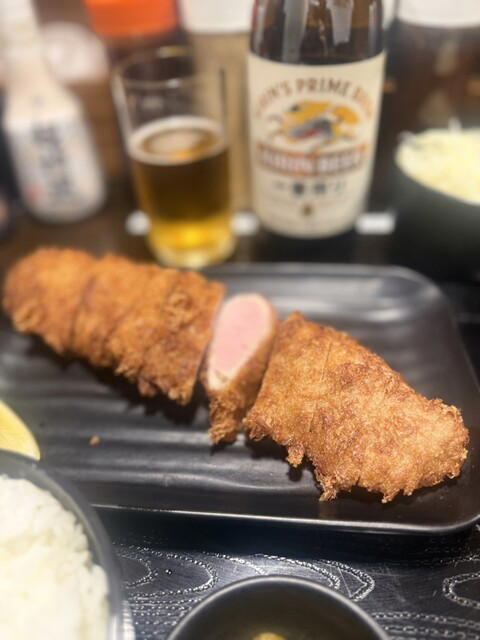
Approaching a neighbourhood shokudo in Ageo is a different proposition from entering a Ginza counter or a hotel dining room. The cues are practical before they are theatrical: a modest frontage, a local rhythm, and the sense that the room is built for people who know exactly what they came to eat. In Saitama, that matters. Everyday restaurants are judged less by spectacle than by repetition, value, and whether a single category can carry a room through service after service.
Kiseki Shokudo Ageo ten sits inside that tradition, with a focus on cafeteria cooking, pork dishes, and tonkatsu. Its selection for Tabelog’s Diner 100 in 2024 and again in 2026 gives it a public signal that goes beyond local convenience. The point is not luxury. The point is a tightly defined shokudo format in which pork is the anchor and the dining experience depends on decisions made long before the plate reaches the table: sourcing, trimming, portioning, breading, oil management, and timing.
Pork-led shokudo cooking, judged by discipline rather than ceremony
Japan’s shokudo culture has always carried a democratic intelligence. These are not places that need tasting-menu choreography to make an argument. A good cafeteria meal is built on compression: a narrow set of dishes, fast turnover, and clear expectations. Tonkatsu is especially unforgiving in that setting because small failures are obvious. Poor pork dries out. Heavy breading dulls the meat. Tired oil turns the meal flat. The genre rewards restaurants that treat an everyday dish with the control usually associated with more expensive formats.
That is why ingredient sourcing is not a decorative theme here. Pork restaurants in Japan often compete through cut quality and consistency rather than through constant menu invention. The customer may read the room as casual, but the kitchen’s task is exacting: keep the meat central, protect texture, and deliver enough richness without pushing the meal into fatigue. In this part of the market, reputation forms through repeatability, not novelty.
Ageo’s dining scene is less internationally mapped than Tokyo’s, which makes its stronger everyday restaurants useful for travellers who care about how Japan eats outside the capital’s performance zones. A meal here belongs in the same planning conversation as local ramen at Chuka Soba Yoshikawa Ageo ten: both show how suburban Saitama can reward diners who look beyond station-adjacent convenience and follow category specialists instead.
Why the Diner 100 signal matters in a low-ceremony category
Tabelog’s Diner 100 is useful because it recognises a field that often falls outside international award attention. Cafeterias, pork specialists, and tonkatsu rooms do not usually produce the kind of narrative that travels easily abroad. They trade in local trust. A 2026 Diner 100 selection places Kiseki Shokudo Ageo ten among a national group where the comparison is not with luxury restaurants, but with other everyday rooms that have earned sustained user attention and category credibility.
That distinction is important for expectation-setting. This is not a chef-driven destination built around biography, nor a room asking diners to surrender an evening to a long-form menu. It is a compact, practical restaurant format where the food category leads. For travellers using our full Ageo restaurants guide, the useful question is not whether Ageo can imitate Tokyo, but where the city’s own dining grammar is strongest. Pork-focused shokudo cooking gives a clear answer.
The comparison set also shows where the restaurant sits. Chuka Soba Yoshikawa Ageo ten occupies the ramen lane at a leaner spend, while out-of-metro names such as Ryu no Ko, Teuchi Udon Ishizuka, Teuchi Udon Matsuya, and Wafu Ramen Yondaime Hinodeya point to a broader Japanese pattern: low-ceremony specialists competing through a single discipline rather than broad menus. Within that pattern, tonkatsu and pork dishes ask for a little more commitment from the kitchen because the main ingredient carries the meal’s weight.
How to place it in an Ageo itinerary
Ageo works better as a food day built around specificity than as a checklist. Pairing a pork-led shokudo meal with ramen, coffee, or a neighbourhood walk gives the city sharper definition than treating it as an appendage to Tokyo. Travellers staying locally can cross-reference our full Ageo hotels guide, while those mapping an evening should use our full Ageo bars guide. Broader regional planning sits in our full Ageo experiences guide, with our full Ageo wineries guide for readers building a wider Saitama route.
For Japan-wide context, the useful comparison is not prestige but category clarity. The country’s dining strength lies in specialists as much as in formal restaurants, from -Grilled beef Sukiyaki- KAMAKURA TANUKIAN 鎌倉 たぬき庵 in Kamakura to . 鮪と炭火焼き うお炭 秋葉原店 in Tokyo.cafe in Osaka.know in Kumamoto, (Shoku) Vietnam in Kawasaki, [Curry Senmon Ten] Maruyama Kyoju. in Sapporo, and [ki:] in Kyoto. The same logic extends to meat, burgers, and casual Japanese formats at #肉といえば松田 奈良本店 in Kashihara, 1/3 HAMBURGER FACTORY in Kanazawa, and 1000 in Yokohama. Even outside Japan, places such as Jōdo Saké Bar in Los Angeles and Onigiri Time in Pasadena show how sharply defined Japanese food formats travel when the category remains clear.
The editorial read is simple: Kiseki Shokudo Ageo ten is for diners who take everyday Japanese cooking seriously. Its value lies in a focused pork-and-tonkatsu identity, an Ageo setting away from the international dining circuit, and a recognition signal that fits the room’s actual ambitions. Treat it as a category specialist, not a ceremony, and the appeal becomes much easier to understand.
Comparison Snapshot
Comparable venues by cuisine and price in the same metro.
| Venue | Cuisine | Price | Notes |
|---|---|---|---|
| Kiseki Shokudo Ageo ten | Japanese tonkatsu and meat shokudo | $$ | /本町 |
| Chuka Soba Yoshikawa Ageo ten | Niboshi ramen & Nagoya Cochin chuka soba shop | $ | Ageo |
| 相撲料理神雷 | Sumo Chanko Nabe | $$ | 三井寺 |
| Ikkaku | Kagawa Honetsukidori Grilled Chicken | $$ | Takamatsu |
| れんが屋 | Yakushima Yakiniku with Jomon Beef & Venison | $$ | Anbo |
| Rishiri Ramen Miraku | Hokkaido Rishiri Ramen | $$ | Kutsugata, Rishiri Island |
Recognition history
Dated appearances from independent guides and award organizations, with the underlying list record or original source where available.
Tabelog 100 #36 · No. 36
Tabelog · Tabelog 100 - Diner - 2026







At a Glance
- Cozy
- Solo
- Casual Hangout
- After Work
- Family
- Standalone
Current opening hours
- Monday
- 10 AM–2:30 PM
- Tuesday
- 10 AM–2:30 PM
- Wednesday
- 10 AM–2:30 PM
- Thursday
- 10 AM–2:30 PM
- Friday
- 10 AM–2:30 PM
- Saturday
- Closed
- Sunday
- Closed
Hours can change for holidays and private events. Last verified .
A small, simple neighborhood shokudo with about 20 seats, informal counter and table seating, and a relaxed, canteen-like atmosphere focused on the food rather than decor.