Rishiri Ramen Miraku
Our verdict
On Rishiri Island, a remote volcanic outcrop off Hokkaido's northern coast, Rishiri Ramen Miraku has become the reference point for the island's distinctive kelp-based ramen tradition. The restaurant draws visitors who make the ferry crossing specifically to eat here, placing it in a rare category of destination dining that operates entirely outside Japan's urban fine-dining circuit.

Pearl is the En Primeur Club membership app, where members save venues, book tables and use the concierge.
The menu
What to order
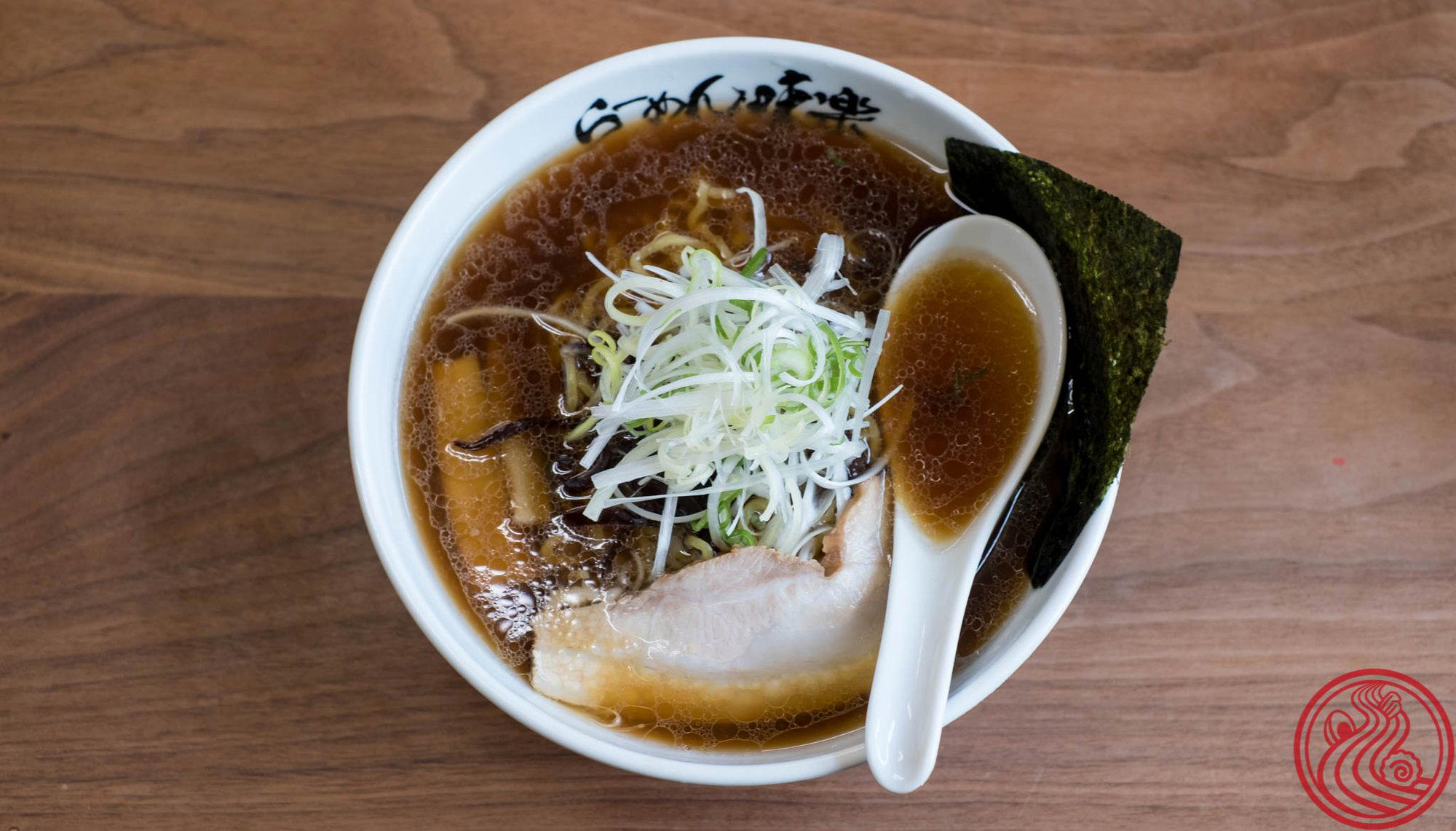
- Yaki Shoyu Ramen
- Grilled Soy Sauce Ramen
- Gyoza
Where the Sea Defines the Bowl
Rishiri Island sits roughly twenty kilometres off the northwestern tip of Hokkaido, accessible only by ferry or small aircraft, and the crossing itself frames what you are about to eat. The island's coastline produces some of Japan's most prized rishiri kombu, a variety of kelp that has shaped Hokkaido's culinary identity for centuries and forms the dashi backbone of the ramen tradition you find here at Rishiri Ramen Miraku. This is not a restaurant you stumble upon. You plan around it.
In a country where ramen culture has fractured into dozens of regional styles, each with its own orthodoxy, Rishiri's version occupies an unusually pure position. The broth is built on kelp dashi rather than the heavier pork or chicken bases that dominate central Hokkaido's miso ramen tradition in cities like Sapporo. The result is a lighter, more mineral-forward bowl, one that reflects the island's primary export and its centuries-old fishing economy rather than the agricultural interior. That directness, place informing bowl, is what separates regional Japanese ramen from the category-generic versions found in urban chains. For a broader view of how this kind of place-specific dining operates across Japan's less-visited prefectures, our full Hokkaido (Rishiri Island) restaurants guide maps the island's food scene in more detail.
The Cultural Logic of Kelp-Based Ramen
Rishiri kombu has been harvested here since at least the Edo period, traded south through Hokkaido and eventually into Osaka's dashi-centric cooking tradition. The kombu route, known in Japanese culinary history as the konbu kaido, connected Hokkaido's remote islands to the cultural and commercial centres of Honshu, making this particular variety of seaweed one of the most influential single ingredients in Japanese cuisine. That history gives the bowl at Miraku a context that extends well beyond the restaurant itself.
What the kelp-forward style represents, in broader ramen terms, is a commitment to subtlety in a category that has increasingly rewarded intensity. Where many of Hokkaido's celebrated ramen shops push towards richer, more emulsified broths, the Rishiri approach asks the diner to pay attention to quieter signals: the faint mineral salinity of the kombu, the clarity of the soup, the way the seasoning sits at the back of the palate rather than the front. It is a style that rewards visitors who have eaten widely across Japan's ramen spectrum, though it is approachable enough that first-time ramen drinkers find it far easier to finish a full bowl than they might a heavier tonkotsu variant.
Nearby, Wakasa Nomise represents another angle on Rishiri's local food culture, worth considering if you are spending more than a day on the island and want to move beyond ramen into the island's broader izakaya tradition.
Remote Dining as a Category
Japan's fine-dining circuit, anchored in Tokyo, Osaka, and Kyoto, operates by well-understood rules: seasonal kaiseki menus, Michelin validation cycles, reservation windows measured in months. Restaurants like HAJIME in Osaka, Harutaka in Tokyo, and Gion Sasaki in Kyoto exist within that system, and their reputations circulate through international review platforms and award bodies in predictable ways. Rishiri Ramen Miraku operates in an entirely different register. There are no Michelin inspectors making ferry crossings to remote Hokkaido islands on any regular basis. The validation here is logistical: the fact that people plan ferry schedules and overnight accommodation specifically to eat a bowl of ramen is a more direct form of endorsement than any star.
This places Miraku in a small category of Japanese restaurants whose authority derives from geographic specificity rather than institutional recognition. The closest comparison is not to other ramen shops but to the handful of destination restaurants in Japan's rural prefectures, places like akordu in Nara or Goh in Fukuoka, that draw visitors primarily because what they serve cannot be replicated in a city. The ingredient, in this case rishiri kombu at peak freshness, is the argument for the journey.
The same logic applies across Japan's regional dining scene: places like 一本杉川島製 in Nanao and 夕佳亭山乃 in Sapporo each anchor themselves to ingredients or traditions that are inseparable from their geography, making the journey part of the editorial case for visiting. Further afield, 湖畔荘 in Takashima and 庄羽屋 in Nishikawa Machi operate within similar frameworks of place-defined cooking, and together they suggest a coherent alternative circuit to Japan's metropolitan restaurant scene.
Planning the Visit
Getting to Rishiri requires either a ferry from Wakkanai (the northernmost city on Hokkaido's mainland, roughly two hours by ferry to Oshidomari port) or a small domestic flight. The ferry schedule is seasonal, with reduced frequency outside summer months, so anyone visiting between October and April should check current timetables before committing to an itinerary. Most visitors combine a Miraku visit with at least one night on the island, since the last ferry back to Wakkanai departs in the early evening. Rishiri has limited but adequate accommodation, and the island is compact enough to explore by rental bicycle or car in a single day alongside the meal.
For those building a broader Japan itinerary around serious eating, Rishiri sits at the far northern end of a spectrum that runs from the raw-fish counters and yakitori specialists of the mainland to the kelp-dashi bowls of the island's far coast. The contrast with internationally recognised destination restaurants, including Le Bernardin in New York City or Atomix in New York City, could hardly be sharper in format or context, but the underlying logic of a journey made for a specific plate of food is the same.
Visitors interested in extending the trip south through Japan's regional dining scene might also consider Birdland in Sakai, Bistro Ange in Toyohashi, Blue Ocean Steak in Nakagami District, bodai in Nachikatsuura, and Cafe Naoshima Konichiwa in Naoshima as part of a regional sweep that prioritises ingredient-driven cooking in non-metropolitan settings.
Frequently asked questions
Is Rishiri Ramen Miraku child-friendly?
Ramen shops on Rishiri Island generally operate as informal counter or small-table venues, and Miraku fits that mould. The bowl-focused format works well for children, and the kombu-based broth is mild by nature. That said, the remoteness of Rishiri Island itself, requiring a two-hour ferry from Wakkanai or a small aircraft, is the greater logistical consideration for families.
Is Rishiri Ramen Miraku formal or casual?
Miraku is a casual ramen shop, not a reservation-only dining room. Rishiri Island's working-harbour context sets the tone: fishermen and ferry passengers eat here alongside visitors who have made the crossing specifically for the kombu ramen. Come as you are from the ferry terminal.
Is Rishiri Ramen Miraku worth the journey from Hokkaido's mainland?
Rishiri Island sits roughly twenty kilometres off the northwestern tip of Hokkaido, making Miraku one of the most geographically isolated ramen destinations in Japan. The case for the crossing is specific: Rishiri kombu, grown in the cold waters surrounding the island, is among the most prized dashi ingredients in Japanese cooking, and eating ramen made with it at its source is a materially different proposition from eating kombu-dashi ramen in Sapporo or Tokyo. Visitors who make the ferry journey from Wakkanai consistently cite the broth's clarity and depth as justification.
What do people recommend at Rishiri Ramen Miraku?
The ramen built on Rishiri kombu dashi is the reason visitors cross from the Hokkaido mainland. Rishiri kombu, harvested on this island since at least the Edo period and traded historically as far as Osaka, produces a clear, deeply savoury broth that defines the bowl. Beyond that, specific menu details are best confirmed on arrival, as a small island kitchen operates seasonally.
How far ahead should I plan for Rishiri Ramen Miraku?
The constraint is not a reservation queue at Miraku itself but the logistics of reaching Rishiri Island. Ferries from Wakkanai fill quickly in July and August, and flights on the small island-hopper route have limited seats. Plan the island crossing two to three months ahead in peak summer; the restaurant visit follows from there.
Price and Positioning
Comparable venues nearby, for context on price, style, and recognition.
| Venue | Cuisine | Price | Awards | Notes |
|---|---|---|---|---|
| Rishiri Ramen MirakuThis venue (the venue you are viewing) | Hokkaido Rishiri Ramen | $10–20 | Not listed | Not listed |
| Wakasa Nomise | Japanese Izakaya | Not listed | Not listed | Rishiri Island, Japanese Izakaya |
| Grill Ippei Motomachi ten | Traditional Kobe yoshoku grill | $20–30 | Tabelog 100 #83 | Chūō, Traditional Kobe yoshoku grill |
| Tonkatsu Yutaka | Traditional Asakusa Tonkatsu & Japanese Cuisine | $10–20 | Tabelog 100 #90 | Taitō, Traditional Asakusa Tonkatsu & Japanese Cuisine |
| Boteyan (ぼてやん多奈加) | Okonomiyaki & Yakisoba | $10–20 | Tabelog 100 #94 | Toyama Station area, Square Okonomiyaki Specialist |
| Yakitori Shokudo | Yakitori & Izakaya | $30–50 | Tabelog 100 #62 | Kita, Yakitori & Izakaya |
Details
- Well Known
- Rustic
- Cozy
- Solo
- Casual Hangout
- Standalone
- Open Kitchen
- Local Sourcing
- A La Carte
- Counter Dining
Intimate family-owned shop with a no-frills, authentic atmosphere; minimal seating with fast-paced service during peak hours.