Our verdict
On an island where ancient cedar forests meet the Pacific, Rengaya sits at the point where Yakushima's extraordinary natural larder meets the table. The restaurant draws on one of Japan's most ecologically distinct environments, placing it in a category of regional dining that few island destinations can match. For travellers making the journey from Kagoshima, it warrants the detour.

Pearl is the En Primeur Club membership app, where members save venues, book tables and use the concierge.
The menu
What to order
- Jomon Beef
- Yakushima game meat
- Yakushima venison
Where the Forest Meets the Plate
Yakushima is not a typical dining destination. The island, a UNESCO World Heritage site since 1993, receives more rainfall than almost anywhere else in Japan, which produces a layered ecology of Jomon-era cedar, subtropical coastal flora, and mountain streams that remain among the cleanest in the country. That environmental specificity has a direct consequence for anyone eating here: the ingredients arriving at local tables are shaped by conditions found nowhere else on the Japanese archipelago. Rengaya operates inside that context. The restaurant belongs to a tradition of regional dining in which geography is not a backdrop but a primary ingredient.
Arriving in Yakushima already involves a degree of commitment. The island is accessible by high-speed ferry from Kagoshima (roughly two hours) or by a short flight, and the relative difficulty of getting there has kept the dining scene small, local, and largely unaffected by the homogenising forces that have reshaped restaurant culture in Japan's major cities. What you find when you arrive is not a scaled-down version of Osaka or Tokyo dining, but something with its own internal logic. For a broader picture of where Rengaya sits in that local scene, our full Yakushima restaurants guide maps the options in more detail.
The Sourcing Logic of an Island Kitchen
The editorial angle on Yakushima's leading kitchens is almost always an ingredient story, and that holds here. The island's fishermen work waters where the Kuroshio Current pushes warm Pacific water along the coast, producing flying fish, sea bream, and local shellfish with a salinity and texture that differs from what you find on the mainland. The mountain interior adds a second larder: wild vegetables, mushrooms, and pork from small-scale island producers are part of the seasonal rotation in restaurants that take their sourcing seriously.
This is the culinary tradition that contextualises Rengaya's position: a regional kitchen that draws on two distinct ecological zones within a few kilometres of each other. Compare this with the sourcing logic at, say, HAJIME in Osaka, where French-inflected innovation works from a national supply network, or Harutaka in Tokyo, where premium tsukiji-adjacent sourcing defines the product. Yakushima's version of hyper-locality is less about luxury procurement and more about genuine geographic limitation: you eat what the island produces because the island produces it.
Restaurants in this tier, whether in Yakushima or in comparably remote Japanese settings like those covered in 湖里庵 in Takashima or 庄内屋 in Nishikawa Machi, tend to operate with a directness that more urban kitchens can rarely replicate. The supply chain is short. Seasonal shifts are sharp. The menu reads the weather.
Reading Rengaya Inside Japan's Regional Dining Scene
Japan's regional dining scene has developed a distinct tier of restaurants that operate outside the Michelin orbit of Tokyo, Osaka, and Kyoto but draw serious food travellers nonetheless. Gion Sasaki in Kyoto represents one endpoint of that spectrum, where kaiseki tradition and documented culinary lineage attract a global audience. Goh in Fukuoka and akordu in Nara demonstrate how secondary cities have developed their own dining identities. Rengaya on Yakushima sits in a different register still: an island kitchen where the absence of metropolitan infrastructure is the point, not the limitation.
For international visitors making Japan-wide itineraries that include recognised destinations like Atomix in New York City or Le Bernardin in New York City as reference points for what premium dining delivers, Rengaya requires a recalibration of expectations. The measure here is not formal complexity or service architecture. It is proximity to source and the kind of ingredient quality that accrues from a kitchen operating inside a genuinely distinct natural environment.
That positioning puts Rengaya in conversation with other regional Japanese restaurants that have built reputations through consistent sourcing rather than award accumulation. 一本木 石川製 in Nanao and 古代山乃坊 in Sapporo each represent that model in their own prefectures. So do more format-specific kitchens like Birdland in Sakai and Denko Sekka in Hiroshima, where a single-product focus sharpens the sourcing story considerably.
The Atmosphere on Arrival
Eating on Yakushima carries a particular atmospheric weight that is hard to separate from the broader island experience. The combination of forest density, coastal proximity, and the general quietness of an island with a small permanent population creates a dining context that feels removed from the rhythm of mainland Japan in ways that purely geographical distance does not fully explain. Restaurants here tend toward compact formats. The pace is unhurried by design, not by accident.
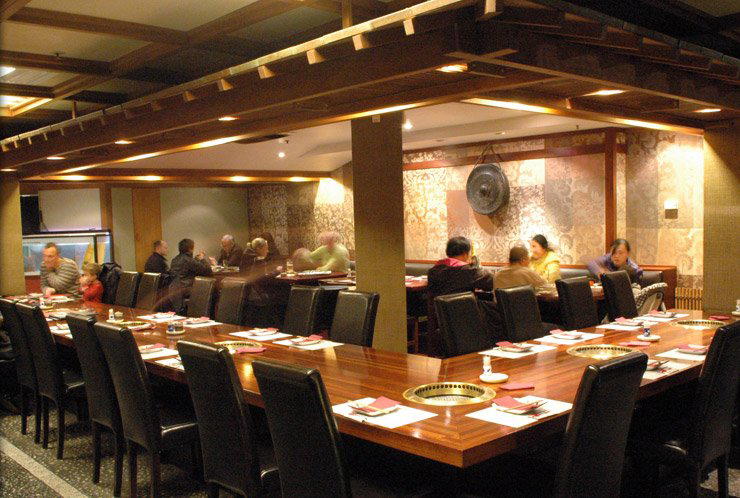
The atmosphere at Rengaya follows this pattern. Visitors who have come through other distinctive regional Japanese dining rooms, including smaller establishments like bodai in Nachikatsuura or Cafe Naoshima Konichiwa on Naoshima, will recognise a similar domestic register: the kitchen is close, the room is modest in scale, and the transaction between kitchen and table is direct.
For those travelling with children, the informal atmosphere of island dining generally makes Yakushima more accommodating than, say, a counter-format kaiseki in Kyoto. Whether Rengaya specifically maintains a child-friendly policy is best confirmed directly when booking, as practices vary and the restaurant's own operational details are not published through the standard channels.
Planning the Visit
Yakushima rewards advance planning at the logistics level before the restaurant level. Accommodation options on the island are finite, ferry and flight schedules to Kagoshima are time-specific, and the island's road network means that moving between the coast and the interior takes longer than maps suggest. Visitors arriving from other parts of Japan who have planned stops at destinations like Bistro Ange in Toyohashi or Blue Ocean Steak in Nakagami District should treat Yakushima as a dedicated detour rather than a stopover. The island merits two nights minimum to eat properly, walk the forest trails, and understand why the ingredient story here is what it is.
Booking details for Rengaya, including current hours and reservation policy, are leading sourced locally on arrival in Yakushima or through your accommodation. The island's hospitality infrastructure, including guesthouses and minshuku, is generally well-connected to local restaurant knowledge. Walk-in availability at smaller island restaurants fluctuates with seasonality and is not reliably predictable; calling ahead or asking your accommodation to assist with a reservation is the practical approach.
Frequently asked questions
Is Rengaya okay with children?
Yakushima as an island destination skews toward adult travellers focused on trekking and nature, and most of its serious dining rooms follow that pattern. Rengaya's format, with its emphasis on local sourcing and a considered meal pace, is better suited to older children who can engage with that style of eating. Families with young children should confirm suitability directly with the venue before booking.
What should I expect atmosphere-wise at Rengaya?
Yakushima's dining rooms carry a particular weight that comes from the island itself: dense cedar forest, persistent rain, and a general sense of remove from mainland Japan. Rengaya sits inside that context, which means the atmosphere is defined as much by the island's UNESCO-listed environment as by the room. Expect something quieter and more grounded than urban Japanese dining, without the performative formality of Tokyo or Kyoto.
Why do travellers make the trip specifically to eat at a restaurant in Yakushima rather than eating well in Kagoshima before the ferry?
Yakushima's ingredients are not reproducible on the mainland: the island's fish come from waters shaped by a specific current geography, and the produce reflects growing conditions created by rainfall levels that rank among Japan's highest. A kitchen in Kagoshima city, however accomplished, cannot source from those same waters and soils on a daily basis. Rengaya sits in Yakushima, which means the ingredient chain is as short and place-specific as it gets in Japanese regional dining.
What do people recommend at Rengaya?
The editorial focus on Yakushima kitchens consistently returns to ingredient provenance, specifically the island's fishermen working the waters around the coast and the hyper-local produce shaped by Yakushima's extraordinary rainfall. Dishes drawing on those local fish and island-grown ingredients tend to be the reason visitors seek out the restaurant in the first place. For current menu specifics, check the venue's official channels or check recent visitor accounts closer to your travel date.
Do they take walk-ins at Rengaya?
Yakushima logistics favour advance planning at every level: accommodation is finite, ferry and flight connections are limited, and the island's better restaurants reflect that same demand pressure. Walk-in availability at Rengaya can change from available data, but given the island's visitor patterns and the small scale typical of regional Japanese dining rooms, booking ahead is the sensible approach. Check the venue's official channels for the latest details.
What do critics highlight about Rengaya?
Rengaya operates in the tier of Japanese regional restaurants that function outside the Michelin orbit of Tokyo, Osaka, and Kyoto but still draw purposeful travellers willing to make the trip for the cooking. The critical angle in this category is almost always sourcing: the specificity of local ingredients on an island as ecologically distinct as Yakushima, a UNESCO World Heritage site, gives kitchens a story that urban restaurants cannot replicate.
| Venue | Cuisine | Price | Awards | Notes |
|---|---|---|---|---|
| RengayaThis venue (the venue you are viewing) | Japanese Yakiniku BBQ | $20–30 | Not listed | Not listed |
| HAJIME | Avant-Garde Japanese Fine Dining | $300–500 | 3 Michelin Stars · World's 50 Best #83 | French, Innovative |
| Harutaka | Edo-Style Omakase Sushi | $200–300 | 3 Michelin Stars · World's 50 Best #76 | Sushi |
| L'Effervescence | Modern French with Japanese Influences | $200–300 | 3 Michelin Stars · World's 50 Best #69 | French |
| RyuGin | Modern Kaiseki | $500+ | 3 Michelin Stars · World's 50 Best #41 | Kaiseki, Japanese |
| Crony | Modern French with Japanese Influences | $150–200 | 2 Michelin Stars · World's 50 Best #34 | Innovative, French |
Continue exploring
More in Yakushima
Restaurants in Yakushima
All restaurants in Yakushima →
Hotels in Yakushima
Browse all →
Details
- Classic
- Cozy
- Rustic
- Casual Hangout
- Group Dining
- Family
- Standalone
- Sake Program
- Local Sourcing
- A La Carte
- Family Style
Traditional Japanese tatami-style seating with a casual, conversational barbecue-restaurant atmosphere.