
Ageo’s ramen scene rewards precision over ceremony, and this counter-and-table shop sits in that practical, ingredient-led lane. Recognition in Tabelog’s Ramen EAST 100 for 2025, a 3.76 score, ramen and tsukemen focus, and a compact 20-seat format put it among Saitama’s more serious everyday noodle addresses without pushing it into destination-dining theatre.
Pearl is the En Primeur Club membership app — saves, bookings, and concierge access live there. Same editors, same standards.
- Address
- 97-5 Minami, Ageo, Saitama 362-0002, Japan
- Phone
- +81 48-856-9747
- Website
- kotobukiseimen.com
- Directions
- Get directions
 Saves & bookings on Pearl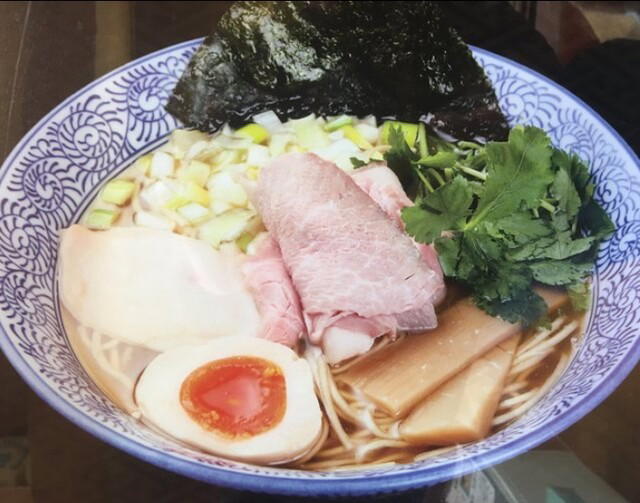
Approaching a serious suburban ramen shop in Saitama rarely involves spectacle. The cues are more functional: a small room built for turnover, the rhythm of counter seats, tables set for groups, and a menu language that keeps attention on broth, noodles, and dipping formats rather than ceremony. In Ageo, that plainspoken format matters. The city sits outside Tokyo’s dense ramen corridors, so a bowl has to earn repeat local traffic before it draws wider attention.
Chuka Soba Yoshikawa Ageo ten belongs to that category of ramen address where sourcing and extraction carry more weight than décor. The restaurant is listed for ramen and tsukemen, two formats that test a kitchen in different ways: ramen asks for balance in the bowl, while tsukemen puts the noodle and dipping broth under closer scrutiny. Its selection for Tabelog Ramen EAST 100 in 2025 gives the shop a measurable place within the eastern Japan ramen conversation, not merely within Ageo’s dining map.
Fish-led ramen culture, read through a Saitama counter
Japan’s contemporary ramen field has widened far beyond the old shorthand of shoyu, miso, shio, and tonkotsu. Ingredient sourcing now functions as a competitive signal. Shops use seafood, chicken, pork, dried fish, kelp, shellfish, and house noodle specifications to stake out identity, even when menus remain brief. In suburban Saitama, that ingredient discipline often appears without the choreography associated with central Tokyo counters.
The appeal here is not luxury coding. It is the way a low-price ramen format can still carry award-level scrutiny. A Tabelog 3.76 score and inclusion in the 2025 Ramen EAST 100 place Chuka Soba Yoshikawa Ageo ten in a bracket where repeatability counts: broth consistency, noodle texture, pacing, and the ability to serve both solo diners and small groups without diluting the food. The 20-seat layout, with counter seating and three four-person tables, points to that dual role.
Tsukemen also changes the conversation. Dipping noodles make temperature, concentration, and noodle structure more exposed than a standard soup bowl. The format rewards kitchens that understand how broth behaves as it cools and how noodles hold texture after rinsing. That does not require a luxury room; it requires control. This is why ramen specialists outside the capital can draw attention when the fundamentals are exact.
Ageo’s stronger casual dining addresses tend to sit in this practical register. Kiseki Shokudo Ageo ten, for example, occupies a different price and comfort-food lane, but it shows the same local pattern: diners in Ageo will travel for a focused specialty when the value equation is clear. For a broader read on the city’s dining map, our full Ageo restaurants guide is the better starting point than treating any single ramen counter as the whole story.
Why the recognition matters beyond a cheap bowl
Ramen awards can be misunderstood by travellers. They are not always about polish in the Western fine-dining sense. They often reward a narrower craft: a broth style sharpened over years, a noodle choice that fits the soup rather than the trend cycle, or a shop’s ability to maintain standards under daily volume. The 2025 Tabelog Ramen EAST 100 selection matters because eastern Japan is crowded with ramen specialists, and Saitama shops compete against a broad field of urban and suburban counters.
The opening date, 2014, adds a second signal. A ramen shop that remains visible after a decade is operating in a category where novelty fades quickly and local habits are unforgiving. The address also offers take-out, a feature that places it closer to everyday neighbourhood use than to reservation-only dining. That distinction is useful for visitors: the value is in understanding a working ramen culture, not in seeking a staged tasting-menu experience.
Comparison helps sharpen the point. Teuchi Udon Matsuya and Wafu Ramen Yondaime Hinodeya occupy similarly accessible price territory, while Kiseki Shokudo Ageo ten sits higher for meals built around a different centre of gravity. Those differences matter more than ranking them against one another. Udon, ramen, tsukemen, and meat-led set meals each ask a different question of the diner: noodle elasticity, broth concentration, soup-and-noodle balance, or portion generosity.
For travellers building a food-focused day around Ageo, the smarter move is to treat ramen as one part of a small-city circuit rather than a standalone pilgrimage. Hotels, bars, wineries, and local experiences shape how long the stop should be, and the city’s practical infrastructure matters more than fantasy. See our full Ageo hotels guide, our full Ageo bars guide, our full Ageo wineries guide, and our full Ageo experiences guide for that wider planning frame.
How to place it in a Japan-wide eating itinerary
Ramen specialists are useful anchors because they reveal how regional dining works at street level. A traveller can spend heavily in Tokyo or Kyoto and still learn less about everyday Japanese food culture than from a focused suburban noodle shop. The key is to compare formats, not prestige. A Kamakura sukiyaki meal, an Akihabara tuna-and-charcoal address, a Sapporo curry specialist, or a Kyoto small-format dining room all speak different dialects of Japanese casual and mid-market eating.
That broader itinerary might include -Grilled beef Sukiyaki- KAMAKURA TANUKIAN 鎌倉 たぬき庵 in Kamakura, . 鮪と炭火焼き うお炭 秋葉原店 in Tokyo, .cafe in Osaka.know in Kumamoto, (Shoku) Vietnam in Kawasaki, [Curry Senmon Ten] Maruyama Kyoju. in Sapporo, [ki:] in Kyoto, #肉といえば松田 奈良本店 in Kashihara, 1/3 HAMBURGER FACTORY in Kanazawa, and 1000 in Yokohama. Outside Japan, Jōdo Saké Bar in Los Angeles and Onigiri Time in Pasadena show how Japanese food formats translate abroad, often with different expectations around service, pacing, and price.
The editorial case for Chuka Soba Yoshikawa Ageo ten is simple: it offers a clean look at ingredient-driven ramen in a city where the format remains grounded in daily use. The award signal gives it weight, the setting keeps it honest, and the ramen-tsukemen focus gives diners a clear reason to pay attention without dressing the experience up as fine dining.
A Quick Peer Check
Comparable venues by cuisine and price in the same metro.
| Venue | Cuisine | Price | Notes |
|---|---|---|---|
| Chuka Soba Yoshikawa Ageo ten | Niboshi ramen & Nagoya Cochin chuka soba shop | $ | Ageo |
| Kiseki Shokudo Ageo ten | Japanese tonkatsu and meat shokudo | $$ | /本町 |
| ラーメン亭「十五夜」 | Japanese Ramen | $ | Kushiro |
| Urashima Ramen | Wakayama Ramen | $ | Uchita |
| Musashino Udon Fujiwara Kitayono honten | Musashino udon | $ | Kita Yono / Saitama-Shintoshin area |
| Ramen Kanekatsu | Ramen & Tsukemen Shop | $ | Kita Urawa |
Recognition history
Dated appearances from independent guides and award organizations, with the underlying list record or original source where available.
Tabelog 100 #43 · No. 43
Tabelog · Tabelog 100 - Ramen - EAST - 2025











At a Glance
- Lively
- Cozy
- Solo
- Casual Hangout
- After Work
- Family
- Standalone
- Sustainable Seafood
Current opening hours
- Monday
- 11 AM–3 PM, 5–8 PM
- Tuesday
- 11 AM–3 PM, 5–8 PM
- Wednesday
- 11 AM–3 PM, 5–8 PM
- Thursday
- 11 AM–3 PM, 5–8 PM
- Friday
- 11 AM–3 PM, 5–8 PM
- Saturday
- 11 AM–8 PM
- Sunday
- Closed
Hours can change for holidays and private events. Last verified .
Typical Saitama ramen shop feel: compact and functional with counter-focused seating, a casual, energetic atmosphere, and a focus on the steaming bowls of ramen rather than decor.