

Michelin Bib Gourmand · Tabelog 100 #35
Our verdict
A Michelin Bib Gourmand recipient in 2024 and 2025, Kamigata Rainbow operates in Tennoji Ward with an approach to ramen that treats noodle selection as a compositional choice rather than a fixed constant. Each ramen style gets its own noodle type, soy sauce runs deep with dried sardine intensity, and a rotating seasonal menu keeps the format from settling into routine. At the single-digit yen tier, it represents serious cooking at an accessible price.

Pearl is the En Primeur Club membership app, where members save venues, book tables and use the concierge.
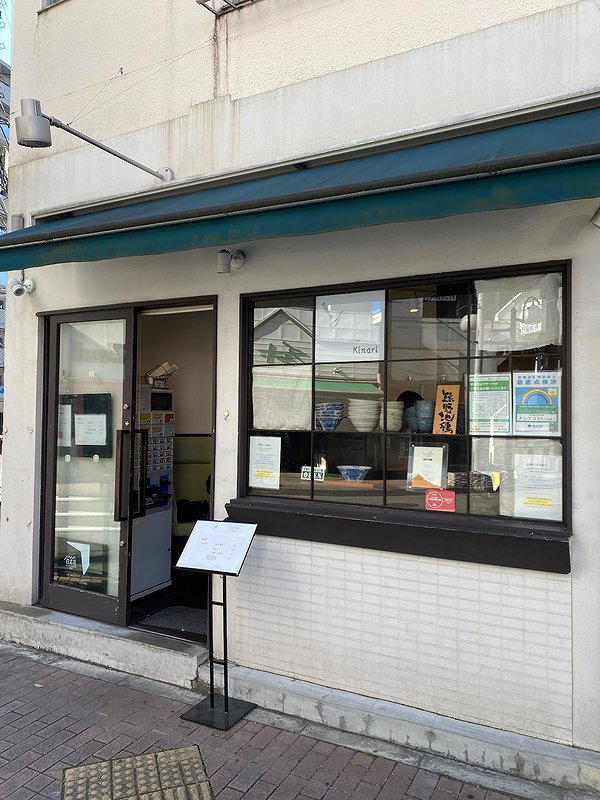
A Rainbow Awning in Tennoji's Ramen Scene
Approach Kamigata Rainbow on Katsuyama in Tennoji Ward and the first thing you clock is the awning: a stripe of colour against the quieter residential and commercial fabric of this part of Osaka, south of Shinsekai and well outside the Namba-to-Shinsaibashi corridor that draws most foreign visitors. That distance from the tourist circuit matters. Tennoji's dining character has historically been shaped by locals and commuters rather than by footfall from the big hotel clusters, and the ramen shops here tend to reflect that: less showmanship, more attention to the bowl itself.
Ramen in Osaka occupies a different register than in Tokyo or Fukuoka. Osaka has never had a single defining regional style in the way Hakata is synonymous with tonkotsu or Sapporo with miso. That absence of a dominant template has, over time, created space for individualist approaches, shops that build their own grammar rather than refining an inherited one. Kamigata Rainbow sits squarely in that individualist current, and consecutive Michelin Bib Gourmand recognition in 2024 and 2025 suggests the approach has found a critical audience.
How the Format Has Taken Shape
The editorial angle that makes most sense for Kamigata Rainbow is not a snapshot of what it is today but a reading of what it has chosen to become. The Bib Gourmand designation, awarded for quality at a reasonable price point, signals that the kitchen has arrived at something consistent enough to earn repeat recognition, but the menu logic points toward a shop that has refused to calcify. The decision to match a different noodle type to each ramen variety is not the default position in the category; most ramen shops standardise on one or two noodle formats and vary other elements. Here, the noodle is treated as a compositional variable, something that changes depending on what the broth and toppings require of it. That kind of systematic thinking usually develops over time, through iteration rather than from an opening-day blueprint.
The soy sauce ramen in particular carries a specific fingerprint: the base is described as redolent with small, dried sardines, the kind of iwashi-niboshi intensity that pulls sharply and lingers. Niboshi-forward broths have grown in profile across Japan's ramen scene over the past decade, moving from a regional northeastern preference into wider currency among shops that want a more complex, less fatty profile. The fact that this flavour is prominent in the soy sauce bowl here places Kamigata Rainbow in that broader national conversation, even from a Tennoji address most guides don't prioritise.
Curry ramen adds a different layer to the menu's range. Curry paste distributed through the soup changes character as it dissolves, which means the eating experience shifts from the first sip to the last. That kind of designed progression within a bowl is a more technically demanding proposition than it appears; too much paste and the broth becomes uniform too quickly, too little and the effect is inert. Getting that arc right requires knowing the soup deeply. It also signals the kind of seasonal and rotational thinking that keeps a menu from becoming predictable: items limited to specific seasons are listed on the menu, which means repeat visitors have reason to return at different points in the year.
Where It Sits in Osaka's Ramen Tier
Price context matters here. Kamigata Rainbow prices at the single-yen tier, making it one of the more accessible entry points in a city where dining can range from Bib Gourmand ramen counters through to three-Michelin-star kaiseki at operations like Taian or the French-inflected innovation of HAJIME at the top of the price range. The Bib Gourmand specifically exists to identify cooking that delivers at that accessible tier, so the recognition is not comparative with Osaka's ¥¥¥¥ restaurants but is meaningful within its own category.
Among Osaka's Michelin-recognised ramen and chukasoba shops, useful peer comparisons include Chukasoba Mugen, Chukasoba Uemachi, Hommachi Seimenjo Chukasobakobo, Kadoya Shokudo, and Mugito Mensuke. Each of these operates in the same price tier and carries guide recognition, which means Tennoji visitors with time to explore have a coherent set of options to work through rather than a single destination. Kamigata Rainbow's point of difference within that peer group is the noodle-per-dish philosophy and the deliberate seasonal rotation, which distinguishes it from shops built around a single, signature broth style.
For a broader ramen frame of reference across Japan, Afuri in Tokyo represents a different stylistic direction, lighter yuzu-shio profiles aimed at a more urban, design-forward audience, and the brand's international extension at Afuri Ramen in Portland shows how far that format travels when positioned correctly. Kamigata Rainbow is not in that commercialisation register; it reads as a single-location, locally rooted operation, which is consistent with the Tennoji address and the Bib Gourmand rather than a full Michelin star.
Planning a Visit
Tennoji Ward is accessible via the Osaka Metro Tanimachi Line and Midosuji Line, with Tennoji Station also served by JR lines, making it a direct journey from central Osaka. The address at 4 Chome-6-3 Katsuyama places the shop in a residential stretch that requires a short walk from the nearest station exits. Queue management at Bib Gourmand ramen shops in Japan frequently operates on a first-come, first-served basis, particularly at lunch, which makes an earlier arrival sensible. The seasonal menu items are an additional reason to ask what is currently available rather than assuming a fixed menu will apply.
For those building an Osaka itinerary beyond this single stop, the full picture is available through our Osaka restaurants guide, alongside resources for hotels, bars, wineries, and experiences across the city. The wider Kansai region also offers strong dining reference points in Gion Sasaki in Kyoto and akordu in Nara, while Harutaka in Tokyo, Goh in Fukuoka, 1000 in Yokohama, and 6 in Okinawa extend the frame for readers planning multi-city Japan itineraries.
Frequently asked questions
What should I order at Kamigata Rainbow?
Is Kamigata Rainbow reservation-only?
What do critics highlight about Kamigata Rainbow?
Category Peers
| Venue | Cuisine | Price | Awards | Notes |
|---|---|---|---|---|
| Kamigata RainbowThis venue (the venue you are viewing) | Creative Modern Ramen | $10–20 | Michelin Bib Gourmand · Tabelog 100 #35 | Not listed |
| HAJIME | Avant-Garde Japanese Fine Dining | $300–500 | 3 Michelin Stars · World's 50 Best #83 | French, Innovative |
| La Cime | Modern French with Japanese Ingredients | $150–200 | 2 Michelin Stars · World's 50 Best #13 | French |
| Kashiwaya Osaka Senriyama | Seasonal Kaiseki Omakase | $200–300 | 3 Michelin Stars · La Liste Top Restaurants | Japanese |
| Taian | Traditional Japanese Kaiseki Omakase | $150–200 | 3 Michelin Stars · La Liste Top Restaurants | Kaiseki, Japanese |
| Fujiya 1935 | Modern Japanese with European influences | $100–150 | 2 Michelin Stars · La Liste Top Restaurants | Innovative |
Recognition history
Dated appearances from independent guides and award organizations, with the underlying list record or original source where available.
Michelin Bib Gourmand
Michelin
Tabelog 100 #35 · No. 35
Tabelog · Tabelog 100 - Ramen - OSAKA - 2025
Full recognition history (4 entries)
Michelin Bib Gourmand
Michelin
Michelin Bib Gourmand
Michelin
Continue exploring
More in Osaka
Restaurants in Osaka
All restaurants in Osaka →



Bars in Osaka
All bars in Osaka →


Hotels in Osaka
All hotels in Osaka →




Wineries in Osaka
Browse all →
Details
- Intimate
- Quiet
- Elegant
- Modern
- Solo
- Casual Hangout
- Chefs Counter
- Open Kitchen
- Counter Dining
- A La Carte
Current opening hours
- Monday
- 11 AM–3 PM, 6–10 PM
- Tuesday
- 11 AM–3 PM, 6–11 PM
- Wednesday
- 11 AM–3 PM
- Thursday
- Closed
- Friday
- 11 AM–3 PM, 6–10 PM
- Saturday
- 11 AM–3 PM, 6–10 PM
- Sunday
- 11 AM–3 PM, 6–10 PM
Hours can change for holidays and private events. Hours as of .
Low, liquid lighting with natural fibers and hand-brushed washi creating a serene, contemplative atmosphere; counter seating in a stylish, relaxing space.