Kagacha

Kagacha places Saitama udon in a serious local frame: house-restaurant scale, a 22-seat room, and recognition in Tabelog 100 Udon EAST 2024. The appeal is less about ceremony than regional noodle culture, where wheat, broth, curry udon, sake, and shochu sit comfortably inside an everyday price band.
Pearl is the En Primeur Club membership app — saves, bookings, and concierge access live there. Same editors, same standards.
- Address
- 12-8 Shimoshinden, Tsurugashima, Saitama 350-2222, Japan
- Phone
- +81 49-287-7779
- Website
- gagachaya.atukan.com
 Saves & bookings on Pearl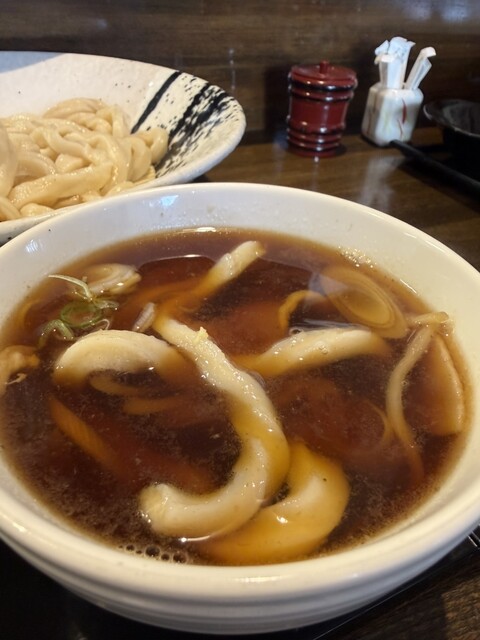
Approach in Shimoshinden and the dining signal is domestic rather than theatrical: Kagacha is listed as a house restaurant, with counter seating and tatami space rather than a polished city dining room. That matters for udon. In Saitama, the noodle is not a luxury prop; it belongs to a broader Kanto habit of wheat-based cooking, quick lunches, and low-friction neighborhood eating. The serious part is in the craft, not the staging.
Japan’s udon culture is often flattened into a single category for visitors, but the regional differences are practical and visible. Sanuki udon built its reputation on firmness and speed; Kansai leans into pale, fragrant dashi; Kanto tends to tolerate darker, more assertive broths and broader everyday formats. Saitama’s position on the edge of the Tokyo commuter belt gives places like this a particular role: not destination dining in the capital-city sense, but a disciplined local counter where the noodle carries the argument.
Wheat, curry, and the Saitama udon lane
The useful way to read Kagacha is through ingredient logic. Udon is a wheat noodle, and the value of a specialist shop comes from how that wheat is handled: hydration, kneading, resting, cutting, boiling, and the timing between pot and bowl. None of that needs a tasting-menu frame. A Tabelog 100 Udon EAST 2024 selection places the restaurant inside a curated regional bracket for the category, alongside shops judged for noodle craft rather than luxury signals.
The listed categories are instructive: udon, curry udon, and izakaya. That combination says a great deal about the modern specialist noodle house in suburban Japan. Curry udon is not an afterthought when treated seriously; it is a test of balance, because a thickened curry sauce can easily bury the texture of the noodle. The izakaya tag widens the frame further, with sake and shochu listed among drinks. In other words, this is not only a lunch-counter proposition. It sits in the overlap between noodle specialist and casual drinking table, a familiar but often underexplained part of Japanese dining.
Price band reinforces the point. Many high-performing noodle shops in Japan remain accessible because the format is built around repetition, turn, and a narrow culinary focus rather than elaborate service. In the broader Saitama peer context, Kagacha prices in the same everyday bracket as Chuka Soba Senmon Tonchibo and Chuka Soba Fukamidori, while Spain Tei occupies a higher spend tier. That comparison is useful because it separates craft from expense. Recognition here is not a proxy for white-tablecloth ambition; it is a signal that a modest category can carry serious evaluation.
A small room changes how udon is judged
Room is listed at 22 seats, with counter seating and tatami space. For noodle dining, scale has consequences. A smaller shop narrows the distance between boiling, finishing, and serving; it also limits how far the operation can drift from its core rhythm. The posted note that service ends once noodles run out is common in specialist noodle culture, but it is still a useful planning signal: supply is finite because the product is not treated as endlessly replaceable.
That finite rhythm also shapes the guest decision. This is the opposite of a maximalist Tokyo itinerary meal, where the booking is the event and the room is part of the performance. Kagacha belongs to a quieter category: a neighborhood-level restaurant with enough outside validation to justify a detour for travelers already interested in regional Japanese food. The Tabelog score of 3.69 adds another data point, though the stronger signal is the repeated Udon EAST selection history noted for 2020, 2022, and 2024. Awards in this category tend to reward consistency as much as novelty.
For a reader mapping Tsurugashima around food rather than landmarks, this is the kind of address that explains the city better than a generic restaurant list. The practical ecosystem matters too: parking is available, private rooms are not, and private use is listed for up to 20 people. Payment is another reminder that Japan’s casual specialists do not always follow big-city assumptions, with credit cards and electronic money not accepted while PayPay is listed. Those details make the restaurant feel less like an exported concept and more like a local operation with its own rhythm.
Where it fits in a Tsurugashima itinerary
Kagacha is strongest as a focused food stop rather than a long, multi-course anchor. The better editorial use is to pair it with a wider look at the area: start with Our full Tsurugashima restaurants guide, then build the rest of the day through Our full Tsurugashima hotels guide, Our full Tsurugashima bars guide, Our full Tsurugashima wineries guide, and Our full Tsurugashima experiences guide. The restaurant’s value is clearest for travelers who want a precise regional meal rather than a broad sampling menu.
For readers comparing Japanese casual dining across cities, the contrast is instructive. -Grilled beef Sukiyaki- KAMAKURA TANUKIAN 鎌倉 たぬき庵 in Kamakura points toward beef-centered tradition, . 鮪と炭火焼き うお炭 秋葉原店 in Tokyo toward seafood and charcoal, and [Curry Senmon Ten] Maruyama Kyoju. in Sapporo toward curry specialization. Udon sits differently: less performative, more dependent on texture, timing, and the relationship between noodle and broth.
That broader map can stretch from [ki:] in Kyoto to 1/3 HAMBURGER FACTORY in Kanazawa, 1000 in Yokohama, and 1000mヒュッテ 1000m Hut in Kutchan. Casual formats abroad make a useful counterpoint as well: Jōdo Saké Bar in Los Angeles and Onigiri Time in Pasadena show how Japanese drinking and rice formats travel, while Saitama udon remains rooted in local wheat culture. For additional cross-category context, see.cafe in Osaka.know in Kumamoto, (Shoku) Vietnam in Kawasaki, and #肉といえば松田 奈良本店 in Kashihara.
Fast Comparison
Comparable venues by cuisine and price in the same metro.
| Venue | Cuisine | Price | Notes |
|---|---|---|---|
| KagachaThis venue — the venue you are viewing | Musashino udon & tempura | $ | Not listed |
| ひろめで安兵衛 | High Kochi Yatai Gyoza | $ | 帯屋町 |
| Umemura | Japanese Soul Food | $ | Koto |
| 中華そば 速水 | 和歌山ラーメン | $ | 緑ヶ丘 |
| Chuka Soba Senmon Tonchibo | Ramen / Chuka soba specialist | $ | Koma |
| Sanuki Udon Jobe | Traditional Sanuki Udon Shop | $ | Kami-Fukuoka |
Recognition history
Dated appearances from independent guides and award organizations, with the underlying list record or original source where available.
Tabelog 100 #42 · No. 42
Tabelog · Tabelog 100 - Udon - EAST - 2024
Continue exploring
More in Tsurugashima
Restaurants in Tsurugashima
Browse all →



Bars in Tsurugashima
Browse all →




Hotels in Tsurugashima
Browse all →




Wineries in Tsurugashima
Browse all →
At a Glance
- Lively
- Classic
- Cozy
- Solo
- Family
- Casual Hangout
- Group Dining
- After Work
- Standalone
Current opening hours
- Monday
- 11:30 AM–2:30 PM
- Tuesday
- 11:30 AM–2 PM
- Wednesday
- Closed
- Thursday
- 11:30 AM–2:30 PM
- Friday
- 11:30 AM–2:30 PM
- Saturday
- 11:30 AM–2:30 PM
- Sunday
- 11:30 AM–2:30 PM
Hours can change for holidays and private events. Last verified .
A casual, homey udon shop with a classic local feel, bright and functional rather than design-focused, bustling at peak times but still relaxed enough for solo diners and families.