
1 Michelin Star
Our verdict
A Michelin-starred counter in Shirokanedai that grounds its sushi in Edo-period tradition, from the deliberate naming rooted in Buddhist symbolism to the presentation of toppings before a single piece of rice is formed. Jizozushi sits in the quieter, more scholastic tier of Tokyo's ¥¥¥¥ omakase scene, where historical literacy about the craft carries as much weight as technical precision.

Pearl is the En Primeur Club membership app, where members save venues, book tables and use the concierge.
The menu
What to order
- Nigiri sushi
- Marinated tuna belly roll
Where Edo Tradition Sets the Terms
Tokyo's sushi counter scene has fractured into clearly readable tiers over the past decade. At the leading sit a handful of three-star counters, Harutaka and Sukiyabashi Jiro Roppongiten among them, where price and prestige align with media recognition and near-impossible reservation windows. Below that, a denser band of one-star and recognised counters occupies the ¥¥¥¥ bracket without commanding the same spectacle. Jizozushi, on the second floor of an NK Building in Shirokanedai, Minato City, belongs to this second cohort, holding a Michelin one star as of 2024 and operating with a degree of scholarly self-awareness that separates it from the more performance-oriented counters nearby.
Shirokanedai itself sits in the quieter residential and diplomatic belt of Minato ward, removed from the Ginza corridor where many of Tokyo's most-visited sushi rooms cluster. That geography is relevant to understanding what Jizozushi offers. The area draws a local, repeat clientele rather than the international tourism traffic that moves through Sushi Kanesaka or other Ginza addresses. The trade-off for the diner is a calmer room and a chef whose attention is not divided across multiple seatings shaped by foreign guest rotation.
The Value Embedded in Historical Depth
At ¥¥¥¥ pricing, Tokyo's omakase counters have to justify their position through something beyond fish quality, which at this tier is broadly consistent across reputable addresses. What differentiates Jizozushi is the density of historical reference packed into a single sitting. The chef presents the full range of available toppings before forming any nigiri, a practice that traces directly to the yatai food stall tradition of Edo-period Tokyo, when customers selected from what was on display before the itamae began work. Most contemporary counters have abandoned this sequence in favour of a more choreographed progression. Retaining it here is not nostalgia for its own sake; it is a structural choice that changes how the diner engages with each piece.
Two specific preparations underline how far this historical commitment extends. Gizzard shad, kohada, is shaped in the form of the Katsuyama hairstyle, a reference to the elaborate topknot worn by courtesans in the Yoshiwara district during the Edo period. The pairing of shrimp on sushi rice with nori is described explicitly as a relic of traditional practice, a deliberate retention of a pre-modern technique that most counters have quietly dropped. These are not decorative gestures. They carry the kind of specificity that makes a sitting at a counter like this function differently from one at Edomae Sushi Hanabusa or a more contemporary-leaning address such as Hiroo Ishizaka, where the reference frame is more technical than historical.
The name itself operates on a level that few diners will encounter at other counters. Jizozushi is derived from an image of Jizo, the Buddhist guardian deity associated with children and travellers, presented to the chef by a temple. The character used for 'sushi' in the restaurant's name is an archaic form, referencing narezushi, the fermented fish preparation that predates modern nigirizushi by centuries. Choosing that character rather than the contemporary one signals that the chef's interest in the craft extends back to its pre-Edo origins, not just the 19th-century yatai period that most Edomae purists treat as the baseline. This kind of naming decision is rare and specific in ways that a Michelin listing alone does not capture.
The ¥¥¥¥ designation places Jizozushi in the same pricing band as counters operating at two and three Michelin stars. That compression is worth examining. Tokyo's award tier does not map neatly onto price tier in sushi; a one-star counter serving deeply researched Edomae work can price comparably to a three-star counter whose recognition rests on a different combination of factors including international reputation, media profile, and seat scarcity. Counters of this type are not being cycled through by guidebook tourists. They tend to attract diners who found them deliberately, often through local recommendation, and who return rather than document.
Compared with the broader Japan dining scene, the Edomae counter format at this price point holds up well against alternatives. A kaiseki sitting in Kyoto at a comparable price, such as Gion Sasaki, delivers a different breadth of technique across more courses, but a sushi counter that operates with this degree of historical literacy is making a different argument: that the compression of meaning into a small piece of vinegared rice and fish can carry as much intellectual weight as an extended seasonal menu.
Tokyo's Sushi Scene in Frame
For visitors building a Japan itinerary around the dining, positioning Jizozushi within a broader Tokyo programme is worth considering alongside our full Tokyo restaurants guide. Tokyo's sushi rooms at ¥¥¥¥ tend to cluster in Ginza, Azabu, Shirokanedai, and a few outer-ward addresses, and the variation between them is rarely about ingredient quality. It is almost always about the philosophy structuring the sitting. Jizozushi's philosophy is legible and consistent, rooted in literary and religious reference rather than in minimalist modernism or technical innovation.
Diners comparing sushi experiences across Japan might also consider Sushi Shikon in Hong Kong or Shoukouwa in Singapore as regional reference points, though neither operates within the same Edo-period framework that defines the Jizozushi experience. For those extending beyond Tokyo, HAJIME in Osaka, Goh in Fukuoka, akordu in Nara, 1000 in Yokohama, and 6 in Okinawa round out a Japan itinerary at comparable price points across different culinary traditions.
For completeness: our full Tokyo hotels guide, our full Tokyo bars guide, our full Tokyo wineries guide, and our full Tokyo experiences guide cover the broader city planning.
Planning Your Visit
Location: 3 Chome-18-5 NK Building 2F, Shirokanedai, Minato City, Tokyo 108-0071. Budget: ¥¥¥¥, placing it in the same pricing band as Michelin two and three-star counters in the city. Recognition: Michelin one star, 2024. Reservations: Contact details are not publicly listed; approach through a hotel concierge or a Japan-based reservation service. Timing: Shirokanedai counters at this tier tend to book several weeks to months in advance; confirm availability well before arrival in Tokyo.
Frequently asked questions
Is Jizozushi good for families?
At ¥¥¥¥ pricing and as a formal sushi counter in Tokyo, it is squarely aimed at adults with a serious interest in Edomae tradition, not a setting for children.
What is the atmosphere like at Jizozushi?
If you appreciate a counter where scholarly intent shapes every detail, from the naming of the restaurant to the sequencing of the meal, you will find the atmosphere at Jizozushi measured and purposeful. The Shirokanedai location removes it from the high-energy Ginza corridor, and the Michelin recognition (one star, 2024) at ¥¥¥¥ pricing signals a room that prioritises depth over spectacle. If you are looking for theatrical presentation or a buzzy dining-out event, a different counter in the city would be a better fit.
What do people recommend at Jizozushi?
The documented preparations that define what this counter does include gizzard shad shaped in the Katsuyama style and shrimp paired with nori in the manner of pre-modern sushi practice. More broadly, the documented approach of presenting all available toppings before forming any nigiri is, within the Edomae tradition and the chef's Michelin-recognised programme, the piece of the experience that distinguishes a sitting here from most other ¥¥¥¥ counters in the city.
The Short List
| Venue | Cuisine | Price | Awards | Notes |
|---|---|---|---|---|
| JizozushiThis venue (the venue you are viewing) | Traditional Edomae Omakase | $300–500 | 1 Michelin Star | Not listed |
| Harutaka | Edo-Style Omakase Sushi | $200–300 | 3 Michelin Stars · World's 50 Best #76 | Sushi |
| RyuGin | Modern Kaiseki | $500+ | 3 Michelin Stars · World's 50 Best #41 | Kaiseki, Japanese |
| L'Effervescence | Modern French with Japanese Influences | $200–300 | 3 Michelin Stars · World's 50 Best #69 | French |
| HOMMAGE | Modern French with Japanese Influences | $150–200 | 2 Michelin Stars · World's 50 Best #78 | Innovtive French, French |
| MAZ | Innovative Peruvian-Japanese Fusion | $150–200 | 2 Michelin Stars · World's 50 Best #28 | Innovative |
Recognition history
Dated appearances from independent guides and award organizations, with the underlying list record or original source where available.
Michelin 1 Star
Michelin
Full recognition history (2 entries)
Michelin 1 Star
Michelin
Continue exploring
More in Tokyo
Restaurants in Tokyo
All restaurants in Tokyo →


Bars in Tokyo
All bars in Tokyo →




Details
- Elegant
- Intimate
- Quiet
- Sophisticated
- Special Occasion
- Date Night
- Chefs Counter
- Open Kitchen
- Sake Program
- Local Sourcing
- Sustainable Seafood
- Omakase
- Counter Dining
- Sake
Current opening hours
- Monday
- Closed
- Tuesday
- Closed
- Wednesday
- Closed
- Thursday
- 6–9 p.m.
- Friday
- 6–9 p.m.
- Saturday
- 6–9 p.m.
- Sunday
- Closed
Hours can change for holidays and private events. Hours as of .
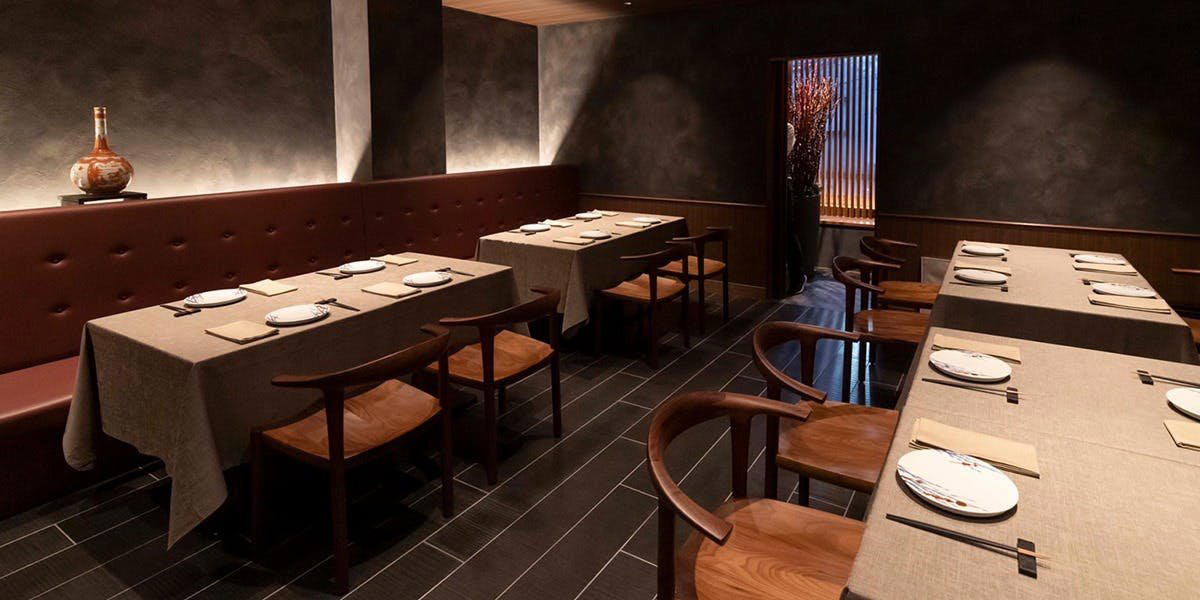
Refined and serene with an eight-seat counter in a sukiya-style Japanese tea ceremony aesthetic, featuring warm wooden elements and minimalist design that creates an atmosphere of quiet elegance and contemplation.