JA occupies a narrow address on Tweede Jan Steenstraat in Amsterdam's De Pijp, a neighbourhood where the gap between local canteen and serious kitchen has narrowed sharply over the past decade. The lunch and dinner divide here tracks a wider shift in how the city's mid-tier dining scene is evolving, less ceremony in daylight, more considered in the evening. Worth placing on any Amsterdam itinerary that reaches beyond the canal belt's headline tables.
Pearl is the En Primeur Club membership app — saves, bookings, and concierge access live there. Same editors, same standards.
- Address
- Tweede Jan Steenstraat 3, 1073 VK Amsterdam, Netherlands
- Phone
- +31650645829
- Website
- restaurantja.nl
- Directions
- Get directions
 Saves & bookings on Pearl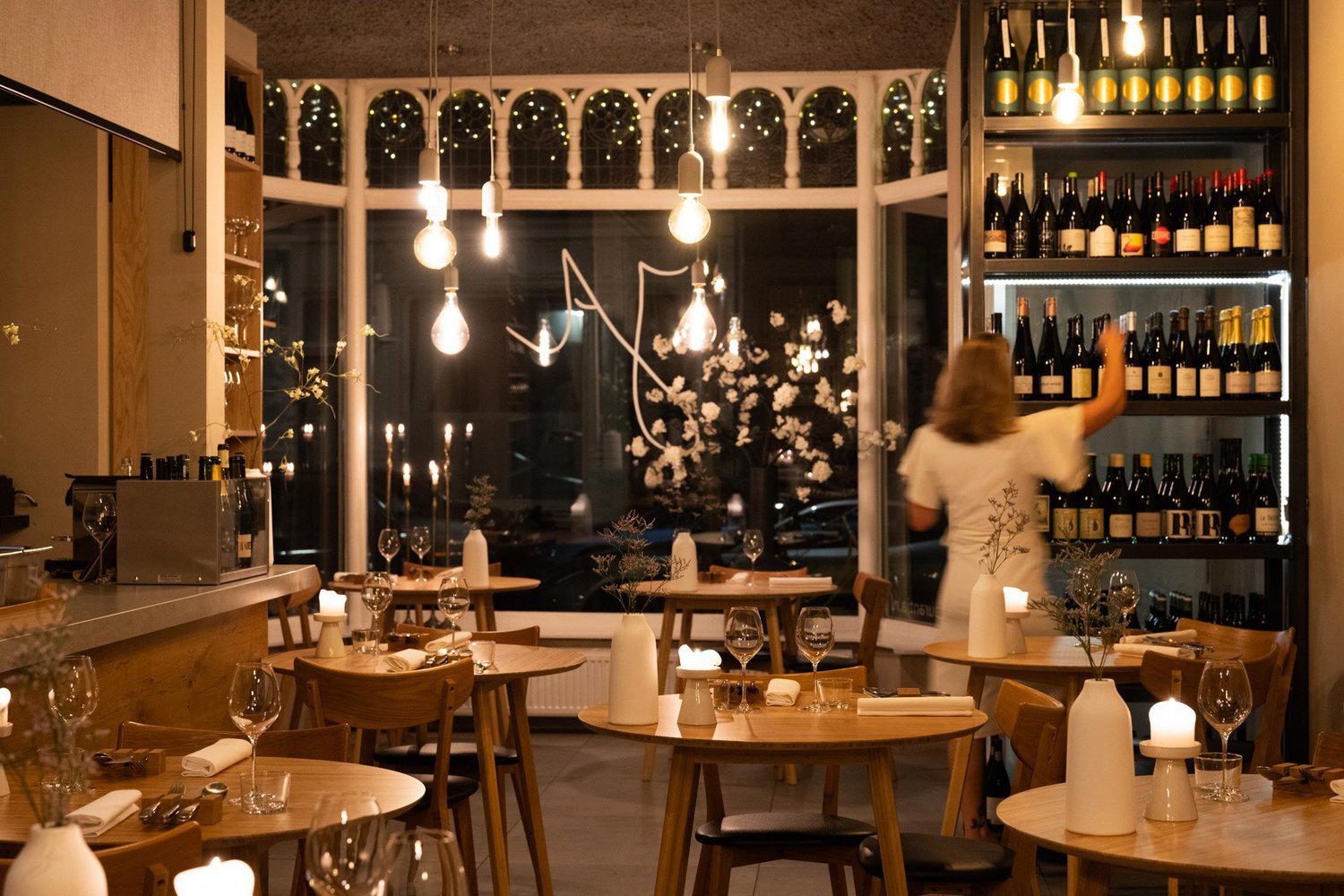
De Pijp's Dining Register and Where JA Sits Within It
JA is a restaurant in Amsterdam, serving Seasonal Dutch-Asian Seafood Fine Dining at Tweede Jan Steenstraat 3 in De Pijp. Amsterdam's dining scene has long sorted itself along a familiar fault line: the canal-belt institutions, Ciel Bleu, Flore, Spectrum, and Vinkeles occupying the formal, multi-course tier, and a looser, neighbourhood-rooted layer that has been gaining seriousness without gaining ceremony. De Pijp, the district south of the Rijksmuseum where JA is addressed at Tweede Jan Steenstraat 3, belongs firmly to the second register. It is a neighbourhood where covered market stalls and independent wine bars share the same block, and where a kitchen can build a following on cooking quality alone rather than on a hotel address or a tasting-menu format.
That context matters for reading JA correctly. The Dutch dining mid-tier has been compressing upward in recent years, with kitchens that once operated as direct neighbourhood spots absorbing technique and produce-sourcing ambition formerly reserved for the starred room. De Pijp has been a productive zone for this shift, producing tables with genuine culinary intent at price points that sit well below the €€€€ bracket occupied by the city's Michelin-flagged rooms. JA operates inside that bracket, and understanding it means understanding the neighbourhood's momentum as much as the address itself.
The Lunch and Dinner Divide in Practice
In Amsterdam's mid-tier, the gap between a kitchen's daytime and evening identity has become one of the more reliable signals of how seriously a restaurant takes its food programme. Places running the same menu across both services tend toward the brasserie model, where consistency matters more than occasion. Places that shift format between lunch and dinner are signalling something different: that the evening is the proving ground, and that lunch is either a condensed version of that ambition or a deliberately relaxed counterpart to it.
The lunch-versus-dinner divide in De Pijp tracks the neighbourhood's rhythm closely. At midday, the area draws a mix of locals, market visitors from the Albert Cuyp a short walk away, and the kind of visitor who plans meals around neighbourhoods rather than names. The mood is lower-key; the expectation is a good plate of food without the scaffolding of a full evening service. By evening, the same street takes on a different register. Candle-lit windows, slower tables, and a crowd that has chosen this over the options further north in the canal ring. For a kitchen, that shift in the room's expectations creates the conditions for a more ambitious dinner offering while keeping the daytime format accessible.
JA's position on Tweede Jan Steenstraat places it in direct dialogue with this rhythm. The address is close enough to the Heineken Experience and the southern museum cluster to receive passing visitor traffic during the day, but the street itself is residential in character, more suited to the deliberate local than the incidental tourist. That distinction tends to shape how a room feels at lunch versus dinner more reliably than any menu choice does.
Reading the Neighbourhood Competition
The comparison set for a table in De Pijp's mid-tier is different from the one that applies to the canal-belt's formal rooms. Where Bistro de la Mer anchors the classic end of Amsterdam's brasserie spectrum, and where the city's starred kitchens at Ciel Bleu or Spectrum are benchmarked against their European peers, the neighbourhood room in De Pijp is judged against daily use. Does it sustain a regular? Does the lunch hold up against what is available at the market nearby? Does the dinner justify the choice over the other independent rooms on the same tram line?
These are the questions that shape reputations in this part of the city, and they are more demanding in their own way than the metrics applied to formal dining. The Netherlands has produced a cluster of kitchens across the country that have built serious reputations at some distance from Amsterdam's central circuit: De Librije in Zwolle, 't Nonnetje in Harderwijk, Aan de Poel in Amstelveen, De Bokkedoorns in Overveen, and De Nieuwe Winkel in Nijmegen among them. The standard they represent has lifted expectations for what a serious Dutch kitchen should be doing at every tier, including the neighbourhood level.
Further afield, the ambition of rooms like Brut172 in Reijmerstok, De Groene Lantaarn in Staphorst, De Lindehof in Nuenen, De Lindenhof in Giethoorn, and De Treeswijkhoeve in Waalre illustrates how distributed serious Dutch cooking has become. Amsterdam's neighbourhood kitchens now operate in a national context where the reference points are sharp, and where cooking ambition in a small room is no longer a novelty.
Planning a Visit
Tweede Jan Steenstraat 3 is accessible from the Rijksmuseum tram stops and from the De Pijp metro, making it direct to reach from most of the city's central hotels. At the international end of the comparison set, the discipline of a kitchen like Le Bernardin in New York City or the precision of Atomix in New York City illustrates the standard against which ambitious European mid-tier rooms increasingly measure themselves, even at a neighbourhood scale.
JA takes reservations and is best booked in advance. It is open Thursday and Friday from 7 to 11:30 PM. De Pijp tables at this level tend to fill early on weekend evenings; a midweek lunch is generally the lower-friction entry point.
Questions Worth Asking Before You Book
What should I eat at JA?
JA's cooking leans seasonal, with Dutch ingredients shaped by Asian influences. What the neighbourhood context does suggest is that De Pijp kitchens operating at this tier tend to reflect seasonal Dutch produce alongside influences from the city's multi-ethnic food culture. The menu changes with the season, so ask for the current selection on arrival. For kitchens whose menus are well-documented at a comparable level of ambition, Ciel Bleu offers a reference point for the creative end of Dutch cuisine in the city.
Do they take walk-ins at JA?
Reservations are essential at JA. In De Pijp, lunch service on weekdays is generally more open to walk-in traffic than weekend evenings, when neighbourhood tables fill from local regulars and visitors who have planned ahead. Given Amsterdam's position as a high-density dining city, where rooms at every price tier from the €€ neighbourhood spot to the €€€€ starred kitchens like Vinkeles or Flore operate at consistent occupancy, contacting the venue directly to confirm current policy before arriving is the practical approach.
Is JA suitable for a solo lunch in De Pijp?
De Pijp has historically been one of Amsterdam's more solo-friendly dining neighbourhoods, with a bar-counter culture and a midday rhythm that accommodates single diners without the formality of an evening booking. Tweede Jan Steenstraat sits within that tradition, and the neighbourhood's lunch register tends to be relaxed enough that a solo visitor arriving at midday, particularly on a weekday, will find the room more accommodating than the city's tasting-menu rooms, where the format is structured around table pacing.
Comparable Venues
Comparable venues nearby, for context on price, style, and recognition.
| Venue | Cuisine | Price | Notes |
|---|---|---|---|
| JAThis venue — the venue you are viewing | Seasonal Dutch-Asian Seafood Fine Dining | $$ | Not listed |
| Terpentijn | Frans-Aziatische Fusion | $$ | Nes e.o. |
| Bo Cinq | French-Arabic Fusion | $$$ | Spiegelbuurt |
| The Pancake Bakery | Traditional Dutch Pancakes | $$ | Leliegracht e.o. |
| Maya's Steakhouse | Argentinian Steakhouse & Grill | $$ | Leidsebuurt Noordoost |
| CatuaBar Amsterdam | South American & South African Fusion | $$ | Oosterparkbuurt Noordwest |
Continue exploring
More in Amsterdam
Restaurants in Amsterdam
Browse all →
Bars in Amsterdam
Browse all →
Hotels in Amsterdam
Browse all →
Wineries in Amsterdam
Browse all →
At a Glance
- Intimate
- Cozy
- Romantic
- Elegant
- Date Night
- Special Occasion
- Open Kitchen
- Chefs Counter
- Extensive Wine List
- Local Sourcing
Current opening hours
- Monday
- Closed
- Tuesday
- Closed
- Wednesday
- Closed
- Thursday
- 7–11:30 PM
- Friday
- 7–11:30 PM
- Saturday
- Closed
- Sunday
- Closed
Hours can change for holidays and private events. Last verified .
Warm, personal, and quiet home-like atmosphere with candlelight, wooden tables, and chef's table intimacy.