
Istanbul Saray gives Kyoto’s dining map a Turkish counterpoint: a small Nakagyo room where halal meat, vegetarian, gluten-free and Hindu options make the table broader than the city’s usual specialist formats. Its Tabelog 100 selection for Asian and Ethnic cuisine in WEST 2024 places it inside a serious regional conversation rather than a novelty category.
Pearl is the En Primeur Club membership app — saves, bookings, and concierge access live there. Same editors, same standards.
- Address
- 534-28 Ebisucho, Nakagyo Ward, Kyoto, 604-8005, Japan
- Phone
- +81 75-213-2995
- Website
- istanbul-saray.com
 Saves & bookings on Pearl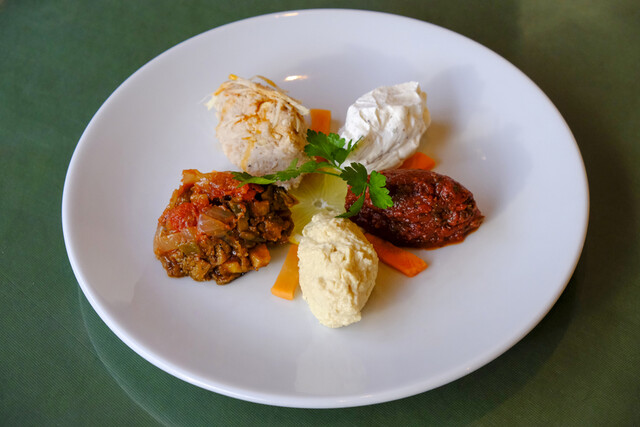
Upstairs in central Nakagyo, the room feels compact, not theatrical: a handful of tables, a short counter, and the scale regulars protect. Kyoto dining often forces choices between ceremony and speed, kaiseki formality and ramen-counter efficiency. Turkish cooking changes that rhythm with shared plates, grilled meat, vegetables, bread, yoghurt, rice, spice, and tea in a city where non-Japanese specialists can feel secondary unless they earn repeat business.
Istanbul Saray has done that since 2002. Its Kyoto category is smaller than Italian, French, Chinese, or washoku, yet it was selected for Tabelog’s Asian cuisine and Ethnic cuisine WEST 100 list in 2022, 2023, and 2024. That recognition shows serious Kyoto diners are not only chasing temple-adjacent tradition or reservation-only counters. They also return to places solving a practical, cultural problem: where a mixed group can eat well when dietary rules, appetite, and price sensitivity do not align.
Turkish cooking as Kyoto's group-dinner pressure valve
Kyoto rewards specialization. Sushi counters, tempura rooms, sukiyaki houses, tea salons, and wagashi shops narrow the experience. Turkish dining widens it. A table can move through grilled meats, vegetable-led dishes, rice, bread, dairy, and sweets without one imposed sequence. That matters when visitors travel in groups but dine as individuals: one wants meat, another vegetarian options, another halal food, another wine, and nobody wants a formal tasting menu.
The restaurant’s listed food accommodations, vegetarian, gluten-free, halal, and Hindu options, are not incidental in Kyoto. They put it in a different decision set from a beef-focused address such as Morita Ya Kiya machi ten, a casual snack specialist such as Honke Gepaikeya Naomasa, or a coffee stop such as Kissa Ashijima. Those comparisons show how quickly Kyoto dining becomes format-specific. Here the appeal is breadth without hotel-lobby compromise.
Regulars value restaurants that make ordering repeatable. Turkish cuisine helps through a built-in grammar: mezze-style vegetables, grilled proteins, bread or rice, and something sweet. The attraction is not novelty but returning with a different table without renegotiating the meal from zero. That is why an ethnic-cuisine listing matters in Kyoto: it identifies a room that has become local habit, not an alternative after a fifth bowl of noodles.
For longer stays, the wider city picture matters. Kyoto’s range runs from contemporary restaurants such as 3TOKU6MI Shijo karasuma ten and Abbesses to tightly defined casual stops like 551蓬莱 and old snack traditions at Aburi Mochi Honke Nemoto Kazariya. A Turkish table belongs in that itinerary because it breaks the local sequence without breaking Kyoto’s seriousness about eating.
The regulars' logic: flexibility, repeat value, and a room small enough to remember
The format is modest: 28 seats across four-seat tables, two-seat tables, and two counter seats. That matters more than décor. A room this small serves couples, friends, and small groups without becoming a banquet hall, while the private-use note for 20 to 50 people suggests it can handle planned gatherings needing dietary range. In Kyoto, that is specific utility. Many acclaimed restaurants suit pairs or small counter bookings; fewer absorb a group with different restrictions.
The listed categories, Turkish, Asian, Ethnic, and European, explain how it is read locally. Turkish food in Japan often occupies a middle register: familiar through kebab culture and international travel, yet broad enough for a fuller dinner. Regulars likely understand the menu less as an education in Ottoman cooking than as an answer to a recurring question: where can a table eat outside the Japanese canon without sacrificing structure?
Wine service adds another clue. Kyoto’s casual international rooms often lean on beer or soft drinks; a wine listing suggests a slower dinner. That separates it from quick-service ethnic cooking and aligns it with mid-priced neighborhood restaurants where value lies in sitting down rather than turning tables fast. The point is not luxury but an evening that can hold conversation, mixed appetites, and a second bottle if the group settles in.
Location matters too. Nakagyo is one of Kyoto’s most useful dining zones, connecting shopping streets, river-adjacent nightlife, offices, and hotel corridors. Restaurants here compete on food and repeat convenience. A place surviving for decades in this district must work for locals after office hours and travelers between temples, bars, and stations. That is the cleanest read of Istanbul Saray: not a curiosity, but a dependable foreign-cuisine room in a district unforgiving to weak concepts.
How to place it in a Kyoto itinerary
This is not the Kyoto meal for lacquered formality or a chef-led counter. Choose it when the day has been rigid and dinner needs to loosen the table. Stronger city itineraries mix registers: a serious washoku meal, a café, a market snack, a bar, and at least one restaurant that lets the group talk instead of study service choreography. Turkish cooking fits that role.
Use it as a central Kyoto dinner after a day ending near the river or shopping arcades, or as a social meal before the drinks scene. Pairing it with our full Kyoto bars guide makes sense for a Nakagyo and nearby-nightlife night. For a wider trip plan, our full Kyoto restaurants guide, our full Kyoto hotels guide, our full Kyoto wineries guide, and our full Kyoto experiences guide place this dinner among the city’s formal, casual, and cultural options.
The broader Japanese comparison is useful. Diners following regional specialist cooking might look from Kyoto to (Shoku) Vietnam in Kawasaki, [Curry Senmon Ten] Maruyama Kyoju. in Sapporo.cafe in Osaka, or.know in Kumamoto to see how non-washoku formats settle into local habits. Across the Pacific, that appetite for focused casual formats appears at Jōdo Saké Bar in Los Angeles and Onigiri Time in Pasadena, while Japan’s broader urban spread includes everything from -Grilled beef Sukiyaki- KAMAKURA TANUKIAN 鎌倉 たぬき庵 in Kamakura to. 鮪と炭火焼き うお炭 秋葉原店 in Tokyo.
The critical read is simple: Istanbul Saray gives Kyoto a serious, repeatable Turkish option where international dining must prove itself against entrenched local formats. The Tabelog 100 selections from 2022 through 2024 show the room has moved beyond novelty. For regulars, its value is practical and social; for visitors, it reminds that Kyoto’s dining intelligence is not confined to Japanese tradition.
Standing Among Peers
Nearby venues at a similar price tier for orientation.
| Venue | Cuisine | Price | Notes |
|---|---|---|---|
| Istanbul SarayThis venue — the venue you are viewing | Halal Turkish & Ottoman home cooking | $$ | Not listed |
| Yamamoto Menzo (山元麺蔵) | Authentic Kyoto-Style Udon | $$ | Okazaki |
| とんかつ山本 | Traditional Tonkatsu | $$ | Nakagyo-ku |
| Kichi Kichi Omurice | Japanese Omurice | $$ | Gion |
| Mughal | Authentic Indian Curry House | $$ | Nakagyō |
| PIZZERIA MARITA | Traditional Neapolitan Pizzeria | $$ | Nakagyō |
Recognition history
Dated appearances from independent guides and award organizations, with the underlying list record or original source where available.
Tabelog 100 #16 · No. 16
Tabelog · Tabelog 100 - Asian cuisine / Ethnic cuisine - WEST - 2024
Continue exploring
More in Kyoto
Restaurants in Kyoto
Browse all →
Bars in Kyoto
Browse all →
Hotels in Kyoto
Browse all →

Wineries in Kyoto
Browse all →
At a Glance
- Cozy
- Lively
- Classic
- Family
- Group Dining
- Casual Hangout
- Date Night
- After Work
- Standalone
- Design Destination
- Beer Program
Current opening hours
- Monday
- 5:30–10 PM
- Tuesday
- 5:30–10 PM
- Wednesday
- 5:30–10 PM
- Thursday
- 5:30–10 PM
- Friday
- 5:30–10 PM
- Saturday
- 12–3 PM, 5:30–10 PM
- Sunday
- 12–3 PM, 5:30–10 PM
Hours can change for holidays and private events. Last verified .
A small, cozy dining room on the 3rd floor of a downtown building, with simple classic Turkish decor, warm lighting, and a relaxed, friendly atmosphere that feels like a neighborhood Turkish home rather than a formal restaurant.