

Tabelog Bronze #165
Our verdict
An eight-seat omakase counter in Fukuoka's Akasaka district, Sushi Karashima has held Tabelog Bronze recognition consecutively from 2024 through 2026 and appeared in the Tabelog Sushi WEST 100 every eligible year since 2021. Dinner runs in two seatings with spend tracking between JPY 60,000 and JPY 79,999. Reservations open by phone one month in advance on the same calendar date.

Pearl is the En Primeur Club membership app, where members save venues, book tables and use the concierge.
The menu
What to order
- Red wine vinegar shari
- Egg white chawanmushi
- Amberjack nigiri
A Counter in Akasaka, Positioned at the top of Fukuoka Sushi
Fukuoka's premium sushi scene sits at an interesting remove from Tokyo's more heavily documented omakase circuit. The city's access to Kyushu seafood, particularly from Genkai Sea fisheries and the cold-water catches that pass through Hakata's morning markets, gives its leading counters a regional identity that the capital's leading rooms can't simply replicate. Within that scene, the counters that have sustained Tabelog recognition across multiple consecutive years form a small, competitive cohort. Sushi Karashima, operating since May 2018 in Akasaka's Chuo Ward, belongs to that group: Tabelog Bronze in 2024, 2025, and 2026, a 4.23 score entering 2026, and placement in the Tabelog Sushi WEST 100 in 2021, 2022, and 2025. On Opinionated About Dining's Japan ranking, the counter reached #108 in 2025, up from #134 in 2024 and #148 in 2023, a three-year ascent that positions it measurably higher each season.
For comparison within Fukuoka's sushi tier, Sushi Gyoten and Sushi Osamu represent the city's other well-documented omakase counters, while Tenzushi Kyomachi occupies a different but adjacent niche. Karashima's OAD trajectory separates it from venues that have plateaued, placing it in a category where demand continues to outpace available seats.
Eight Seats, Two Seatings: The Format Determines the Experience
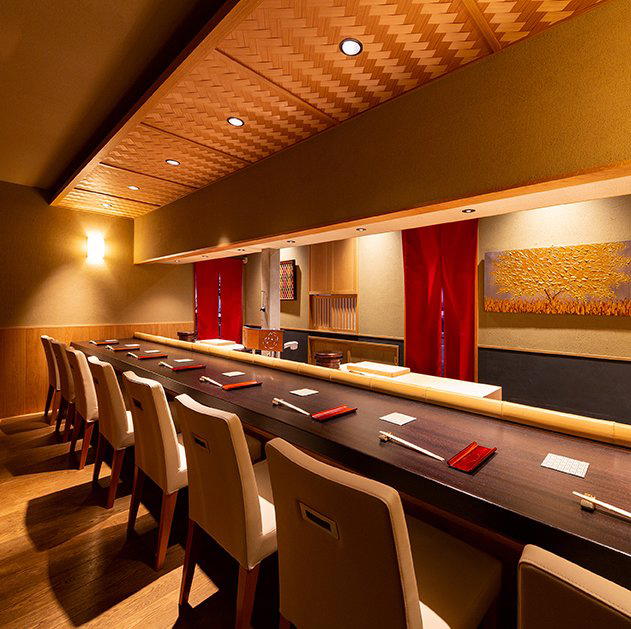
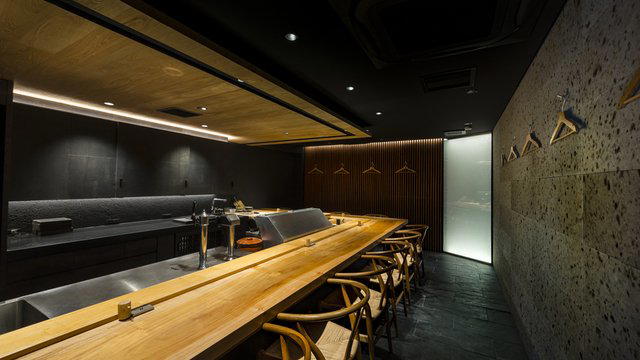
The physical format here shapes everything. Eight seats arranged at a counter, two seatings per evening, 18:00 to 20:15, then 20:30 to 23:00, means Karashima serves no more than sixteen covers on any given night, seven nights a week. There are no private rooms, no overflow dining areas, and no walk-in option. Every seat faces the same counter, and the experience is identical in geometry if not in the precise fish available that evening.
This format is now standard at the upper tier of Japanese omakase, but it carries practical implications for the diner. The first seating ends promptly; the second runs later than many visitors expect. Those building an evening around dinner at Karashima should treat the 20:30 seating as a late-night commitment rather than an early dinner, since service runs until 23:00. The Akasaka address places the counter within walking distance of Sakurazaka, approximately 400 metres by the venue's own transport note, and a short taxi or subway ride from Tenjin, Fukuoka's central entertainment and hotel district.
The editorial angle that applies most directly to Karashima is the lunch-versus-dinner divide, but in this case, the divide is resolved definitively: there is no lunch service. Dinner hours are listed for all seven days of the week, with no corresponding lunch window in the Tabelog data. This is a meaningful distinction in the premium sushi category, where some counters use a midday seating to offer a shorter, more accessible omakase at a lower price point, a format that has drawn younger diners and international visitors who find the evening spend harder to commit to.
Karashima's dinner-only positioning means the spend range, JPY 60,000 to JPY 79,999 per person, applies to every sitting without a lower-cost entry point. At the current JPY/USD rate, that bracket translates to roughly USD 400–530, placing it at the higher end of Fukuoka's premium sushi tier and in line with comparable counters in Osaka. It does not approach the leading Tokyo omakase rooms (which can run to JPY 100,000 and above), but it prices closer to those counters than to Fukuoka's mid-tier sushi options. For reference, Harutaka in Tokyo and Sushi Shikon in Hong Kong represent the international tier that Karashima's OAD ranking increasingly places it near.
The absence of lunch also concentrates demand into a single daily window. A venue that serves only sixteen covers per evening, with no lunch release to absorb overflow, maintains higher booking pressure than a counter that splits capacity across two dayparts. That pressure shows in the reservation policy: phone only, accepted no earlier than one month in advance on the same calendar date, with no proxy reservations permitted and no phone calls answered during service hours. Practically, this means calling at precisely the right calendar window, not the day before, not two months out, and placing the call outside the 18:00–23:00 service block.
The Rules of Entry: A Counter That Sets Its Own Terms
Beyond the reservation mechanics, Karashima operates with a specific set of conditions that are worth reading before booking rather than after. Cash is the only payment method accepted, no credit cards, no electronic money, no QR code payments. For international visitors accustomed to card-everywhere travel norms, this requires advance planning: the nearest ATMs accepting international cards in central Fukuoka are at convenience stores and post offices within the Tenjin and Akasaka areas.
The fragrance policy is unusual but absolute: customers wearing strong perfumes or using heavily scented fabric softeners will not be permitted entry. This is standard practice at serious omakase counters throughout Japan, where the argument is that scent interference compromises the tasting environment for all eight guests simultaneously. It is worth noting before sending a booking party that includes anyone with a strong preference for cologne or perfume. The children's policy follows the same logic: only those able to participate fully in the adult course are admitted, which effectively means no young children.
Taken together, these conditions describe a counter that prioritises the integrity of the dining environment over transactional ease. This is a known characteristic of the Fukuoka omakase tier, and Karashima is not unusual in enforcing it, but the combination of cash-only, fragrance restrictions, no-proxy reservations, and phone-only booking makes it operationally demanding for first-time visitors.
Fukuoka's Position in the Broader Japan Sushi Conversation
Premium sushi outside Tokyo and Osaka occupies a specific competitive position in Japan's dining hierarchy. Cities like Fukuoka, Kyoto, and Kanazawa have developed counter cultures that work from regional seafood supply chains unavailable to Tokyo, while operating at slightly lower price points than the capital's leading rooms. Gion Sasaki in Kyoto and HAJIME in Osaka illustrate how Kansai and Kyushu dining can hold its own on national and international ranking systems without being derivative of Tokyo's model.
Fukuoka's specific advantage is geography. The city sits at the junction of Kyushu's fishing ports and the Genkai Sea, with ingredients arriving at Hakata that simply don't reach Tokyo in the same condition. A counter like Karashima, holding a 4.23 Tabelog score and a consistent three-year OAD ascent, is drawing on that supply chain as a structural advantage rather than as a marketing point. The same principle applies to Shoukouwa in Singapore, which has built an international reputation by applying Japanese counter discipline to procurement, proof that the format travels when the sourcing rationale is genuine.
For visitors building a broader Fukuoka itinerary, Chikamatsu and Gahoujin 我逢人 represent other award-recognised options in the city's dining tier. Our full Fukuoka restaurants guide maps the complete picture across cuisine types and price points. For accommodation context, the Fukuoka hotels guide covers the city's lodging tier, and the bars guide covers post-dinner options in Akasaka and Tenjin. The wineries and experiences guides round out a full Fukuoka visit.
For those constructing a multi-city Japan itinerary that includes sushi as a focus, akordu in Nara, 1000 in Yokohama, and 6 in Okinawa illustrate how Japan's regional dining circuit extends well beyond the three major urban centres.
Planning a Visit
Reservations at Sushi Karashima require a phone call to 080-6661-3999, placed no earlier than one month before the desired date on the same calendar day. Calls must be made outside the 18:00–23:00 service window. Proxy reservations are not accepted. Payment is cash only, so visitors should withdraw JPY before arriving at the Akasaka address: 3-1-2 Akasaka, Chuo Ward, Fukuoka, Daito Building II, 1F. The counter operates seven days a week in two seatings, 18:00 and 20:30, with no fixed closure days, though hours can change and confirming directly before any visit is advisable. Budget JPY 60,000 to JPY 79,999 per person. The counter seats eight, strong fragrances are not permitted, and the dining room is non-smoking.
Frequently asked questions
What dish is Sushi Karashima famous for?
The counter operates as an omakase format, meaning the chef, Hiroshi Karashima, determines the full course based on what is available that day. The venue's recognition across Tabelog's Sushi WEST 100 (2021, 2022, 2025) and three consecutive Bronze awards (2024, 2025, 2026) reflects the consistency of the omakase as a whole rather than any single item. Visitors should expect a course built around Kyushu seafood without a fixed menu declared in advance.
Cuisine and Awards Snapshot
Comparable venues nearby, for context on price, style, and recognition.
| Venue | Cuisine | Price | Awards | Notes |
|---|---|---|---|---|
| Sushi KarashimaThis venue (the venue you are viewing) | Kyushu-Style Edomae Omakase | $200–300 | Tabelog Bronze #165 | Not listed |
| Gahoujin 我逢人 | Seasonal Sushi Omakase | $200–300 | Tabelog Bronze #80 | Chūō |
| Sushi Sakai | Edomae-style Omakase Sushi | $300–500 | La Liste Top Restaurants · Tabelog Silver #114 | Chūō |
| Sushi Gosuian | Edomae Sushi Omakase | $150–200 | Tabelog 100 #13 | Chūō |
| 鮨おさむ | Traditional Japanese Omakase Sushi | $150–200 | Tabelog Bronze #342 | Takamiya |
| 茶懐石 中伴 | Cha-Kaiseki Omakase | $200–300 | Not listed | Chūō |
Recognition history
Dated appearances from independent guides and award organizations, with the underlying list record or original source where available.
Opinionated About Dining Top Restaurants in Japan Ranked #92
Opinionated About Dining
Tabelog Bronze #165
Tabelog
Full recognition history (7 entries)
Opinionated About Dining Top Restaurants in Japan Ranked #108
Opinionated About Dining
Tabelog Bronze
Tabelog
Tabelog 100 #24 · No. 24
Tabelog · Tabelog 100 - Sushi - WEST - 2025
Opinionated About Dining Top Restaurants in Japan Ranked #134
Opinionated About Dining
Opinionated About Dining Top Restaurants in Japan Ranked #148
Opinionated About Dining
Continue exploring
More in Fukuoka
Restaurants in Fukuoka
All restaurants in Fukuoka →
Details
- Elegant
- Minimalist
- Intimate
- Sophisticated
- Special Occasion
- Date Night
- Chefs Counter
- Sake Program
- Local Sourcing
- Sustainable Seafood
- Omakase
- Counter Dining
- Sake
Current opening hours
- Monday
- 6–11 PM
- Tuesday
- 6–11 PM
- Wednesday
- 6–11 PM
- Thursday
- 6–11 PM
- Friday
- 6–11 PM
- Saturday
- 6–11 PM
- Sunday
- 6–11 PM
Hours can change for holidays and private events. Hours as of .
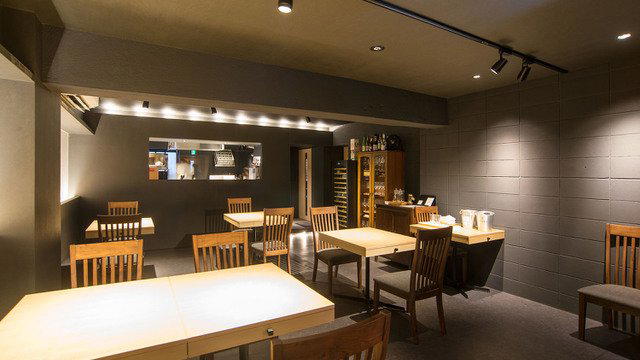
Austere and minimalist with black and white decor, hinoki counter, spotlighted plates creating a serene gallery-like sanctuary.