Il Marchese Milano serves Contemporary Roman Cuisine at Via dei Bossi, 3, 20121 Milano MI, Italy, with craft cocktails, an extensive wine list, and dishes like Carbonara and Gricia.
Pearl is the En Primeur Club membership app — saves, bookings, and concierge access live there. Same editors, same standards.
- Address
- Via dei Bossi, 3, 20121 Milano MI, Italy
- Phone
- +39258124986
- Website
- ilmarchesemilano.it
- Directions
- Get directions
 Saves & bookings on Pearl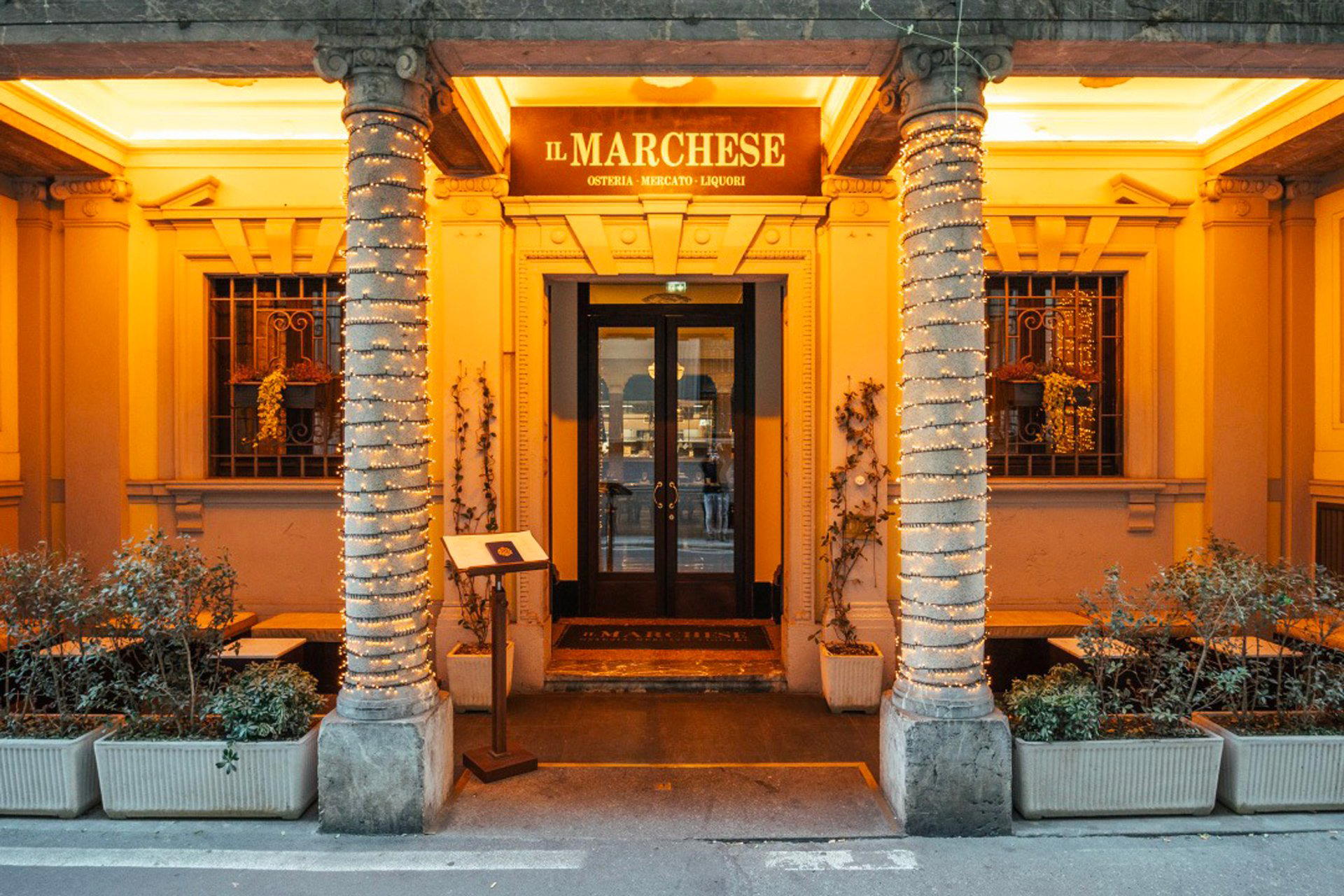
Via dei Bossi and the Grammar of Milanese Dining Rooms
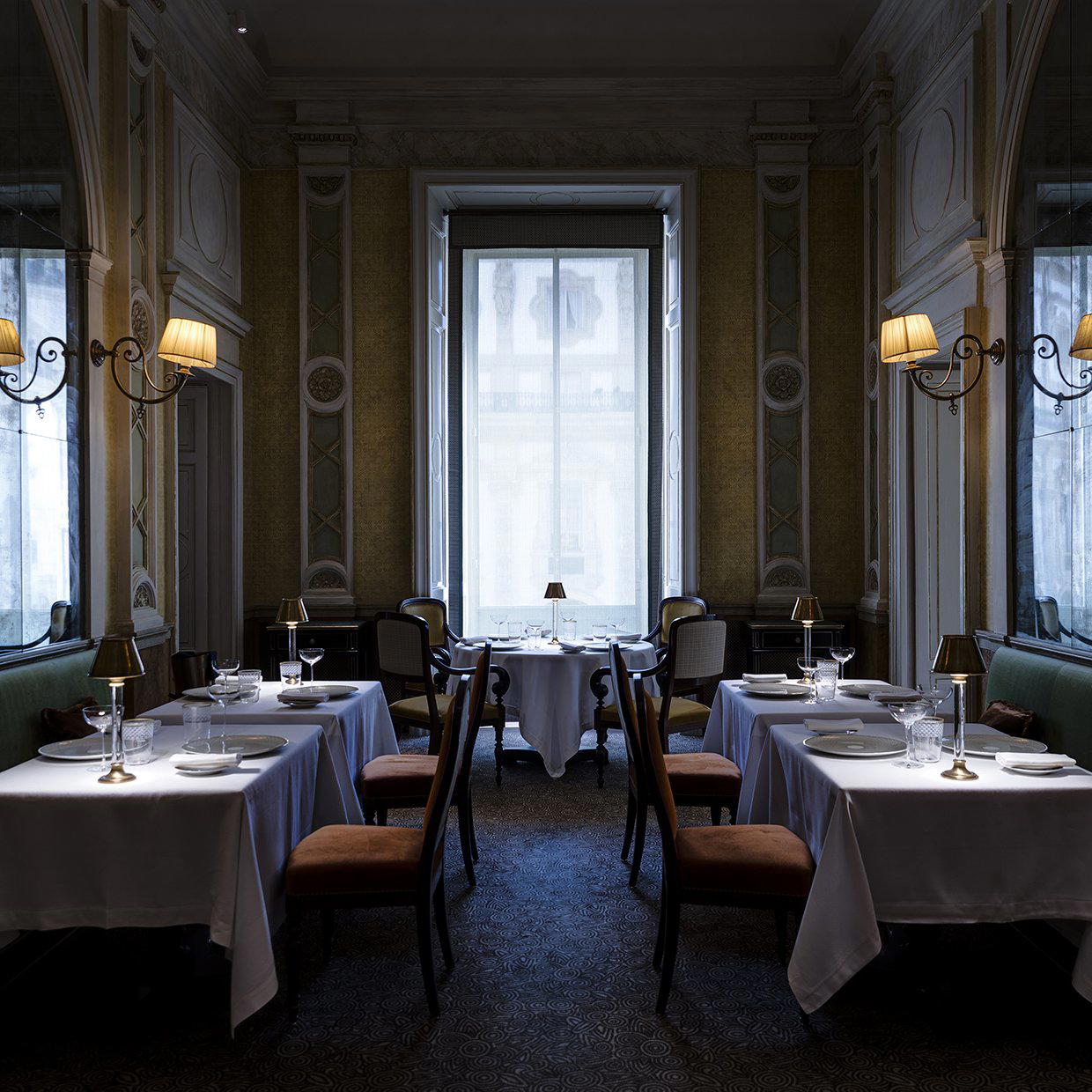
There is a particular architectural register that defines the older dining rooms of central Milan: vaulted ceilings, surfaces worn to a particular matte, and a quality of light that arrives in the room rather than floods it. Via dei Bossi, tucked into the dense street grid of Milan's historic centre near Piazza Cordusio, belongs to that tradition. Il Marchese Milano is a restaurant serving Contemporary Roman Cuisine at Via dei Bossi, 3, in Milan. Il Marchese Milano occupies this address at number 3, in a neighbourhood where the boundary between banking Milan and cultural Milan has always been porous. Walking in from the street, the transition from the compressed urban exterior to a more considered interior space is immediate, the kind of entrance that signals intent before a menu is ever placed on the table.
Milan's fine dining scene has split, over the past decade, into two broadly legible categories: the high-concept creative table that treats the plate as a thesis, and the more formally grounded room that treats service, wine, and cuisine as a three-part system of equal weight. Il Marchese Milano operates closer to the latter model, and understanding that distinction matters for setting expectations correctly.
The Collaborative Architecture of a Room That Works
In rooms where the editorial angle is the team rather than a single authorial chef, the seams between front-of-house, kitchen, and wine program either show or they don't. The better Italian fine dining rooms, from Seta in Milan's Mandarin Oriental to Dal Pescatore in Runate, where three generations of the Santini family have built one of Italy's most durable institutions, share a quality of synchronisation that no single brilliant chef can manufacture alone. The sommelier's pace matches the kitchen's rhythm. The front-of-house reads the room rather than performing to it. These are learned institutional behaviours, not policies, and they accumulate over time.
Il Marchese Milano sits on Via dei Bossi in a district that is, by Milanese standards, relatively insulated from the high-volume tourist traffic of the Duomo precinct a few hundred metres south. That proximity to the centre without full immersion in it is a practical advantage: the room is accessible to the business traveller staying near Cordusio and to the visitor using Milan's dense metro network, while retaining the street-level calm that makes a two-hour dinner function as a dinner rather than an event to be survived. Metro stops at Cordusio and Cairoli place the address within direct reach from most of central Milan.
How Il Marchese Sits in Milan's Competitive Set
The top end of Milanese dining is bracketed by a cluster of addresses that carry substantial reputations. Enrico Bartolini at the Mudec operates at the creative extreme of that spectrum. Andrea Aprea, which opened its current standalone space in the Palazzo Reale area, works a modern Italian idiom with strong technique and a southern Italian foundation. Cracco in Galleria uses its position inside the Galleria Vittorio Emanuele II to draw both locals and international visitors into its orbit. Each of these rooms carries the weight of its own competitive positioning; each attracts a specific kind of dinner. Verso Capitaneo represents a newer creative entry into that bracket.
The restaurant, without the published award portfolio of those addresses, occupies a different position in the city's dining order. Nationally, the Italian fine dining conversation has grown substantially more international in reference over the past fifteen years. Houses like Osteria Francescana in Modena, Le Calandre in Rubano, and Piazza Duomo in Alba have set a standard for Italian fine dining that is now globally referenced. Rooms that operate below that tier of recognition are not necessarily lesser, they are often serving a different function: the reliable serious dinner rather than the destination event.
For visitors calibrating their Milan itinerary, the practical question is where Il Marchese sits relative to the city's other formal options. At about $45 per person, it sits below the city’s most formal tasting-menu addresses while still squarely in serious dining territory.
Service as Architecture
The team dynamic model of fine dining, where sommelier, chef, and front-of-house are understood as co-authors of the experience, has become the dominant structural philosophy at Europe's most durably successful restaurants. At Enoteca Pinchiorri in Florence, the wine program has always been as much the point as the kitchen. At Uliassi in Senigallia, the relationship between kitchen creativity and a deeply considered front-of-house rhythm is what gives the room its particular character. At Reale in Castel di Sangro, the isolation of the setting means the room's internal coherence carries almost all of the atmospheric weight.
In Milan, a city with a professional dining culture shaped by decades of fashion industry, financial sector, and design world clientele, the front-of-house reads the table quickly. The expectation is competence without performance, and the better rooms in the city's business-dining tier deliver exactly that. The restaurant's address in the historic centre places it squarely in the orbit of that professional dinner tradition.
For reference points outside Italy, the collaborative-team model finds some of its clearest international expressions at places like Le Bernardin in New York City, where the relationship between kitchen, floor, and wine has been institutionalised over decades, and at Atomix in New York City, where the team structure is part of the explicit format. Casa Perbellini 12 Apostoli in Verona offers a closer domestic analogue: a room where the format is built around the interaction between kitchen and floor as much as around the plate itself.
Planning a Visit
Via dei Bossi 3 places the restaurant within the dense historical centre, with Piazza Cordusio and the surrounding financial district immediately adjacent and Piazza del Duomo a short walk south. For visitors arriving by metro, Cordusio on Line M1 is especially practical stop. Given the venue's central position and the general demand pressure on formal dining rooms in this part of Milan, particularly Thursday through Saturday, booking ahead rather than attempting a walk-in is the sensible approach. The restaurant is recommended for reservations and keeps daily hours from 12:30 PM to 2 AM.
Milan's serious restaurants, operating in a city with significant international clientele, are generally equipped to handle dietary adjustments when notified before service. For a broader read on what the city's dining tier offers, the Milan guide maps the full competitive field. Further Italian reference points worth considering as part of a wider itinerary include Quattro Passi in Marina del Cantone and Atelier Moessmer Norbert Niederkofler in Brunico.
- Carbonara
- Amatriciana
- Cacio e Pepe
- Gricia
- Crocchetta di bollito con salsa verde
- Filetto di vitello come saltimbocca
- Polpo su crema di zucchine alla scapece
A Pricing-First Comparison
Comparable venues nearby, for context on price, style, and recognition.
| Venue | Cuisine | Price | Notes |
|---|---|---|---|
| Il Marchese MilanoThis venue — the venue you are viewing | Brera, Contemporary Roman Cuisine | $$$ | Not listed |
| Antica Trattoria della Pesa | Not listed | $$$ | Porta Garibaldi - Porta Nuova, Traditional Lombard Trattoria |
| Cantine MILANO | Not listed | $$$ | Isola, Mediterranean Italian Wine Restaurant |
| Losko | Not listed | $$$ | Buenos Aires - Porta Venezia - Porta Monforte, Modern Italian Grill |
| 55 Milan | Sarpi, Italian Casual Dining | $$$ | Not listed |
| DG Martini | Not listed | $$$$ | Centro Storico, Upscale Sicilian-inspired Italian restaurant & cocktail bar |
Continue exploring
More in Milan
Restaurants in Milan
Browse all →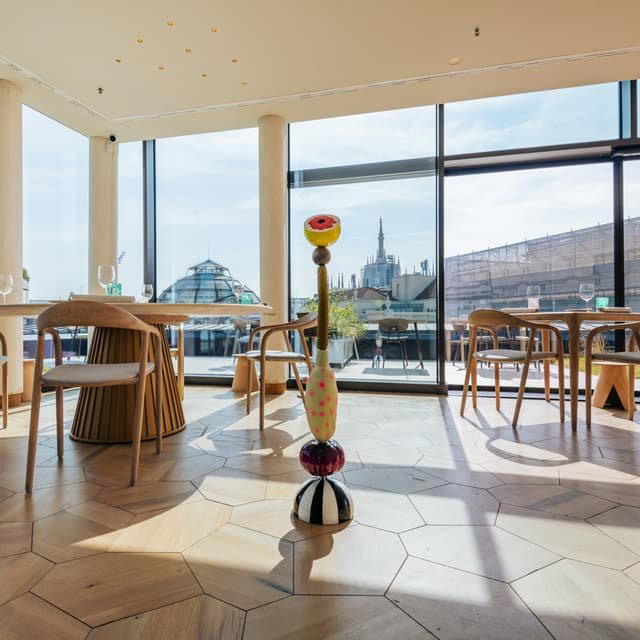
Bars in Milan
Browse all →
Hotels in Milan
Browse all →
Wineries in Milan
Browse all →
At a Glance
- Elegant
- Classic
- Sophisticated
- Lively
- Date Night
- Business Dinner
- Group Dining
- Celebration
- Special Occasion
- After Work
- Live Music
- Open Kitchen
- Private Dining
- Courtyard
- Historic Building
- Design Destination
- Extensive Wine List
- Craft Cocktails
- Sommelier Led
- Local Sourcing
- Farm To Table
Current opening hours
- Monday
- 12:30 PM–2 AM
- Tuesday
- 12:30 PM–2 AM
- Wednesday
- 12:30 PM–2 AM
- Thursday
- 12:30 PM–2 AM
- Friday
- 12:30 PM–2 AM
- Saturday
- 12:30 PM–2 AM
- Sunday
- 12:30 PM–2 AM
Hours can change for holidays and private events. Last verified .
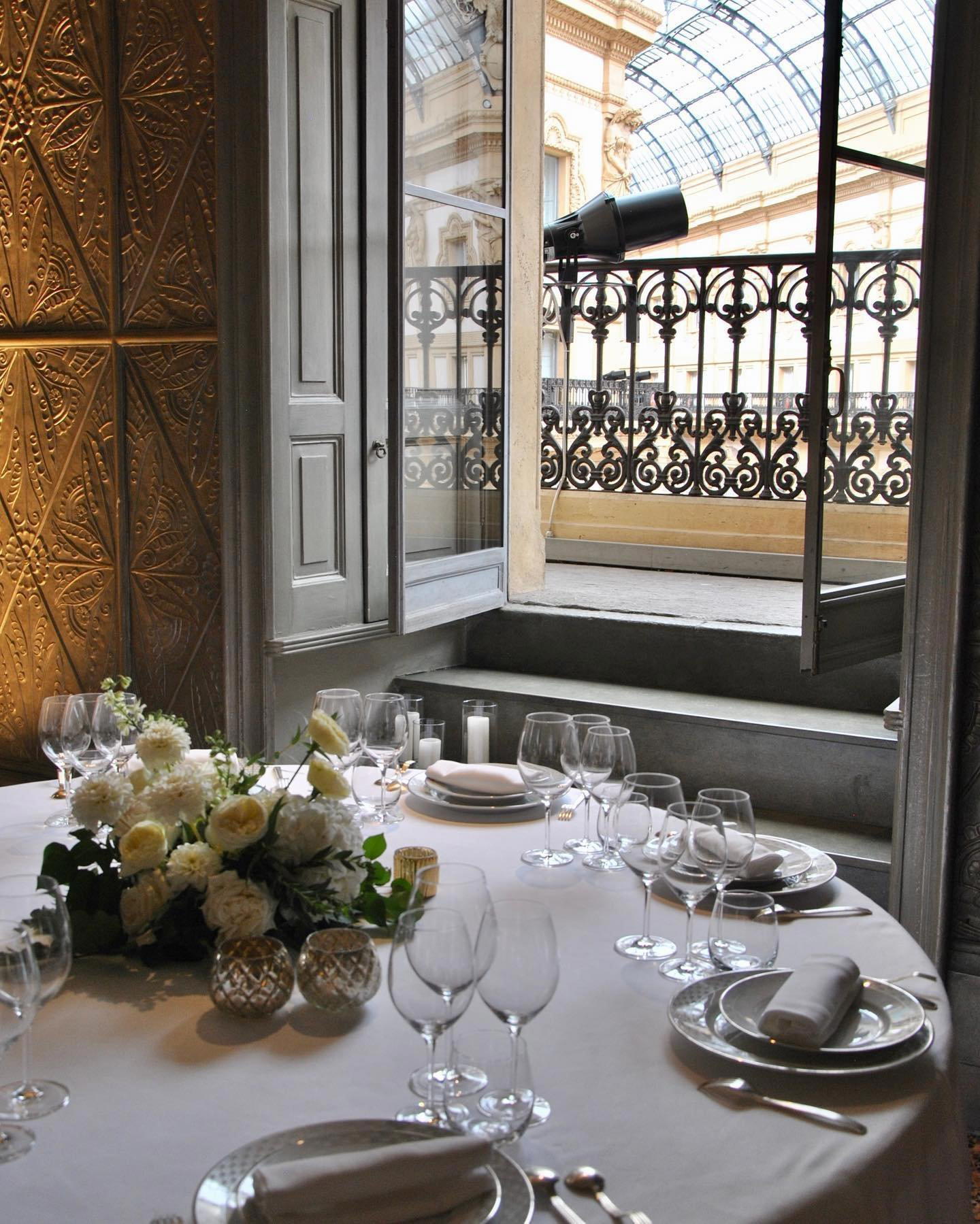
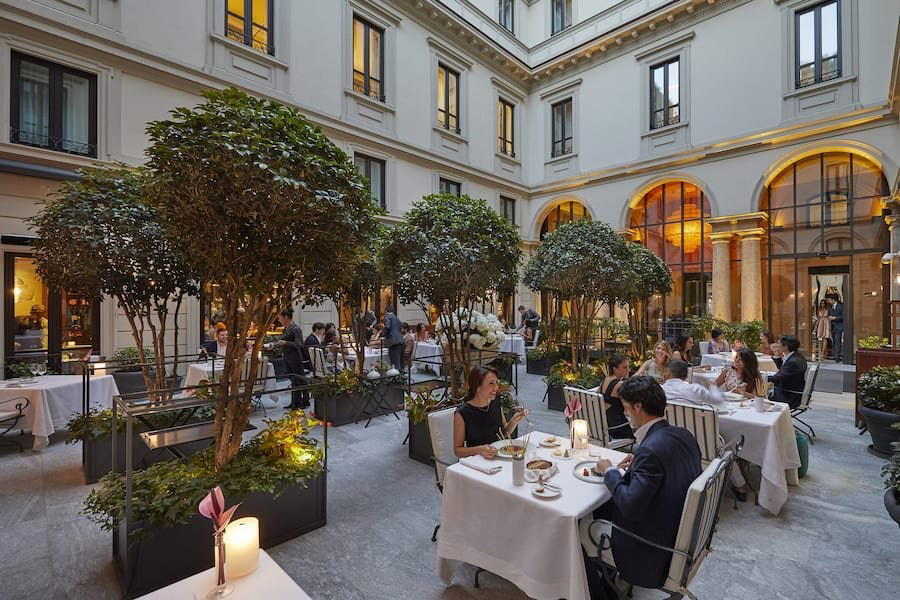
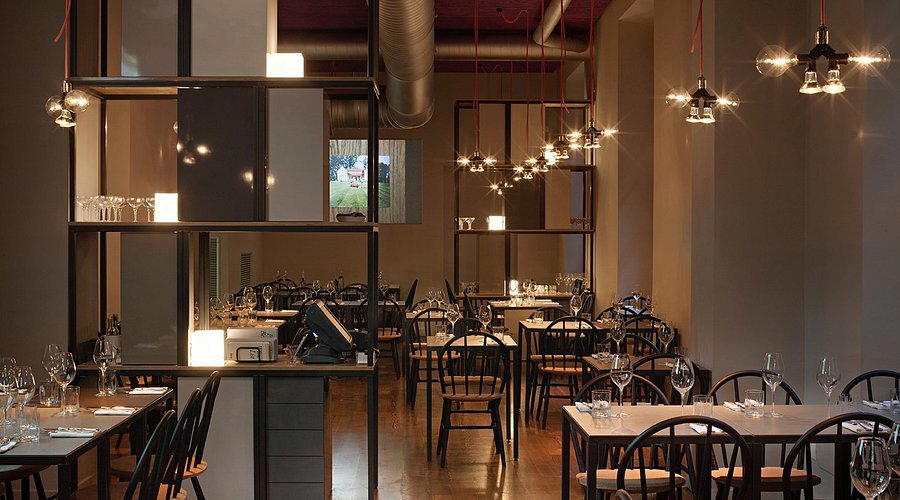
Elegant and refined with Art Deco design, featuring a dramatic central courtyard with columns, visible open kitchen, and cocktail bar creating a sophisticated yet warm Roman atmosphere.