IJ-kantine
Our verdict
IJ-kantine occupies a converted industrial canteen on the NDSM Wharf, one of Amsterdam Noord's most characterful post-industrial addresses. The waterfront setting, reached by ferry across the IJ, gives the space a remove from the city centre that suits occasions requiring a genuine sense of arrival. It sits in a mid-range tier that bridges Amsterdam's casual waterfront dining scene and its more formal creative restaurants.

The menu
What to order
- Osso Bucco
- Octopus Salad
- Sea Bass
Arriving at NDSM: When the Journey Is Part of the Occasion
Some Amsterdam restaurants are destinations by reputation. IJ-kantine is a destination by geography. The NDSM Wharf, a decommissioned shipyard on the north bank of the IJ, requires a free ferry crossing from Centraal Station, a five-minute ride that functions as a kind of threshold ritual, separating the meal from the rest of the day. When the ferry pulls in and the enormous former crane hall comes into view, the transition feels deliberate. That sense of crossing over, of arriving somewhere that requires a small effort, is precisely what makes NDSM an address for occasions rather than routine visits.
Amsterdam Noord has spent the better part of two decades converting its industrial waterfront into a cultural and dining corridor. The NDSM site anchors the northern edge of that shift, hosting creative studios, film production facilities, and a cluster of eating and drinking spaces that share an aesthetic rooted in exposed steel, raw concrete, and river light. IJ-kantine sits within that fabric as one of the more established addresses on the wharf, occupying the canteen building that once fed the shipyard workers who built vessels in the dry dock below.
The Industrial-Waterfront Dining Category in Amsterdam
Amsterdam's dining scene has developed a distinct sub-category over the past decade: the waterfront conversion restaurant, where architectural atmosphere and setting carry as much weight as what arrives on the plate. IJ-kantine belongs to this category alongside a handful of Noord addresses that have made the ferry crossing part of their identity. This is a different competitive set from the canal-side fine dining of the centre, or from the Michelin-tracked creative restaurants like Ciel Bleu, Flore, Spectrum, and Vinkeles, which operate in a price tier and formality register that positions them differently against occasion dining.
The waterfront category prizes something those central fine-dining rooms often cannot offer: space. Industrial conversions on the IJ tend toward high ceilings, long sightlines, and a relationship with the river that smaller city-centre rooms cannot replicate. For celebrations that call for a sense of physical expansiveness, an anniversary that benefits from watching freight traffic move across the water, a birthday that wants breathing room between tables, this format delivers something structurally different from a refined tasting-menu counter.
Occasion Dining in Amsterdam Noord
The question of where to mark a significant meal in Amsterdam splits, broadly, along two axes: the formal tasting-menu rooms in the centre and south of the city, and the atmosphere-led spaces north of the IJ. For readers whose occasion priorities weigh setting and atmosphere over technical culinary progression, the Noord waterfront addresses are the more natural fit. A meal at a place like Bistro de la Mer in a more classic register, or at IJ-kantine in its converted-industrial register, offers a different kind of occasion logic than the structured progression of a multi-course creative menu.
Ferry crossing itself functions as an occasion marker. Groups arriving by water, with the city skyline receding behind them, are already in a different mode before they sit down. This is one reason the NDSM addresses attract a significant share of private and semi-private bookings, particularly for larger groups marking milestone events. The physical separation from the city centre creates the sense of a dedicated event rather than a dinner that happens to coincide with a celebration.
Amsterdam's broader occasion dining scene has useful reference points further afield. The Netherlands has a strong fine-dining tradition with addresses like De Librije in Zwolle, 't Nonnetje in Harderwijk, and Aan de Poel in Amstelveen at the formal end, and creative regional addresses like De Nieuwe Winkel in Nijmegen and Brut172 in Reijmerstok for those drawn to contemporary cooking in less metropolitan settings. Within Amsterdam itself, the waterfront addresses occupy a middle register: more atmospheric and occasion-appropriate than a neighbourhood bistro, less technically demanding in format than a tasting-menu room.
The NDSM Context: What the Location Means for Planners
For readers planning a meal around an occasion, the logistical profile of IJ-kantine deserves specific attention. The free GVB ferry from Centraal Station runs frequently, with crossings roughly every fifteen to thirty minutes depending on the time of day, and the journey to NDSM takes approximately fifteen minutes. This is a longer transit than reaching most Amsterdam centre restaurants, which means build-in time matters, arriving at the ferry dock early enough to guarantee the intended boat is part of the planning equation, particularly in the evening when ferries may be less frequent. The ferry runs until the early hours, so return travel is generally not a constraint for dinner occasions.
The NDSM Wharf retains a deliberately raw character. The food and beverage operators on the site have generally maintained that aesthetic rather than softening it with conventional restaurant fit-out. For occasions where the surroundings are part of the story, a milestone birthday for someone who works in architecture or design, a post-project celebration for a creative team, the industrial grammar of the space reads as an asset. For guests expecting the kind of formal, polished room that Amsterdam's centre fine-dining addresses provide, the setting requires an adjustment of expectations.
For more context on Amsterdam's full restaurant range, the EP Club Amsterdam restaurant guide maps venues across price tiers, neighbourhoods, and formats, including comparable waterfront and creative-cuisine addresses. Readers comparing occasion-dining options across the Netherlands may also find relevant reference points at De Bokkedoorns in Overveen, De Groene Lantaarn in Staphorst, De Lindehof in Nuenen, De Lindenhof in Giethoorn, and De Treeswijkhoeve in Waalre. For international reference on occasion-calibre dining in a waterfront register, Le Bernardin in New York City and Atomix in New York City illustrate how different cities handle the intersection of setting and occasion ambition at the premium end.
Planning Your Visit
IJ-kantine is located at NDSM-Kade 5, 1033 PG Amsterdam. Access is via the free GVB NDSM ferry from Amsterdam Centraal, with the crossing taking approximately fifteen minutes. The wharf is a working creative campus and the surrounding area rewards arriving with time to walk the site before a meal. Specific booking methods, hours, pricing, and dietary accommodation policies are best confirmed directly with the venue, as these details sit outside what the available record can verify.
Frequently asked questions
at IJ-kantine?
As a general principle with Amsterdam waterfront restaurants in this category, seasonal Dutch produce and North Sea seafood tend to define what these kitchens do at their most confident. Checking the venue's current menu directly before visiting will give the clearest steer on what to prioritise.
Do they take walk-ins at IJ-kantine?
Walk-in availability at NDSM addresses tends to vary considerably by day and season. The wharf attracts significant weekend foot traffic, particularly in summer when the waterfront draws visitors from across the city, and tables without reservations become harder to secure. On weekday evenings and outside the summer peak, the odds improve. The safest approach for an occasion meal is to book ahead; for a casual visit, arriving early in the evening reduces the risk of a wait.
What makes IJ-kantine worth seeking out?
The location on the NDSM Wharf is the primary differentiator. The free ferry crossing from Centraal Station creates a genuine sense of remove from the city centre, and the converted shipyard canteen setting gives the space a character that Amsterdam's more conventional restaurant rooms cannot replicate. For occasions where atmosphere and physical setting carry weight alongside the meal itself, this format serves a specific purpose within Amsterdam's dining range that the centre addresses do not.
How does IJ-kantine handle allergies?
Amsterdam restaurants in this category generally operate in a Dutch hospitality context where allergy disclosure is standard practice, but the specifics of what IJ-kantine can accommodate require confirmation from the kitchen. If the website or phone number become available, those are the first points of contact.
Is IJ-kantine suitable for large group bookings or private events?
The NDSM Wharf's converted-industrial spaces have historically attracted private event and group dining bookings precisely because of their scale and the built-in occasion logic of the ferry crossing. Industrial-format venues in this category tend to offer more flexibility for groups than the smaller, tightly formatted rooms of Amsterdam's fine-dining centre.
Comparable Spots
| Venue | Cuisine | Price | Awards | Notes |
|---|---|---|---|---|
| IJ-kantineThis venue (the venue you are viewing) | Modern European Brasserie with Seafood | $20–30 | Not listed | Not listed |
| Ciel Bleu | Modern French Fine Dining | $200–300 | 2 Michelin Stars · La Liste Top Restaurants | Creative |
| Bolenius | Modern Dutch Farm-to-Table | $100–150 | 1 Michelin Star · We're Smart World Top 100 #18 | Modern Dutch, Creative |
| De Kas | Seasonal Farm-to-Table Fine Dining | $50–100 | 1 Michelin Star · Star Wine List | Organic |
| Wils | Michelin-Starred Fire-Cooked Modern European | $100–150 | 1 Michelin Star · We're Smart World 4 Radishes | World Cuisine |
| BAK | Modern European Fine Dining | $50–100 | Michelin Plate · Star Wine List | Farm to table |
Continue exploring
More in Amsterdam
Restaurants in Amsterdam
All restaurants in Amsterdam →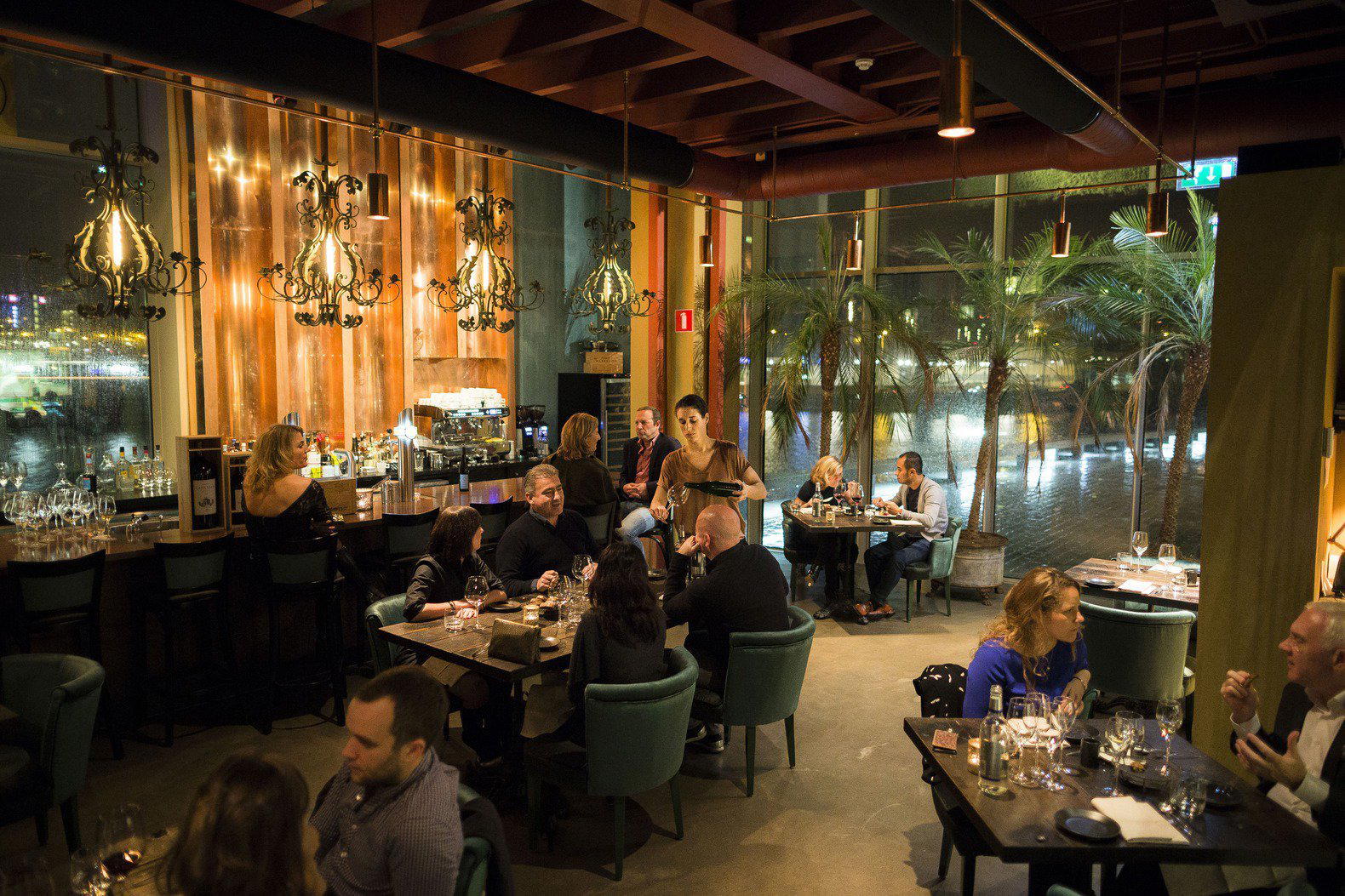
Bars in Amsterdam
All bars in Amsterdam →
Hotels in Amsterdam
All hotels in Amsterdam →
Wineries in Amsterdam
All wineries in Amsterdam →
Details
- Modern
- Scenic
- Lively
- Brunch
- Casual Hangout
- Family
- Waterfront
- Terrace
- Open Kitchen
- Local Sourcing
- Waterfront
- A La Carte
- Local Beers
- Wines
- Vegetarian Friendly
Bright and cheerful modern brasserie with vast windows allowing natural light, terrace by the water, and a welcoming atmosphere around the bar and fireplace.