Ree 7
Positioned on one of Amsterdam's most characterful canal streets, Ree 7 occupies a address in the Jordaan district where the physical setting does much of the editorial work. Compared to the city's larger fine-dining operations, it represents the smaller, address-led end of Amsterdam's restaurant spectrum, a category where space, scale, and location carry as much weight as the kitchen.
Pearl is the En Primeur Club membership app — saves, bookings, and concierge access live there. Same editors, same standards.
- Address
- Reestraat 7, 1016 DM Amsterdam, Netherlands
- Phone
- +31 20 330 1254
- Website
- ree7.nl
- Directions
- Get directions
 Saves & bookings on Pearl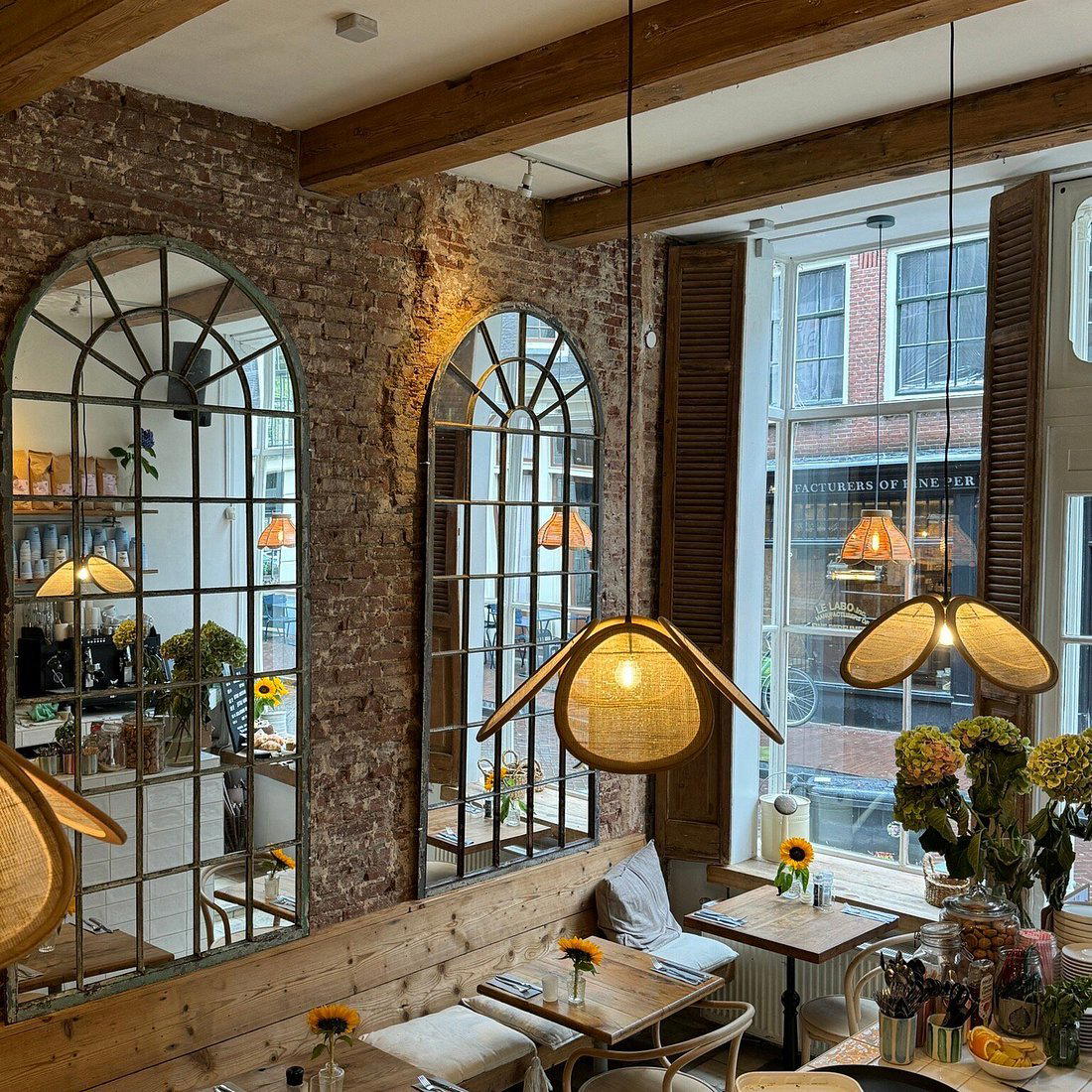
A Street That Sets the Terms
In Amsterdam's Jordaan district, the canal-side streets do something that larger dining rooms cannot: they compress scale until the building, the room, and the guest are in genuine proximity. Reestraat is one of those streets, narrow, gabled, and composed in the way that only centuries of incremental building produce. The address at number 7 inherits that compression. Before a guest sits down, the approach through the Jordaan has already established a register: quiet, residential, deliberate. It is a neighbourhood that rewards the reader who came looking rather than the visitor who stumbled in.
That spatial logic, intimate address, compressed footprint, strong neighbourhood identity, defines a particular tier of Amsterdam dining that sits apart from the hotel dining rooms and the destination-chef operations clustered in the Museum Quarter and along the Amstel. Venues like Ciel Bleu, Flore, and Spectrum operate at the €€€€ tier with the overhead structures of large properties behind them. Vinkeles, set inside a former bakery within a boutique hotel, navigates a middle ground. Ree 7, by contrast, is defined by its address alone, a freestanding canal-house position in the Jordaan, which places it in a different competitive conversation entirely.
The Jordaan as Context
The Jordaan's dining character has shifted considerably over the past two decades. What was once a working-class neighbourhood of brown cafés and neighbourhood kitchens has stratified: some streets have gone aggressively commercial, while others, Reestraat among them, have retained a residential grain that filters the type of operator willing to work within its constraints. Canal-house buildings impose their own architectural logic: narrow frontages, steep internal stairs, rooms that stack vertically rather than spread horizontally. Dining rooms in these structures tend to be small by necessity, which produces a seating density and guest-to-kitchen ratio that larger venues cannot replicate.
This is the spatial tradition that Ree 7 operates within. The Jordaan's premium-casual restaurants, those operating in the €€ to €€€ register, focused on cooking rather than spectacle, form a coherent comparable set that includes Bistro de la Mer at the classic-cuisine end of the spectrum. The neighbourhood's dining rooms reward repeat visitors: they are calibrated for locals who return, not tourists completing a checklist.
Design by Default: The Canal House Interior
Amsterdam canal houses were not designed for restaurants. Their domestic proportions, low ceilings, wide floorboards, windows scaled for light rather than views, were meant for merchants and families. When these buildings become dining rooms, the original architecture asserts itself in ways that contemporary restaurant design cannot manufacture: the creak of old timber, natural light that changes by season and hour, walls thick enough to produce a genuine sense of enclosure. The editorial angle of an address like Reestraat 7 is partly determined by these inherited physical facts.
Across the Netherlands, discussed rooms in fine dining tend to be those where architecture and programme are in alignment. De Librije in Zwolle operates inside a former prison library, a setting that amplifies rather than contradicts its ambition. Inter Scaldes in Kruiningen uses its manor-house setting to establish a register of considered calm. De Nieuwe Winkel in Nijmegen and De Lindenhof in Giethoorn each draw part of their identity from their physical context. The lesson across these venues is consistent: in the Netherlands, where the built environment is historically dense and architecturally specific, space is not neutral. It argues for something.
At Reestraat 7, that argument is made by the Jordaan itself, a district whose architectural coherence gives even modest addresses a legibility that newer developments lack. Venues on streets with this kind of spatial grammar tend to attract guests who are making a considered decision about where they want to be, not just what they want to eat.
Where Ree 7 Sits in the Amsterdam Picture
Amsterdam's restaurant scene has developed a pronounced split over the past decade. On one side: high-investment destination dining with Michelin credentials, tasting menus in the €150-plus range, and the associated machinery of reservations, wine pairings, and formal service. On the other: a tier of neighbourhood-focused rooms, smaller, less formally structured, driven by cooking rather than ceremony, that operate closer to the residential grain of the city's historic districts.
The Netherlands' broader fine-dining circuit extends well beyond Amsterdam, with recognised kitchens at Tribeca in Heeze, De Groene Lantaarn in Staphorst, Brut172 in Reijmerstok, De Lindehof in Nuenen, De Bokkedoorns in Overveen, and De Treeswijkhoeve in Waalre all operating at the upper end of Dutch restaurant culture. Against that national map, Amsterdam's Jordaan addresses represent something different: urban, compressed, neighbourhood-anchored. Internationally, the closest analogues are the address-led dining rooms of cities like New York, where Le Bernardin has held its Midtown position across decades, or San Francisco, where communal-format venues like Lazy Bear have redefined what intimacy at table means. The connecting thread is that physical setting frames the experience before the kitchen speaks.
The Jordaan addresses, Reestraat in particular, belong to the neighbourhood-anchored tier where the decision to book is as much about where you will be sitting as what you will be eating.
Planning a Visit
Reestraat 7 is reachable on foot from the central canal ring in under ten minutes, and from the Prinsengracht tram stops in five. The Jordaan's street grid is compact enough that most visitors approach on foot from the Negen Straatjes shopping area to the south, or from the Brouwersgracht to the north.
The Essentials
Comparable venues nearby, for context on price, style, and recognition.
| Venue | Cuisine | Price | Notes |
|---|---|---|---|
| Ree 7This venue — the venue you are viewing | Felix Meritisbuurt, European Lunchroom | $ | Not listed |
| Kanarie Club | Not listed | $$ | Bellamybuurt Zuid, European Gastropub with Seasonal Shared Dining |
| Vishandel Centrum | Not listed | $ | Haarlemerbuurt, Traditional Dutch Seafood |
| Café Binnenvisser | Not listed | $$ | Da Costabuurt Noord, Modern European Bistro |
| Scarpetta - Pasta Takeaway & Delivery | Not listed | $ | Haarlemerbuurt, Fresh Italian Pasta Takeaway |
| Sukhothai Thanee | Van Loonbuurt, Authentic Thai | $$ | Not listed |
Continue exploring
More in Amsterdam
Restaurants in Amsterdam
Browse all →
Bars in Amsterdam
Browse all →
Hotels in Amsterdam
Browse all →
Wineries in Amsterdam
Browse all →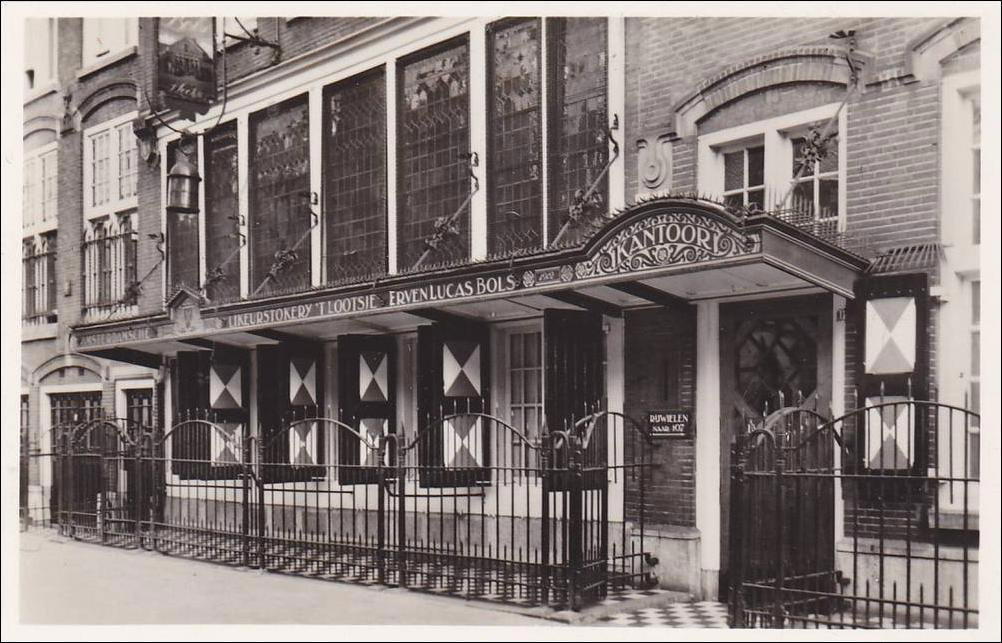
At a Glance
- Cozy
- Casual
- Casual Hangout
- Brunch
- Group Dining
- Standalone
Current opening hours
- Monday
- 9 AM–5 PM
- Tuesday
- 9 AM–5 PM
- Wednesday
- 9 AM–5 PM
- Thursday
- 9 AM–5 PM
- Friday
- 9 AM–5 PM
- Saturday
- 9 AM–5 PM
- Sunday
- 9 AM–5 PM
Hours can change for holidays and private events. Last verified .
Cozy and welcoming neighborhood lunchroom with a relaxed, casual atmosphere ideal for casual meals with friends, family, or colleagues.