Positioned on Szent István tér in Budapest's inner fifth district, DiVino Wine Bar is one of the city's most recognisable addresses for Hungarian wine. The bar draws on the country's diverse wine regions, from Tokaj to Villány, to build a list that functions as a working map of domestic viticulture. For visitors wanting context alongside the glass, it earns its place on the itinerary.
Pearl is the En Primeur Club membership app — saves, bookings, and concierge access live there. Same editors, same standards.
- Address
- Budapest, Szent István tér 3, 1051 Hungary
- Phone
- +36 70 935 3980
- Website
- bazilika.divino.hu
- Directions
- Get directions
 Saves & bookings on Pearl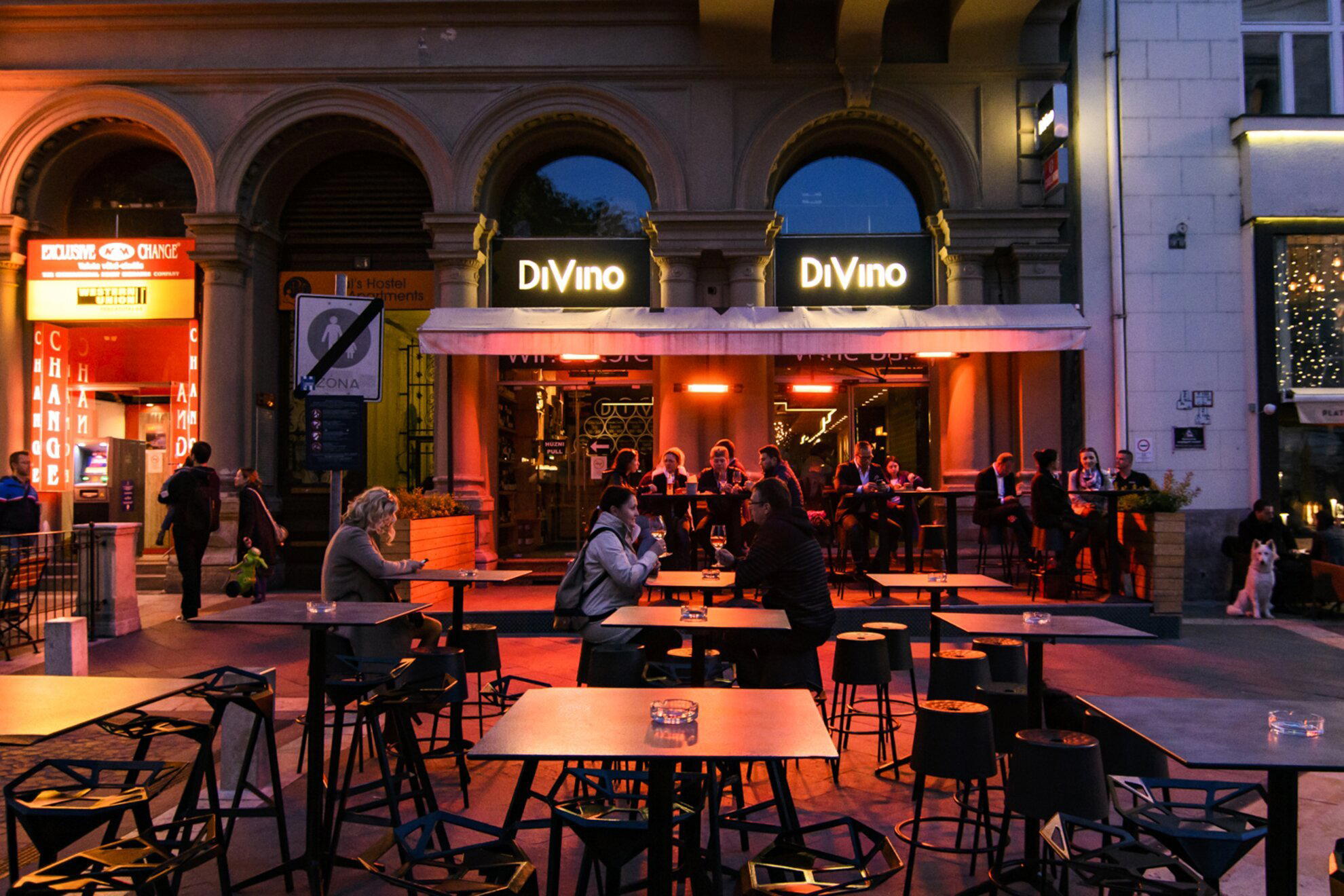
Szent István tér and the Case for Hungarian Wine
Budapest's wine bar culture has matured in a specific direction over the past decade: away from pan-European lists and toward a sharper focus on domestic production. That shift reflects something real happening in Hungarian viticulture, where regions like Tokaj, Eger, Villány, and the Balaton shore have drawn serious international attention. DiVino Wine Bar is a Hungarian wine bar with tapas at Szent István tér 3 in Budapest's fifth district. The square itself frames one of Budapest's most recognisable views, with the Basilica of St. Stephen anchoring the north end. Arriving in the early evening, when the stone plaza catches the last of the light and the terrace fills with a mix of locals and visitors, you understand immediately why this address works as a meeting point for the city's wine conversation.
The wine bar format, as it has evolved in cities like Vienna and Prague, tends to split between two models: the cellar-heavy traditionalist, and the more contemporary bar that treats wine as a social rather than ceremonial act. DiVino belongs to the second category. The atmosphere is animated rather than reverent, the emphasis on access over ritual. That positioning matters because Hungary's wine identity has historically suffered from an image problem in export markets, and venues that make the country's producers approachable to a broad audience perform a genuinely useful function.
A List Built Around Regional Logic
Understanding DiVino's wine selection requires some grounding in how Hungary's wine map actually works. The country has 22 designated wine regions, each with distinct soil profiles and permitted varietals. Tokaj, in the northeast, remains especially internationally documented: its aszú wines, made from botrytis-affected Furmint grapes, have a centuries-long record in European fine wine trade. But the contemporary story runs wider. Eger produces red blends under the Egri Bikavér designation that have improved sharply in quality terms. Villány, in the south close to the Croatian border, has developed a reputation for structured Cabernet Franc and Portugieser. The Balaton region yields white wines from indigenous varieties like Olaszrizling and Kéknyelű that rarely surface outside Hungary's domestic market.
A wine bar committed to sourcing across those regions is, in effect, curating a geography lesson. The value of that approach, for a visitor with limited time in Budapest, is compression: a well-chosen pour from a Villány producer or a Somló white can communicate more about Hungarian terroir in a glass than a week of reading. For context on how those regions translate to restaurant-level wine pairings, venues like Borkonyha Winekitchen have built their identity around exactly that bridge between kitchen and cellar.
The Fifth District Setting
Location on Szent István tér places DiVino in one of Budapest's most central and pedestrian-friendly zones. The fifth district (Belváros-Lipótváros) concentrates a significant share of the city's higher-end dining: Costes (€€€€ · Modern Cuisine) and Babel (€€€€ · Modern Cuisine) both operate within the broader neighbourhood, as does Stand (€€€€ · Modern Cuisine). The concentration of quality addresses in this part of the city means DiVino fits naturally into a longer evening: a glass or two before dinner, or a late stop after a meal at one of the nearby fine-dining rooms.
The square's outdoor terrace is a practical consideration. Budapest summers run warm from June through August, and alfresco drinking on a terrace overlooking the Basilica functions differently from a winter evening inside. Timing a visit to the terrace season rewards visitors who plan their Budapest trip for late spring or early autumn, when the heat is manageable and the square is at its most active without the peak-summer crowds. For those planning wider Hungarian food and wine itineraries, the country's wine regions are increasingly accessible via day trips and overnight stays: Sauska 48 in Villány and Petrányi Csopak in Csopak represent the kind of producer-adjacent dining that the Villány and Balaton regions now support, while Pajta in Őriszentpéter points toward the emerging western Transdanubia dining scene.
Where DiVino Sits in Budapest's Broader Scene
Budapest's fine-dining tier has attracted consistent Michelin attention: essência joins a cohort of recognised rooms that have repositioned the city as a serious European dining capital over the past decade. A wine bar like DiVino operates in a different register, but it connects to that broader credibility. When the city's leading kitchens are investing in Hungarian producers, a wine bar that draws from the same regional pool benefits from the same tailwind.
Closer to home, the comparison set includes Borkonyha Winekitchen, which has built a Michelin-recognised program around Hungarian wine pairings, and a growing number of neighbourhood wine bars across the seventh and eighth districts that have pushed local producers into mainstream conversation. DiVino's fifth-district address and its proximity to the Basilica give it a visibility advantage in that competitive field: the tourist traffic through Szent István tér is consistent, but the bar's orientation toward serious Hungarian producers means it skews toward wine-curious visitors rather than a purely casual crowd.
For readers planning wider Hungarian food itineraries beyond Budapest, the regional dining picture has grown significantly: Platán Gourmet in Tata, Kővirág in Köveskál, Hosszú Tányér in Hosszúhetény, Teyföl in Szentendre, Öreg Prés in Mór, Botanica in Dánszentmiklós, and Old Kőrössy Fish Restaurant in Szegedin collectively trace a country that has moved well beyond its Budapest-centric culinary reputation. DiVino, as a dedicated Hungarian wine address in the capital, functions as a natural entry point for that wider exploration.
Planning a Visit
DiVino Wine Bar occupies the ground floor address at Szent István tér 3, 1051 Budapest. The square is walkable from the main fifth-district metro stops and sits within easy reach of the Chain Bridge and the Danube embankment. Given its terrace and central location, the bar draws a consistent crowd through the main evening hours; arriving slightly ahead of the peak dinner window tends to offer more space and easier access to staff for wine guidance. Visitors combining DiVino with a dinner reservation nearby at one of the area's higher-end restaurants should plan the wine bar as a pre-dinner stop rather than a late evening one, since the energy in the square peaks earlier than in the city's bar-district streets to the east.
Side-by-Side Snapshot
Comparable venues nearby, for context on price, style, and recognition.
| Venue | Cuisine | Price | Notes |
|---|---|---|---|
| DiVino Wine BarThis venue — the venue you are viewing | Hungarian Wine Bar with Tapas | $$ | Not listed |
| Cafe Vian Gozsdu Udvar | Traditional Hungarian Bistro | $$ | Belvaros |
| Gettó Gulyás | Authentic Hungarian Stews | $$ | Belvaros |
| Múzeum Étterem | Traditional Hungarian | $$ | Belvaros |
| 21 Restaurant | Modern Hungarian Bistro | $$$ | Varhegy |
| IDA Bistro | Austro-Hungarian Bistro | $$ | Tabán |
Continue exploring
More in Budapest
Restaurants in Budapest
Browse all →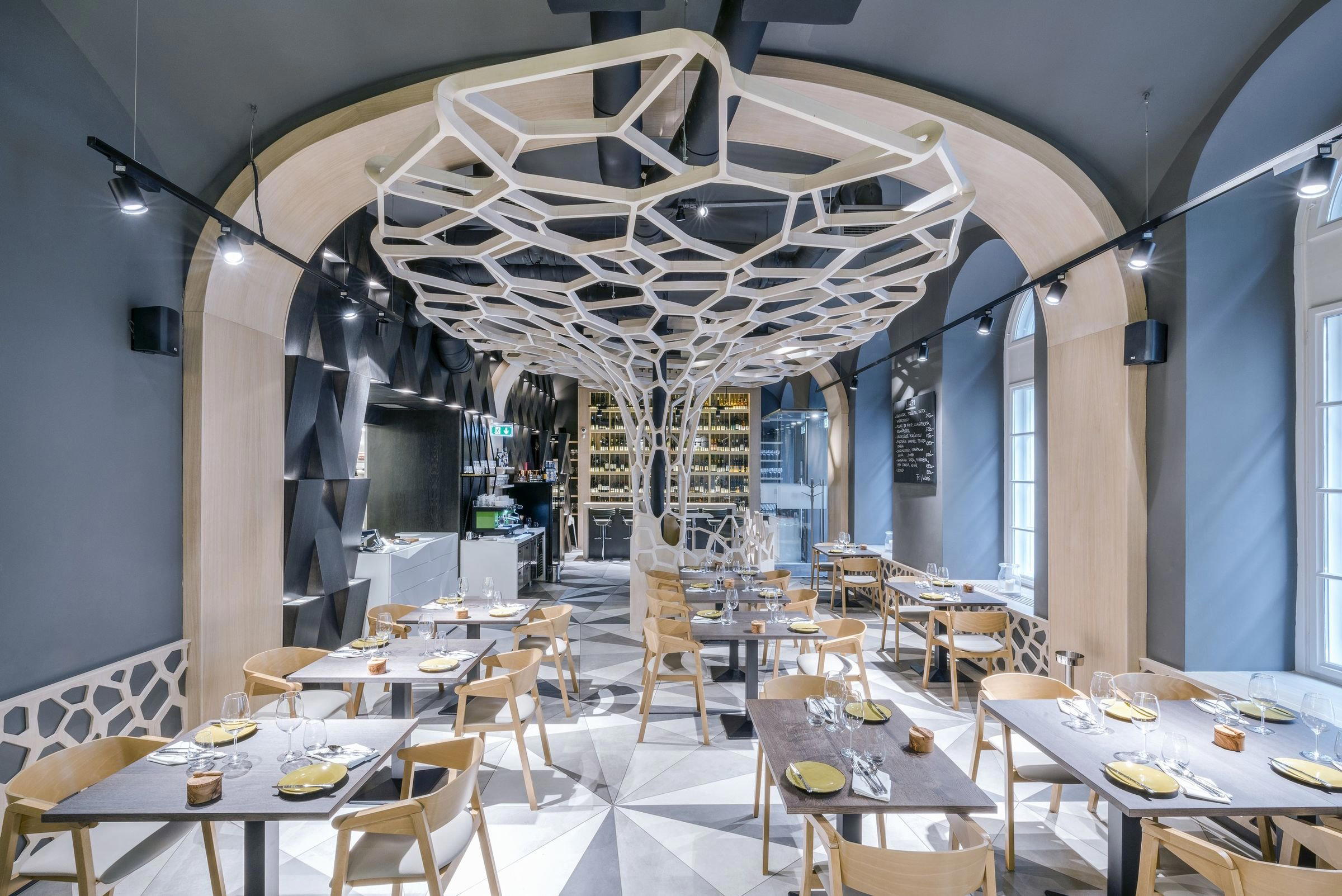
Bars in Budapest
Browse all →
Hotels in Budapest
Browse all →

At a Glance
- Modern
- Scenic
- Lively
- Elegant
- Casual Hangout
- After Work
- Date Night
- Group Dining
- Terrace
- Design Destination
- Wine Cellar
- Extensive Wine List
- Natural Wine
- Sommelier Led
- Local Sourcing
- Street Scene
Current opening hours
- Monday
- 12 PM–12 AM
- Tuesday
- 12 PM–12 AM
- Wednesday
- 12 PM–12 AM
- Thursday
- 12 PM–2 AM
- Friday
- 12 PM–2 AM
- Saturday
- 12 PM–2 AM
- Sunday
- 12 PM–12 AM
Hours can change for holidays and private events. Last verified .
Modern, contemporary design with pine wood and black walls creating a sophisticated yet relaxed atmosphere; spacious terrace overlooking the inner city square with views of the basilica.